
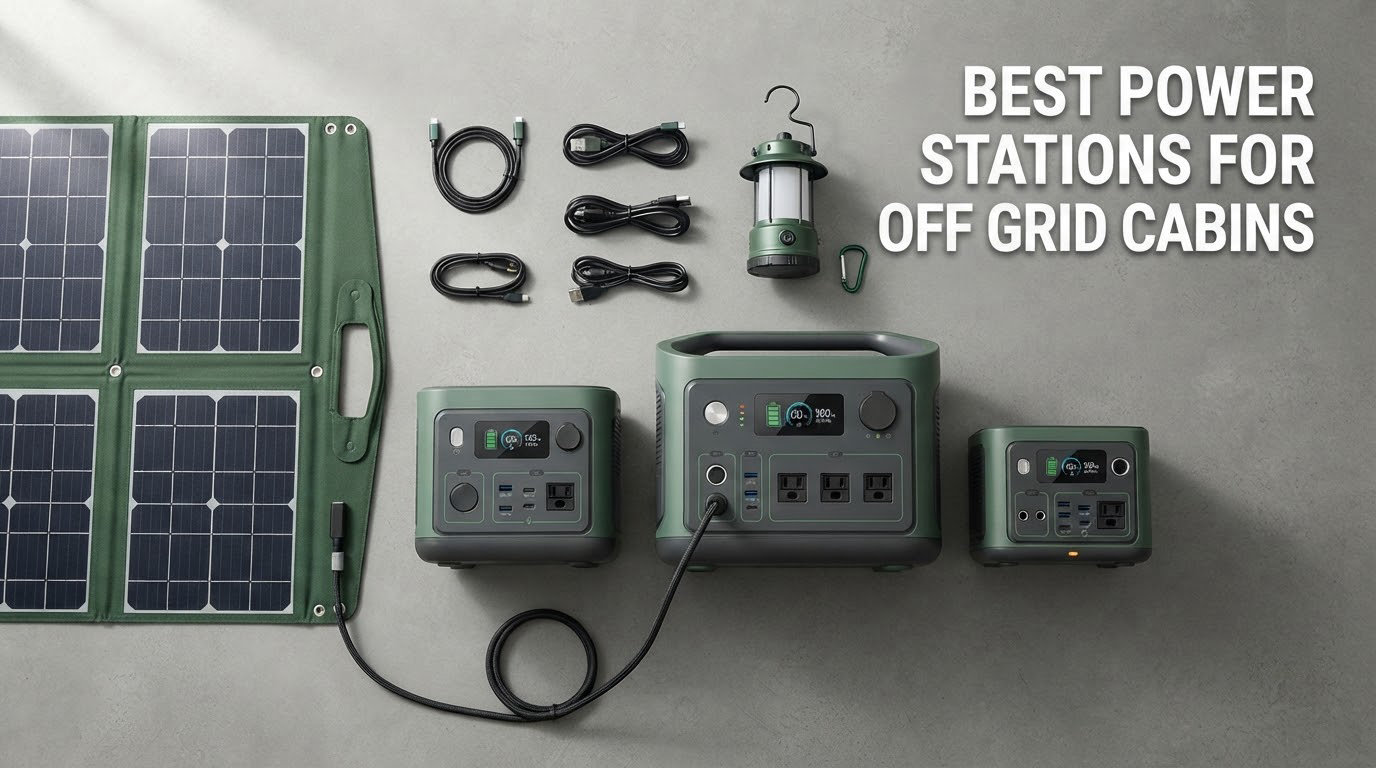
The best power stations for off grid cabins right now is the Jackery Explorer 1000 v2, a 1070Wh LiFePO4 unit that weighs 23.8 lbs and delivers 1500W continuously. Sizing rule of thumb: measure your daily load in watt-hours, add 30% for losses, and buy at least that much rated capacity.
That 30% cushion is not a marketing figure. A power station advertises rated watt-hours, and you get roughly 85% of that as usable energy after inverter losses and the small amount of power the electronics themselves draw. A 1070Wh station really gives you about 900Wh of usable AC energy.
There is a second thing to settle before any product list matters, and it is the question that comes up first in every off-grid cabin forum I have read. Is this a weekend place, a part-time place, or a full-time home? A weekend cabin needs about 1kWh and some solar. A part-time cabin wants 2kWh. Full-time living is a different category entirely, and it is the one where a portable power station is usually the wrong purchase.
Nobody in those threads says do not buy one. They say buy the right amount, understand the recharge math, and know what you are giving up compared with a fixed off-grid solar system. I will size all three tiers below, then walk through the 12 units that fit them. If you are only looking at weekend use, our guide to the best portable power stations for camping covers the lighter end of the range.
Top 3 Picks for Off-Grid Cabins in 2026

Quick Picks: The Best Power Stations for Off-Grid Cabins in 2026
| Product | Specifications | Action |
|---|---|---|
| Jackery Explorer 1000 v2 |
|
Check Latest Price |
 BLUETTI AC180 BLUETTI AC180 |
|
Check Latest Price |
 Anker SOLIX C1000 Gen 2 Anker SOLIX C1000 Gen 2 |
|
Check Latest Price |
 OUPES Mega 1 OUPES Mega 1 |
|
Check Latest Price |
 EcoFlow Delta 3 Classic EcoFlow Delta 3 Classic |
|
Check Latest Price |
 Jackery Explorer 2000 v2 Jackery Explorer 2000 v2 |
|
Check Latest Price |
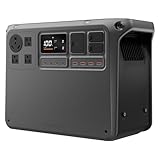 DJI Power 2000 DJI Power 2000 |
|
Check Latest Price |
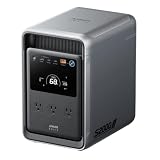 Anker SOLIX S2000 Anker SOLIX S2000 |
|
Check Latest Price |
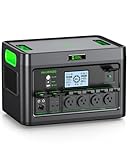 EBL 2400W Power Station EBL 2400W Power Station |
|
Check Latest Price |
 EcoFlow Delta Pro 3 EcoFlow Delta Pro 3 |
|
Check Latest Price |
 Jackery HomePower 3000 Jackery HomePower 3000 |
|
Check Latest Price |
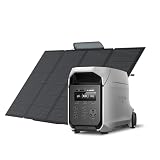 EcoFlow Delta 3 Ultra Plus EcoFlow Delta 3 Ultra Plus |
|
Check Latest Price |
- Jackery Explorer 1000 v2 – best overall for a weekend or part-time cabin, and the easiest 1kWh unit to carry in from the truck.
- Anker SOLIX C1000 Gen 2 – best for app control and the fastest recharge in the 1kWh class.
- BLUETTI AC180 – best value, with 500W solar input and a 5-year warranty.
- OUPES Mega 1 – best for surge headroom, and the only 1kWh unit here that expands to 5120Wh.
- EcoFlow Delta 3 Classic – best for overnight fridge duty on a strict budget.
- Anker SOLIX S2000 – best for the longest refrigerator runtime, thanks to a 6W idle draw.
- Jackery Explorer 2000 v2 – best for quiet overnight charging next to a bed.
- DJI Power 2000 – best for well pumps and power tools, with 3000W of steady output.
- EBL 2400W Power Station – best for powering many small devices at once.
- Jackery HomePower 3000 – best for RV hookups, with a built-in TT-30 port.
- EcoFlow Delta 3 Ultra Plus – best starter kit, because the 400W solar panel is in the box.
- EcoFlow Delta Pro 3 – best for 240V appliances and whole-cabin power.
How We Picked These Power Stations
Every product here runs LiFePO4 cells and a pure sine wave inverter, because a modified sine wave will make a refrigerator compressor and a well pump motor run hot and unhappy. That left capacity, continuous output, surge headroom, solar input wattage, weight, port selection, expansion support and warranty length as the deciding criteria.
We also worked backwards from cabin loads rather than forward from spec sheets. A mini fridge, a full-size refrigerator, a well pump, Starlink, LED lighting and phone charging are the loads that show up in nearly every off-grid cabin thread, so each review below states what that appliance mix actually costs in watt-hours. Reviewer feedback on rated-versus-delivered runtime, noise, and cold-weather behaviour informed the cons on every pick.
1. Jackery Explorer 1000 v2 – Best Overall for a Cabin
Jackery Explorer 1000 v2 Portable Power Station,1070Wh,1500W
1070Wh LiFePO4
1500W continuous, 3000W surge
23.8 lbs
0-100% in about 1 hour
Pros
- Lightest credible cabin unit at 23.8 lbs
- 1070Wh covers a fridge plus lights and Starlink for a night
- 1500W continuous handles a microwave or space heater
- Over 70 percent capacity retained after 4000 cycles
- Seven outputs including 100W USB-C PD
Cons
- Solar input limited to Jackery panels
- 1070Wh is tight for multi-day cloudy stretches
- Three AC outlets means no room for a second heavy load
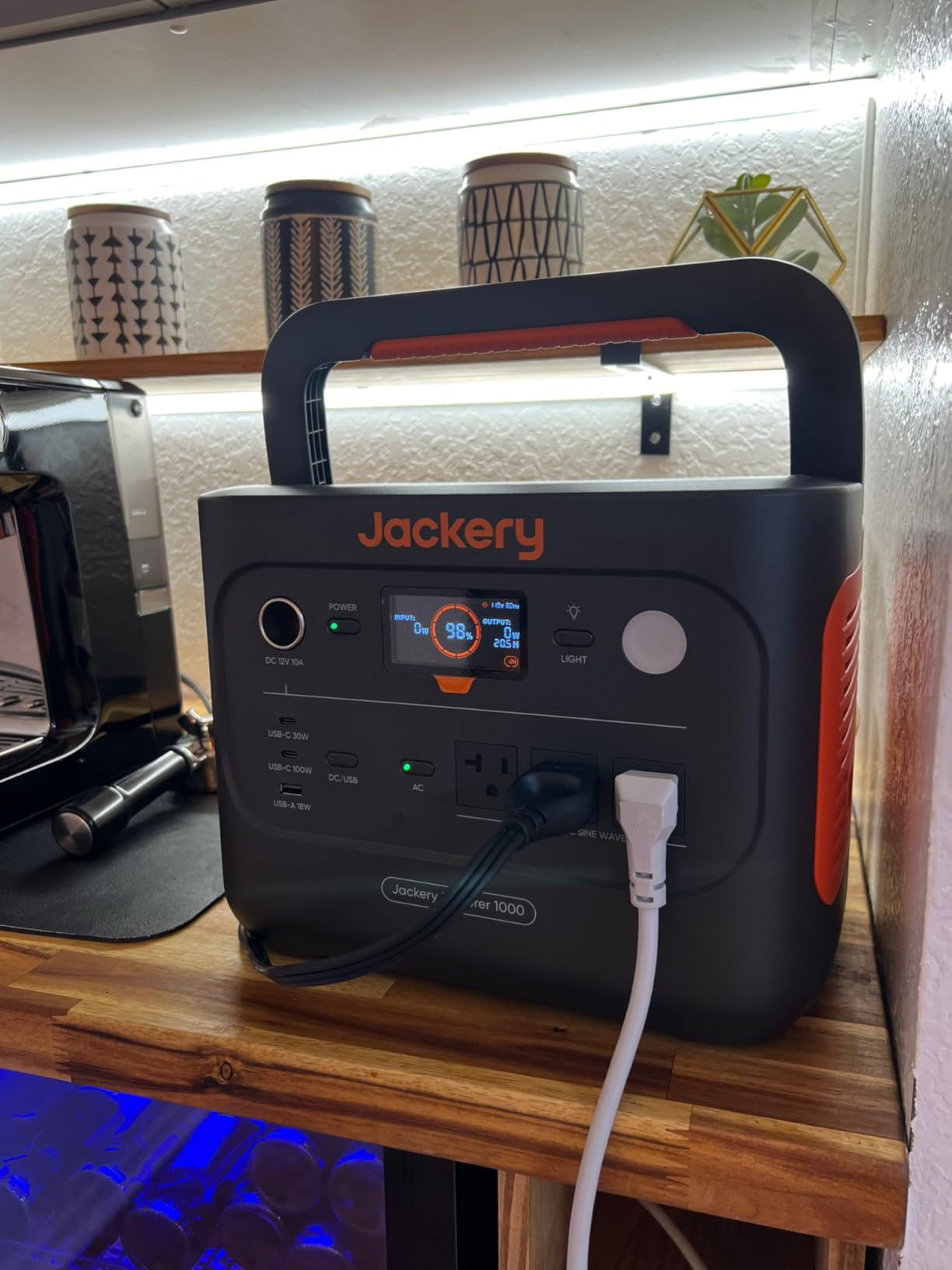
This is the unit I keep coming back to for a cabin because weight is the constraint that nobody accounts for. At 23.8 lbs with a foldable handle, one person can move it from the truck bed to the porch without planning a second trip, and 1070Wh is enough to run a refrigerator through the night if solar does not arrive the next morning.
The recharge story is the other reason it wins. Emergency charging mode in the app brings a full charge in about an hour, which means a day of sun can be replaced before you go to sleep on a Saturday. Cycle life is rated past 4000 cycles with over 70 percent capacity retained, which comfortably covers a decade of weekend use.
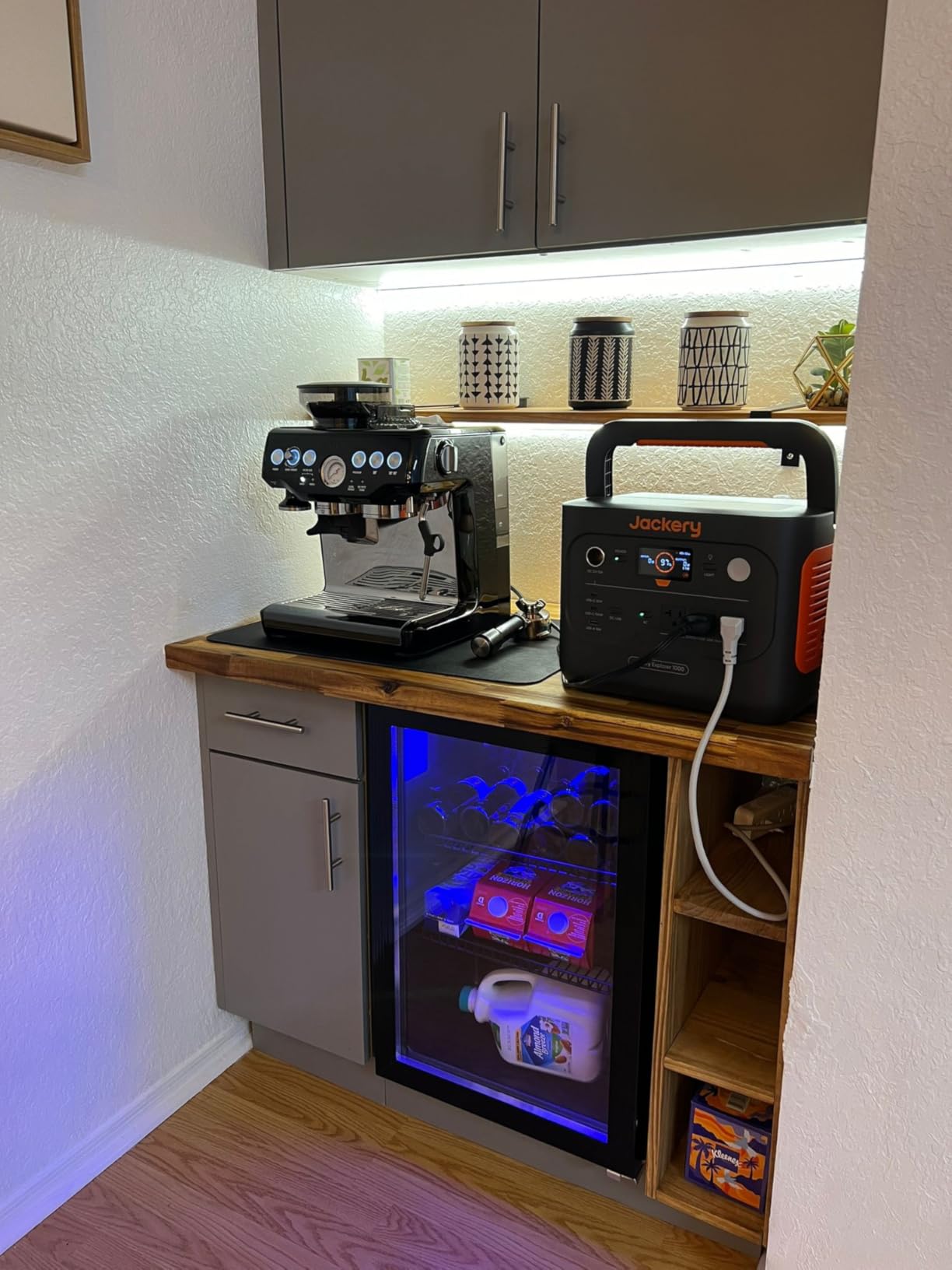
The honest weakness is solar flexibility. Owners consistently report that the solar input works with Jackery-branded panels, which limits what you can rig to the cabin roof if you are mixing brands. Do the math on a 1070Wh pack too: at 850W usable and a 70W fridge compressor running about a third of the time, you get roughly 36 hours of fridge alone before you add lighting and Starlink.
What size cabin it actually fits
This is a weekend-to-part-time unit. A four-person weekend with a fridge, a few LED lights, phone charging and a Starlink dish sits comfortably inside one charge. Add a space heater and you will be recharging from the wall every morning.
Where it will disappoint you
Two cloudy days in November without generator or vehicle charging is where a 1kWh pack runs out of road. It is also the wrong tool if you plan to run a well pump daily, because you will burn the reserve on pump startup alone.
2. Anker SOLIX C1000 Gen 2 – Best for App Control and Fast Recharging
Anker SOLIX C1000 Gen 2 Portable Power Station
1024Wh LiFePO4
2000W output, 3000W peak
24.9 lbs
49 minute full recharge
Pros
- 2000W output from a 1024Wh pack
- 49 minute full recharge on 1200W input
- Compact at 24.9 lbs for its output class
- Under 10ms UPS keeps routers and medical devices alive
- Bluetooth and Wi-Fi app with time-of-use scheduling
Cons
- Gen 2 dropped the expansion battery option
- Mild inverter distortion on microwave loads
- No protective storage case included
Where the Jackery wins on weight, this one wins on headroom and recharge speed. 2000W of continuous output from 1024Wh is unusual in this class, and reviewers report it holding fridges, CPAP machines and full-performance laptops without complaint.
The app is the real differentiator at a remote cabin. Wi-Fi plus Bluetooth control and time-of-use scheduling let you reserve charge for the evening rather than letting a laptop top off the pack at 4pm. Reviewers who lost power for a full day or more describe it holding a Starlink link and networking equipment without a hiccup.
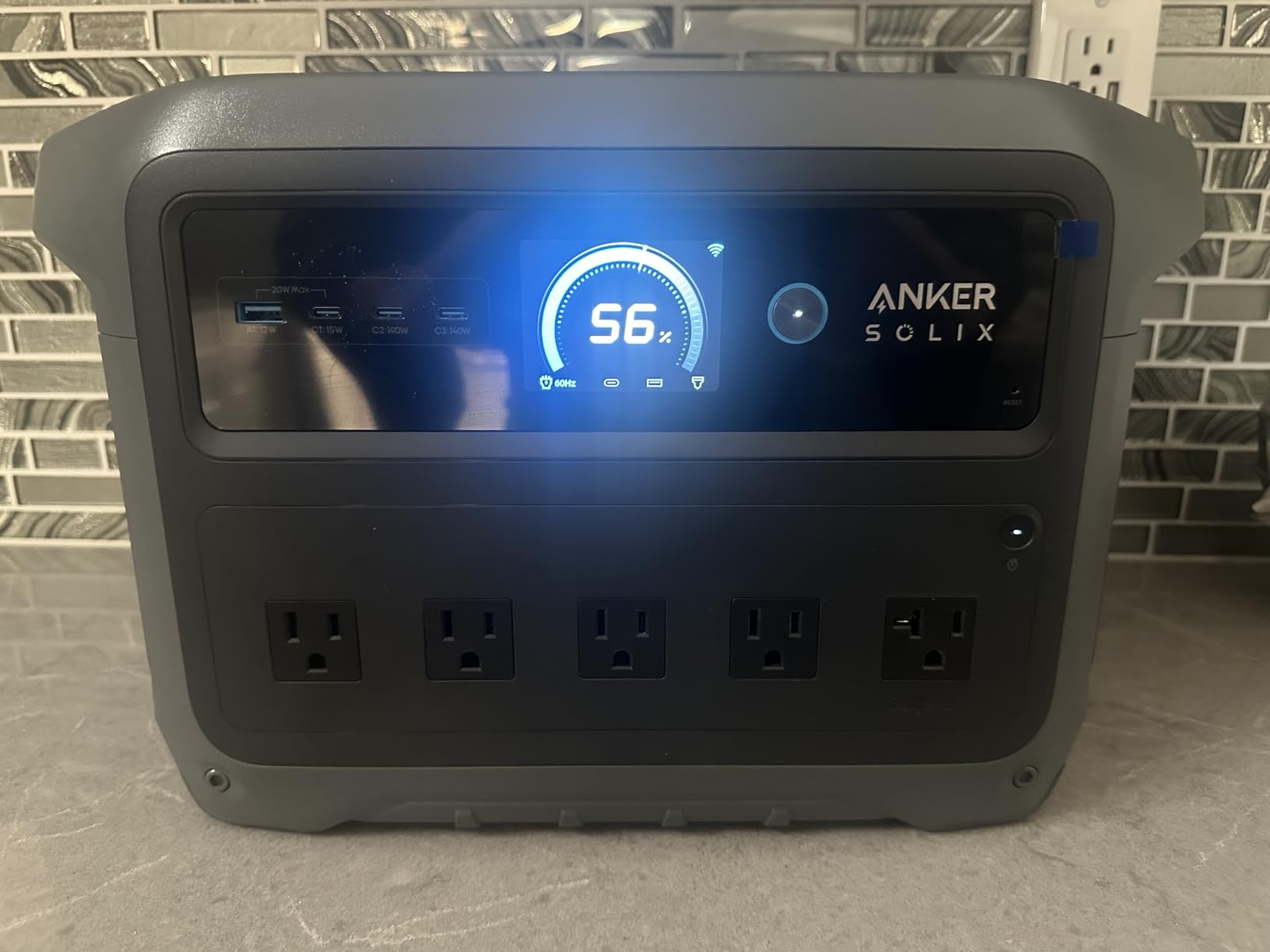
Two things to weigh first. Gen 2 removed the expansion battery option the first generation had, so 1024Wh is a hard ceiling and the purchase cannot grow. Owners also note mild harmonic distortion from the pure sine wave inverter on microwave loads, which did not bother them but is worth knowing if you plan to run one often.
How it handles a night without grid power
At 1024Wh rated, usable AC energy lands near 870Wh. That covers a mini fridge, LED lighting and Starlink for an overnight stop without a wall outlet, and the 49 minute recharge means a lunch break on 1200W restores most of it.
The upgrade path problem
There is none. If you buy this expecting to add a second pack in year two, that plan is gone, and you should look at the OUPES Mega 1 or the EcoFlow Delta 3 Ultra Plus instead.
3. BLUETTI AC180 – Best Value
BLUETTI AC180 Portable Power Station 1152Wh 1800W LiFePO4 Solar Generator
1152Wh LiFePO4
1800W continuous, 2700W boosted
37.4 lbs
500W solar input
Pros
- Highest rated capacity among the 1kWh units here
- 1800W continuous with app-enabled 2700W lifting
- 500W solar input charges in 2.8 to 3.3 hours
- 20ms UPS switchover for backup
- 5 year warranty
Cons
- 37.4 lbs is a two-person lift in rough ground
- Top wireless charging pad drops connection repeatedly
- 20W idle draw cuts real runtime below the nameplate
The AC180 is the one I recommend to people who want the most usable energy per unit of cash. 1152Wh is the largest battery in the 1kWh group, 1800W continuous handles nearly anything short of a well pump, and the 20ms UPS keeps networking gear alive through a switchover.
That 500W solar input is the sleeper feature. Solar input that high is rare in a 1kWh machine, and it turns a full recharge into a 2.8 to 3.3 hour job instead of a two-day proposition in good weather. That is the difference between a station that keeps up with your load and one that slowly falls behind.
Reviewers are candid about the 20W idle self-consumption and 90% usable capacity rating, and both cut into real runtime on small loads. Some units needed firmware updates and a full discharge cycle before they delivered rated runtime, and the top-mounted wireless charging pad is the single most repeated complaint in the reviews.
Whether the weight matters at your place
At 37.4 lbs this is a two-hand carry and an awkward one over cabin steps. If your power station lives in a finished room rather than a truck bed and porch, that is acceptable. If it moves often, the 24 lb units are a better fit.
What the app power lifting is good for
It raises usable output from 1800W to 2700W for resistive loads like a space heater or coffee maker. It is genuinely useful when you want more than 1800W from a 1kWh pack, and it is one of the few software features that earns its place at a cabin.
4. OUPES Mega 1 – Best for Surge Headroom and Expansion
OUPES Mega 1 Portable Power Station 1024Wh 2000W (4500W Surge)
1024Wh LiFePO4
2000W continuous, 4500W advertised surge
27.8 lbs
Expands to 5120Wh
Pros
- Only 1kWh unit here that expands to 5120Wh
- 2000W continuous output for a small cabin
- 0-80% in 36 minutes on AC
- Front outlets well spaced for bulky plugs
- Dual 100W USB-C PD plus four QC3.0 USB-A
- 5 year warranty
Cons
- 4500W surge figure is optimistic and some trip near 2100W
- Proprietary charging cable is hard to replace
- Cooling fan runs continuously while charging
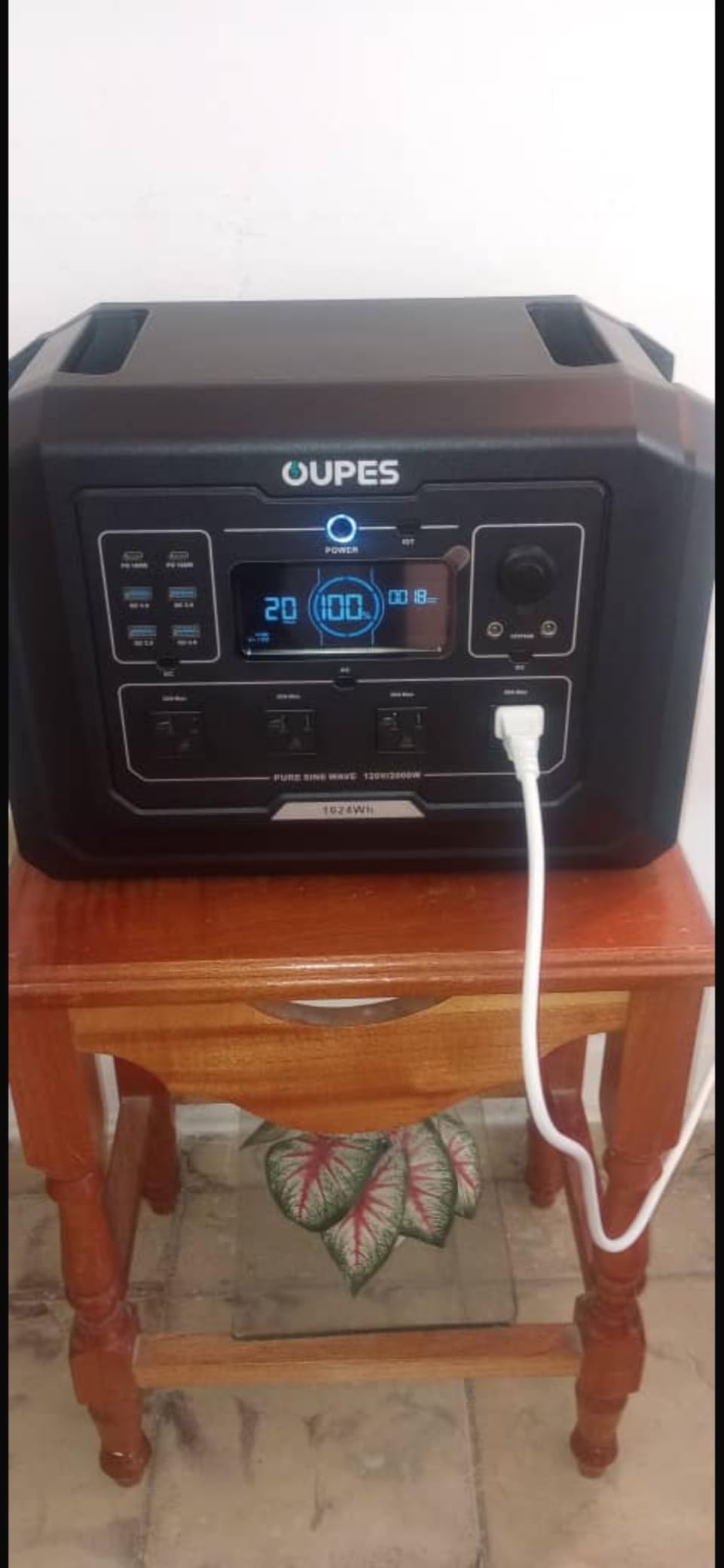
Expansion support is the reason to look at this one. Two extra batteries take the Mega 1 from 1024Wh to 5120Wh, which turns a weekend pack into something closer to a part-time cabin system without buying a second main unit.
Charging is also exceptional for the class. Reviewers report 0-80% in roughly 35 to 45 minutes on AC, and 26 minutes when solar is added on top, and 2000W of continuous output that runs refrigerators, microwaves and power tools without tripping.

Be skeptical about the surge number. The listed 4500W is optimistic, and some units trip between roughly 2050W and 2200W, so plan on 2000W real continuous output and size any well pump against that rather than the headline figure. The app is also basic, with no cell-level or temperature detail, which matters at a place with no cell service anyway.
Does it survive a motor starting
For a fridge compressor or a small pump it does. For a deep well pump needing 1000W to 2000W of startup draw, 2000W continuous is the ceiling and anything above it will trip. Pair it with expansion batteries for energy, not for surge.
What to know about the fan
The cooling fan runs continuously while charging and reviewers flag the noise in a quiet room. Charge it while you are out hiking, not while you are trying to sleep near it.
5. EcoFlow Delta 3 Classic – Best for Overnight Fridge Duty
EF ECOFLOW Portable Power Station Delta 3 Classic, 1024Wh 1800W AC
1024Wh LiFePO4
1800W output, 3600W surge
26.7 lbs
2.5 hour solar recharge
Pros
- 0-80% in about 45 minutes on AC
- Under 10ms UPS keeps a fridge running through a switchover
- Clear display of state of charge and runtime
- 500W solar input for a 2.5 hour full recharge
- Thoughtful details like dual handles and non-skid pads
Cons
- Not compatible with any Smart Extra Battery
- 26.7 lbs is heavy to carry around
- Small tail of used or dead-on-arrival reports from third-party sellers
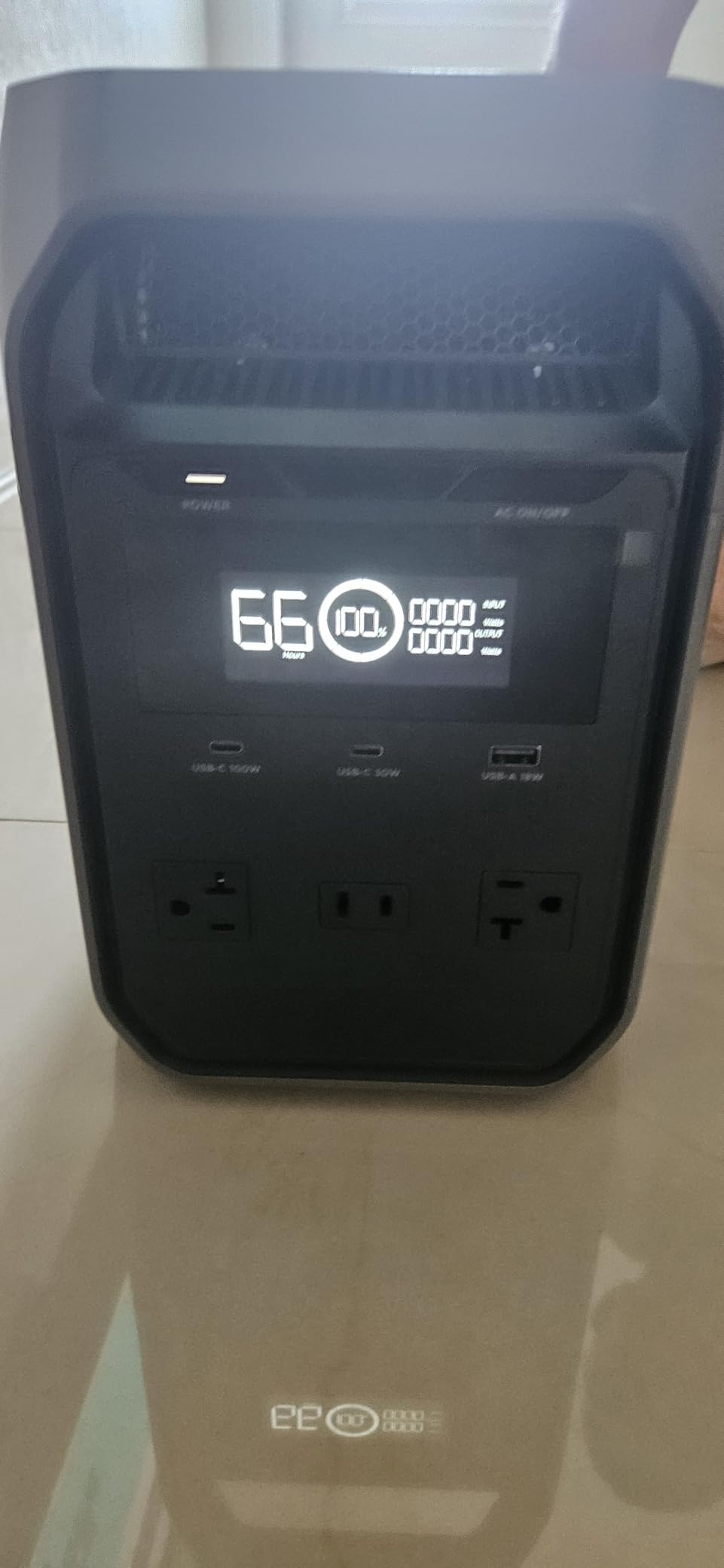
Reviewers report running refrigerators and CPAP-type loads for 8 to 10 hours and longer in real use, and the under 10ms UPS switchover keeps a fridge compressor from cycling off when a generator or a vehicle shuts down. That is the specific behaviour a weekend cabin needs.
Charging is the other strength. 0-80% in 45 minutes on a wall outlet and a full recharge in 2.5 hours from a single 500W panel means a 1kWh pack can be back to full on a partly sunny day. X-Boost raises usable output to 2600W for resistive loads when you need it.
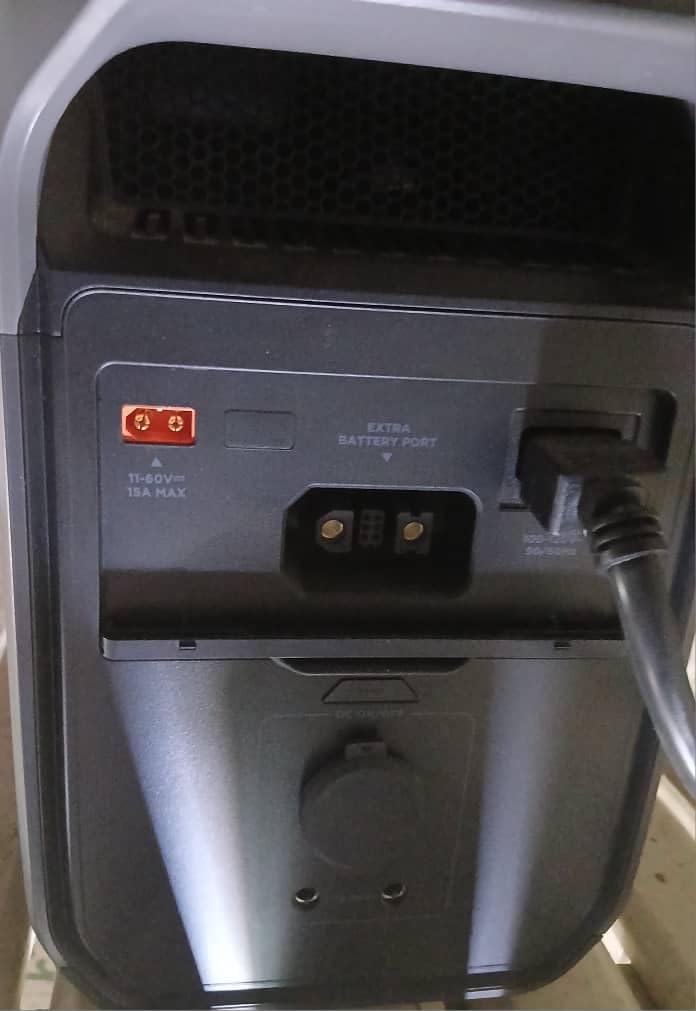
Like the Anker C1000 Gen 2, this unit cannot be expanded, which caps it firmly at weekend or short part-time duty. The weight is manageable but not light, and a small share of reviewers received used, damaged or non-functioning units from third-party sellers, so buying through the main listing matters.
Why the UPS behaviour matters more than capacity here
A compressor refrigerator does not like to be interrupted. Sub-10ms transfer means the unit effectively becomes an uninterruptible power supply for the fridge, which is a better use of 1kWh than trying to run more loads simultaneously.
Where the solar recharge assumption breaks
Two and a half hours assumes good sun and a well-angled panel. In a northern winter with low sun angles and snow on the glass, treat that figure as a summer number and plan on the wall or your vehicle for the shoulder seasons.
6. Anker SOLIX S2000 – Best for the Longest Fridge Runtime
Anker SOLIX S2 Portable Power Station, 2,010Wh, 1,500W
2010Wh LFP battery
1500W continuous, 3000W peak
35.7 lbs
6W idle draw
Pros
- 6W idle draw gives up to 35 hours on a typical fridge
- Rated 10000 cycles and a 15 year lifespan
- Under 10ms UPS works as a drop-in network rack replacement
- Six recharge paths including 400W solar generator and alternator
- Rebuilds from 33 to 100 percent in about 1.5 hours
Cons
- Cooling fan is loud during 1200W fast charging
- Strong chemical burn-off smell on the very first charge
- No 12V DC car port on the unit
Idle draw is the quiet hero of this list, and it decides fridge runtime. At 6W, dropping to roughly 3W in UPS mode, the manufacturer rates up to 35 hours on a typical refrigerator, which is by far the longest overnight figure in this group.
The battery is also built for the long haul. It uses 314Ah cells rated for 10000 cycles and a 15-year lifespan, so a cabin owner who keeps it on trickle charge through the off-season is buying a decade of service, not three years. Reviewers describe outages lasting 24 to 30 hours handled without intervention.
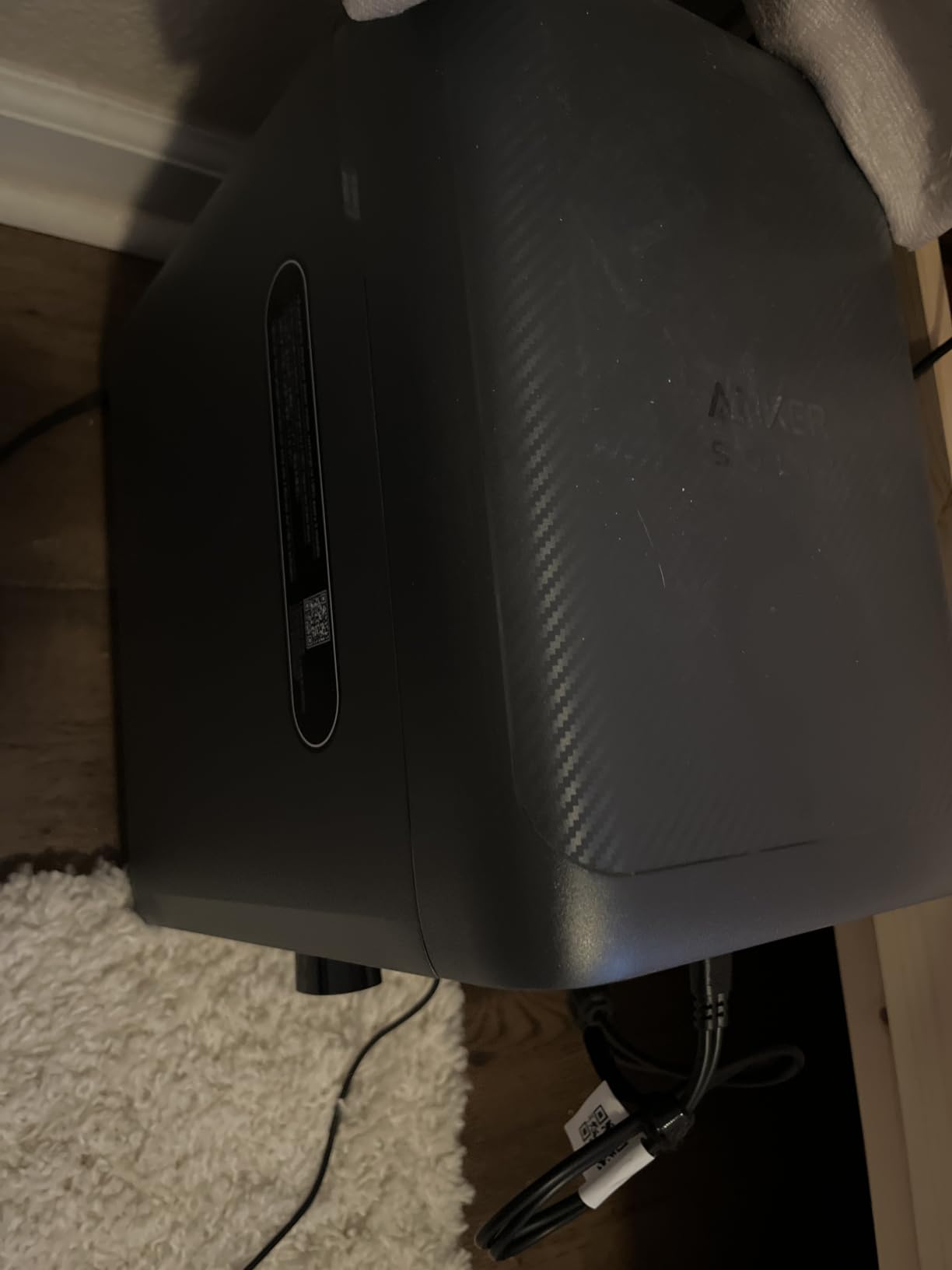
Two annoyances stand out. The cooling fan drones loudly during 1200W fast charging, which reviewers flag as a problem in a bedroom, and there is a strong chemical burn-off smell on the first charge that fades afterward. The lack of a 12V car port is minor unless you plan to run accessories from it.
Whether 1500W is enough output for you
It is generous for a fridge, lighting, Starlink and a laptop, and modest the moment you want a space heater or a microwave on at the same time. For heating loads, look at a 2kWh unit with 2200W or more.
How it handles a cabin with no cell service
Everything works without the app. The app adds charge rate control, time-of-use modes and usage graphs, but the unit is fully usable offline, which is exactly what you want at a remote property.
7. Jackery Explorer 2000 v2 – Best for Quiet Overnight Charging
Jackery Explorer 2000 v2 Portable Power Station, 2042Wh, 2200W AC Output
2042Wh LiFePO4
2200W continuous AC
39.5 lbs
Silent mode under 30 dB
Pros
- True 2042Wh capacity with 2200W output
- Silent charging mode under 30 dB
- 0-80% in 66 minutes and full in 102 minutes
- 20ms UL1778 certified UPS switchover
- Cell-to-Body design keeps it compact for 2kWh
Cons
- 39.5 lbs is an awkward solo lift
- Solar charging limited to Jackery panels
- Only one USB-C port against three AC outlets
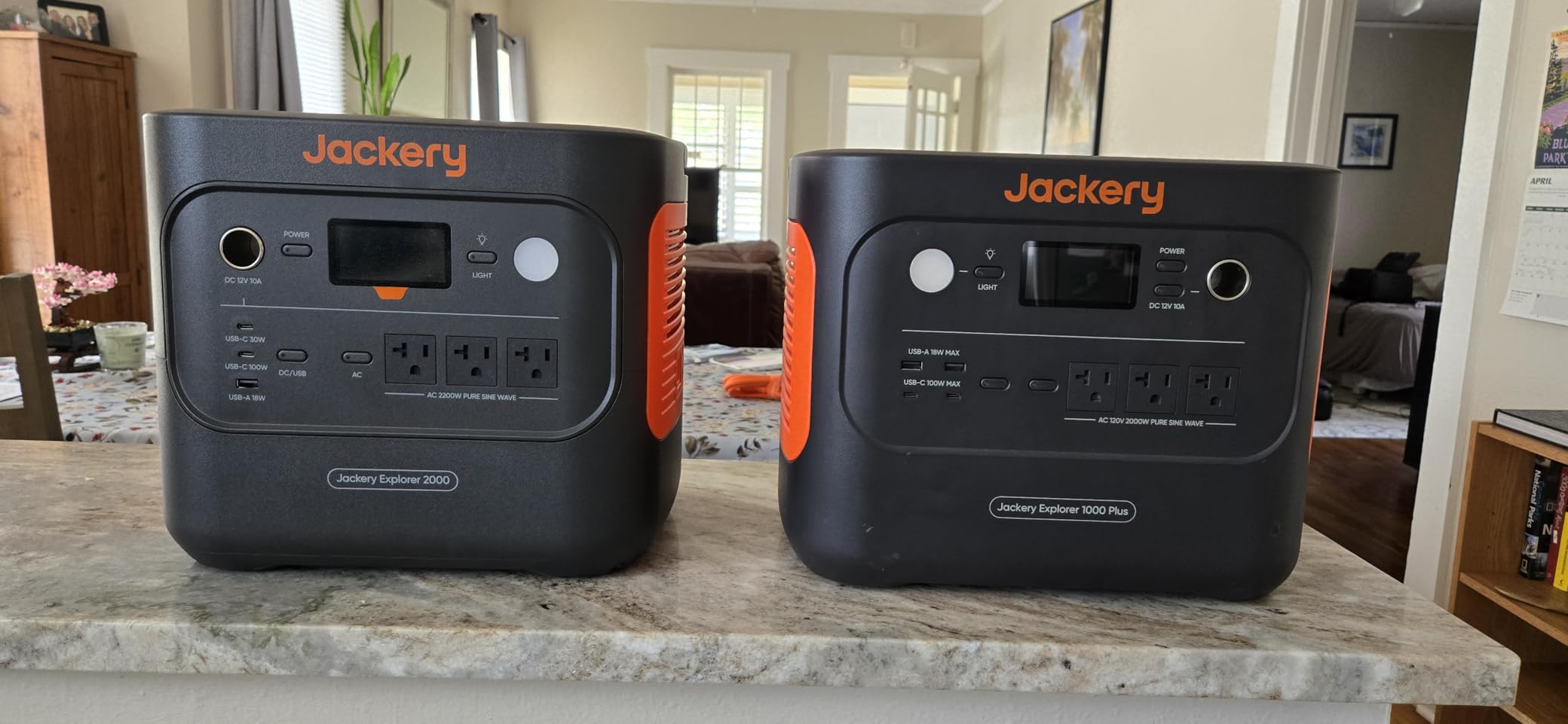
This is the 2kWh answer for a part-time cabin. 2042Wh gives you about 1730Wh of usable energy, which covers a refrigerator, lighting, Starlink and phone charging for a full day, and 2200W of continuous output will run a microwave or a small space heater without complaint.
The silent charging mode under 30 dB is the feature that decides it for us. Cabins are quiet, bedrooms are quieter, and being able to recharge the pack overnight a few feet from a pillow without a fan droning through the night is worth more than any app feature.
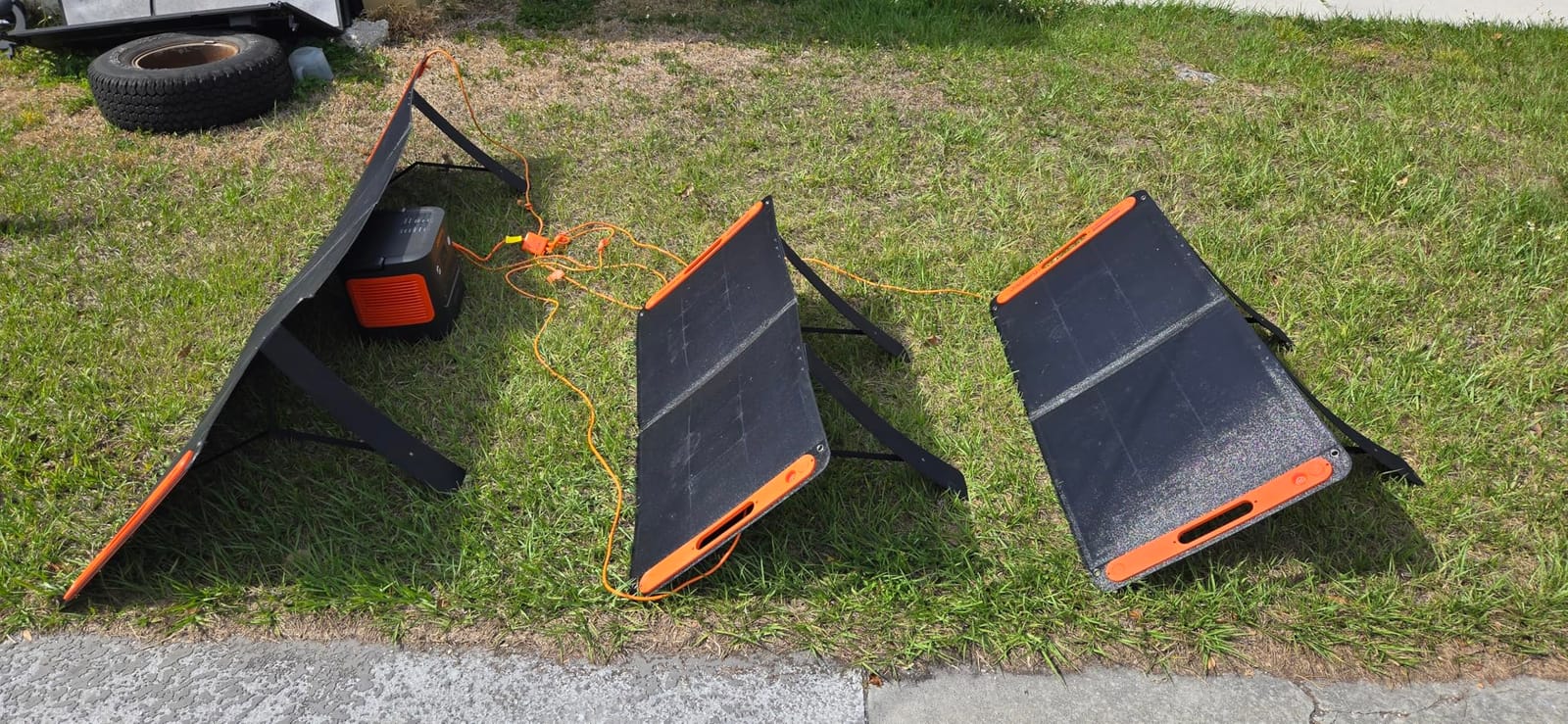
Weight is the trade. At 39.5 lbs it is a two-hand carry, and reviewers describe it as the lightest and smallest 2kWh LiFePO4 body available rather than a genuinely portable one. Jackery-only solar input and a single USB-C port also put it behind the DJI Power 2000 on port count.
Whether 2kWh is the right tier for you
It is the sweet spot for a part-time cabin or a weekend place that gets visited in every season. Below 2kWh you are recharging every other day, and above it you are carrying weight you do not use.
What happens with a well pump
2200W continuous is fine for a refrigerator compressor and small motors. A 1 HP pump with 1000W to 2000W of startup draw will run near the edge, and anything larger wants the DJI Power 2000 or a fixed system.
8. DJI Power 2000 – Best for Well Pumps and Power Tools
DJI Power 2000 Portable Power Station, 2048Wh LFP Battery
2048Wh LFP battery
3000W stable output
47.8 lbs
Expands to 22.5kWh
Pros
- 3000W steady output from a 2048Wh pack
- 0-80% recharge in 55 minutes
- Quiet at as low as 30 dB
- 10ms UPS twice as fast as the smaller DJI model
- 15 ports including dual full SDC
- Expandable to 22.5kWh
Cons
- MPPT solar and car modules sold separately
- Roughly 48 lbs
- Only a 1 year manufacturer warranty
- Only an AC power cable in the box
Output is the headline here. 3000W of stable continuous power from 2048Wh is more than any other 2kWh unit in this list, and that is exactly the number you need when a well pump, a saw or an impact drill is the load. Reviewers report it running kettles, cookers, projectors, saws and impact drills.
Expansion to 22.5kWh is the strongest growth path here, and the 10ms UPS keeps computers, medical equipment and routers from rebooting when a supply drops. Fifteen ports including dual full SDC means you can charge a whole work crew from one box.
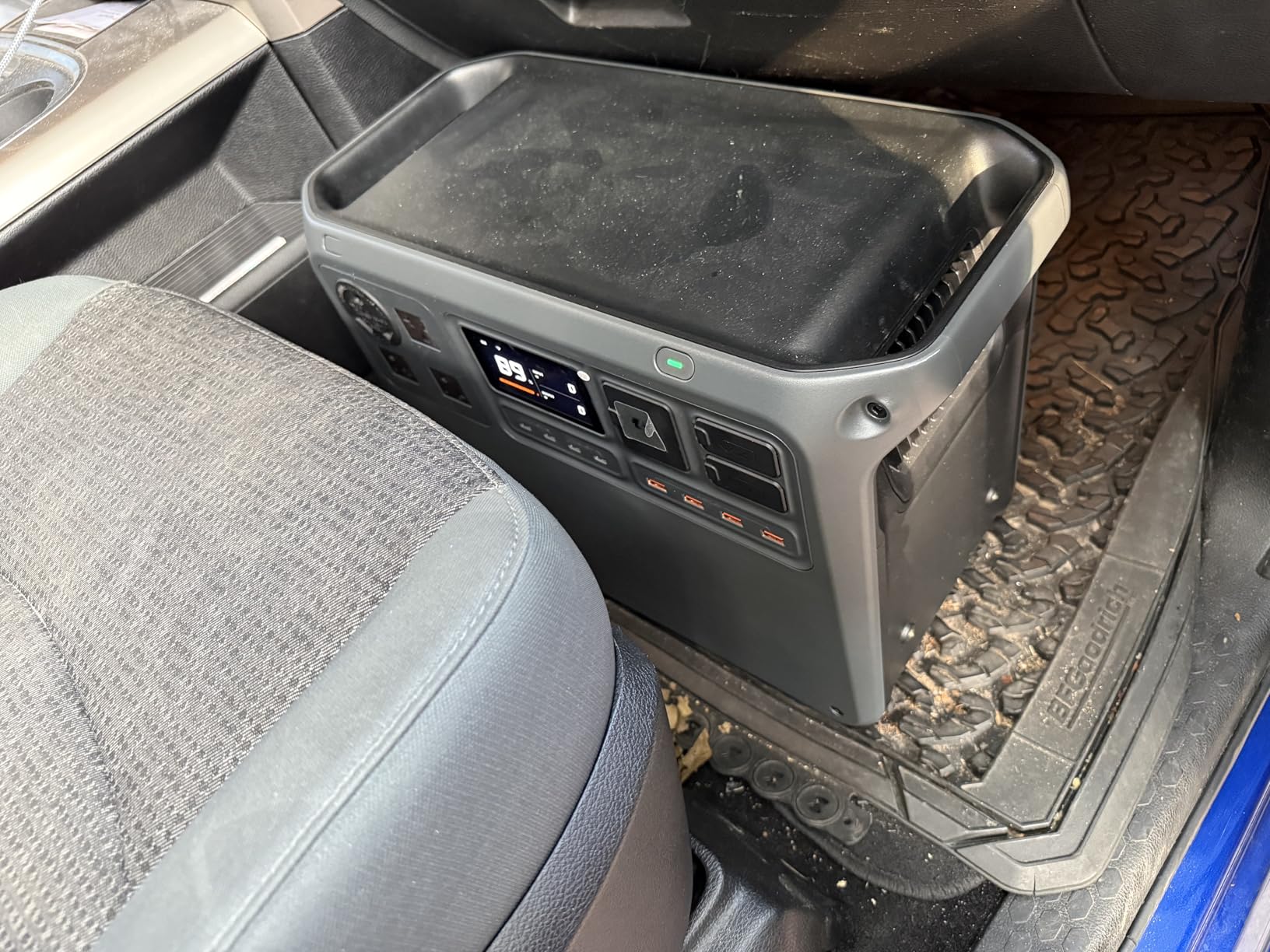
The catch is that the MPPT solar and car charging modules are not built in, so you are buying a second accessory to use the panels you already own. The one-year manufacturer warranty is also the shortest we would accept at a remote property, and at roughly 48 lbs it is not moving without a plan.
Sizing it against a well pump
A 1 HP pump pulling 250W to 750W running and 1000W to 2000W at startup fits inside 3000W continuous with margin. A 3 HP pump does not, and no portable power station in this roundup is the right answer for one.
Why the extra solar accessory is worth it anyway
Without the MPPT module you are limited to slow car charging, and at a cabin with no drive-in access that is a real limitation. Budget for the module on day one rather than discovering it later.
9. EBL 2400W Power Station – Best for Many Devices at Once
EBL 2400W Portable Power Station LiFePO4 Battery for Home Use
1843Wh LiFePO4
2400W output
54 lbs
Powers 12 devices simultaneously
Pros
- Charges up to 12 devices at the same time
- Richest port selection here with wireless panel and DC outputs
- 4 mode LED light for cabin and emergency lighting
- Built-in protection against overcharge and high temperature
- Over 3500 cycles for a 10 year plus service life
Cons
- 54 lbs limits where it can be placed
- Only a 2 year manufacturer warranty
- 0.1 second switchover is slow next to sub-10ms UPS modes
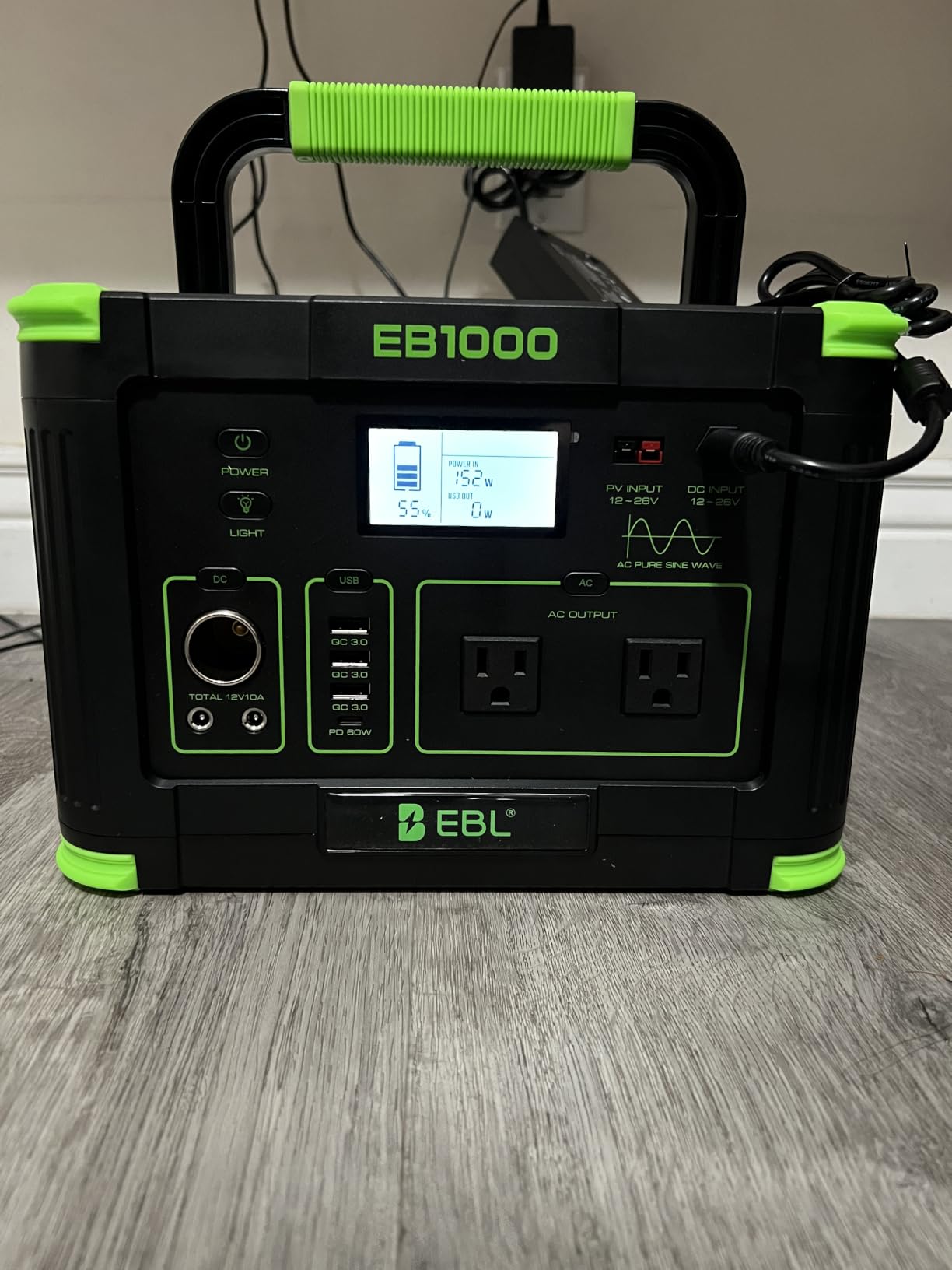
If your cabin is full of small loads rather than one big one, this is the unit to look at. Four AC outlets, two USB-A, two fast USB-C, a car port, two DC ports and a wireless charging panel, with support for 12 devices charging simultaneously.
1843Wh and 2400W is a workable pairing for kettles, hair dryers, coffee makers and power tools, and the built-in four-mode LED light is a small thing that genuinely matters in an unlit cabin during a power outage. The battery is rated past 3500 cycles.
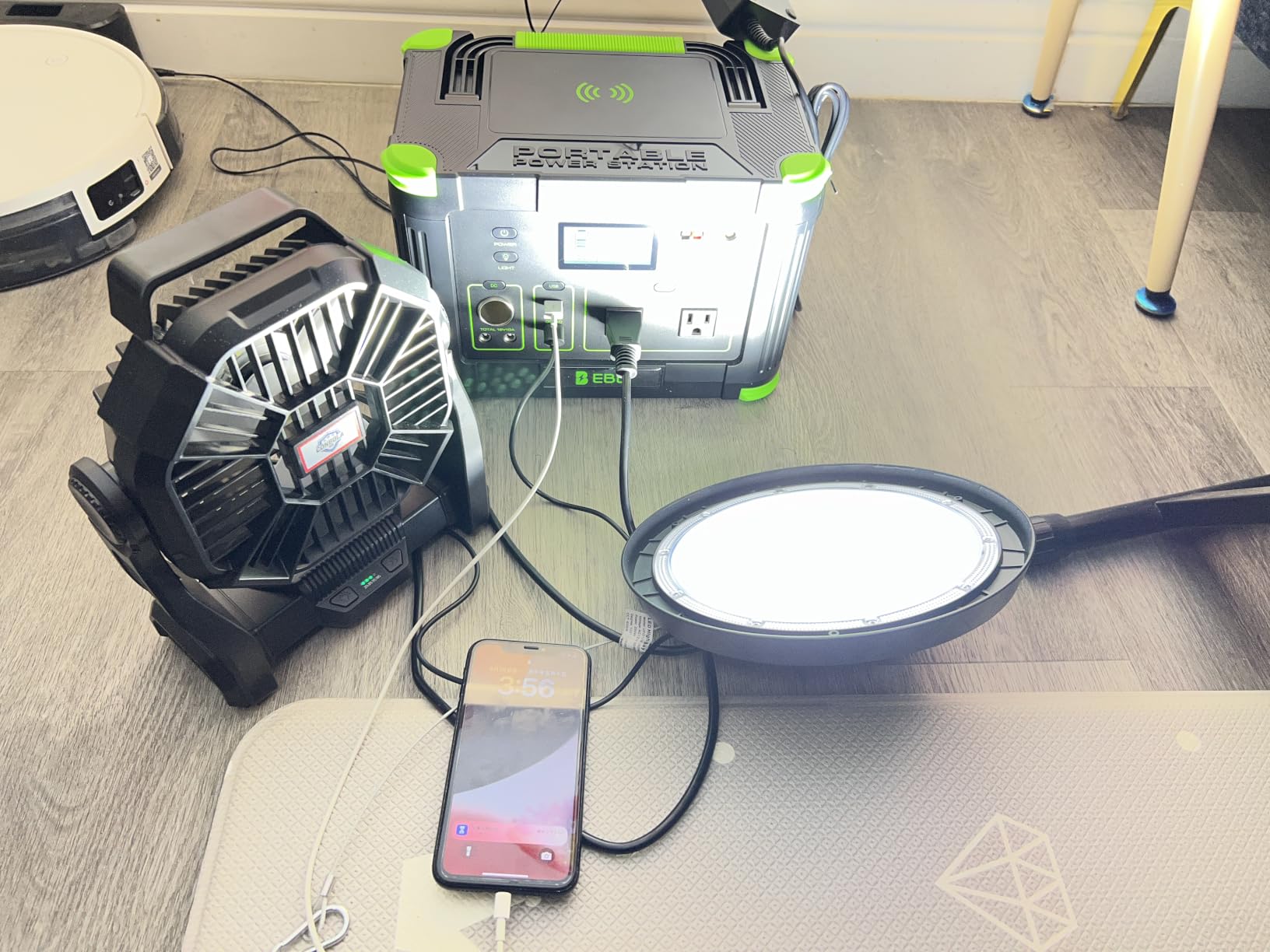
It is also the heaviest 2kWh-class unit here at 54 lbs, which essentially fixes its location. The two-year warranty is the shortest in this group, and the 0.1 second emergency switchover is slow enough to reset a desktop computer, which is the whole point of a UPS feature. The 4.3 rating reflects a 12 percent one-star share of quality and support complaints.
Where it beats the 2kWh competition
Port count. If everyone at the cabin is charging a phone, a laptop and a set of lights, the twelve-device ceiling and the wireless panel are worth more than the last 200Wh of capacity.
What the shorter warranty means for you
Two years on a device that will sit in an unheated building through winters is thinner cover than we would like. It is the clearest reason this unit ranks near the bottom of our order despite the port selection.
10. Jackery HomePower 3000 – Best for RV Hookups
Jackery HomePower 3000 Portable Power Station, 3072Wh, 3600W AC Output
3072Wh LFP battery
3600W output, 7200W surge
59.5 lbs
Built-in TT-30 RV port
Pros
- 3600W continuous with 7200W surge headroom
- Keeps a refrigerator running 1 to 2 days
- UL certified UPS switching within 20ms
- Full recharge in 1.7 hours on hybrid AC and DC
- Dual 100W USB-C PD plus a built-in TT-30 RV port
- 5 year manufacturer warranty
Cons
- 59.5 lbs makes true portability unrealistic
- Solar panels sold separately
- About 20 percent of reviews sit at 4 stars or below
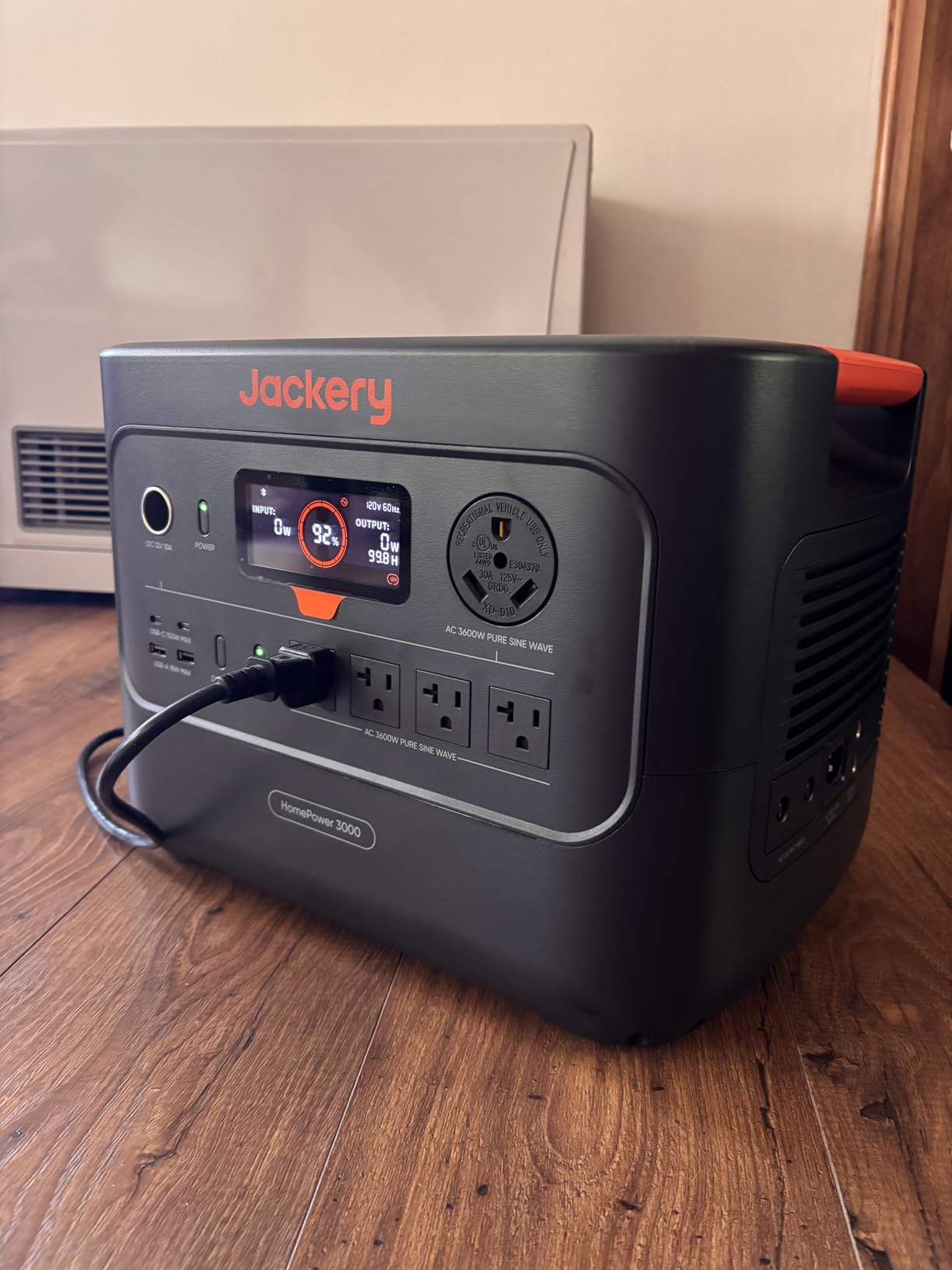
The built-in TT-30 RV port is the reason this one earns a place. If your cabin has an RV hookup, a fifth wheel on the property, or you intend to run a trailer-mounted unit, you can plug straight in without an adapter and without a separate transfer arrangement.
3600W continuous and 7200W surge is real headroom, and 3072Wh powers a household for up to 15 hours or keeps a refrigerator running for one to two days. The UL-certified UPS switches in 20ms or less, which keeps security cameras, medical refrigerators, phone calls and pet feeders running through a cut.
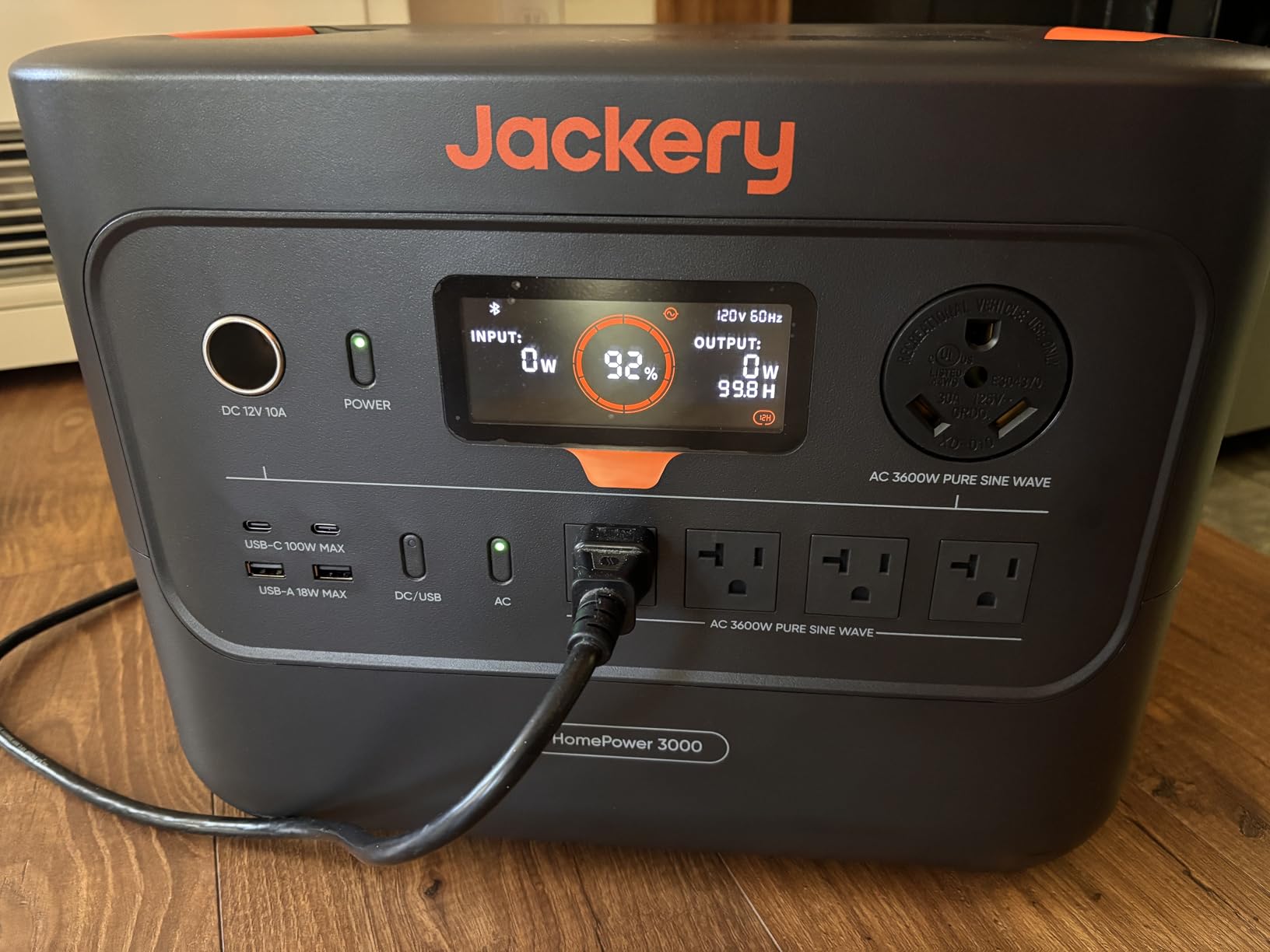
At 59.5 lbs it is a two-person lift, so plan its final position before the first charge. The 4000-cycle battery is rated at 70 percent capacity retention, which is fine but not exceptional, and roughly a fifth of reviews sit at four stars or below, with a visible one-star cohort.
Whether a 3kWh pack is the right size
For a cabin with a refrigerator, Starlink, lighting and a security camera running continuously, 3072Wh is comfortable. It is still not enough for heating loads, and it will not carry a 240V appliance without help.
What to pair it with
Two SolarSaga 200W panels take it to 80 percent in about 9 hours. Without panels in the box you will be charging from a wall, a car or a generator, which is fine if you drive in regularly and not fine if you do not.
11. EcoFlow Delta 3 Ultra Plus – Best Starter Kit with Solar Included
EF ECOFLOW 3072Wh Power Station DELTA 3 Ultra Plus with 400W Solar Panel
3072Wh LFP battery
3600W output, 7200W surge
125 lbs
400W panel included
Pros
- 400W solar panel included in the box
- Expandable from 3072Wh up to 11kWh
- 3600W continuous and 7200W surge output
- Sub-10ms automatic UPS with no manual setup
- X-Stream reaches 80 percent in under an hour
- Five year manufacturer warranty
Cons
- 125 lbs is a stationary home unit
- Power station and panel arrive in separate packages
- Bulky 24.1 by 12.9 by 15.6 inch footprint
Most power stations ship without panels, and then you spend weeks working out why your battery never fills. This bundle includes a 400W panel in the box, so the recharge loop is closed on day one and you can size the rest of the array later.
Underneath, it is a 3072Wh pack with 3600W continuous and 7200W surge output, expandable to 11kWh, with a sub-10ms automatic UPS that needs no setup. Six charging inputs including EV station and generator input mean almost any power source at the property can feed it.
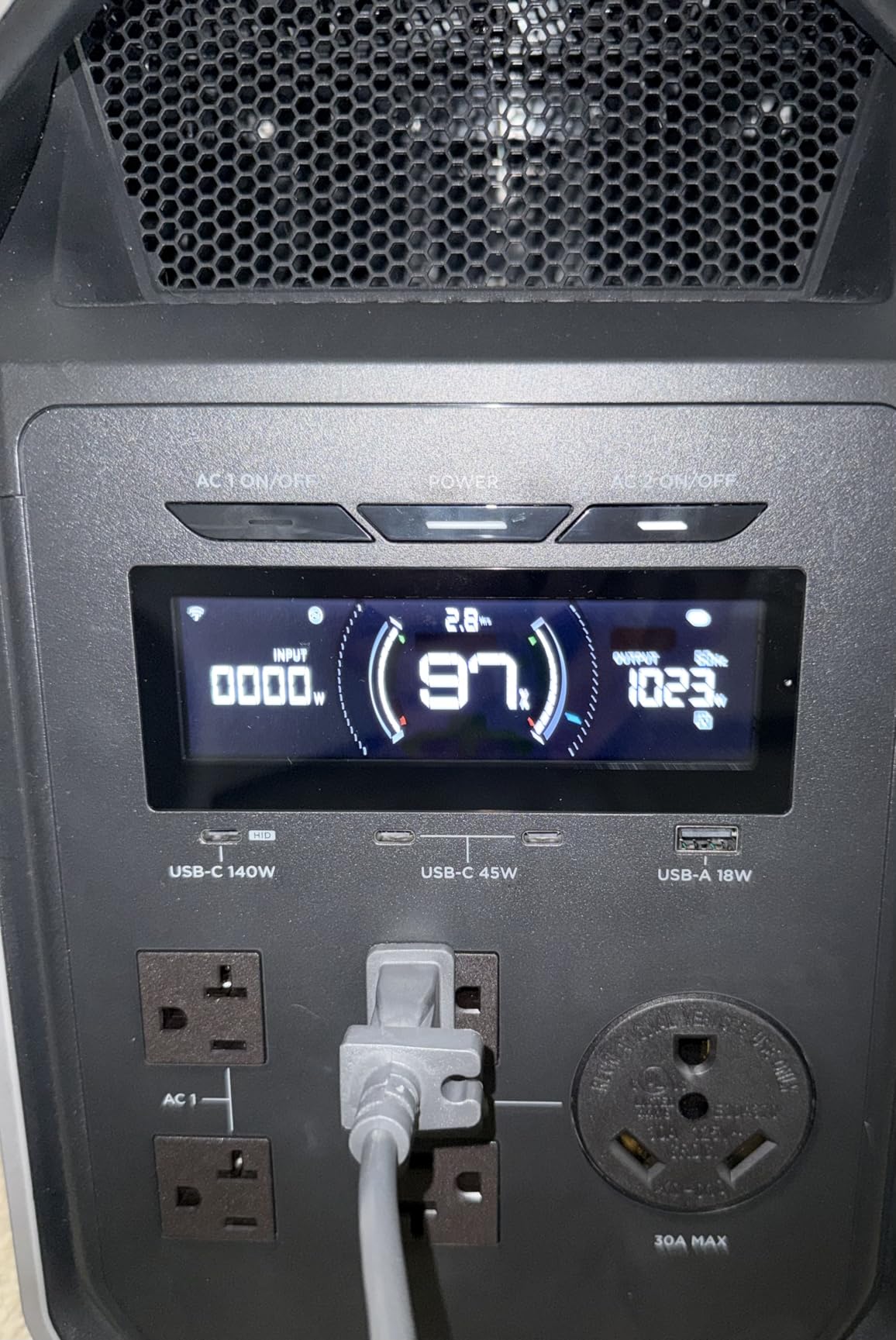
The weight ends the portability conversation. At 125 lbs with a 24.1 by 12.9 by 15.6 inch footprint, this is a fixture for a finished room or a covered deck, not something you carry to a campfire. Plan the floor space and the ventilation before it arrives, and note that the power station and the 400W panel arrive in separate boxes.
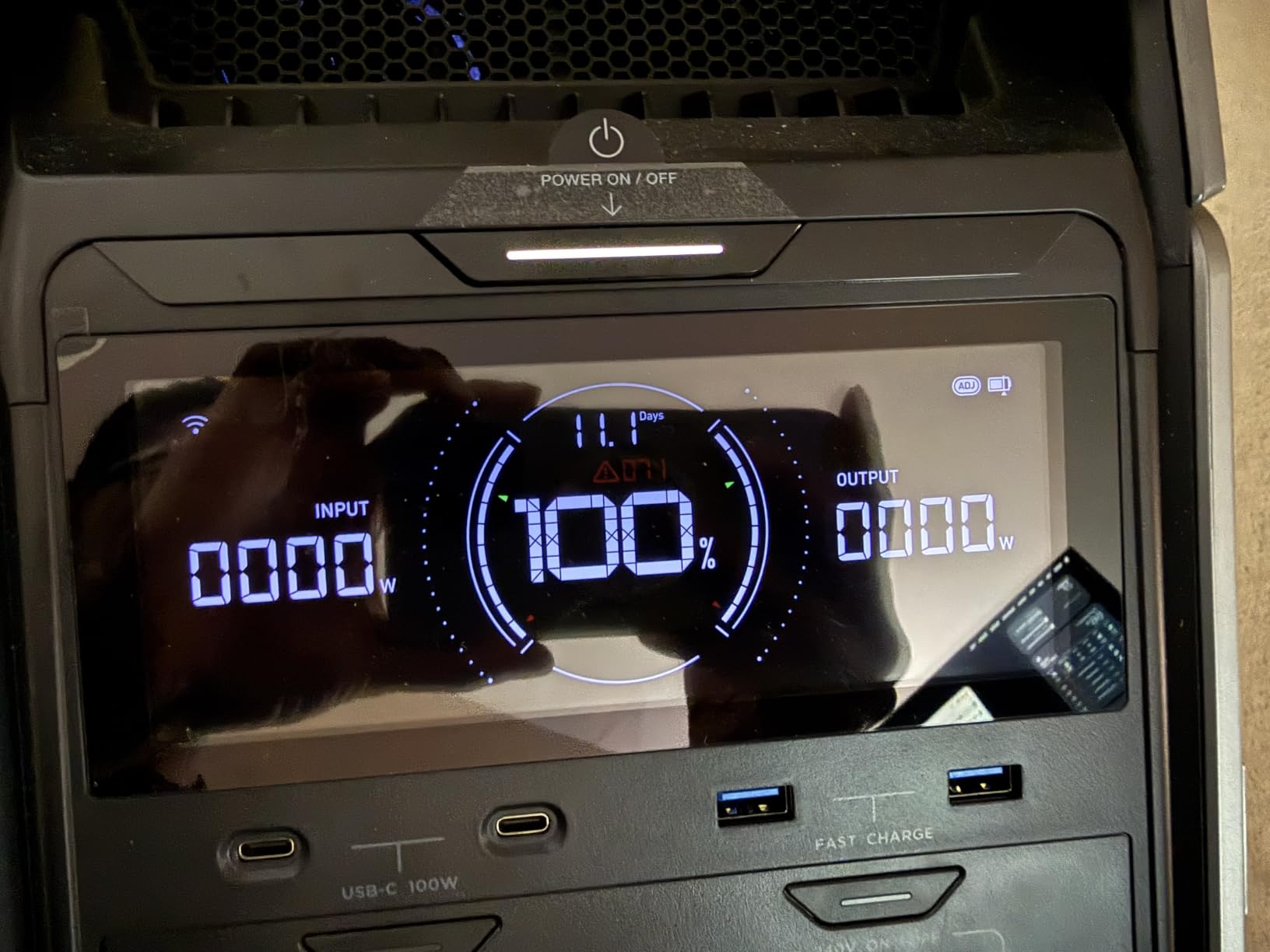
Is one 400W panel enough on its own
No, and this is the most misunderstood part of the whole category. A 400W panel delivers roughly 1.4kWh on a clear day, which covers one 3kWh pack about half a time. You need two to four panels to keep a 3kWh station ahead of a real cabin load.
Why 3600W matters at a part-time cabin
Output, not capacity, is what stops you from running a microwave while the fridge compressor starts. 3600W of continuous headroom with 7200W of surge is enough to layer a few real appliances rather than taking turns.
12. EcoFlow Delta Pro 3 – Best for 240V and Whole-Cabin Power
EF ECOFLOW DELTA Pro 3 Portable Power Station, 4096Wh, 4000W AC Output
4096Wh LFP battery
4000W continuous, 120V and 240V
115 lbs
Expandable to 48kWh
Pros
- 4000W continuous with 120V and 240V from one unit
- Powers a 1 HP water pump
- furnace and 240V well pump
- Expands to 48kWh with extra batteries or generators
- 2600W of combined dual solar input
- 0-80% in about 50 minutes on 1800W AC
- IP65 rated battery pack and near silent cooling
Cons
- 115 lbs makes it a permanent fixture
- No built-in 12V car port and dongle not included
- Reported Error 71 battery management lockouts
- 14 percent one-star share
This is the only unit here that outputs 240V split-phase from a single box. If your cabin has a well pump, an electric range, a clothes dryer or a 3-ton central air unit on 240V, this is the shortlist answer, and it is the reason the unit exists.
4096Wh expands to 48kWh, 2600W of combined solar input replenishes it quickly, and 0-80% in about 50 minutes on an 1800W wall charger means you can refill it the night before a visit. The IP65-rated pack and near-silent cooling suit an unheated or semi-heated outbuilding.
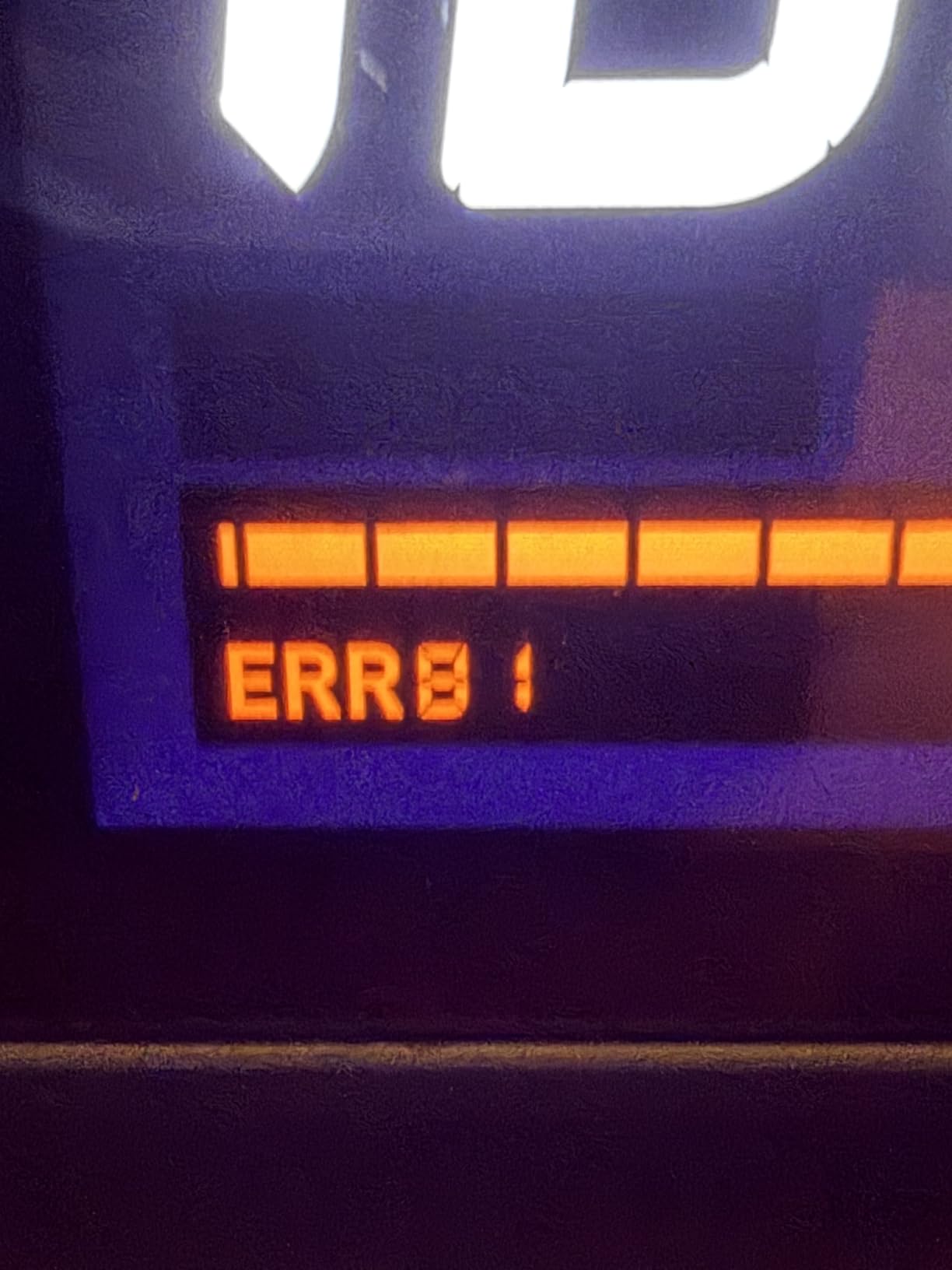
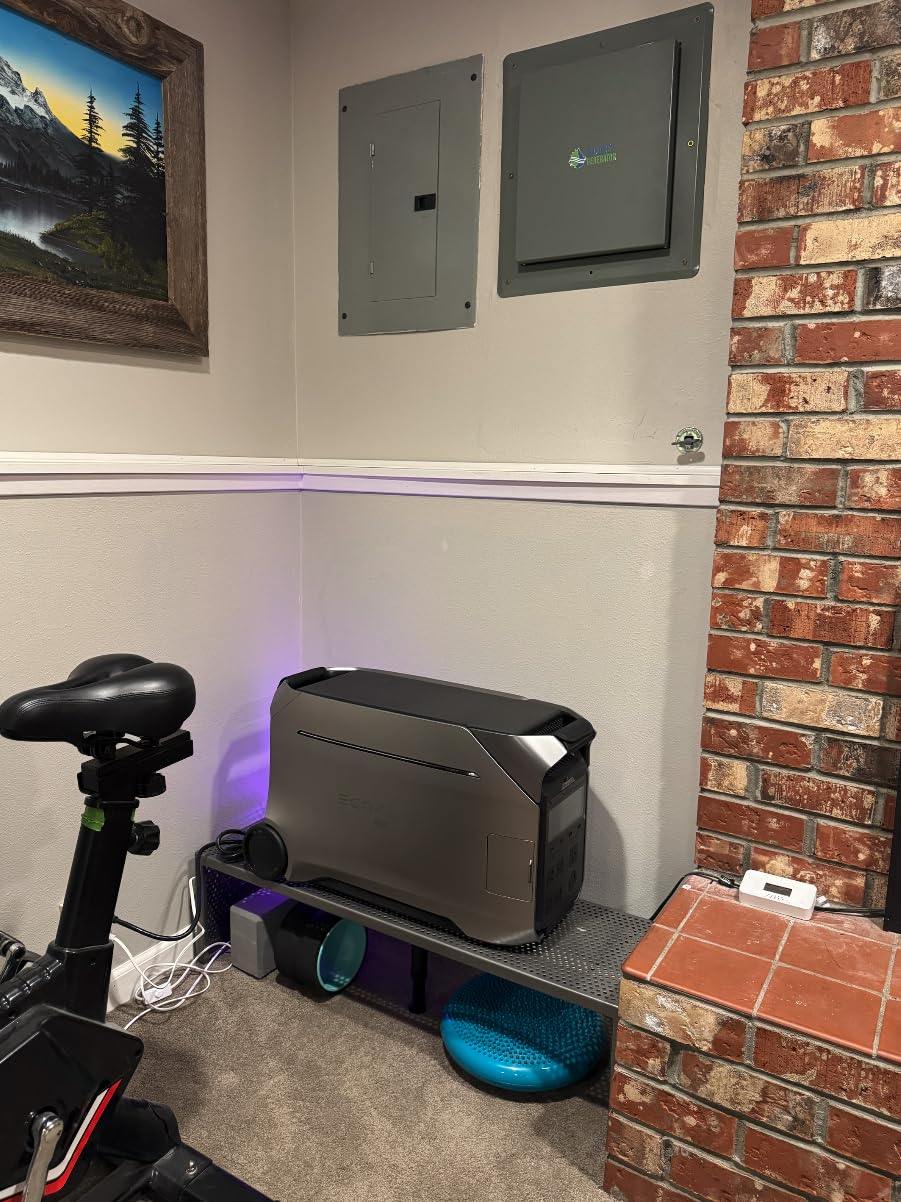
At 115 lbs with wheels and a telescoping handle, this is a garage fixture and not a portable device. The 4.2 rating is the lowest in this group and is driven by a 14 percent one-star share, including reports of Error 71 lockouts where the unit reads full but refuses to output, and the return logistics involved in shipping a 115 lb lithium pack back.
When 240V output is worth the size
Only if something in the cabin actually needs it. A deep well pump on a 240V circuit, an electric dryer or a central air compressor cannot run on any of the 120V units above, and this is the smallest package that does it.
What to do about the failure reports
Register the warranty on day one and keep the original packaging. Beyond that, the Error 71 reports cluster around BMS lockouts rather than gradual capacity loss, so the risk is a unit that stops rather than one that fades.
What Size Power Station Does an Off-Grid Cabin Actually Need?
Start by adding up what you actually run, not what you might run. A mini fridge draws 60W to 80W while running, a full-size refrigerator draws 150W to 200W, a well pump draws 250W to 750W running but needs 1000W to 2000W to start, a Starlink dish draws 50W to 100W, LED lighting runs about 10W, a microwave pulls around 1200W and a space heater 1300W.
Then multiply each by how many hours a day it runs to get daily watt-hours. A typical part-time cabin works out to roughly 700Wh to 1,200Wh per day for a refrigerator, lighting, phone charging and Starlink, and a well pump used for 20 minutes a day adds maybe 150Wh.
Here is the formula that matters, and it is the one every competitor skips:
Runtime in hours = usable watt-hours ÷ watts drawn
Usable watt-hours is the rated number times roughly 0.85. A 1070Wh station gives about 900Wh usable, and a 70W fridge compressor therefore runs for about 12.8 hours before you add lights and Starlink. The same 900Wh running a 1300W space heater gives you 42 minutes, which is why heating loads change the answer entirely.
That math gives three workable tiers. A weekend cabin needs 1kWh rated and 200W to 400W of panels. A part-time cabin with a well pump and a full-size refrigerator needs 2kWh to 3kWh and 600W to 1,200W of panels. A full-time home needs well beyond anything in this roundup, and that is where a fixed system takes over.
If your load profile resembles van life rather than a cabin, our guide to portable power stations for van life covers the same watt-hour budgeting in more detail.
How Much Solar Do You Need for a Cabin?
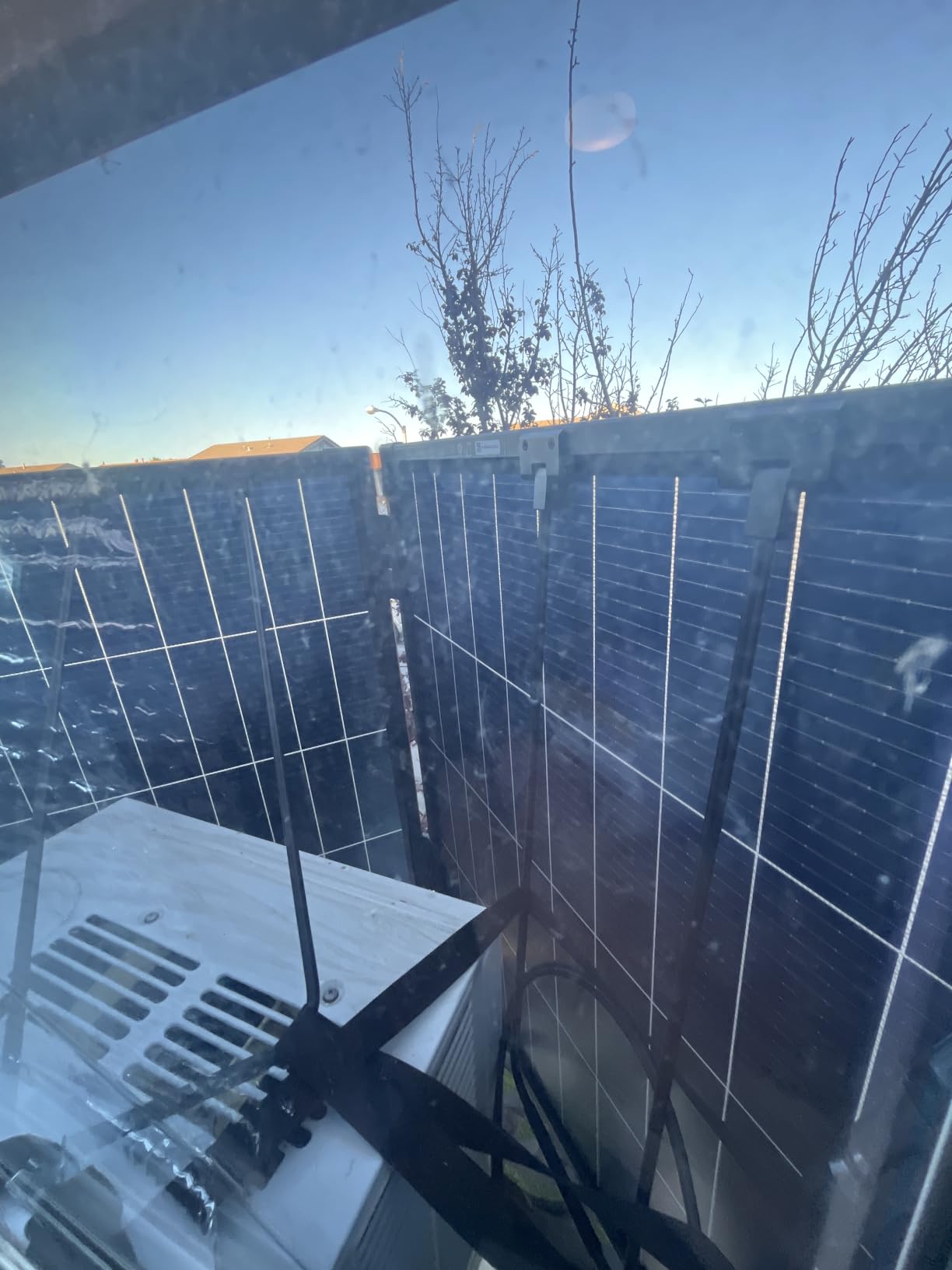
The short answer is that a 400W solar panel cannot run a refrigerator on its own. A 400W panel produces roughly 1.4kWh on a clear, well-angled summer day, and a refrigerator running 24 hours a day can use 1.8kWh or more. In practice you need two to four panels to keep a 2kWh to 3kWh station ahead of a real cabin load.
The arithmetic is simple: recharge hours = battery watt-hours ÷ panel watts. A 2042Wh station on 400W of panel is about 5.1 hours of peak sun, and on 800W it is about 2.6 hours. Those are best-case numbers, so apply a derating factor of roughly 0.7 for angle, dust, clouds and the losses inside the charge controller.
That gives realistic figures. A 1kWh station on 500W of panel needs about 3.5 hours of realistic sun, which is why the BLUETTI AC180 and EcoFlow Delta 3 Classic do so well on single-panel setups. In winter at northern latitudes, plan for two to three times that, and assume a stretch of cloudy days where generation is close to nothing.
Power Station or a Fixed Off-Grid Solar System?
If you live at the cabin full time, a portable power station is almost certainly the wrong tool, and I would rather say so than take the sale. The reasons come up repeatedly in off-grid forums, and the top comment in the highest-ranking thread is exactly this argument.
- Cost per stored watt-hour is high. A portable unit bundles a battery, inverter, charge controller and case in a portable shell, and you pay a premium for the convenience of the shell.
- They are not built for 24/7 duty cycling. Builders report that these are not designed to run continuously and will eventually fail at component level rather than gracefully degrading.
- Heat rejection needs airflow. A sealed closet or an unheated winter room shortens battery life far faster than the cycle count suggests.
- Expansion is proprietary. Extra batteries often only pair with the same brand, so a mistake in brand choice is expensive to unwind later.
- App control is useless without signal. The exact situation at a remote cabin is the one where the app stops connecting.
- Generator charging is a workaround, not a design. Running a gas generator to charge a battery that replaced a generator is an expensive way to store fuel energy as heat.
A fixed system made of a charge controller, an inverter and a rack of lithium batteries costs less per kilowatt-hour and is built to sit in a room and run indefinitely. The power station wins on portability, on installation speed and on the fact that you can take it with you.
Heating is the other thing most roundups will not say. If your cabin is heated with electricity, no portable power station on this list will carry a resistive heater through a winter night. Most cabin owners pair a power station for lights, appliances and Starlink with a wood burning stove for small cabins for heat, which is the arrangement that actually works.
Buying Guide: How to Choose a Power Station for a Cabin
Capacity in watt-hours, and the 85% rule
Add up daily watt-hours, multiply by 1.3 for losses and standby draw, and that is the rated capacity you need. Ignore the watt-hour number alone and always check the idle self-consumption, because a unit rated at 1152Wh with 20W of idle draw quietly loses 480Wh over a full day of doing nothing.
Continuous output versus surge
Continuous output is what you can run for hours, and surge is the brief peak a motor needs to start. Well pumps are the reason this matters at a cabin: 250W to 750W running becomes 1000W to 2000W at startup. Size continuous output to your largest running load and surge to your largest motor, and treat advertised surge figures with suspicion where reviewers report lower real limits.
Solar input wattage
More input wattage means faster replenishment, which matters more at a cabin than it does camping. A 300W input takes roughly three times as long as 900W for the same battery. Look for an MPPT controller, and check the voltage ceiling so your panel string can actually reach the unit.
LiFePO4 chemistry and cold charging
Every unit in this roundup uses lithium iron phosphate, which handles daily cycling far better than the nickel-manganese-chemistry packs used in cheaper units. The caveat at a cold cabin is real: charging a lithium pack below freezing is where damage happens, so either keep the unit in a heated space over winter or charge it from a wall or vehicle instead.
Weight, cold storage and seasonal storage
Anything above 50 lbs stops being portable and settles to wherever you first set it down, which is why four of our picks are effectively fixed in place. For a unit that sits unused between visits, store it around half charge in a temperature-stable space, top it up every few months, and avoid leaving it plugged in indefinitely, since staying at full charge shortens battery life.
Ports, expansion and app control
Count what you actually plug in. Multiple USB-C PD ports charge laptops and cameras at full speed, a 12V car socket is useful if you run tools, and a 30A RV or TT-30 outlet saves an adapter if you have a trailer on the property. Check expansion support before you buy, because a unit that cannot grow caps your ceiling. For app-based units, confirm it works locally over Bluetooth, because a cabin will not have cell service.
Weather and dust
Cabins are dusty, damp and often unheated, and most units carry no meaningful IP rating. The EcoFlow Delta Pro 3 is the exception in this list with an IP65-rated battery pack. Keep every other unit away from floor-level dust and moisture, and do not leave a unit in a shed that sweats in summer.
Frequently Asked Questions
How much solar power is needed for an off-grid cabin?
A realistic off-grid cabin needs enough panel wattage to refill the battery faster than the household drains it. A 1kWh station needs roughly 300W to 500W of panels, a 2kWh station needs 600W to 1,200W, and a 3kWh station needs 800W to 1,600W. Multiply panel watts by peak sun hours to get daily yield, then derate by about 30 percent for angle, clouds and controller losses. A single 400W panel produces roughly 1.4kWh on a clear day, which will not keep a refrigerator running alone.
How big of a power station do I need for an off-grid cabin?
For a weekend cabin running a mini fridge, LED lights, phone charging and a Starlink dish, 1kWh rated is enough. For a part-time cabin with a full-size refrigerator, a well pump and a router, budget 2kWh to 3kWh. Full-time living needs far more than any portable unit in this roundup. Multiply your daily watt-hours by 1.3 to cover the roughly 85 percent of rated capacity you can actually use, and make sure continuous output covers your largest running appliance.
Can you run a well pump off a portable power station?
Sometimes, and the startup draw is the deciding factor. A well pump typically runs at 250W to 750W but needs 1000W to 2000W to start, so the unit needs that much continuous output headroom, not just the running wattage. The DJI Power 2000 at 3000W continuous and the EcoFlow Delta Pro 3 at 4000W both have the margin for a typical 1 HP pump. A 1kWh unit will trip on most well pumps no matter what its surge rating claims.
How long will a 2000 watt solar generator run a refrigerator?
Divide usable watt-hours by the compressor’s running wattage. A 2000Wh station gives about 1700Wh usable, and a refrigerator compressor drawing 70W for roughly a third of each hour works out to close to 30 hours of continuous fridge support. The Anker SOLIX S2000 is rated for up to 35 hours on a typical fridge thanks to a 6W idle draw. Add lighting and Starlink and you are looking at a full night rather than a full day from a single 2kWh charge.
Will a 400W solar panel run a fridge?
Not on its own. A 400W panel yields roughly 1.4kWh on a clear, well-angled day, while a full-size refrigerator can draw 1.8kWh or more across 24 hours. One panel works as a trickle top-up on a 1kWh station, not as a primary supply. Two to four panels, angled correctly and clear of snow and shade, is the realistic starting point for keeping a refrigerator running indefinitely at a cabin.
Are portable power stations worth it for off grid living?
For a weekend or part-time cabin, yes. They install in minutes, need no fuel, produce no exhaust, and can be taken with you when you leave. For full-time off-grid living, usually no. The cost per stored watt-hour is higher than a fixed charge controller, inverter and battery build, they are not engineered for 24/7 duty cycling, and heating loads exceed their continuous output entirely. If you are choosing one, size it to your measured daily load and buy at least 30 percent above it.
Conclusion
For most cabin owners the answer is the Jackery Explorer 1000 v2, because 23.8 lbs and a full charge in about an hour make it the least annoying unit to live with while still covering a fridge, lights and Starlink. Part-time cabins should step up to 2kWh, and the Jackery Explorer 2000 v2 is the pick there unless output matters more than quiet, in which case the DJI Power 2000 wins.
The best power stations for off grid cabins are the ones sized to your measured load rather than to a spec sheet. Do the watt-hour math, add 30 percent, and remember that anything above 2kWh is a fixed-system question rather than a shopping question. If a CPAP machine is part of your overnight kit, our picks for power stations for CPAP machines cover that use case in detail.