
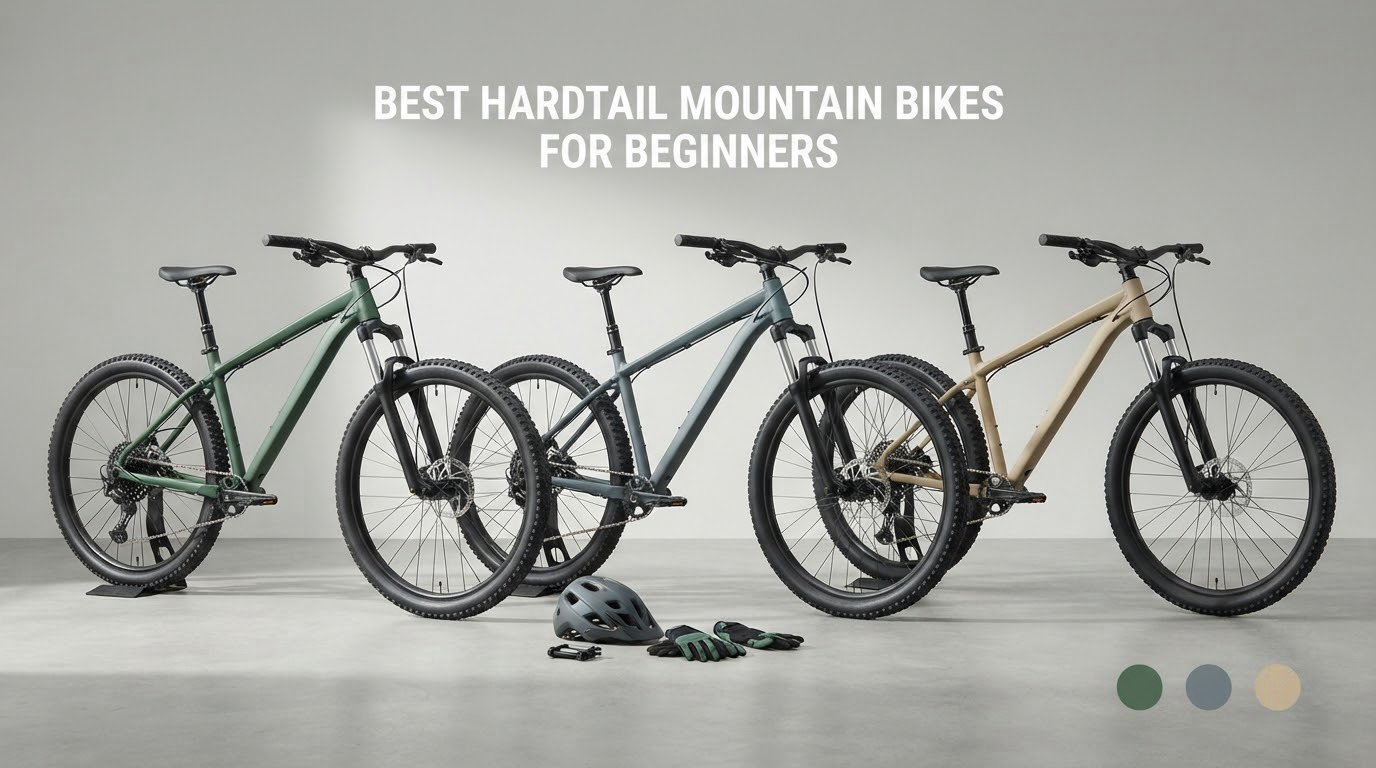
Short answer first: buy a hardtail. A hardtail mountain bike has a suspension fork at the front and no rear shock, which makes it the lightest and simplest way for a new rider to learn trail riding. You will not miss the rear suspension until your skill level outgrows the bike, and by then you will know exactly which bike you actually want next.
That is why every pick in this roundup of the best hardtail mountain bikes for beginners is front-suspension only, and why the list below is weighted toward bikes with reliable braking and simple gearing.
That answer matters more than it sounds, because shop staff and well-meaning friends push new riders toward a full-suspension bike that they do not need yet. You end up carrying a heavier bike with more parts to service, and you pay for suspension you cannot use. Experienced riders on forums keep circling the same point: a beginner will ride everywhere with a bike that is reliable, so dependability beats weight and prestige.
We spent the last few months working through eight entry hardtails so you would not have to. Below you will find each bike’s frame material, wheel size, drivetrain, brake type and stated rider-height range, plus an honest note on what that bike cannot do. All eight are real, currently listed models with hundreds of owner reviews behind them, not a spec-sheet wish list.
If you want the short version of everything else, our broader mountain bike guide covers full-suspension options and hybrid bikes too, which is worth a look if you ride mostly on pavement with the occasional gravel path.
Table of Contents
Hardtail or Full Suspension as a Beginner? The Direct Answer
A beginner should buy a hardtail, and here is the reasoning. A hardtail is roughly a kilo lighter than a similarly equipped full-suspension bike, needs no shock or linkage servicing, and puts every pedal stroke straight into the rear wheel. On greenway trails, park doubletrack and local beginner loops, that efficiency matters far more than comfort you cannot yet use.
The trade is real, though. You give up rear-wheel traction in roots and rock gardens, you feel every square edge through the saddle, and jumps and bike-park terrain will punish you. If your local riding is lift-served flow trail with repeated drop sections, a full-suspension bike is the better tool and the extra weight is worth it.
There is a middle option worth naming: a hardtail with 100mm to 120mm of fork travel and wide tires handles surprisingly rough ground if you ride smoothly. Several bikes in this list do exactly that, and they cover the vast majority of beginner terrain for less money and less upkeep.
Top 3 Picks for the Best Hardtail Mountain Bikes for Beginners
Three bikes stand out once you line up rating, review volume and component quality. The Ktaxon is the one we would buy, the Schwinn carries the most real-world feedback, and the EUROBIKE has the strongest spec sheet at the entry point.

Ktaxon 27.5 Mountain Bike
- 27.5 inch wheels
- High carbon steel frame
- 21-speed trigger shifters
- Mechanical dual disc brakes

Schwinn High Timber
- 16.5 inch aluminum frame
- 26 inch wheels
- 21-speed twist shift
- Front suspension fork

EUROBIKE Aluminum Hardtail
- Aluminum alloy frame
- 29 inch or 27.5 inch wheels
- Shimano 3x7 shifters
- Front and rear disc brakes
All 8 Bikes at a Glance in 2026
Every bike below is a front-suspension hardtail. The table is sorted by how we would rank them, with the strongest all-round package first.
| Product | Specifications | Action |
|---|---|---|
| Ktaxon 27.5 Inch Mountain Bike |
|
Check Latest Price |
| Schwinn High Timber |
|
Check Latest Price |
| EUROBIKE Aluminum Mountain Bike |
|
Check Latest Price |
 Huffy 26 and 27.5 Inch Mountain Bike Huffy 26 and 27.5 Inch Mountain Bike |
|
Check Latest Price |
 Mongoose Flatrock Mongoose Flatrock |
|
Check Latest Price |
 WEIZE 29 Inch Hardtail WEIZE 29 Inch Hardtail |
|
Check Latest Price |
 HILAND Steel Hardtail Mountain Bike HILAND Steel Hardtail Mountain Bike |
|
Check Latest Price |
 Ecarpat 26 Inch Womens Mountain Bike Ecarpat 26 Inch Womens Mountain Bike |
|
Check Latest Price |
1. Ktaxon 27.5 Inch Mountain Bike – Best Hardtail Mountain Bike for Beginners Overall
Ktaxon Mountain Bike 27.5 Inch Men & Women Mountain Bike 21Speed Adult Bike
27.5 in wheels
High carbon steel frame
21-speed trigger shift
Dual disc brakes
16 kg
Pros
- Dual disc brakes in this class
- Rated 4.1 stars over 404 reviews
- Four wheel sizes for easy height matching
- Trigger shifters are precise under load
- Light at 16 kg
Cons
- Steel frame is heavier than aluminum rivals
- Warranty runs only 30 days
- Minor reports of shifting trouble in the low gears
- Some bikes need front wheel truing
The Ktaxon is the bike we keep coming back to, because it does the two things beginners most often get wrong in cheap bikes: it has real disc brakes at both wheels, and it uses trigger shifters instead of vague twist grippers. That combination is rare at the entry point and it shows up in how the bike feels on the first hour of riding.
Weighing in at 16 kg, it is also one of the lighter frames in this group, which matters more than any spec sheet suggests. A lighter bike is easier to lift onto a curb, easier to hold while you fix a chain, and less tiring on a first long ride to a trailhead that is further away than you planned.
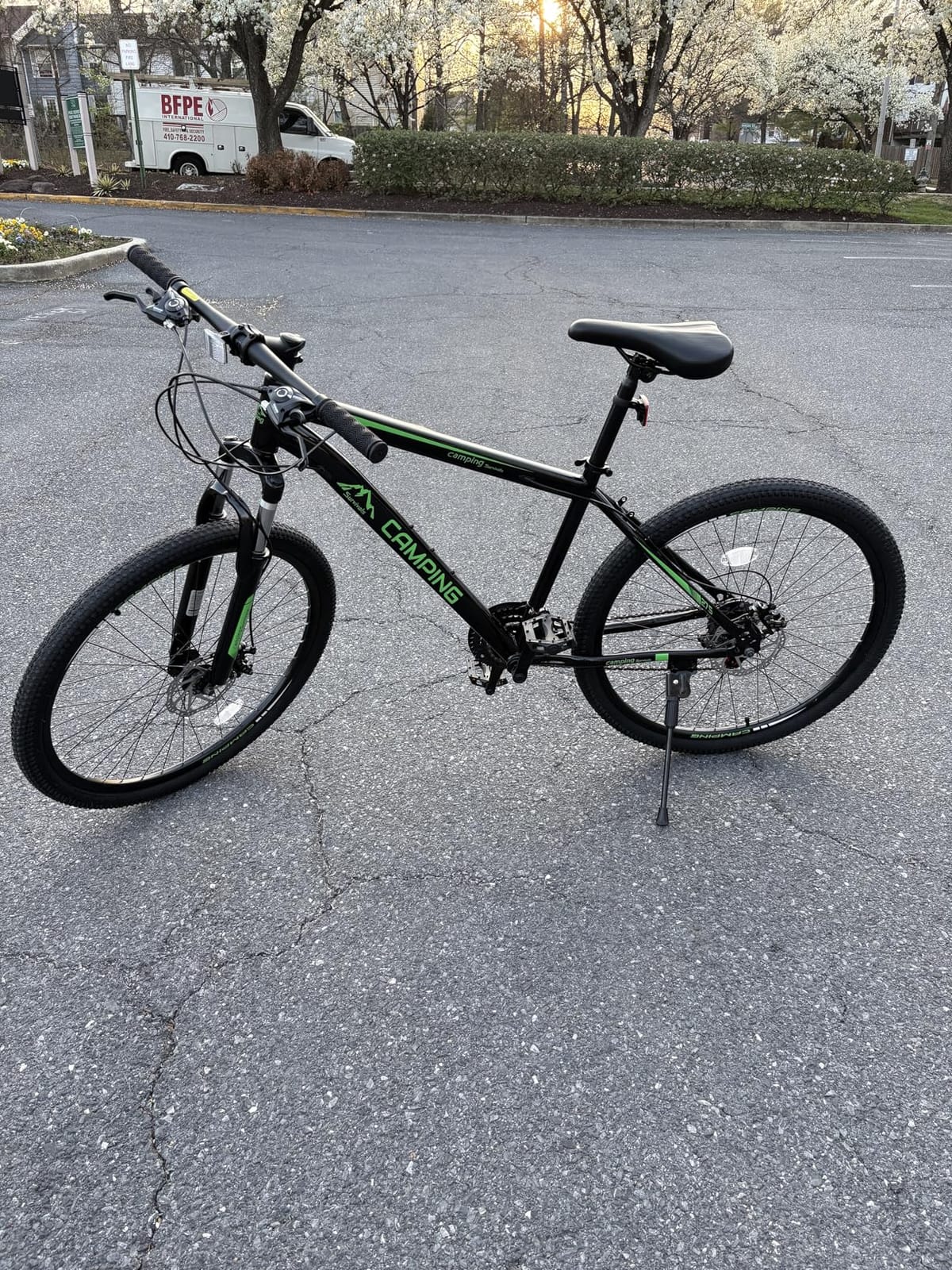
Its frame is high carbon steel rather than aluminum, and that is the one real compromise. Steel is heavier and transmits more vibration, but it also feels durable and forgiving, and experienced riders on mountain biking forums frequently recommend steel frames to newcomers for exactly that reason. The thickened front fork adds a lock-out mode, so you can firm up the suspension on smooth pavement.
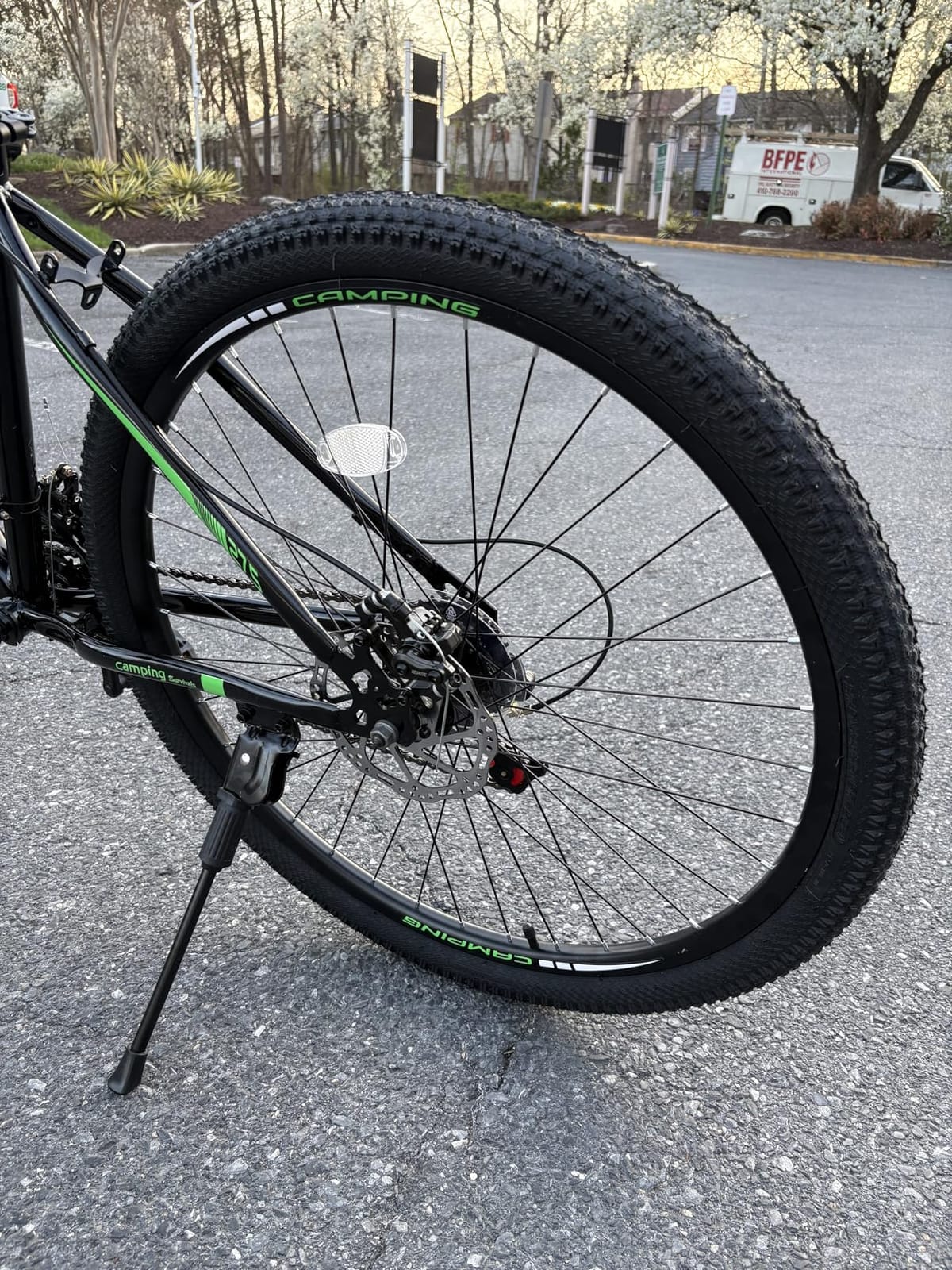
The 21-speed trigger drivetrain gives you a genuine low gear, which is the difference between walking your bike up a hill and riding it. The dual mechanical disc brakes deliver predictable stopping on loose gravel and in the wet, where rim and V-brakes on cheaper bikes get vague and dangerous.
Who this bike suits
This suits a first-time rider who plans to do a mix of gravel roads, dirt paths and flat-to-moderate forest trail, and who wants disc brakes and precise shifting without stepping up to a full-suspension machine. The four wheel sizes it comes in, 24, 26, 27.5 and 29 inch, make height matching unusually straightforward for a family buying for more than one rider.
It is also a strong choice as a first bike that a young rider can grow out of within a year or two and later resell, since the trigger drivetrain and disc brakes are the parts worth carrying forward if you upgrade later.
Who this bike is not for
The 30-day warranty is the shortest in this roundup, and customer support leans on video guides rather than live help. If you want a dealer to sort out a warranty claim in person, this is not the bike. Buyers who expect a shop to tune the shifting and true the front wheel after delivery should budget for a local tune-up or choose a bike with a longer warranty.
A steel frame also loses the lively, damped feel of aluminum on chattery ground. It is fine for beginners, but riders chasing speed on flow trails will notice the difference sooner than they expect.
2. Schwinn High Timber – Best Lightweight Hardtail for Greenway and Park Trails
Schwinn High Timber ALX Mountain Bike for Adult Men Women, 26-Inch Wheels, 21-Speeds, Front Suspension, Aluminum Frame, Mechanical Disc Brakes, Red
26 in wheels
16.5 in aluminum frame
21-speed twist shift
Front suspension
15.98 kg
Pros
- 1523 owner ratings to learn from
- Light aluminum frame at 15.98 kg
- Aluminum frame is lively and light
- Explicitly labeled a beginner bike
- Quick-release seat post for easy fitting
Cons
- Arrives only 80 percent assembled
- Twist shifters are imprecise under load
- One-star reviews run at 12 percent
- Disc brake performance is basic
With more than 1,500 owner ratings, the High Timber has the largest feedback base of any bike we looked at, and that volume matters. When a model has this many reviews, the recurring complaints are well documented rather than anecdotal, so you know what you are signing up for.
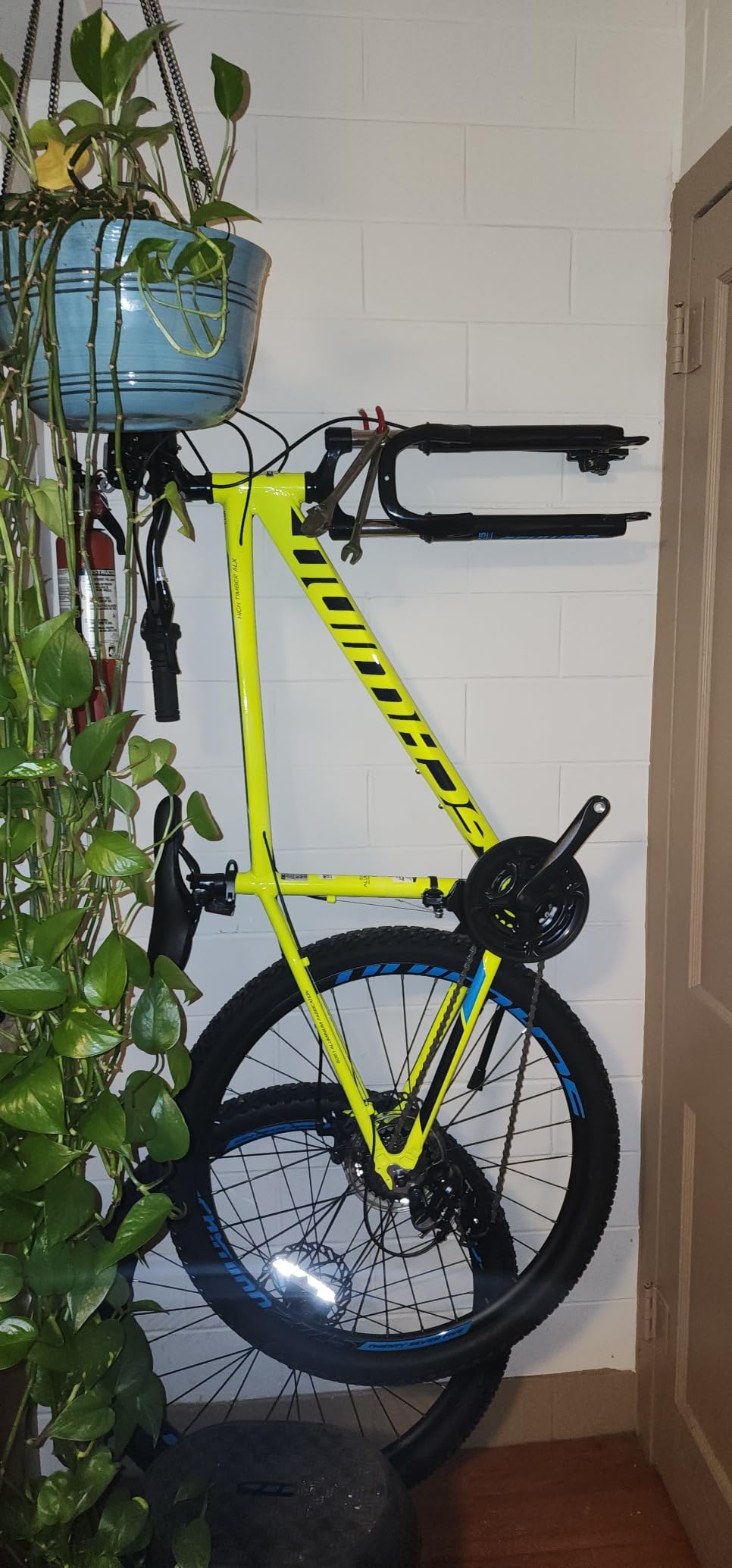
At 15.98 kg it is one of the lightest bikes on this list, and the aluminum frame gives it the lively, responsive feel that steel frames in the same class cannot match. For a first bike aimed at wide gravel greenways, smooth park doubletrack and fire roads, the efficiency is exactly what you want. Schwinn also lists the skill level as Beginner, which is rare in this category.
The stated fit range runs from riders 5 ft 4 in to 6 ft 2 in tall, which covers an unusually wide spread. The maximum recommended rider weight is 300 pounds, another generous figure.
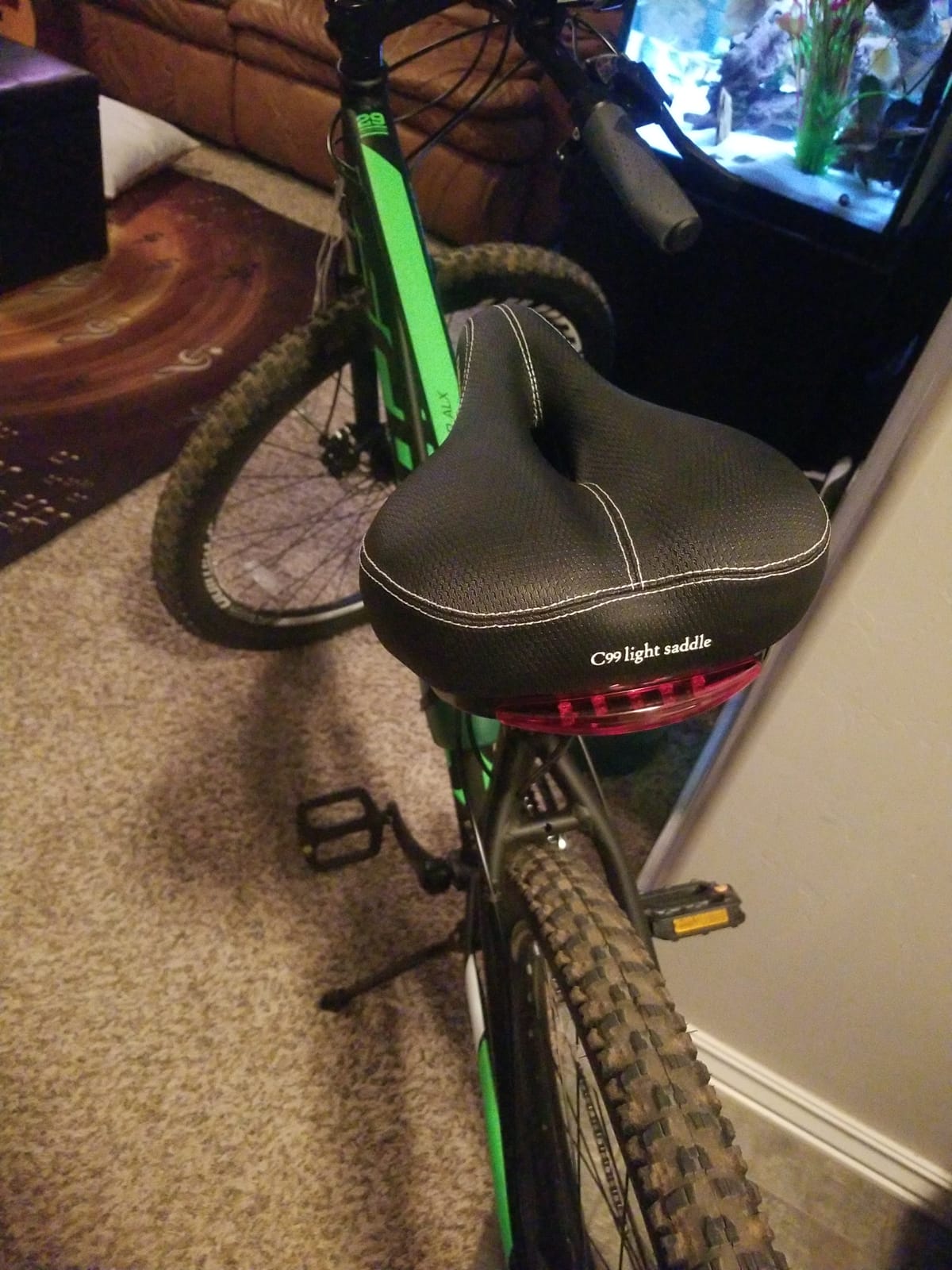
Its 21-speed drivetrain uses twist shifters with an alloy crank, which keeps maintenance to a minimum but is less precise on steep climbs than the trigger shifters on the Ktaxon. Owners frequently report the same pattern: easy flat riding, and a mild learning curve when the road tilts up.
The wide knobby tires and alloy wheels give predictable grip and balance across loose dirt and gravel, and the quick-release seat post makes it simple to fine-tune your riding position in a parking lot rather than a workshop.
Who this bike suits
This suits a beginner who wants to ride mostly on greenway trails, rail trails, park paths and cross-country fitness loops, and who values a light, lively bike over extreme capability. The 1,523-review base also makes it the safest choice in this roundup for someone nervous about buying a model with limited long-term data.
It is a good bike to learn on because mistakes cost less. If you clip a rock, wedge a tire or crash on a gravel bend, a 26-inch aluminum bike with a basic drivetrain is forgiving and cheap to put right.
Who this bike is not for
It arrives 80 percent assembled, so expect to fit the handlebars, seat and pedals and then adjust the brakes and shifting yourself. That is the longest build of the eight, and combined with a basic fork and basic disc brakes, it makes this a bike for flat-to-moderate terrain rather than rocky technical trails.
One-star reviews run at 12 percent, which is the second highest share in this roundup. Most of those complaints trace back to assembly quality control and the suspension feeling basic, which is a fair trade for such a light frame.
3. EUROBIKE Aluminum Mountain Bike – Best Disc-Braked Hardtail for Taller Riders
EUROBIKE Mountain Bike,29″ Men Mountain Bike, Lightweight Aluminum,Disc Brakes 21 Speed Bicycles Bikes (Silvery)
29 in or 27.5 in wheels
Aluminum frame
Shimano 3x7 shifting
Front and rear disc brakes
35 lb
Pros
- Highest average rating here at 4.2 stars
- Only pick with Shimano shifters and derailleurs
- Front and rear disc brakes
- Lowest one-star share at 4 percent
- Rack and kickstand mounts for commuting
Cons
- Heaviest listed weight at 35 pounds
- Smallest review base with 70 ratings
- Some reports of early rear gear noise
- Grips need replacing
The EUROBIKE is the spec standout. It is the only bike in this roundup with Shimano shifters and Shimano derailleurs, and one of only two listed with disc brakes at both wheels rather than a single disc. On a 21-speed drivetrain, Shimano 3×7 shifting gives you predictable, well-supported gear changes that any shop can adjust for you.
Its 4.2 stars is the highest average rating in this roundup, and the 4 percent one-star share is the lowest, which is unusual for a bike with as few as 70 ratings. Owners also report good fit for taller riders, with several mentioning riders around 6 ft 1 in to 6 ft 4 in being comfortable on the 19-inch frame.
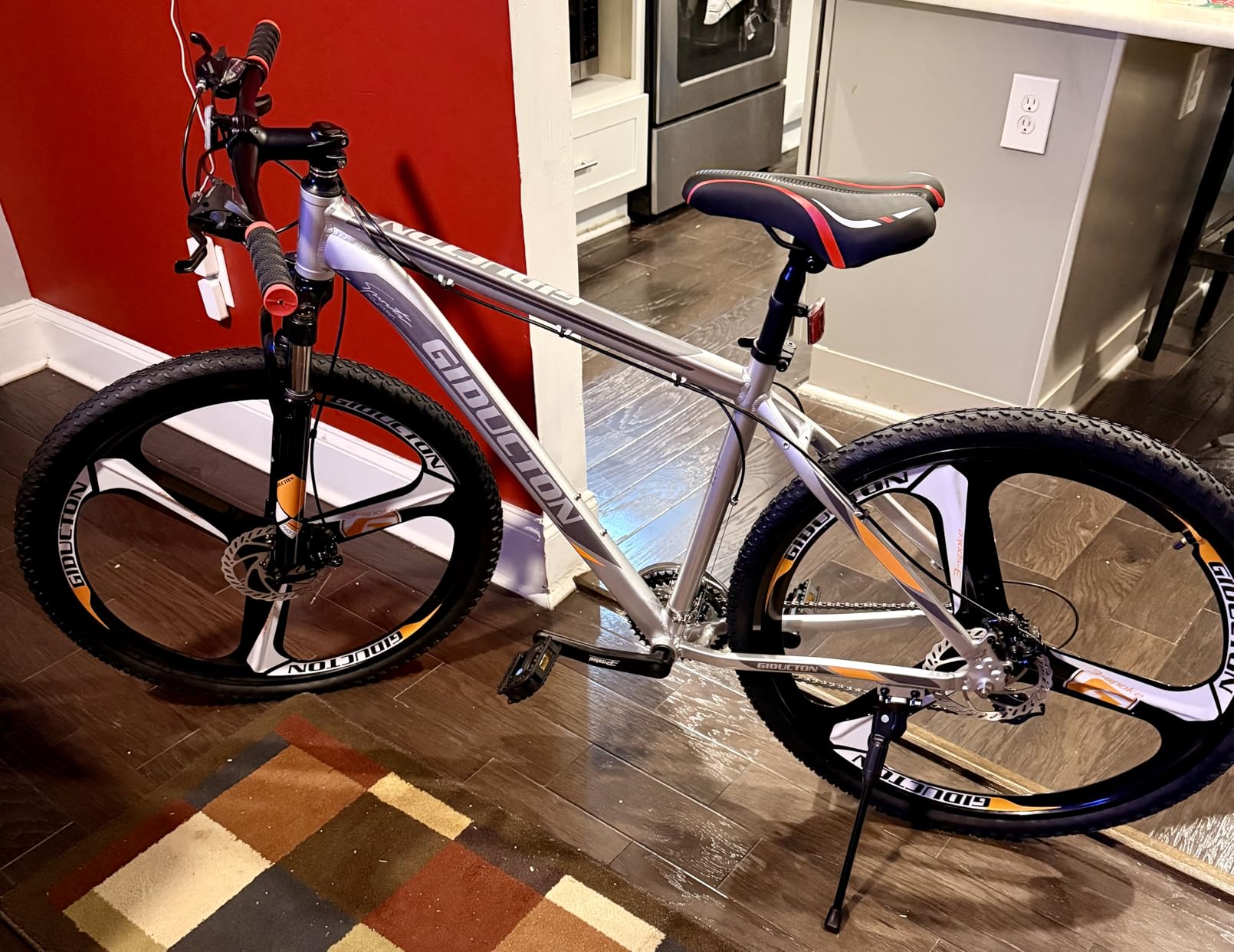
It is built for daily use as much as trail use. Rack and kickstand mounts make it a plausible commuter or campus bike, and the magnesium alloy wheels and three-spoke design are easy to lock up with a cable lock.
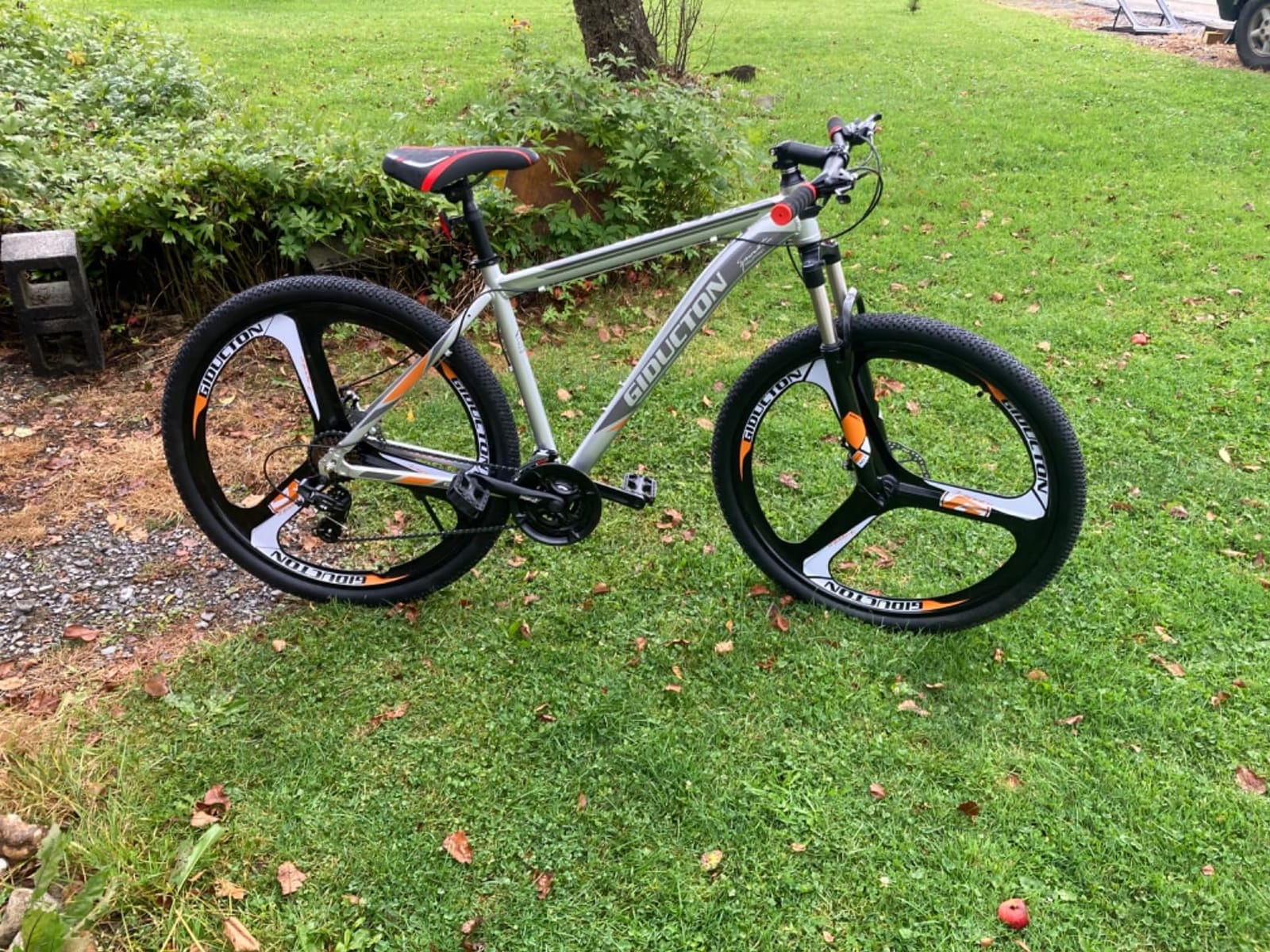
The frame is aluminum alloy, rated for riders up to 300 pounds, and the bike is offered with either 29-inch wheels on the 19-inch frame or 27.5-inch wheels on an 18-inch frame. That two-configuration approach is useful if you are between sizes or shopping for more than one rider.
Arriving 85 percent assembled, it needs the front fork, front wheel, seat and pedals fitted before you inflate the tire. That is a longer build than the HILAND’s 90 percent arrival but a shorter one than the Schwinn’s 80 percent, and owners report the included tool kit handles the job at a local shop for a modest fee. The bike carries a 1-year limited warranty.
Who this bike suits
This suits a taller rider who wants a bike that doubles as a commuter, and who values brand-name drivetrain components and two disc brakes over absolute lightness. The Shimano parts also mean any local shop can service the shifting, and the 1-year limited warranty is standard rather than generous.
It also suits someone planning to ride in mixed conditions. Mechanical disc brakes keep their stopping power in rain and mud better than rim brakes, which matters if you are out on the trail when the weather turns.
Who this bike is not for
At 35 pounds it is among the heaviest bikes in this roundup, and you will feel that on a long climb or when carrying the bike up stairs. Beginners who struggle with bike weight should look at the lighter aluminum options instead, particularly the Schwinn and Ktaxon.
The 70-rating review base is the smallest here, so long-term durability data is thin. Some owners report the rear gears beginning to skip and make noise after about a month, and the handlebar grips are widely considered an early upgrade.
4. Huffy 26 and 27.5 Inch Mountain Bike – Best Comfort-Focused First Hardtail
Huffy Hardtail Mountain Trail Bike 24 inch, 26 inch, 27.5 inch, 26 Inch Wheels/17 Inch Frame, Military Green Gloss
26 in wheels
17 in aluminum frame
21-speed twist shift
Linear pull brakes
33 lb
Pros
- 640 owner ratings to learn from
- Comfort saddle and grips for long first rides
- Knobby tires grip loose and rough ground
- 21 speeds give real climbing range
- Kickstand included
Cons
- V-brakes rather than disc brakes
- Listed as Intermediate skill level
- Pads and cables wear faster than discs
- 33 pounds is heavier than the weight range typical for entry aluminum
The Huffy is the bike to buy if your first rides are long. Its selling point is not speed or spec, it is comfort: an ergonomic saddle, comfortable grips and a 17-inch lightweight aluminum frame designed for ease of maneuverability rather than aggressive riding. Riders who take the long way around will feel the difference over an hour or two.
At 4.0 stars across 640 ratings, this is a well-established model with enough feedback to know how it behaves. The 21-speed derailleur drivetrain with twist-grip shifters gives you a usable low gear, and the rugged knobby tires grip loose surfaces and gravel paths well.
It arrives in a 26-inch configuration here, with 27.5-inch options listed in the same family, and the maximum recommended rider weight is 150 kg, the highest stated limit among the bikes here.
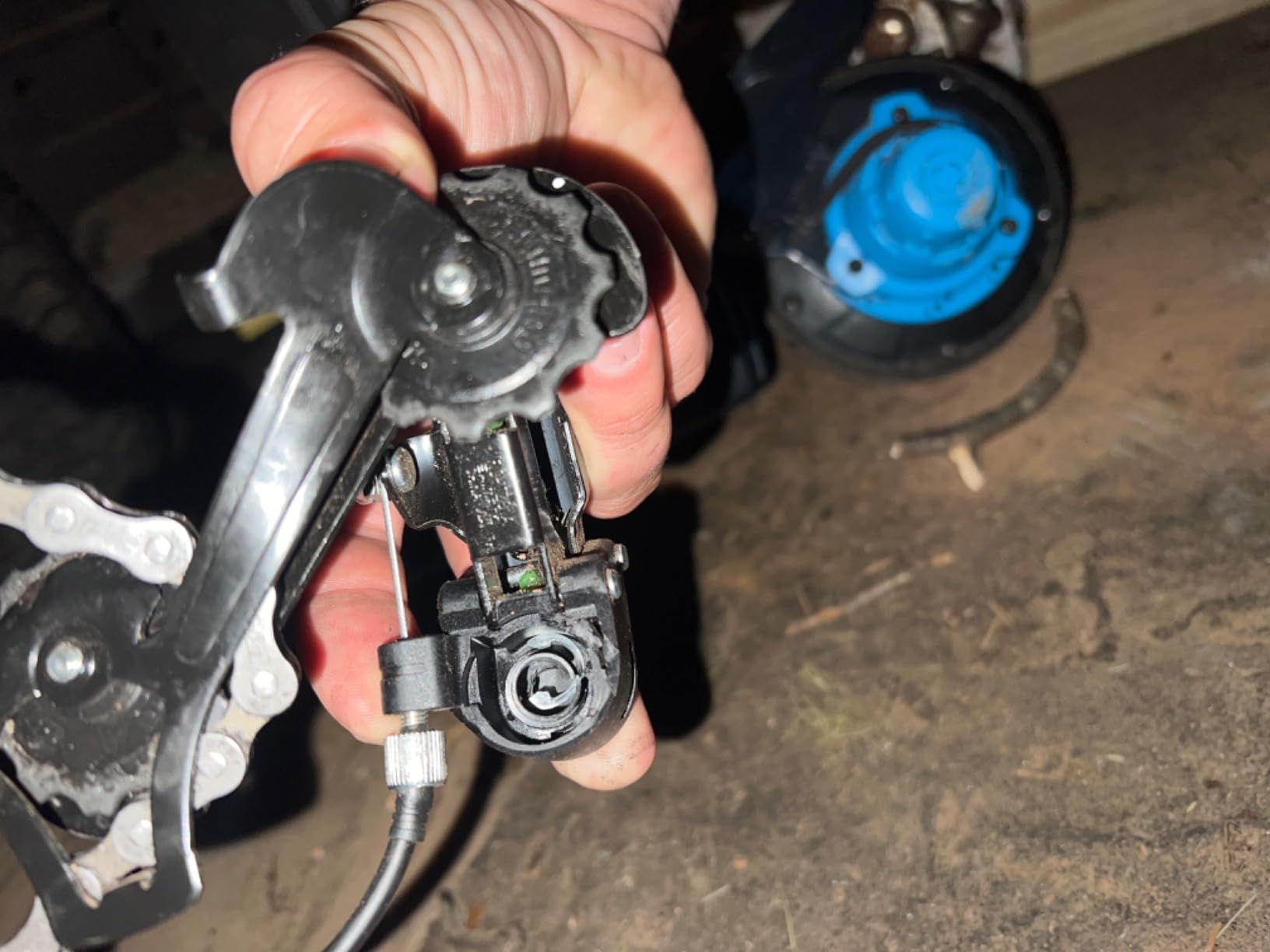
The important thing to know about this bike is the braking. It uses alloy linear pull brakes, which are rim brakes, and while the feature descriptions reference dependable stopping on descents, rim brakes lose meaningful effectiveness on loose, wet or muddy ground compared with the disc brakes on the Ktaxon and EUROBIKE.
For a beginner on groomed park trail and greenway surfaces, that difference is mostly theoretical. For anyone who will ride muddy root sections or long steep descents, it is not, and this is the reason we do not rank it higher despite the strong review base.
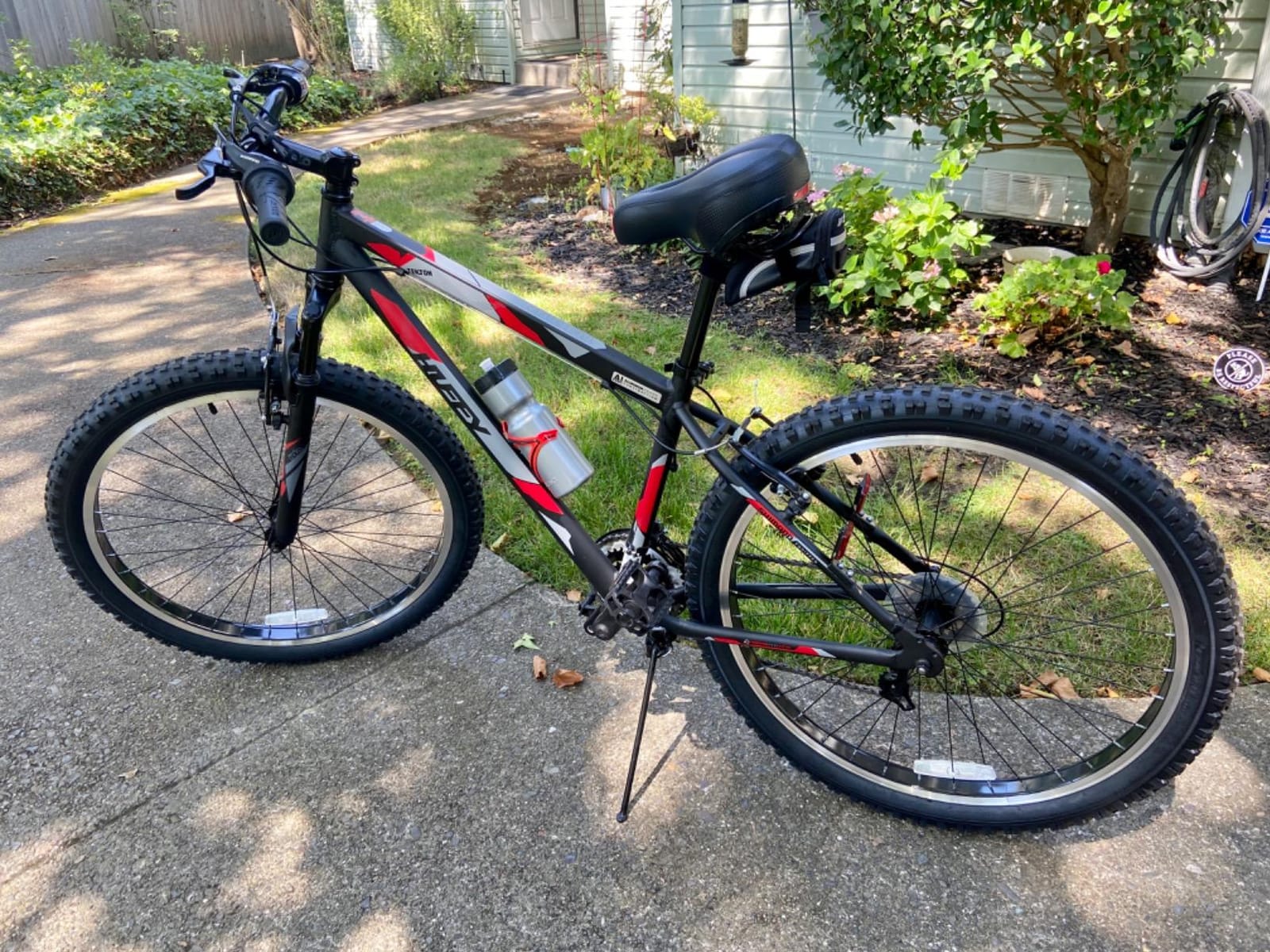
Who this bike suits
This suits a beginner who wants a comfortable, well-reviewed bike for long recreational rides on paved paths, gravel roads and easy park trails, and who does not plan to ride technical terrain. The included kickstand makes it practical to stop and rest mid-route without finding a tree or a rail.
It is also a good family bike. The wide rider range and simple controls mean a new rider can be productive on the first outing rather than spending the first hour working out how to shift.
Who this bike is not for
It is not the bike for anyone riding in the wet, on loose surfaces or on sustained steep descents, because rim brakes need a dry, clean rim to work properly. Riders heading into roots, mud or rock gardens should step up to a disc-braked model.
Brands often label these bikes Intermediate rather than Beginner, and at 33 pounds the bike is heavier than the aluminum frames in this roundup would suggest. Brake pads and cables will need replacing more often, and a shop will happily do that for you during a first service.
5. Mongoose Flatrock – Simplest Hardtail With the Longest Frame Warranty
Mongoose Flatrock Mountain Bike, 26 Inch Bike for Men and Women, 7 Speed, Aluminum Frame, Front Suspension Fork for a Smooth Ride, Twist Shifters, Linear Pull Brakes, Adult and Teen Bicycle
26 in wheels
17 in aluminum frame
7-speed twist shift
Linear pull brakes
19.16 kg
Pros
- 5 year frame warranty is the longest fixed term here
- Fits riders 5 ft 4 in to 6 ft 2 in
- Lightweight aluminum frame from a 50 year brand
- Simple drivetrain is easy to understand
- Sales rank shows strong demand
Cons
- Only 7 speeds is the fewest in this lineup
- V-brakes rather than discs
- Heaviest listed aluminum weight at 19.16 kg
- Listed as Intermediate skill level
The Mongoose Flatrock is the anti-overthinking pick. It has seven speeds, twist shifters, and a front suspension fork that soaks up bumps. That is the whole bike, and for a new rider who wants something uncomplicated to ride on a greenway or a dirt path, simplicity is genuinely worth more than gear range.
Mongoose has been building BMX and action-sport bikes for more than 50 years, and the aluminum frame is described as lightweight and durable. At 4.0 stars over 446 ratings, the Flatrock also ranks among the most popular mountain bikes in its category, which suggests it is not a hard model to find parts for.
The frame warranty runs five years, the longest fixed-term warranty in this roundup, with one year on parts and 30 days on wear items. For a first bike that will get knocked about, that is the most useful feature on the spec sheet for a first bike.
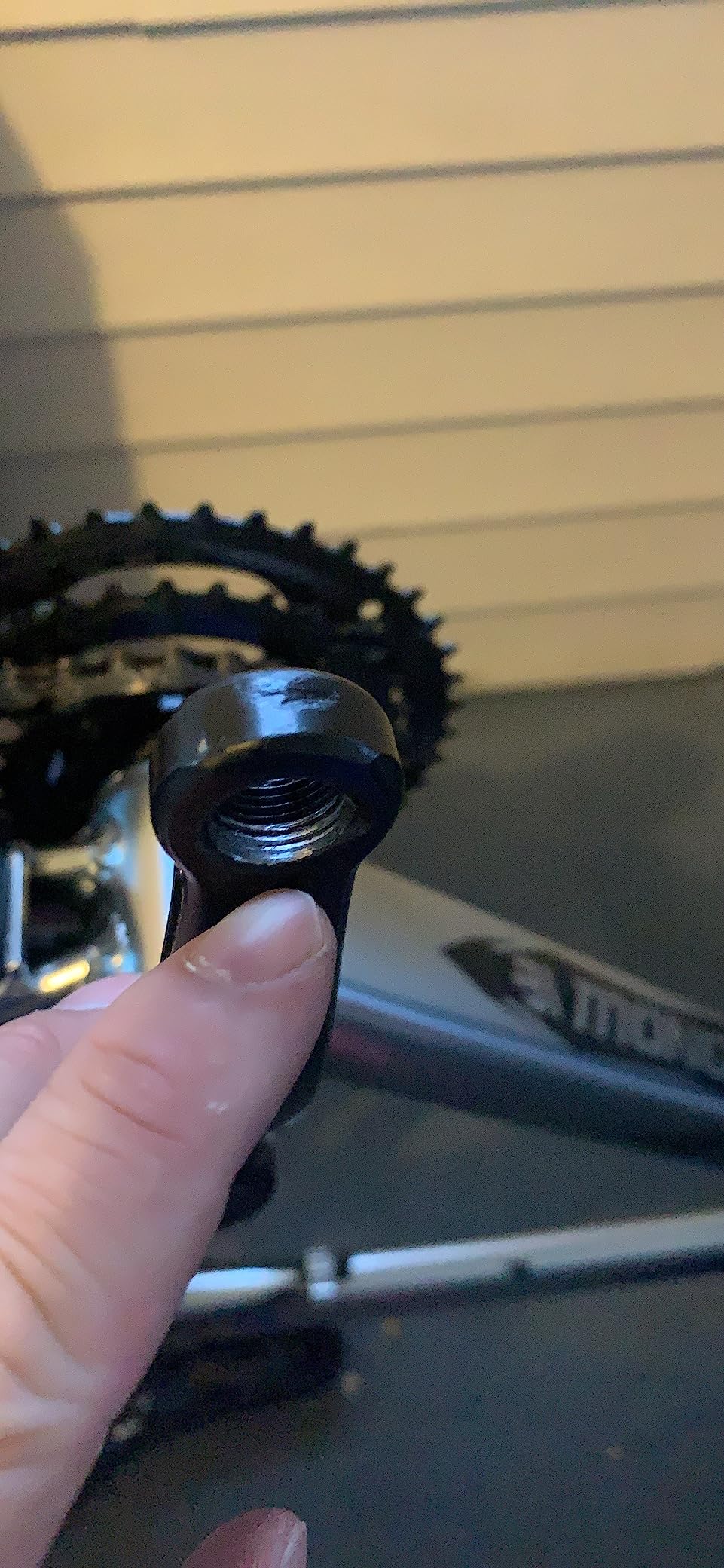
Where the seven-speed count becomes a problem is on steep terrain. A 7-speed drivetrain gives you far less gear range than the 21-speed bikes here, so you will be standing on the pedals and picking a line more often on real hills. If your local riding involves any sustained climbing, this is a genuine limitation rather than a nitpick.
Braking is by linear pull, again a rim brake, so wet and loose conditions reduce stopping power. The 26-inch wheels and stated fit range of 5 ft 4 in to 6 ft 2 in cover a wide span of riders, and the model year is current.
Who this bike suits
This suits a beginner on flat terrain, a shorter rider, or anyone who has decided they will not be riding technical trails and would rather have a simple machine with a long frame warranty. Riders who plan to log many miles on greenways and multi-use paths will find seven speeds more than enough.
It also suits anyone buying a first bike for a child or teenager who will grow out of it, since the five-year frame warranty covers the years when drops and knocks are most likely.
Who this bike is not for
It is not for hill-heavy terrain or for anyone upgrading to harder trails in a year or two. Riders who know they will progress to rooty singletrack will outgrow the drivetrain before they outgrow the frame.
At 19.16 kg it carries more mass than the other aluminum frames here with a stated weight, despite the material, and the linear pull brakes again rule out confident riding in wet or loose conditions. The brand lists the skill level as Intermediate, which tells you how they see the bike’s ceiling.
6. WEIZE 29 Inch Hardtail – Best Hardtail for Tall Riders on Rough Ground
WEIZE Hardtail Mountain Bike, 29 Inch Wheels Outdoor Cycling Bike, 21-Speed Trigger Shifter, Aluminum Frame for Women and Men, Comfort Saddle, MTB Bicycle with Suspension Fork, White
29 in wheels
6061 aluminum frame
21-speed trigger shift
Front suspension fork
Pros
- 6061 aluminum frame is rare at this level
- 29 inch wheels roll over rough ground
- 21-speed trigger shifters are precise
- Tool kit included
- Assembly reported around 30 minutes
Cons
- 16 percent one-star share is the highest here
- V-brakes rather than disc brakes
- Some reports of a stiff front suspension
- Some bikes arrive with miswired brakes
The pairing of a 6061 aluminum frame with 29-inch wheels is the appeal. Aluminum frames are less common than steel at the entry point, and 29-inch wheels are the largest available in this roundup, so the bike rolls over loose ground and ruts more easily than the 26-inch bikes in the group.
Owners frequently praise two things: the assembly, which most report finishing in about half an hour with the included tool kit, and the sizing, which works for a broad 5 ft 4 in to 6 ft 2 in range. That makes it a practical pick for a tall rider who feels small on 26-inch wheels.
The 21-speed trigger-shift drivetrain with front and rear derailleurs is another step up from twist shifters, and precise shifting matters when you are picking a gear on a loose climb.
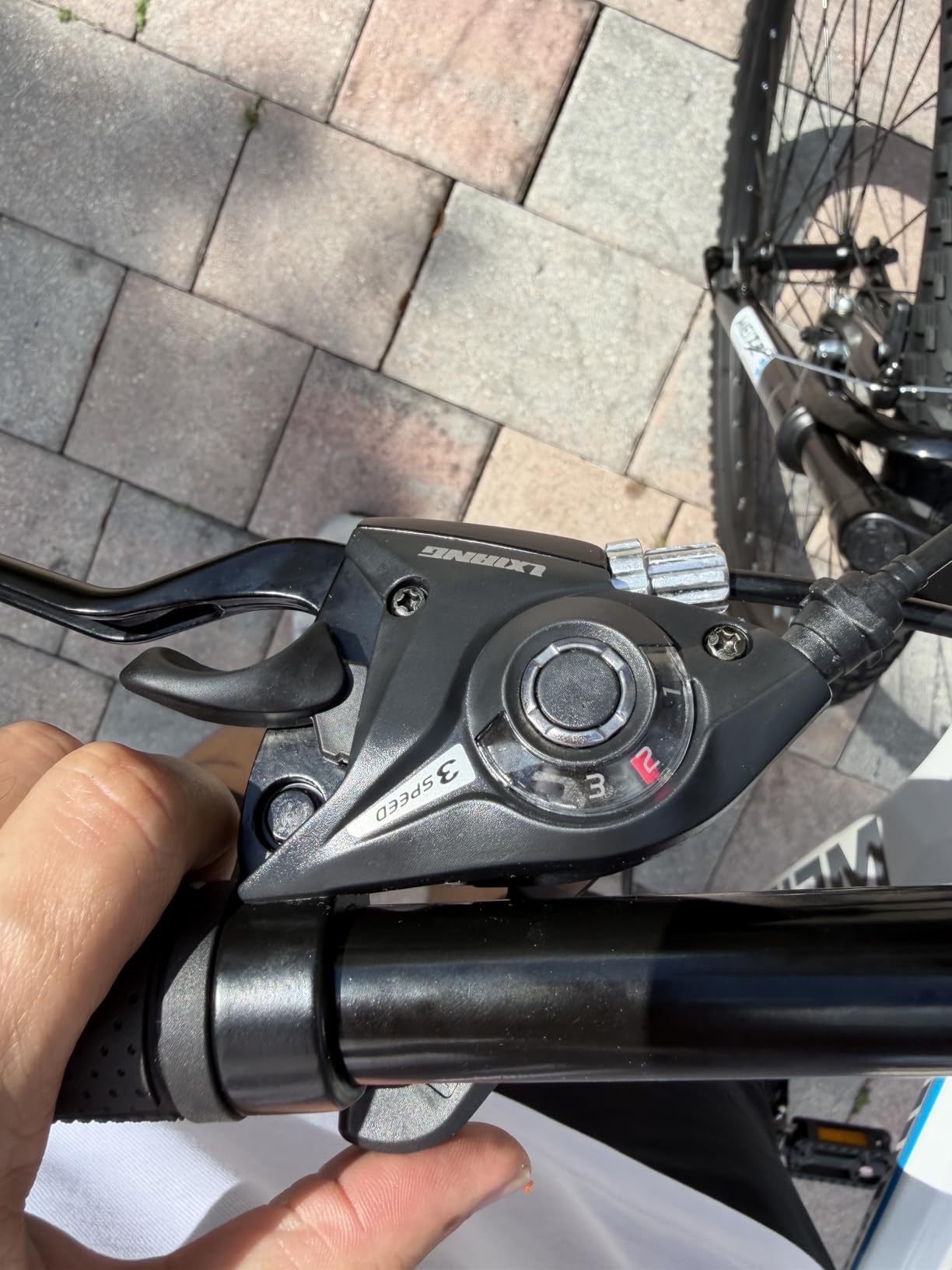
We want to be straight about the downside, because it is the largest in this roundup. The one-star share runs at 16 percent, the highest of the eight bikes, and the complaints are consistent: some bikes arrive with miswired brakes, an unconnected derailleur or a missing seat-adjustment lever, and the front suspension is reported by some owners to feel stiff.
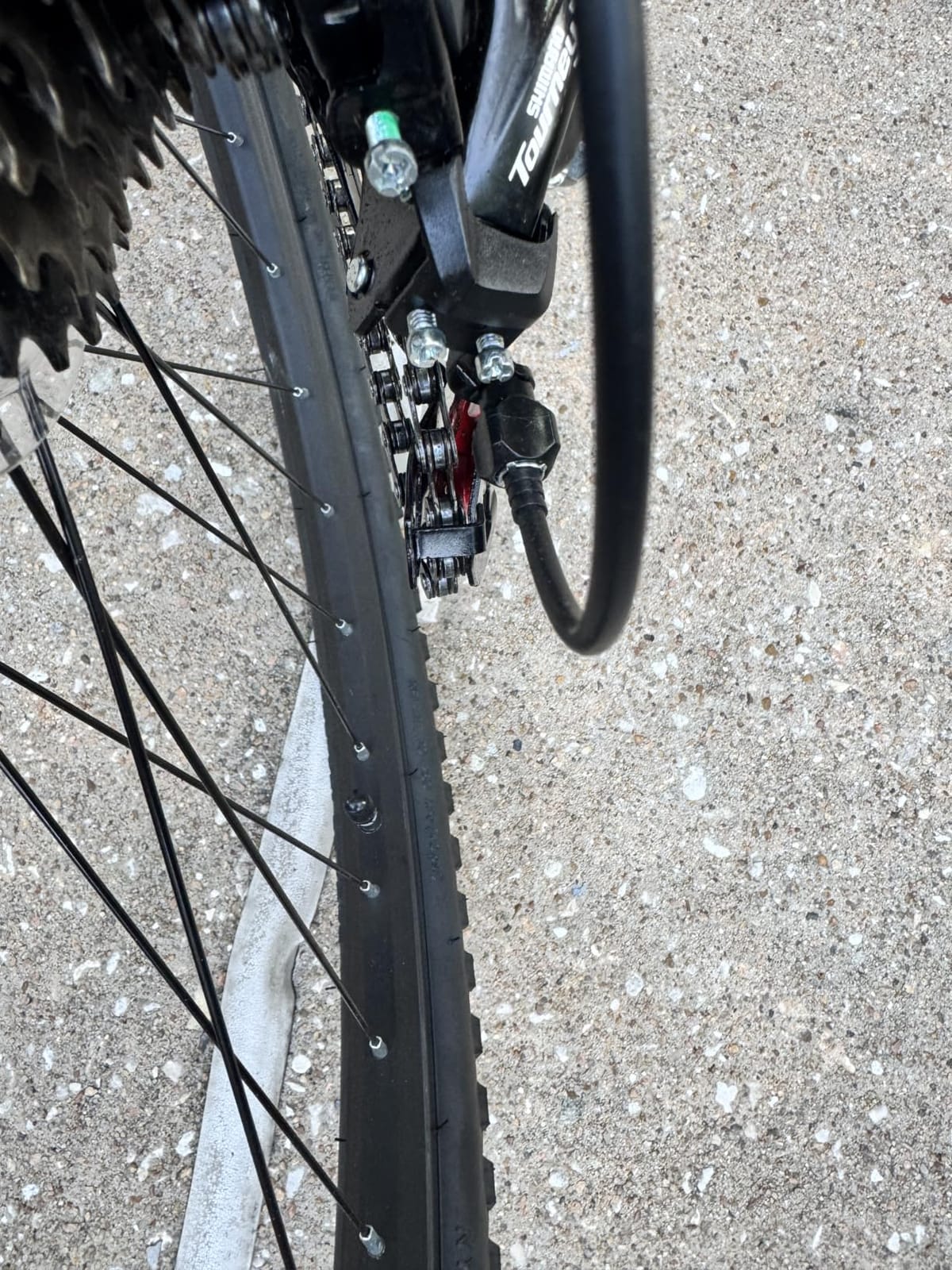
Brakes are V-brakes rather than discs, so stopping power drops in the wet, and that same 16 percent share reflects build consistency rather than a design flaw. Gears are also reported to slip under hard shifting and need frequent adjustment.
Who this bike suits
This suits a tall rider who wants big wheels and a light aluminum frame, and who will do their own assembly in a garage rather than paying a shop. If your trails are uneven, rooty or full of washboard, 29-inch wheels give you noticeably more roll-over capability than the 26-inch options.
It is also a good bike for a rider who already knows they will want clipless pedals and a dropper post later, since the trigger drivetrain is a modern baseline rather than something to replace first.
Who this bike is not for
The 16 percent one-star share means you should budget time for a setup check. A new rider who cannot adjust a barrel adjuster or true a wheel will want a shop to build and inspect the bike, and that labor adds to what this option costs you.
V-brakes on 29-inch wheels with a heavier tire contact patch also feel vague on loose descents. Riders who will regularly ride in wet conditions should choose a disc-braked bike instead, and the stiff fork means it is not a bike for someone chasing plushness.
7. HILAND Steel Hardtail Mountain Bike – Best Hardtail for Riders Who Want Easy Maintenance
HH HILAND 26 Inch Mountain Bike, Mens and Womens MTB with 21 Speeds, High-Tensile Steel Frame, V Brake, Hardtail Bicycle for Adults Blue
26 in wheels
High-tensile steel frame
21-speed trigger shift
V-brakes
90 percent assembled
Pros
- Lifetime warranty on the frame category
- Arrives 90 percent assembled with tools included
- V-brakes are simple to adjust
- Clear height-based sizing guidance
- 18 percent 4-star share shows broad satisfaction
Cons
- V-brakes are weak on steep descents
- Steel frame is heavier than aluminum
- Handlebars unstable at speed or on rough trail
- Some owners report transit damage
- Some owners replace the saddle
The HILAND makes a deliberately simple argument: give a beginner parts they can understand and adjust. The V-brakes are the clearest example. Where disc brakes need bleeding and pads need a specific tool, V-brakes need a barrel adjuster and a hex key, and a new rider can learn to tune them in an afternoon.
It arrives 90 percent pre-assembled with a tool kit included, the shortest build of the eight, and the frame carries a lifetime warranty, which is the strongest warranty statement in this roundup. At 4.0 stars across 267 ratings, it also has an 18 percent 4-star share, higher than any other bike here, which usually signals broad rather than enthusiastic satisfaction.
Sizing guidance here is the clearest of any bike in the group. The 26-inch fits riders 5 ft 4 in to 5 ft 9 in, the 27.5-inch fits 5 ft 8 in to 6 ft 5 in, and the 29-inch fits riders over 5 ft 9 in, with clear overlap between sizes.
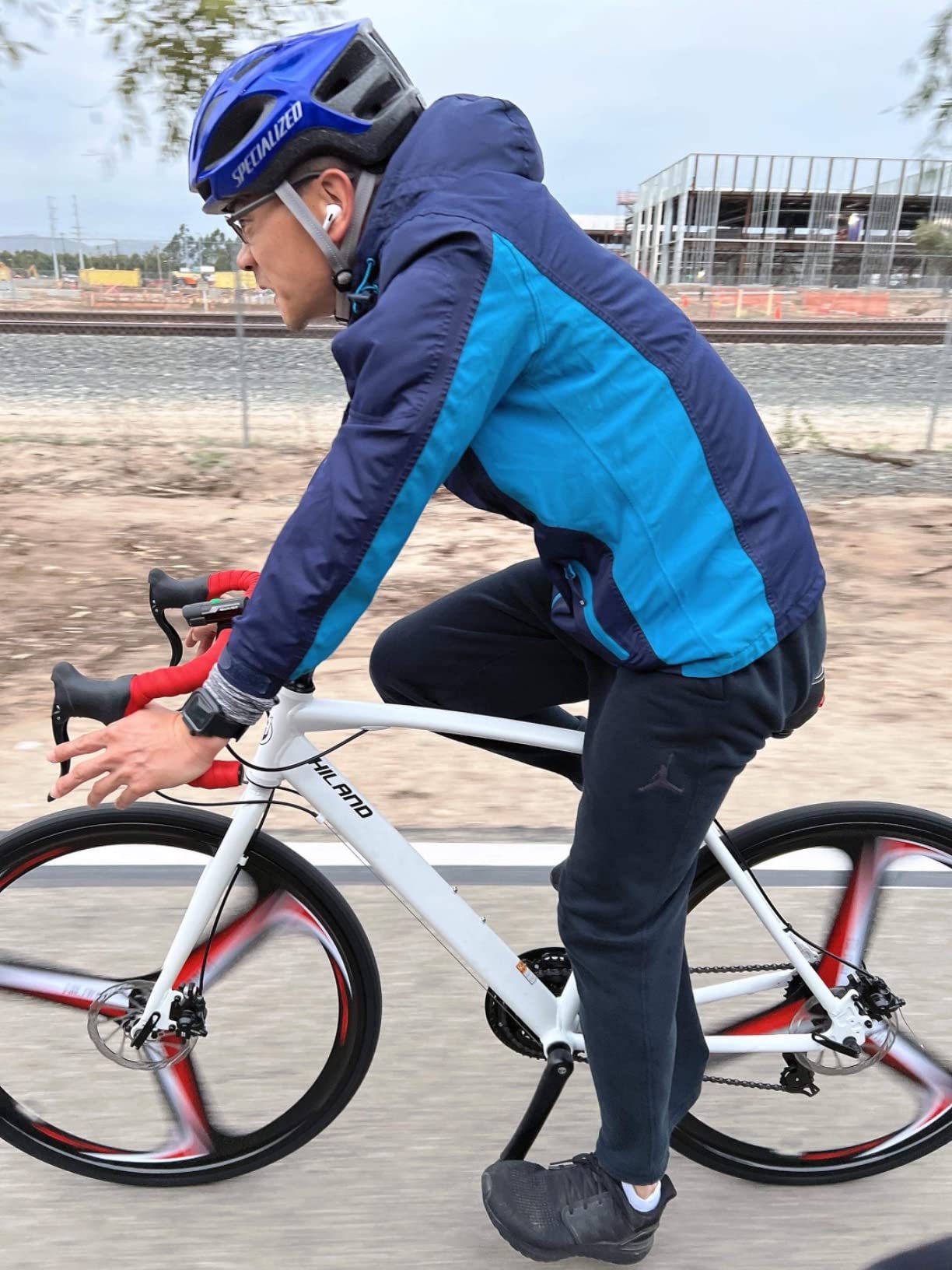
The 21-speed drivetrain uses trigger shifters rather than twist grippers, which is a real step up in precision for the money. The high carbon steel frame with a reinforced front suspension fork is sturdy, and the reinforced fork is the part that matters when a beginner drops a front wheel off a curb.
Steel is heavier than aluminum, and this bike shows it. Owners consistently describe it as a solid daily commuter and easy-trail bike rather than a trail machine, and several replace the supplied saddle early because the original one is uncomfortable on longer rides.
Who this bike suits
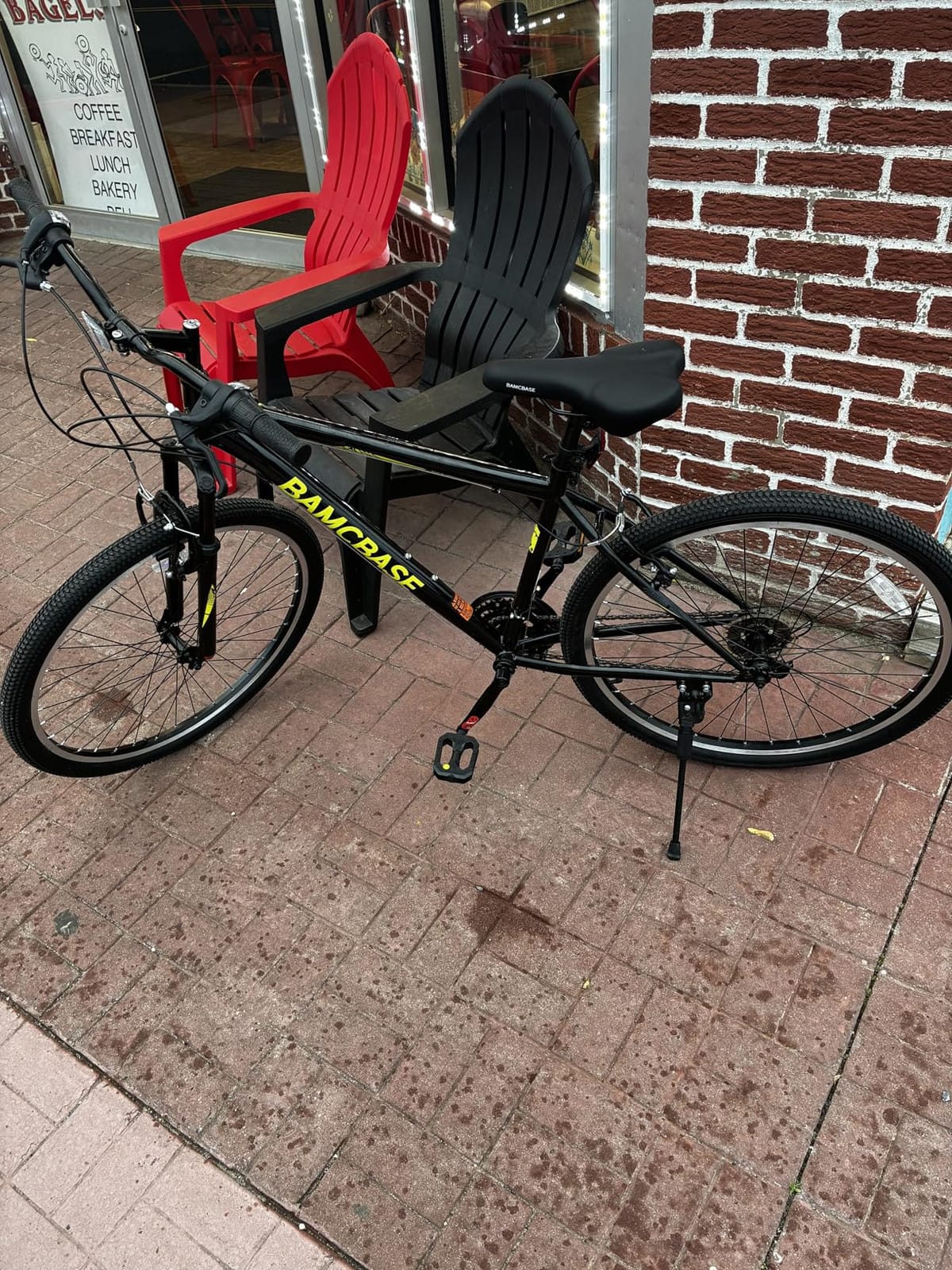
This suits a beginner who wants to learn bike maintenance rather than depend on a shop, and who rides city streets, gravel paths and easy greenway trails. Riders living somewhere with rain or mud will want to factor in the rim-brake limitation before choosing it.
It is a good pick for households buying several bikes at once, because the 90 percent build time and included tools mean less setup before the first ride, and the lifetime frame warranty covers the whole learning period.
Who this bike is not for
It is not for fast descents, jump lines or twisty technical trail, and owners are clear about that. The handlebars are described as not very stable at speed or on rough ground, and a first-timer who wants to push harder will get an unpleasant surprise the first time the bike does not track.
A minority of owners also report damage in transit such as a cracked derailleur or missing hardware, so inspect the bike on arrival before riding away. The heavier steel frame is less pleasant to carry up stairs or lift onto a rack than an aluminum equivalent.
8. Ecarpat 26 Inch Womens Mountain Bike – Best Fit for Shorter Riders
Ecarpat 26 Inch Mountain Bike, V Brakes 21 Speeds Women Mens Bike, Steel Frame and Suspension Fork, Adult and Teens Sport Bicycle for Urban Trail Snow Commuter White
26 in wheels
15 in alloy steel frame
21-speed twist shift
Dual V-brakes
100mm fork
Pros
- 66 percent 5-star share across 140 ratings
- 15 inch frame covers riders 4 ft 8 in to 5 ft 8 in
- Wide 2.125 inch tires resist punctures
- Assembly takes about 20 minutes
- Colours include pink and purple options
Cons
- Alloy steel frame is heavy for the class
- V-brakes on this configuration
- Instructions are poor and thin
- Saddle is small for taller riders
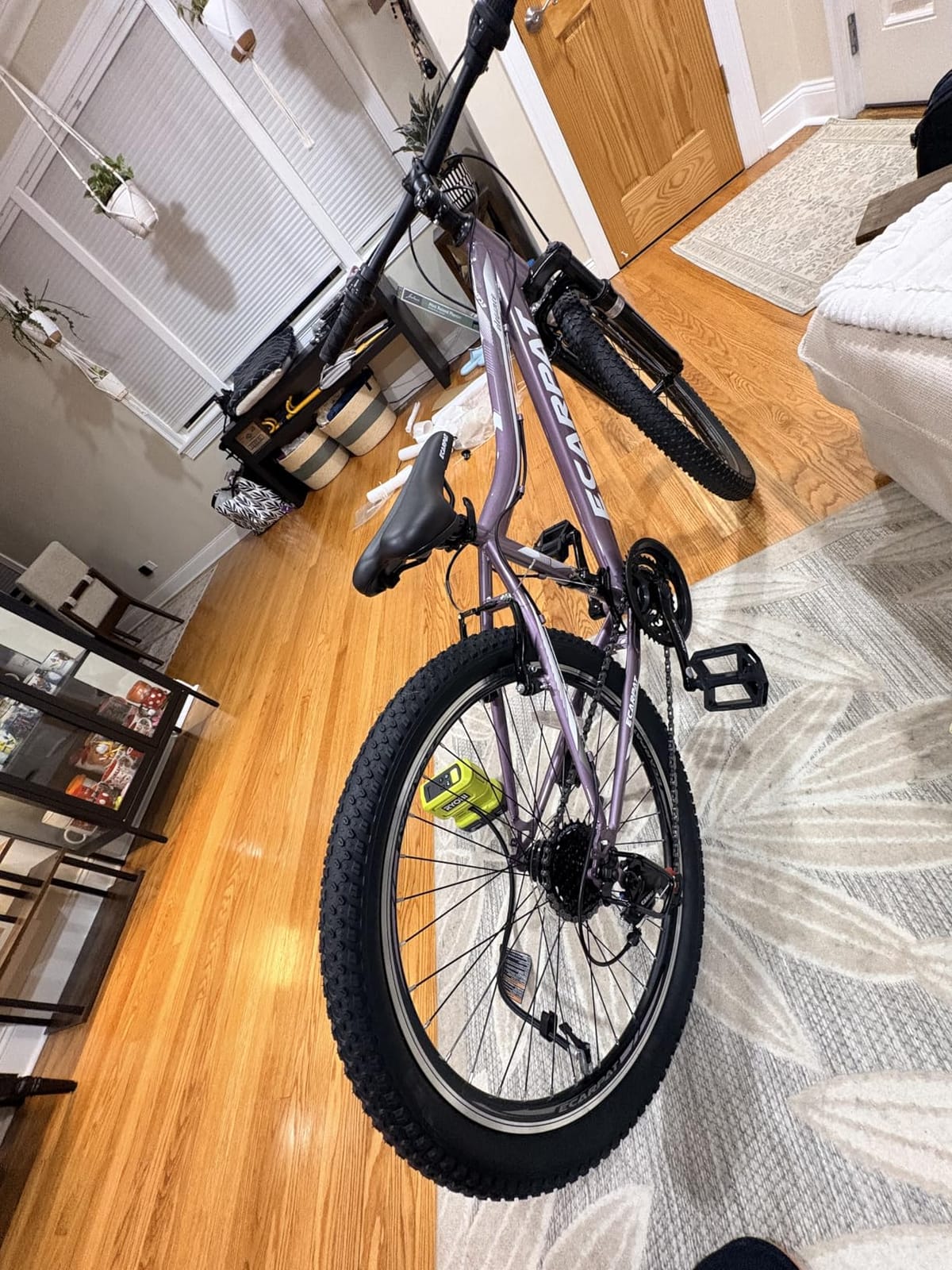
The Ecarpat exists because most bikes in this roundup simply do not fit a shorter rider. Its 15-inch frame is specified for riders between 4 ft 8 in and 5 ft 8 in, a range that the 26-inch aluminum bikes in this group sit awkwardly inside or simply do not cover.
It also holds a 66 percent 5-star share, and at 4.1 stars it sits among the highest-rated bikes in the roundup. The wide 26 by 2.125 inch all-terrain tires are notable for their puncture resistance, and the 100mm front suspension fork with parallel bars is a sensible amount of travel for a first bike.
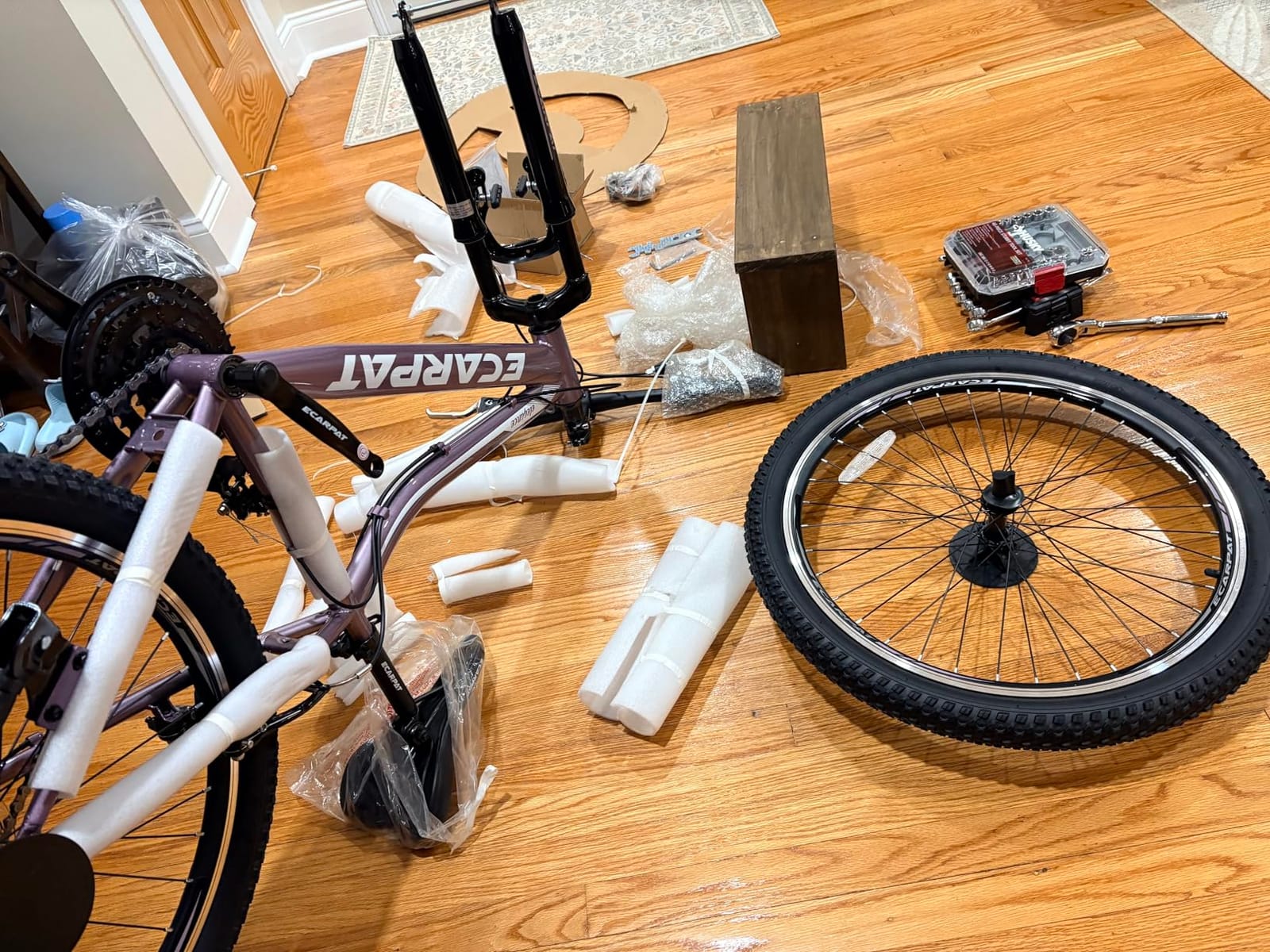
Assembly is described as quick here: install the pedals, handlebars, saddle and front wheel, inflate the tires, and you are riding, which owners put at around 20 minutes. A kickstand and tool kit are included, and some builds come with a front bell.
Braking is by dual V-brakes, which the manufacturer describes as reducing braking distance for emergency stops, and the 21-speed twist-grip drivetrain gives you real climbing range. The frame is alloy steel, which is the heaviest material in this roundup, so the bike is not as lively as the aluminum frames it competes with.
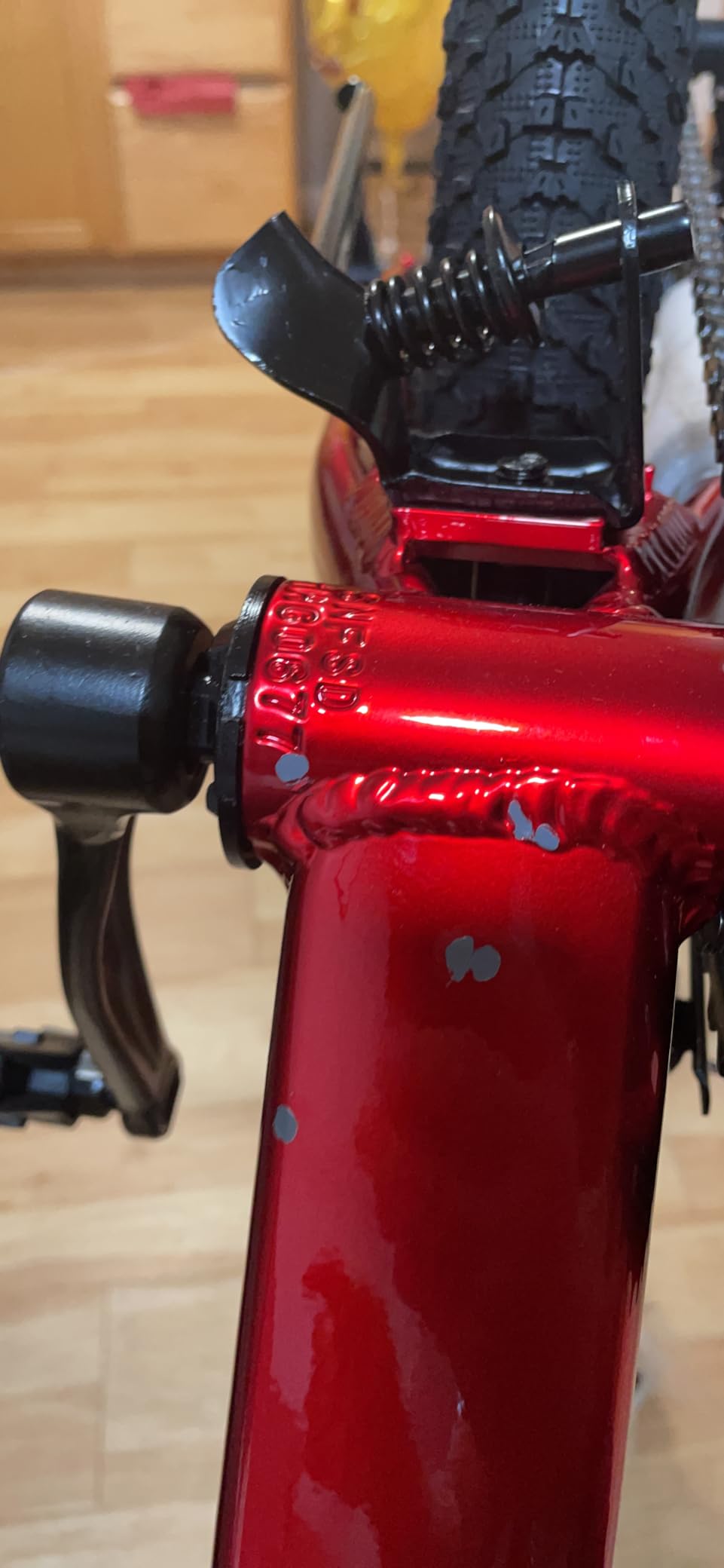
Assembly quality is the weak point. Some bikes arrive scratched with the front brakes misaligned and a rear derailleur that will not shift, and the instructions are widely criticised as poor, with a manual supplied in the box and an electronic version available on request.
Who this bike suits
This suits a shorter rider between 4 ft 8 in and 5 ft 8 in who keeps being sized out of bikes with a properly proportioned frame, and who rides gravel paths, fire roads and easy singletrack. The wide tires and 100mm fork will handle more surface than the wheel size suggests.
It is also a sensible gift for a teenager still growing, since the short frame fits now and the wide tires will cope with whatever gets thrown at them.
Who this bike is not for
It is not for anyone who will be riding in wet conditions, since rim brakes depend on a dry, clean rim. It is also not for riders who want to fine-tune their bike, because the thin documentation means you will be searching for answers after any adjustment.
The saddle is small and some owners replace it, and a rider who is already tall should skip this bike entirely rather than fight the frame. Check your standover clearance before buying, since the short frame is the whole point here.
How to Choose Your First Hardtail Mountain Bike
Use brakes and drivetrain quality as your filter, not weight or wheel size. Those two questions decide whether a bike will be a pleasure or a headache for your first year.
Disc brakes beat rim brakes for a beginner, because they work in the wet and on loose ground and require less adjustment. Only the Ktaxon and EUROBIKE are listed with disc brakes at both wheels in this roundup, and the Schwinn is also disc-braked. If your riding involves rain, mud or any descent, put disc-braked models at the top of your list.
On the drivetrain, more speeds are not automatically better. Riders on forums point out that a smaller drivetrain with a wide cassette often suits a beginner better than a bigger one, because the important thing is having a low enough gear to climb without stalling. Trigger shifters, found on the Ktaxon, WEIZE, HILAND and EUROBIKE, are simply more precise than twist shifters under load.
Frame material comes down to one trade. Aluminum is lighter and more responsive, which the Schwinn, WEIZE, Huffy, Mongoose and EUROBIKE all deliver to some degree. Steel is heavier but more forgiving and durable, and experienced riders often recommend it to newcomers. Our Ktaxon is the one steel example here, and we would still pick it for a first bike because of the brakes.
Wheel size is the most overthought decision. 26-inch wheels are nimble and suit shorter riders, 27.5 is a balanced middle, and 29-inch wheels roll over rough ground and suit taller riders. Plus tires, meaning wider tires on a smaller rim, add grip and cushioning in the deepest snow and sand. Pick the size that matches your height, then stop thinking about it.
Fork travel matters more than most beginners expect. Around 100mm to 120mm of travel absorbs roots and rock without the sluggishness of a long-travel fork. Travel beyond 150mm is designed for bike parks and downhill, costs weight, and makes a bike harder to control at beginner speeds.
Finally, think about terrain matching. If you ride flat park trails and greenways, almost any bike here works. If you ride lift-served flow trail with drops, you want a longer-travel fork and disc brakes. If you ride rooty local singletrack, a 1x drivetrain and 29-inch wheels help you keep momentum. Our gravel bike guide is the right reference if most of your riding is on road and hardpack rather than technical trail.
One last point that experienced riders make constantly: buy from a shop that will let you test ride. At the entry level, a small spec difference matters far less than whether the bike fits you and whether someone local will tune it up. If you end up riding more road than trail, our road bike picks are worth a look.
Sizing: How to Measure and What Standover Clearance Means
Size your hardtail by inseam, not height, and check standover clearance before you buy. Sizing is the single biggest source of post-purchase regret among new riders, and brand size charts are inconsistent because they are often built around height alone.
To measure your inseam, stand against a wall in your riding shoes with your feet about 15 cm apart, place a book spine-up between your legs with the top at your crotch, and measure from the floor to the top of the book in centimetres. Multiply that number by 2.54 to convert to inches. Your inseam is a close match to the frame size you need, though a top tube roughly two to three centimetres shorter than your inseam is the normal rule.
Standover clearance is the gap between you and the top tube when you stand over the bike with your feet flat on the ground. For trail riding you want around three to five centimetres of clearance so you can move on the bike. For flatter riding, less clearance is acceptable, but you should still be able to stand over the bike without your crotch touching the top tube.
A rough guide from those ranges: 4 ft 8 in to 5 ft 2 in suits a 15-inch frame, 5 ft 2 in to 5 ft 6 in suits a 16.5 to 17-inch frame, 5 ft 6 in to 5 ft 10 in suits a 17.5 to 18-inch frame, and 5 ft 10 in to 6 ft 2 in suits a 19-inch frame. Confirm with an inseam measurement, because individual proportions vary far more than height alone suggests.
If you are between two sizes, size down when you ride mostly flat ground and want agility, and size up when you ride technical trail and want more stability and control. Riders frequently ask whether they should size up or down, and the honest answer is that the better move is to test ride both if you can. A frame you can adjust the saddle and handlebar on is nearly as good as the perfect frame.
The Rest of Your Budget: What Else Your First Mountain Bike Needs
A first mountain bike is only part of what it costs to start riding properly. Budget for the gear, or the bike will sit in a garage collecting dust because you cannot ride it safely.
You need a properly fitted helmet, and the fit matters more than any other single item in this list. You also need flat pedals rather than clipless pedals for your first months, because you can put a foot down at a stop without thinking about it, which is exactly what new riders need on technical ground. Mountain bike shoes with a stiff sole are optional; flat-soled shoes work fine to start.
Then a floor pump with a gauge, a tube and tire levers for flat repairs, a basic multi-tool, chain lube, and a small reserve for the first service. Most of this list costs less than a month of the riding you will do on the bike.
If you plan to use the bike for commuting or to leave it at a coffee shop, add a lock, and plan your route around where you can actually lock it safely. Riders moving from a hardtail to an electric bike for longer commutes can see our electric mountain bike guide, but for a first trail bike, pedal power is more than enough.
Your First 50 Hours: What to Check and What Breaks
Every new bike needs a short settling-in period. Twenty minutes of checks after the first ride and again after the tenth saves a roadside problem later.
Start with the bolts you can see. Check the handlebar clamp and stem bolts, the seat post clamp, and the pedals, because these are the ones that work loose from general use. Then check your tire pressure against the range printed on the sidewall; it changes with temperature, and a soft tire causes pinch flats and vague steering.
Brakes are the second priority. Check pad clearance and make sure the levers feel firm rather than spongy. If the lever pulls all the way to the bar, or the pads are visibly worn, that is a shop job, not a home job. On a V-braked bike, the adjustment is a barrel adjuster and takes a minute.
Transmission problems usually show up as a skip under load or a slow chain. Listen for a grinding noise when you pedal hard, and check the chain is not rusted. A new bike chain that skips is almost always an indexing adjustment rather than a worn part.
Finally, check the wheels for lateral wobble by spinning them, and listen for creaks. A new bike that creaks is usually a pedal, headset or seat clamp, all of which are cheap and quick to fix. Any bike here that arrives needing assembly is worth a professional setup check before your first trail ride, because a misaligned brake or a loose stem is a genuine safety issue, not a minor annoyance.
Frequently Asked Questions
Should I get a hardtail or full suspension as a beginner?
Buy a hardtail. It is lighter, cheaper, simpler to maintain and more efficient than a full-suspension bike, and on greenway trails, park doubletrack and beginner loops you will not miss the rear suspension. Consider full suspension only if your local riding is lift-served flow trail with repeated drops.
What is the best all-around hardtail MTB?
The Ktaxon 27.5 inch mountain bike is the best all-around hardtail for beginners in this roundup. It pairs mechanical disc brakes at both wheels with a 21-speed trigger-shift drivetrain, weighs 16 kg, and comes in four wheel sizes, which makes height matching simple. It rates 4.1 stars across 404 owner reviews.
What are the cons of a hardtail MTB?
Without rear suspension you lose traction in roots and rock gardens, you feel every square edge through the saddle, and jumps and bike-park terrain will punish you. A hardtail is also typically heavier in the front end with no shock to control bounce. On smooth to moderate trail, none of this matters much to a new rider.
What is the best budget hardtail MTB?
The HILAND 26 inch steel hardtail is the best value in this roundup for riders who want simple maintenance. It has a 21-speed trigger drivetrain, V-brakes that a beginner can adjust unaided, 90 percent pre-assembly with tools included, and a lifetime frame warranty. Riders who want disc brakes instead should look at the Ktaxon.
Do I want a 27.5 or 29 mountain bike?
Pick 27.5 inch wheels if you are around 5 ft 6 in to 5 ft 10 in or want a bike that feels agile, and pick 29 inch wheels if you are taller or ride loose, rooty ground where roll-over capability helps. Wheel size matters far less than brakes and drivetrain quality at the beginner level.
Is it better to size up or down for mountain bikes?
Size down if you ride mostly flat ground and want agility, and size up if you ride technical trail and want more stability. The better approach is to size by inseam rather than height, then test ride both if you can. A frame with a few centimetres of standover clearance is a safer choice than one you are squeezed onto.
Final Verdict: Which Hardtail Mountain Bike Should You Buy?
The Ktaxon 27.5 inch mountain bike is the best hardtail mountain bike for beginners, because disc brakes at both wheels and a 21-speed trigger drivetrain solve the two problems new riders hit hardest, and it comes in four wheel sizes so fitting is simple. The Schwinn High Timber is the alternative if you ride mostly smooth greenway and park trail and want the lightest frame and the largest review base. The EUROBIKE is the pick for taller riders who want Shimano components and a commuter-friendly setup.
Measure your inseam, buy locally if you can, and start with flat pedals. Whatever you choose, the first fifty hours are the part that turns a bike into a habit, and the bike that gets ridden beats the bike that impresses. We updated this roundup for 2026, and we will keep testing as these models change.