
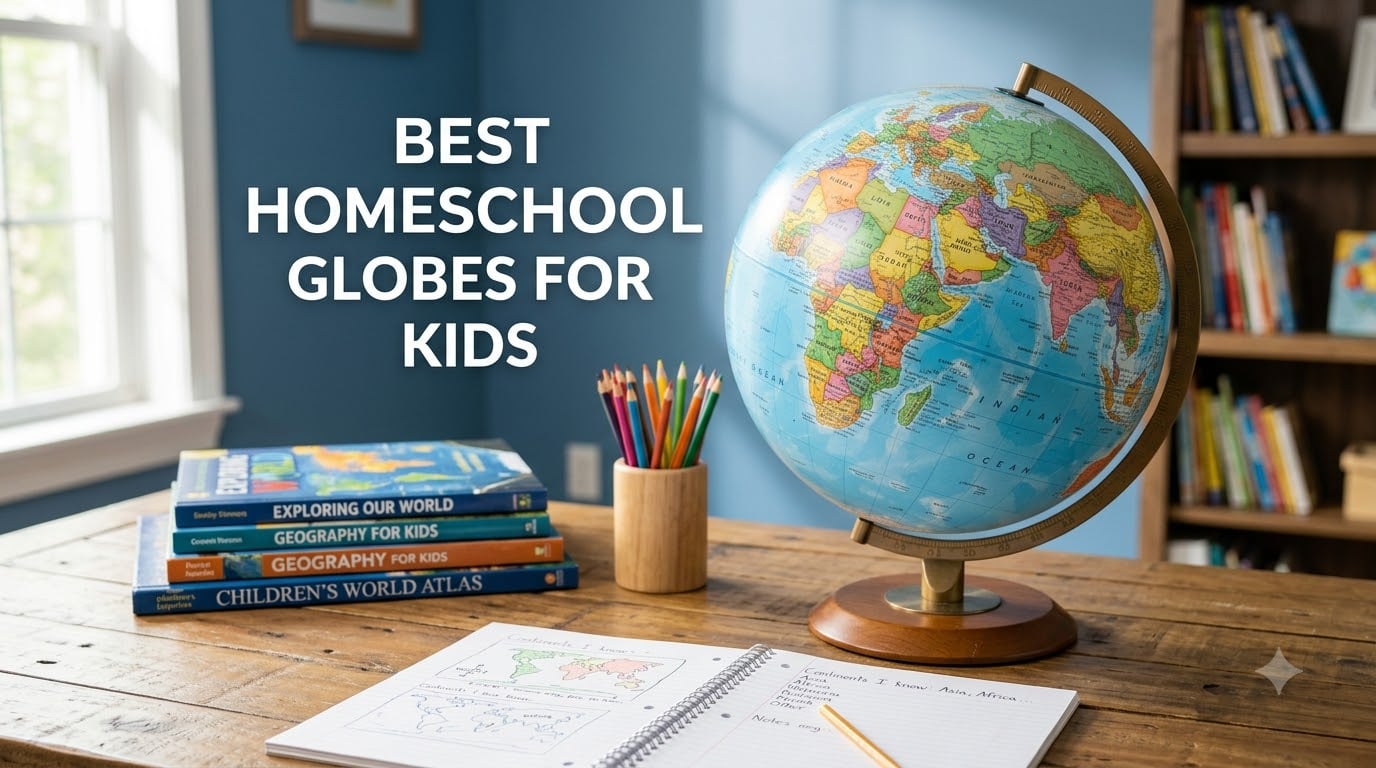
Geography is one of those subjects where hands-on learning beats textbooks every single time. When I started homeschooling my kids, I quickly realized that flat maps just were not cutting it. My 6-year-old could not understand why Greenland is not actually bigger than Africa, and honestly, trying to explain map distortion to a first grader is a losing battle.
That is when I brought our first globe into the house. The difference was immediate. Both kids started spinning it, tracing routes with their fingers, and asking questions about countries I had never even heard of. A good homeschool globe turns abstract geography into something kids can touch, spin, and explore on their own terms.
Our team spent the last several months testing 8 of the most popular homeschool globes for kids. We looked at everything from interactive smart globes with built-in screens to simple Montessori-style puzzle globes for toddlers. We evaluated them on educational value, durability, engagement, and how well they fit into a real homeschool routine. Whether you are looking for your homeschool geography activities or building a full curriculum, these are the best homeschool globes for kids in 2026.
If you want to go beyond the physical globe, you can also pair these tools with our guide on how to teach world geography on iPad for a complete geography setup.
Table of Contents
Top 3 Picks for Best Homeschool Globes for Kids
Before we get into the detailed reviews, here are our three standout picks. These globes rose to the top across all our testing categories, from interactive features to build quality and educational depth.

LeapFrog Magic Adventures Globe
- 2.8 inch video screen
- BBC video content
- Interactive stylus
- 3 quiz games

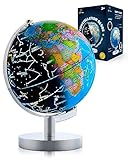
USA Toyz Illuminated Globe
- 3-in-1 globe and night light
- 88 constellations
- LED illumination
- Chrome steel base
The LeapFrog Magic Adventures Globe earned our Editor’s Choice because it works as a standalone device without needing a tablet or phone. The PlayShifu Orboot Earth won Best Value for its incredible AR experience at a mid-range price. And the USA Toyz Illuminated Globe took Budget Pick honors for doubling as a constellation night light.
Best Homeschool Globes for Kids in 2026
Here is a quick overview of all 8 globes we tested. Use this comparison to narrow down your options before diving into the individual reviews.
| Product | Specifications | Action |
|---|---|---|
| LeapFrog Magic Adventures Globe |
|
Check Latest Price |
| PlayShifu Orboot Earth |
|
Check Latest Price |
 Replogle Student Classic Globe Replogle Student Classic Globe |
|
Check Latest Price |
| USA Toyz Illuminated Globe |
|
Check Latest Price |
 Educational Insights GeoSafari Talking Globe Educational Insights GeoSafari Talking Globe |
|
Check Latest Price |
 Learning Resources Puzzle Globe Learning Resources Puzzle Globe |
|
Check Latest Price |
 Waypoint Geographic Parlamondo Waypoint Geographic Parlamondo |
|
Check Latest Price |
 LeapFrog LeapGlobe LeapFrog LeapGlobe |
|
Check Latest Price |
1. LeapFrog Magic Adventures Globe – Best Interactive Globe Overall
LeapFrog Magic Adventures Globe (Frustration Free Packaging)
2.8 inch video screen
Over 5 hours BBC videos
Interactive stylus
3 quiz games
Ages 5+
Pros
- Interactive stylus lets kids explore every country
- Built-in screen plays 5 hours of BBC videos
- 3 engaging quiz games keep kids challenged
- Teaches animals cultures and geography
- No tablet or phone required
Cons
- Batteries drain quickly with regular use
- Tech feels slightly dated compared to modern tablets
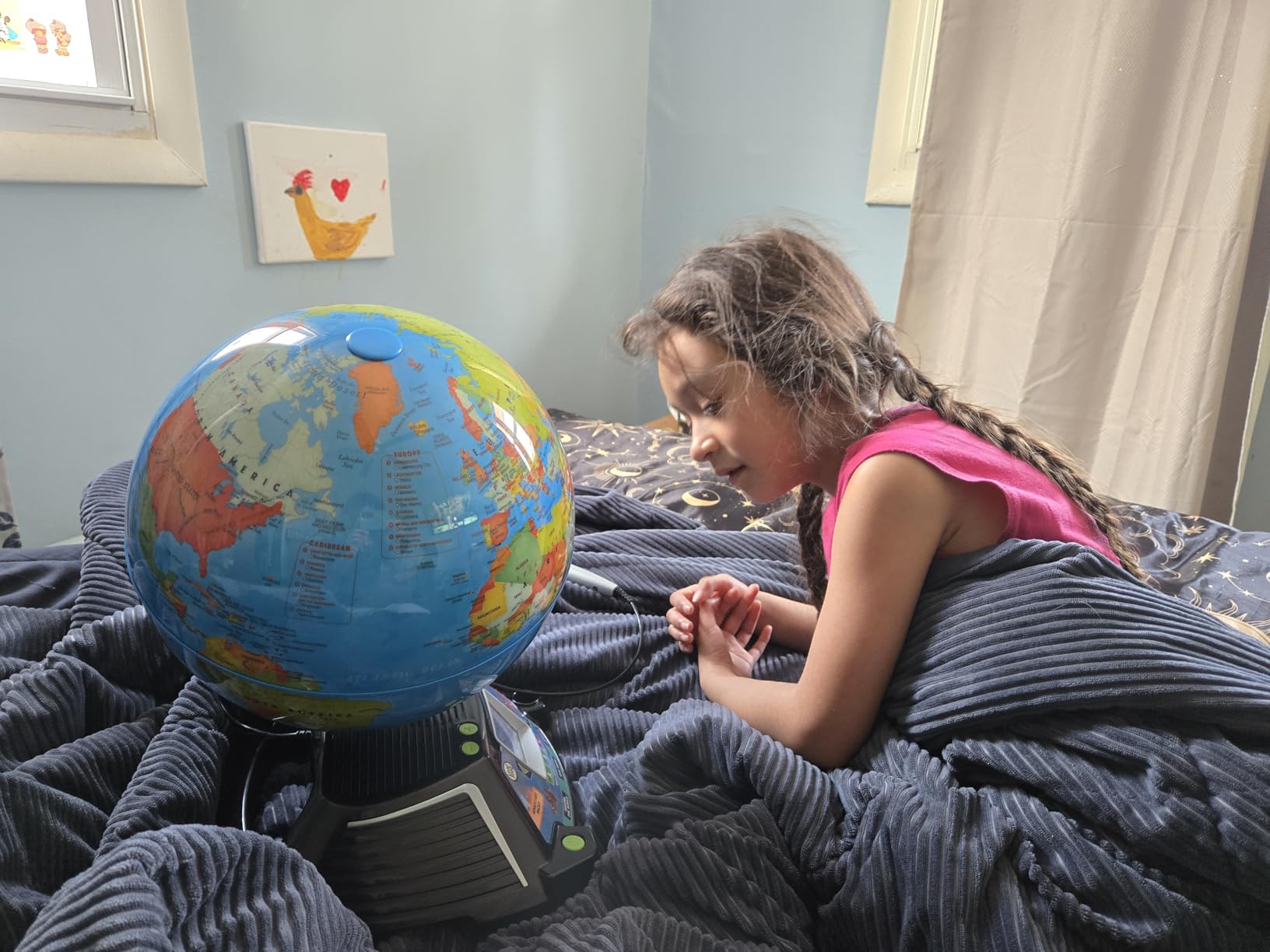
The LeapFrog Magic Adventures Globe became the centerpiece of our homeschool geography corner within days of unboxing it. What immediately impressed me was how self-contained it is. My daughter could pick up the stylus, tap any country, and instantly see a video or animation about that place on the built-in 2.8-inch screen. No phone pairing, no app downloads, no Wi-Fi needed.
The BBC video content is where this globe really shines. There are over 5 hours of high-quality educational videos covering animals, cultures, landmarks, and natural wonders. My kids spent an entire afternoon just tapping different African countries and watching wildlife footage. As a homeschool parent, I loved that I could set them up with the globe while I worked with their sibling on math.
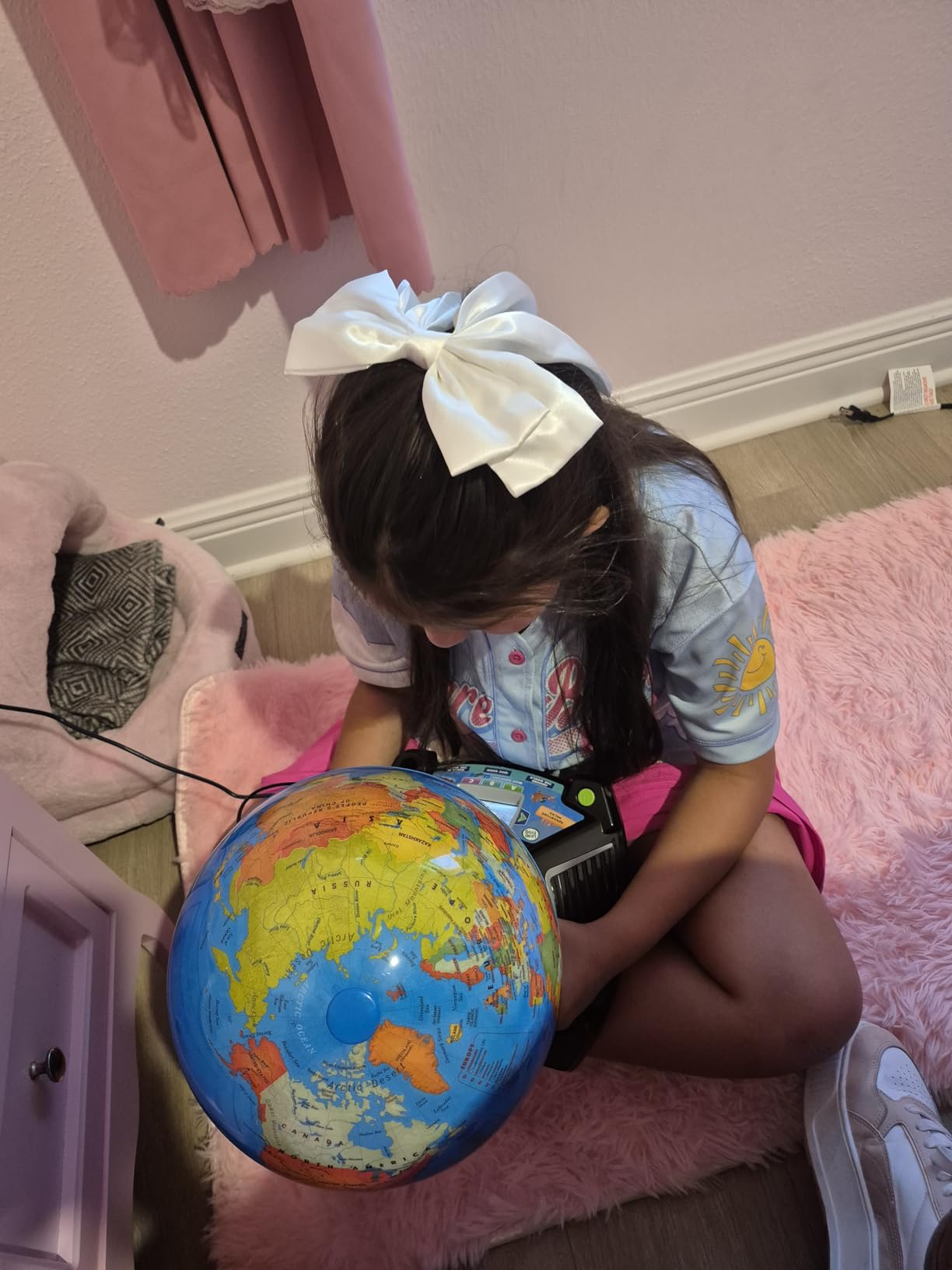
The three built-in quiz games add a nice layer of structure. They range from easy country-finding challenges to harder trivia about capitals and cultures. My 8-year-old started on the easy mode and worked his way up over a few weeks. The globe tracks progress too, so there is a natural motivation to keep improving.
Battery life is the main drawback I noticed. With regular daily use of about 30 to 45 minutes, I was replacing the AA batteries roughly every two weeks. I eventually bought a set of rechargeable AAs, which solved the problem. The 2.8-inch screen is also a bit small by modern standards, though it is perfectly readable for short video clips.
What Ages It Works Best For
This globe hits the sweet spot for ages 5 through 10. Younger kids will enjoy tapping countries and watching videos, though they may need help navigating the menus. Older kids around 9 or 10 might find the screen size limiting compared to tablets, but the quiz games still offer real educational value.
I found it works especially well as a supplement to a structured geography curriculum. You can assign specific regions for exploration and then use the quiz mode to test retention.
How It Holds Up Over Time
The build quality surprised me in a good way. After three months of daily use by two kids, the globe surface still looks clean and the stylus works perfectly. The plastic body has survived being knocked off the table twice without any damage.
The one concern is the internal electronics. While nothing has broken yet, I can see the screen eventually wearing out with heavy use. LeapFrog does cover it with a solid warranty, which gives some peace of mind.
2. PlayShifu Orboot Earth – Best AR Globe for Homeschool
PlayShifu Orboot Earth – Interactive AR World Globe for Kids: 1000+ Facts on Animals, Places & Monuments | Tech-Powered STEM Learning Toy & Gift, Ages 4–10
10 inch AR globe
1000+ facts
Passport and stickers
Free Orboot app
Ages 4-10
Pros
- Augmented reality brings the globe to life
- 1000+ educational facts
- Passport and stickers gamify learning
- Works with iPad and iPhone
- Great value for the price
Cons
- App can be slow and buggy
- Some countries missing or misshapen
- Not compatible with Amazon Fire tablets
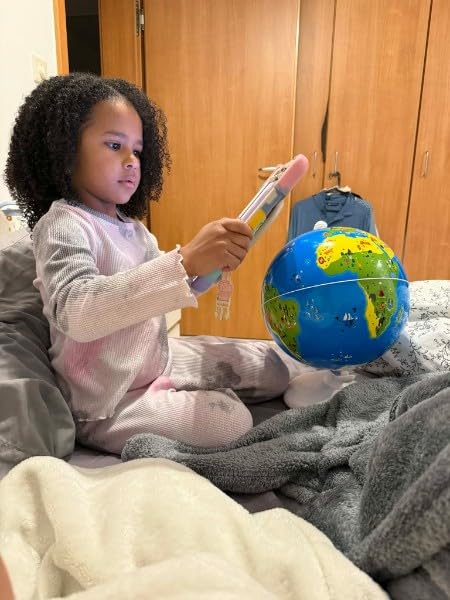
The PlayShifu Orboot Earth takes a completely different approach to the interactive globe concept. Instead of built-in screens and speakers, it uses augmented reality through a free tablet or phone app. You point your device at the globe, and 3D animals, monuments, and cultural facts pop up on screen.
My kids were absolutely mesmerized the first time they used it. Watching a 3D elephant stomp across Africa on the iPad while the physical globe sat in front of them was a genuinely magical moment. The app covers over 1,000 facts across animals, monuments, cuisines, and inventions. With 17,000+ reviews on Amazon, it is one of the most popular AR learning globes available.
The passport and sticker system is a stroke of genius for homeschoolers. Kids get a physical passport booklet and country flag stickers. Every time they explore a new country, they stamp their passport and add the flag sticker. This gave my kids a tangible sense of progress that kept them coming back day after day.
The app experience is not perfect though. I noticed occasional lag, especially when moving the tablet quickly around the globe. A few times the AR tracking lost its place and needed a reset. The app also does not work with Amazon Fire tablets, which I know is a dealbreaker for some homeschool families who rely on Fire Kids tablets.
Device Compatibility You Need to Know
Before buying, check your device carefully. The Orboot app works with iPad mini 4 and newer, iPad 5th generation and above, and iPhone 7 and above. It also works with many Android devices, but not Amazon Fire tablets. If you already use an iPad for world geography lessons, this globe pairs naturally with your setup.
I tested it primarily with an iPad 9th generation and the experience was smooth about 85 percent of the time. The occasional glitches were annoying but not deal-breaking.
How It Compares to a Standalone Interactive Globe
The Orboot Earth costs significantly less than screen-based globes like the LeapFrog Magic Adventures. But it requires a tablet, so factor that into your total investment. The AR experience is more visually impressive than a 2.8-inch screen, but it also means more screen time.
For homeschool families who already own a compatible tablet, the Orboot gives you more bang for your buck than any other interactive globe on this list.
3. Replogle Student Classic Globe – Best Traditional Educational Globe
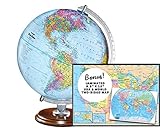
Replogle Student – Educational Classic World globe, Blue Ocean, Raised Relief feature, including a bonus map, made in USA, 12″/30cm diameter
12 inch diameter
Raised relief mountains
Political map
Time dial
Made in USA
Pros
- Excellent raised relief for feeling mountain ranges
- Accurate and verified cartography
- Quality wooden and metal construction
- Made in USA
- Time dial for teaching time zones
Cons
- Not Prime eligible
- Occasional quality control alignment issues
- No electronic features
Sometimes you do not need screens, apps, or batteries. The Replogle Student Classic Globe is proof that a well-made traditional globe still has enormous educational value. I added this one to our homeschool setup specifically for the times when I wanted my kids to unplug and just explore the world with their eyes and hands.
The raised relief feature is what sets this globe apart from cheap desk globes. Mountain ranges like the Himalayas and the Andes are physically raised from the surface, so kids can actually feel the topography. My son spent twenty minutes one afternoon tracing the Rocky Mountains from Alaska to Mexico with his fingertips. That tactile experience creates a kind of spatial memory that no screen can replicate.
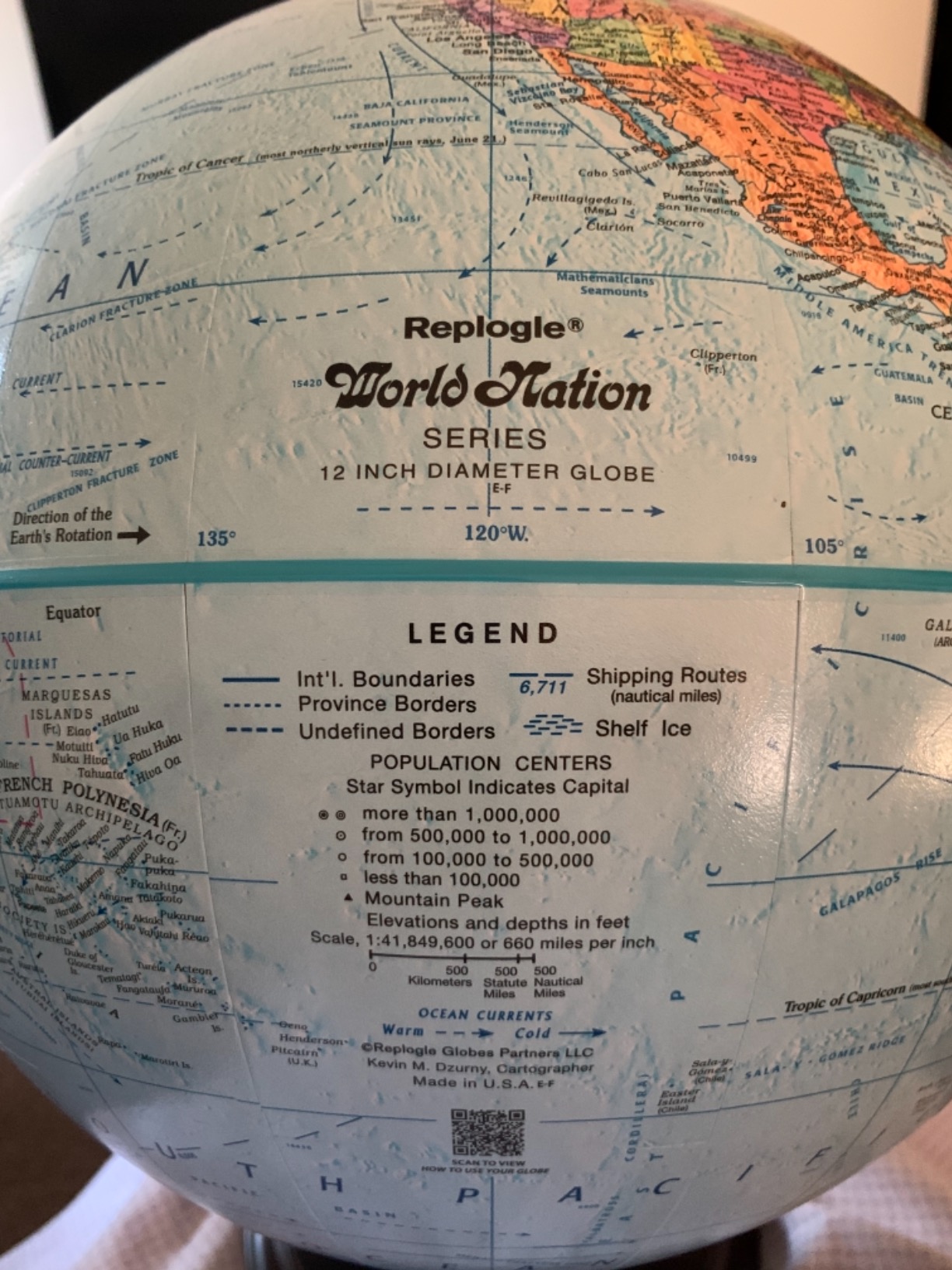
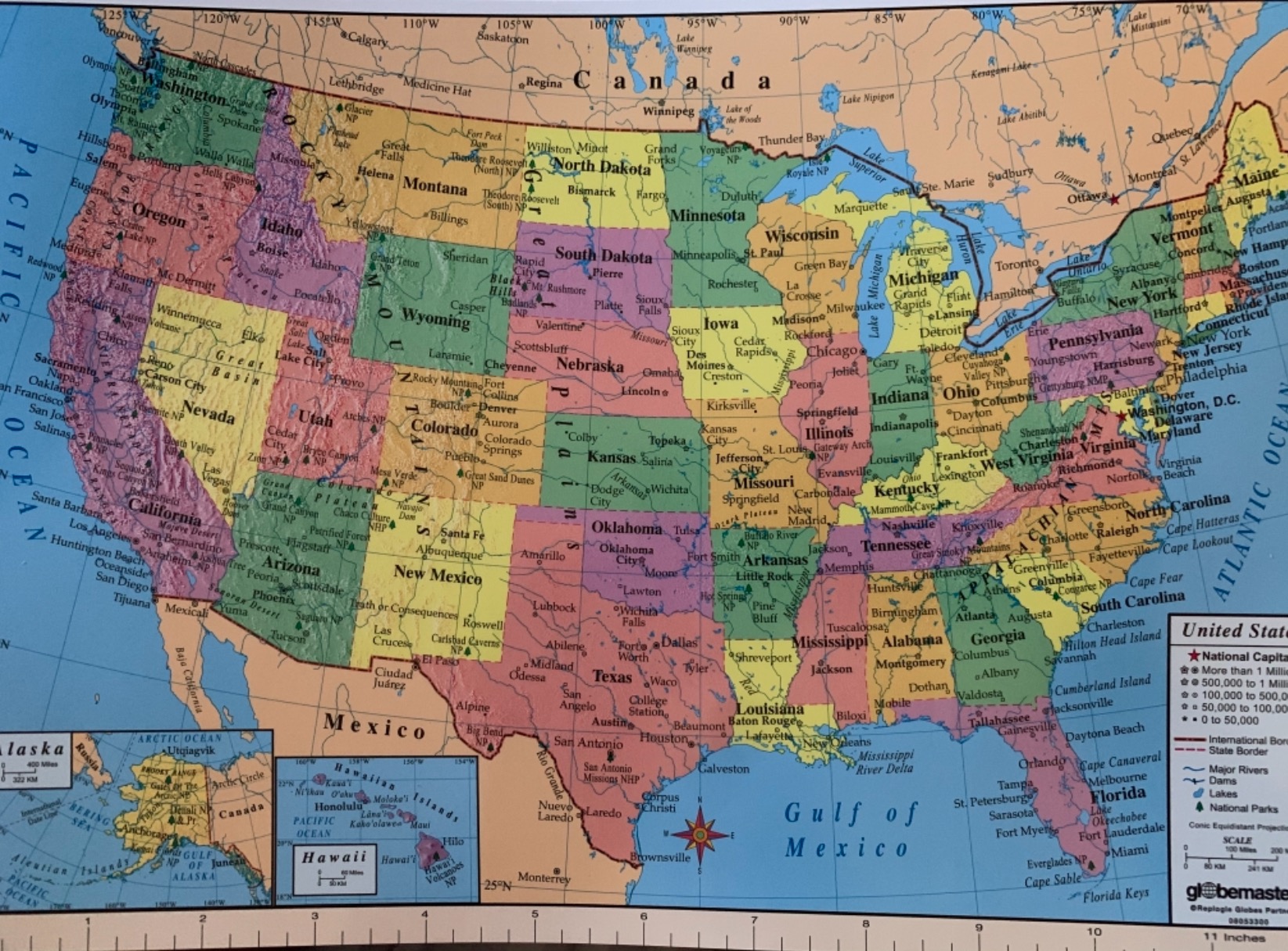
The cartography is excellent. Country borders are clearly marked, US states are differentiated by color, and population centers are marked at appropriate scales. Replogle has been making globes in the USA for decades, and the quality of the map printing reflects that experience. The time dial at the top is a nice touch for teaching time zones, which is a concept that clicks much faster when kids can physically rotate the globe.
I did notice some minor alignment issues on the meridian ring. The globe sat slightly off-center on the stand, which bothered me more than it bothered the kids. A few other reviewers mentioned similar quality control concerns. This is also not a Prime-eligible product, so shipping took a bit longer.
Why Raised Relief Matters for Learning
Raised relief turns a flat political map into a three-dimensional learning tool. When kids can physically feel that the Himalayas form a massive barrier between India and China, they start understanding geography on a deeper level. It answers the why behind historical events, trade routes, and cultural differences.
For homeschoolers following a classical education model or Charlotte Mason approach, this globe fits perfectly. It encourages exploration and wonder without any digital distractions.
Durability for Daily Homeschool Use
The wooden base and metal meridian give this globe real heft. It weighs about 4 pounds and sits very stable on a desk. The paper-vinyl surface is more delicate than plastic globes, so this is not the globe I would hand to a toddler. But for kids ages 6 and up who can treat it with reasonable care, it holds up beautifully.
After four months of daily use, ours still looks new with no fading or peeling on the map surface.
4. USA Toyz Illuminated Globe – Best Budget Globe with Night Light
USA Toyz Illuminated Globe for Kids Learning- 3-in-1 STEM Globes of the World with Stand, Constellation Map, Built-in LED Night Light Desk Globe Lamp, Non-Tip Metal Base, 9.75” Tall, 7 Inch Diameter
3-in-1 globe and night light
88 constellations
LED illumination
Chrome steel base
7.2 inch diameter
Pros
- Beautiful LED illumination doubles as night light
- 88 constellations appear when lit
- Sturdy chrome steel non-tip base
- 360 degree rotation
- Very affordable price point
Cons
- Constellation overlay obscures countries when lit
- 7 inch diameter is smaller than standard globes
- Plug-in power limits placement options
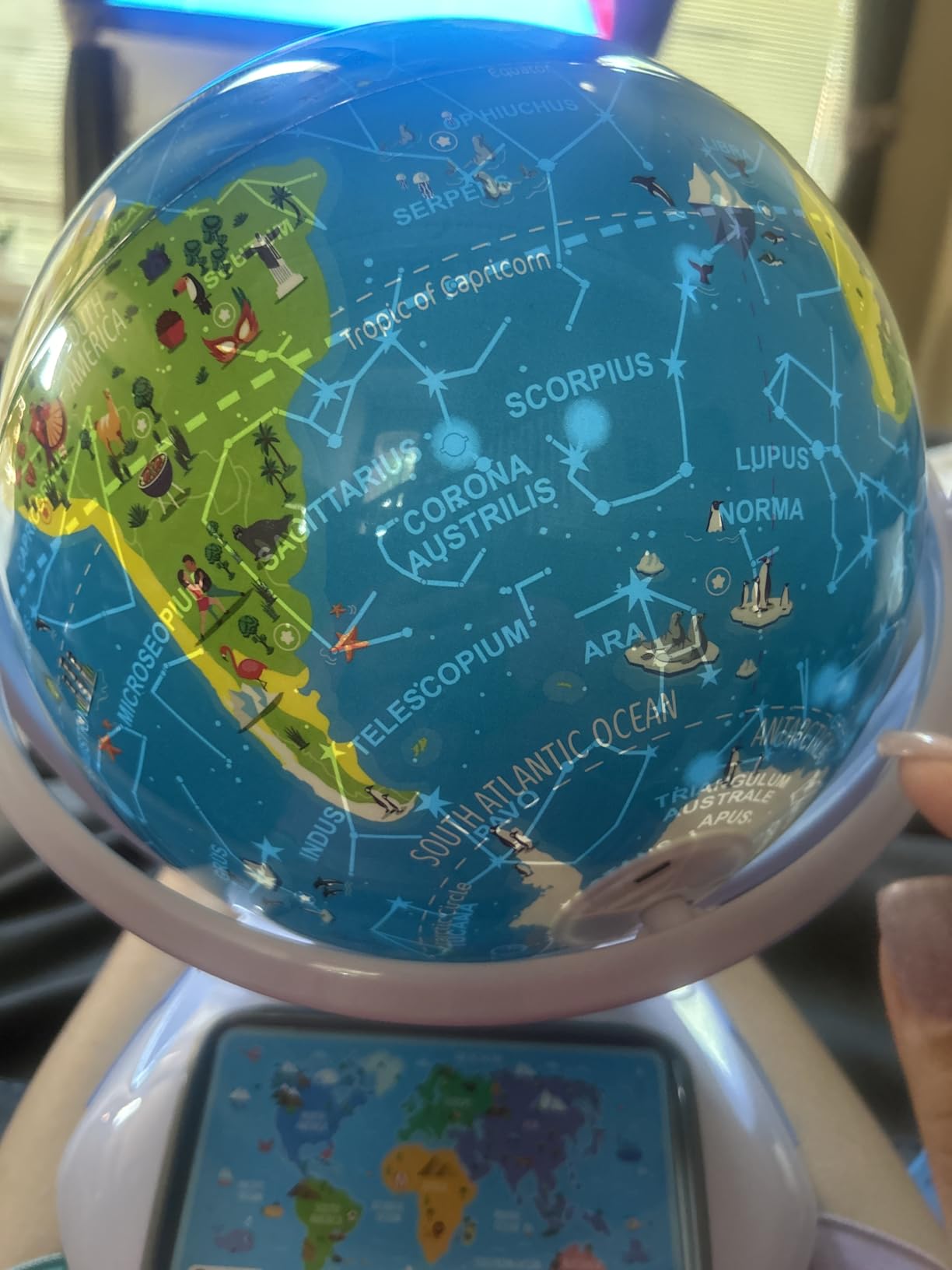
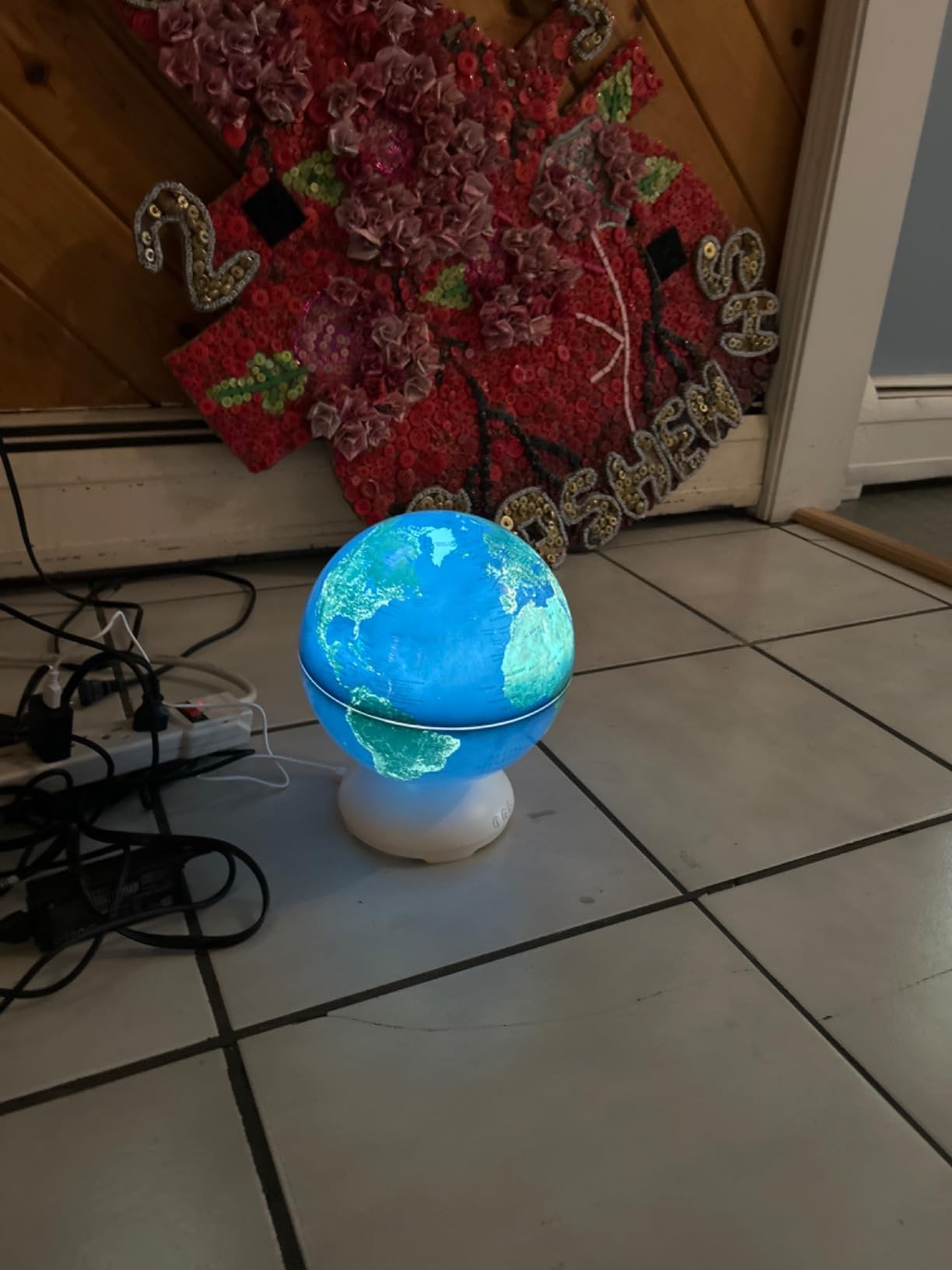
The USA Toyz Illuminated Globe punches well above its price point. For what amounts to a budget globe, it delivers three distinct functions in one device: a world globe for geography lessons, a constellation map for astronomy, and an LED night light for the bedroom. My kids were genuinely excited when we turned off the lights and the constellations appeared.
The 3-in-1 concept is more practical than I expected. During school hours, we use it as a regular world globe. The political map shows countries, capitals, and major cities. Then at night, we plug it in and the 88 constellations light up across the surface. It became an instant bedtime companion for my younger daughter.
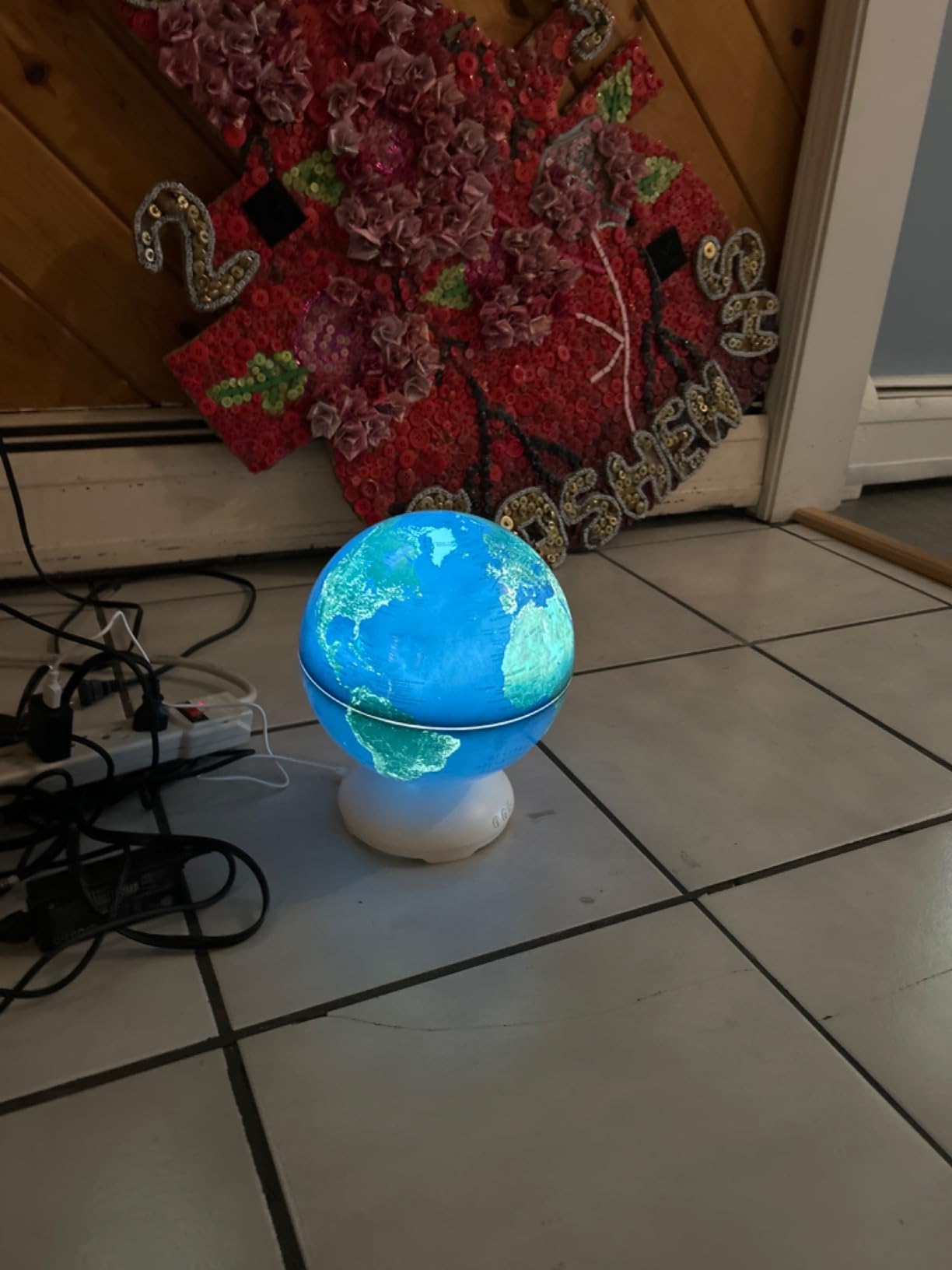
The chrome steel base is a real highlight. It has a non-tip design that actually works, even when my 4-year-old gave it an enthusiastic spin. The 360-degree rotation is smooth and the globe stays firmly planted. For under $40, I was not expecting this level of build quality.
The main trade-off is size. At 7.2 inches in diameter, this globe is smaller than standard 12-inch educational globes. Country labels can be hard to read for smaller countries in Europe and Southeast Asia. Also, when the light is on, the constellation overlay makes it difficult to see the political map underneath.
Best Used As a Starter Globe
I recommend this globe for families with younger kids, ages 3 to 7, who are just starting their geography journey. The smaller size is less intimidating, and the night light feature keeps them engaged even outside school hours. For older kids doing serious geography study, you will want something larger.
It also works great as a second globe. We keep ours in the bedroom as a night light and constellation finder, while our larger globe stays in the school area.
Power and Placement Considerations
The LED light requires plugging into a wall outlet, which limits where you can place it. The cord is about 4 feet long. If you want it as a night light, make sure there is an outlet near the bed or dresser. The globe itself spins freely on battery-free bearings.
One thing to note: the plug type is standard US, so international buyers may need an adapter.
5. Educational Insights GeoSafari Talking Globe – Best Talking Globe
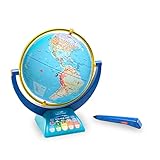
Educational Insights GeoSafari Talking Globe Featuring Bindi Irwin
12 inch rotating globe
Voiced by Bindi Irwin
1000+ facts
Smart stylus pen
3 learning modes
Ages 4-8
Pros
- Voiced by Bindi Irwin which kids love
- Over 1000 facts and quiz questions
- 3 modes including distance measurement
- 12 inch full-size globe
- Smart stylus pen with built-in speaker
Cons
- Highest price point on this list
- Sound comes only from the pen which can be quiet
- Losing the pen disables all talking features
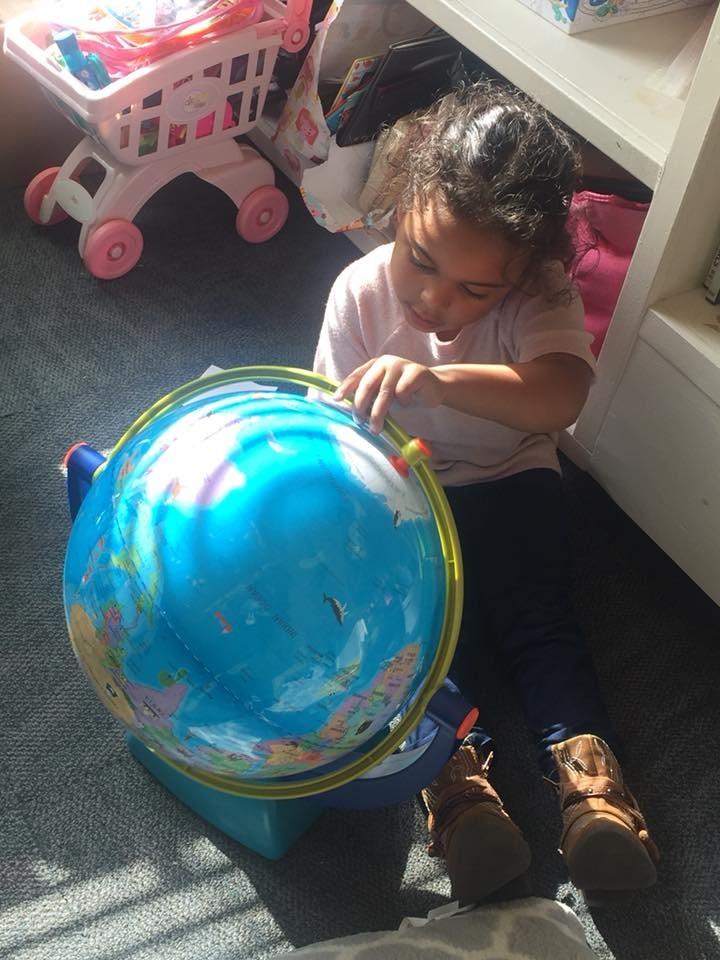
The Educational Insights GeoSafari Talking Globe is the premium option on our list, and the feature set justifies the investment for serious homeschool families. What immediately won my kids over was the voice of Bindi Irwin. Having a recognizable, enthusiastic wildlife personality narrate facts about animals and geography made the content feel more like a nature show than a lesson.
The smart stylus pen is the core interaction method. Kids touch any country, ocean, or landmark, and the pen’s built-in speaker delivers facts, names, and trivia. With over 1,000 facts and quiz questions built in, the content depth is impressive. My daughter spent a full week exploring Australia alone, learning about the Outback, the Great Barrier Reef, and native wildlife.
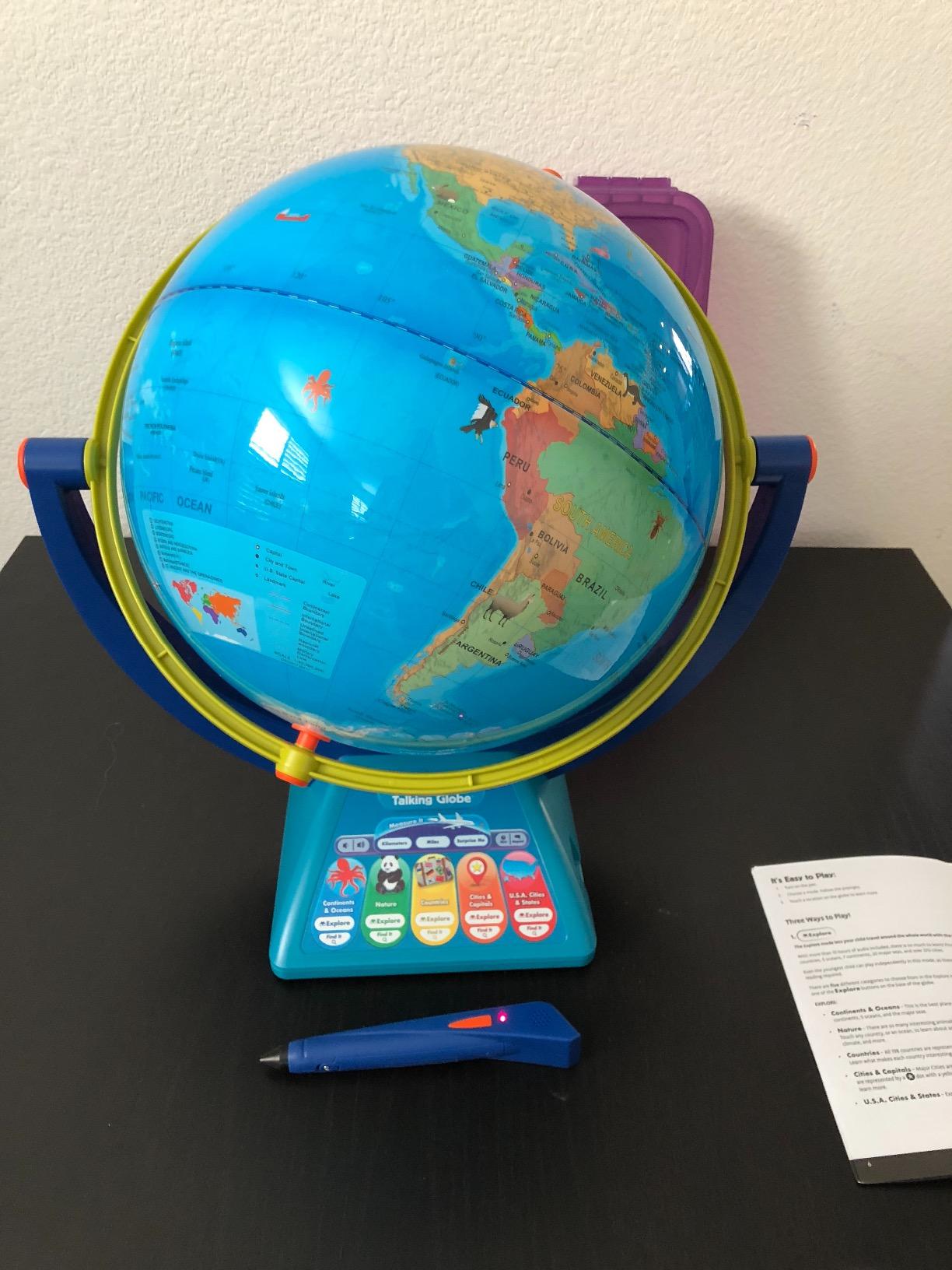
The three learning modes are well-designed. Explore mode lets kids freely tap and learn. Find It mode gives clues and challenges kids to locate specific countries or landmarks. Measure It mode calculates distances between two points, which is fantastic for teaching scale and relative geography. I used this mode extensively during our unit on world trade routes.
The biggest downside is the sound quality. All audio comes from a small speaker inside the stylus pen, not from the globe itself. In a quiet room, it is perfectly audible. But with two kids talking or background noise, you may struggle to hear. The pen is also a single point of failure. If it gets lost or broken, the talking functionality is completely gone.
Is the Premium Price Worth It
At around $147, this is the most expensive globe on our list. Whether it is worth it depends on how central geography is to your homeschool curriculum. If you do daily geography lessons, the depth of content and quality of the narration make it a worthwhile investment.
For families who only do occasional geography units, the LeapFrog Magic Adventures or PlayShifu Orboot offer similar interactivity at a lower price point.
Best Age Range for Maximum Value
The sweet spot is ages 4 to 8. Younger kids will enjoy the animal facts and Bindi Irwin’s narration, even if some of the quiz content is too advanced. Kids older than 8 may find some of the facts repetitive, though the Measure It mode still offers value for advanced learners.
The 12-inch globe size is standard, so the map is readable and detailed enough for real geography study.
6. Learning Resources Puzzle Globe – Best Montessori Globe for Preschool
Learning Resources Puzzle Globe – Earth Montessori Toys, Preschool Classroom Must Haves, STEM World Puzzles, Educational Geography Games, Fine Motor Skills, Gifts for Boys and Girls
7 continent puzzle pieces
Color-coded continents
Activity guide
8 inch diameter
Ages 3+
Glow in the dark
Pros
- Hands-on puzzle approach to geography
- Color-coded continents aid recognition
- Develops fine motor skills
- Activity guide with 30+ facts
- Glow in the dark feature kids love
Cons
- Some stickers may peel over time
- Antarctica is intentionally missing
- Small pieces could be a choking hazard for toddlers
The Learning Resources Puzzle Globe is a completely different breed of globe. Instead of a printed sphere, this is a 3D puzzle where each of the seven continents is a detachable piece. Kids physically remove continents, study their shapes, and snap them back into place. For my 4-year-old, this was her introduction to geography, and it worked beautifully.
The Montessori-style approach here is spot-on. Color-coded continent pieces help children associate shapes and colors with landmasses before they can even read. My daughter learned to identify Africa, Australia, and South America by their puzzle piece shapes within a week. The fine motor skill development is an added bonus that makes this feel like two educational toys in one.
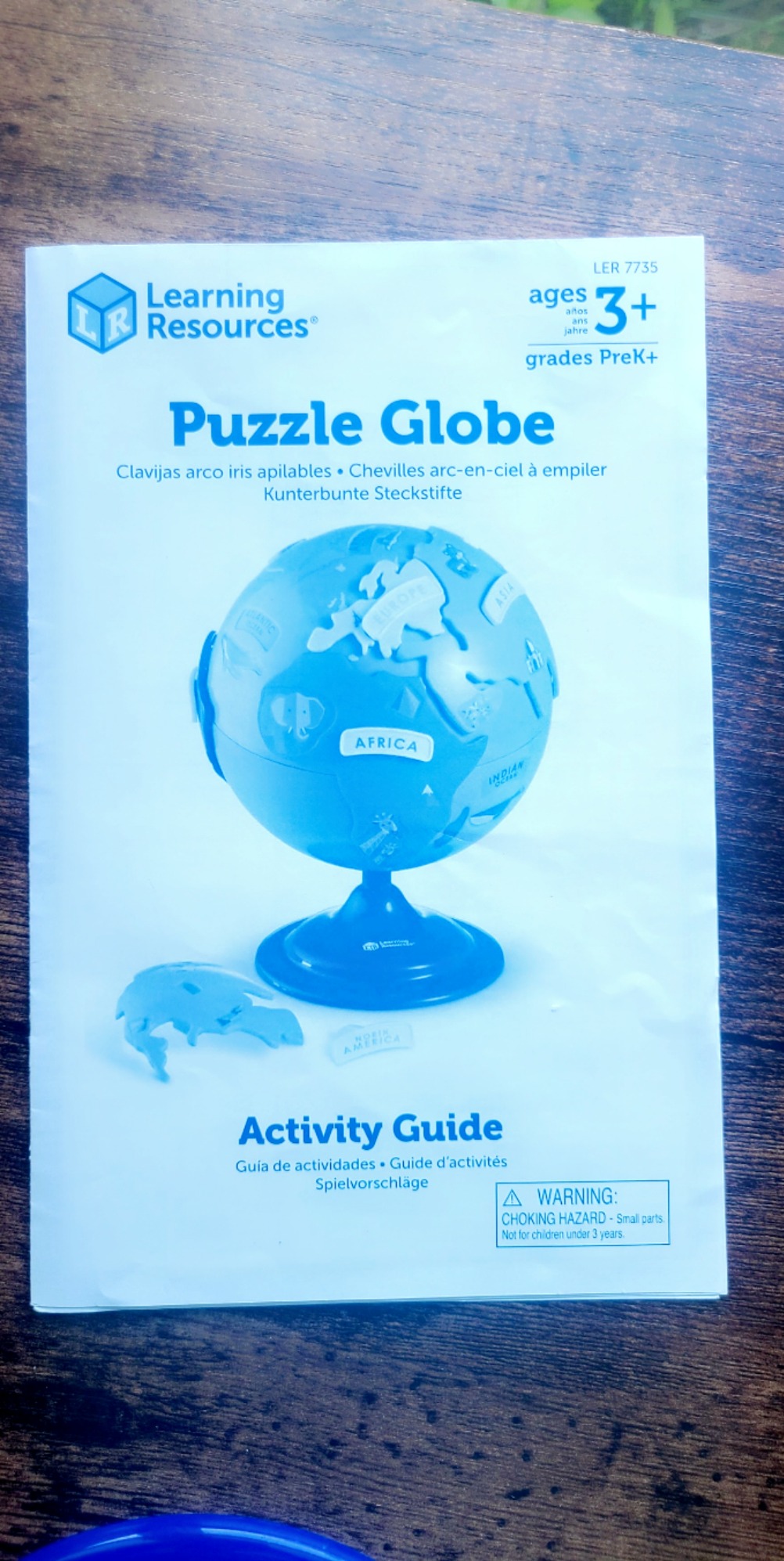
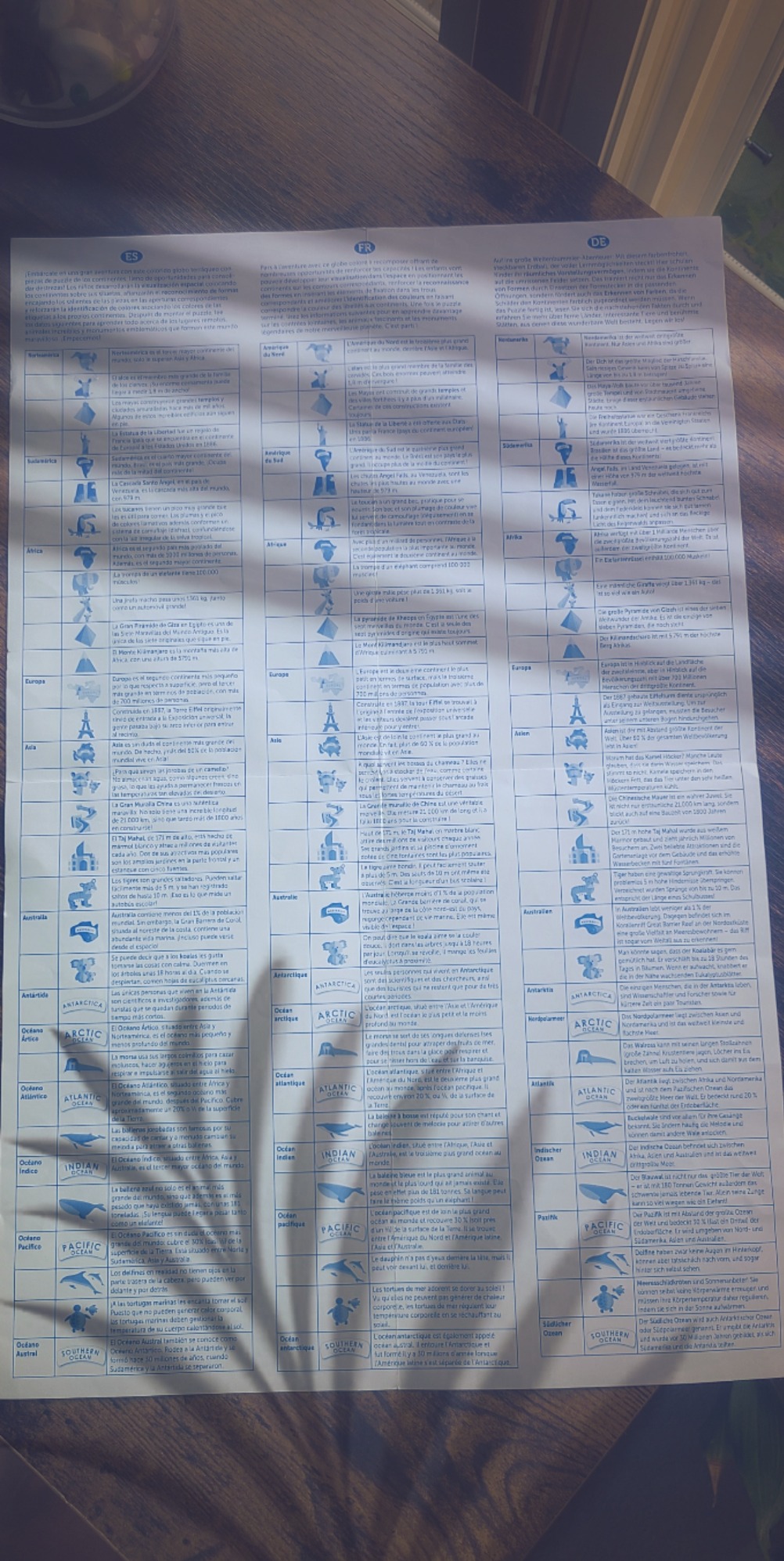
The included activity guide offers 30+ fascinating facts that you can read together. I used these during our morning circle time to introduce one new fact per day. The glow-in-the-dark feature is a fun surprise that my kids discovered at bedtime, and it gave them one more reason to engage with the globe outside of formal lesson time.
There are a couple of things to watch out for. The continent stickers on some pieces started peeling after a few months of heavy use. A bit of craft glue fixed it, but it is worth noting. Also, Antarctica is intentionally omitted from the puzzle, which confused my son who had learned all seven continents already.
Why It Works for Montessori Homeschooling
The hands-on, tactile approach aligns perfectly with Montessori principles. Children learn by doing, and taking apart and reassembling the globe gives them a physical understanding of how continents fit together. The color-coding reinforces visual memory, and the self-correcting nature of the puzzle means kids can work independently.
For families following a Montessori curriculum, this globe pairs well with continent studies and cultural units. It is the kind of material kids will return to repeatedly on their own.
Safety and Age Considerations
The manufacturer recommends ages 3 and up, and I agree with that. The continent pieces are small enough to be a choking hazard for children under 3. The plastic is durable and has survived being dropped, thrown, and stepped on in our house.
For toddlers under 3, consider a soft cloth globe or a beach ball-style globe instead.
7. Waypoint Geographic Parlamondo Interactive Talking Globe – Best Multilingual Globe
Waypoint Geographic Parlamondo Interactive Talking Globe, 12″ Diameter Illuminated Globe with Games, Rechargeable Talking Pen, USB Cord and Power Plug
12 inch illuminated globe
Rechargeable talking pen
1000s of facts
7 languages
Multiple games
Ages 8+
Pros
- 1000s of facts and points of interest
- Rechargeable pen with volume control
- Illuminated globe with internal LED
- 7 languages for multilingual learning
- Cartography made in USA
Cons
- Durability concerns with the plastic stand
- Reports of quality issues on arrival
- Not Prime eligible
- Only 45 reviews to gauge reliability
The Waypoint Geographic Parlamondo is the most feature-dense globe on our list. It combines a talking pen, an illuminated sphere, multi-user games, and support for seven languages. For homeschool families teaching multiple languages or with bilingual backgrounds, this globe offers something no other product on this list can match.
I was impressed by the sheer volume of content. The talking pen delivers thousands of facts covering geography, history, culture, and points of interest. Touch a country and you hear its capital, population, government type, and notable landmarks. The depth here exceeds what the LeapFrog and Educational Insights globes offer, though the presentation is less polished.
The rechargeable pen is a smart design choice. Instead of swapping batteries every few weeks like with the LeapFrog, you just plug the pen into a USB charger. The built-in volume controls and on-off switch are practical touches. The internal LED light turns the globe into a study lamp and makes the political map easier to read in dim lighting.
How the 7-Language Feature Works in Practice
The multilingual support covers English, Spanish, French, German, Italian, Portuguese, and Dutch. You switch languages through the pen interface. This is where the Parlamondo shines for bilingual homeschool families or those teaching foreign languages. If you are using language learning tools, this globe adds a physical, geography-connected dimension to language study.
I tested the Spanish mode with my kids, who are learning basic Spanish. Hearing country names and facts in Spanish reinforced their vocabulary in a natural context. The pronunciation is clear and accurate across the languages I tested.
Quality Concerns to Be Aware Of
With only 45 reviews on Amazon, this globe has a much smaller user base than the other products on this list. Several reviewers reported quality control issues, including globes arriving with cosmetic defects and stands that feel wobbly. The plastic stand is noticeably less sturdy than the metal meridian on the Replogle.
I would recommend buying from a retailer with a good return policy, just in case you get a unit with issues. The globe itself is well-designed, but the manufacturing consistency seems to vary.
8. LeapFrog LeapGlobe – Best Globe for Toddlers and Preschoolers
LeapFrog LeapGlobe Light-Up and Touch Interactive Electronic Globe for Kids, Exploration Toy for Ages 3 and Up
48 touch points
Light-up rainbow colors
3 modes of play
Teaches languages and animals
Ages 3+
Pros
- 48 touch points designed for small hands
- Light-up features with rainbow colors
- Teaches French Mandarin and Spanish basics
- Exploration Music and Find-It modes
- Durable build quality for toddlers
Cons
- No included instructions
- Missing some places users expect
- Demo batteries need immediate replacement
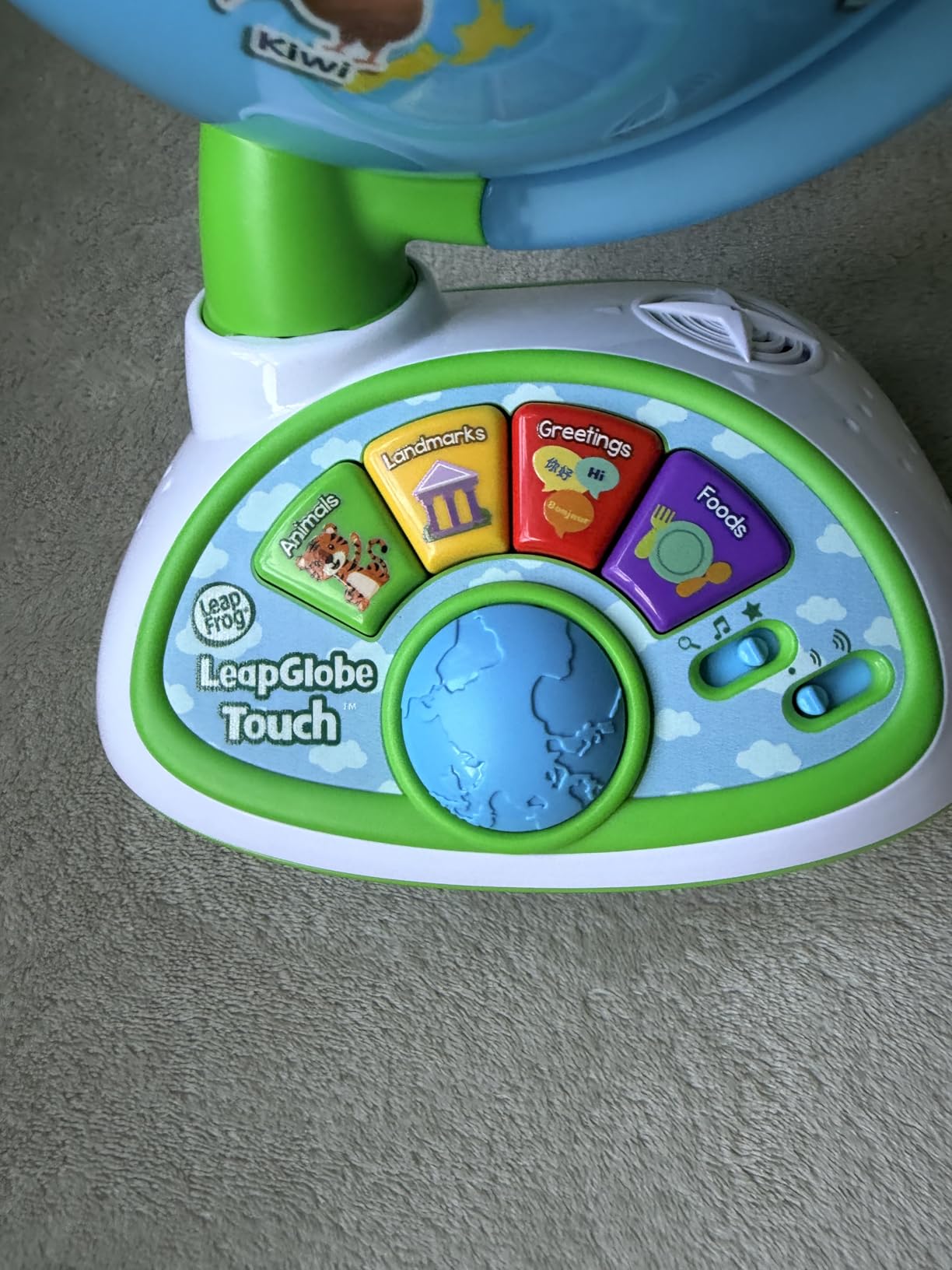
The LeapFrog LeapGlobe is designed specifically for the youngest learners on our list. With 48 touch points, light-up features, and content focused on animals, landmarks, and music, this is the globe I would buy for a 3 or 4-year-old who is just starting to show curiosity about the world. The tactile, colorful design speaks directly to preschool learning styles.
My youngest tester, age 3, was immediately drawn to the light-up touch points. Each time she pressed a country, rainbow colors lit up and the globe spoke a fact or played world music. The instant audio-visual feedback kept her engaged far longer than any other globe I put in front of her. The Music mode was her favorite, playing songs from different countries that we danced to during circle time.
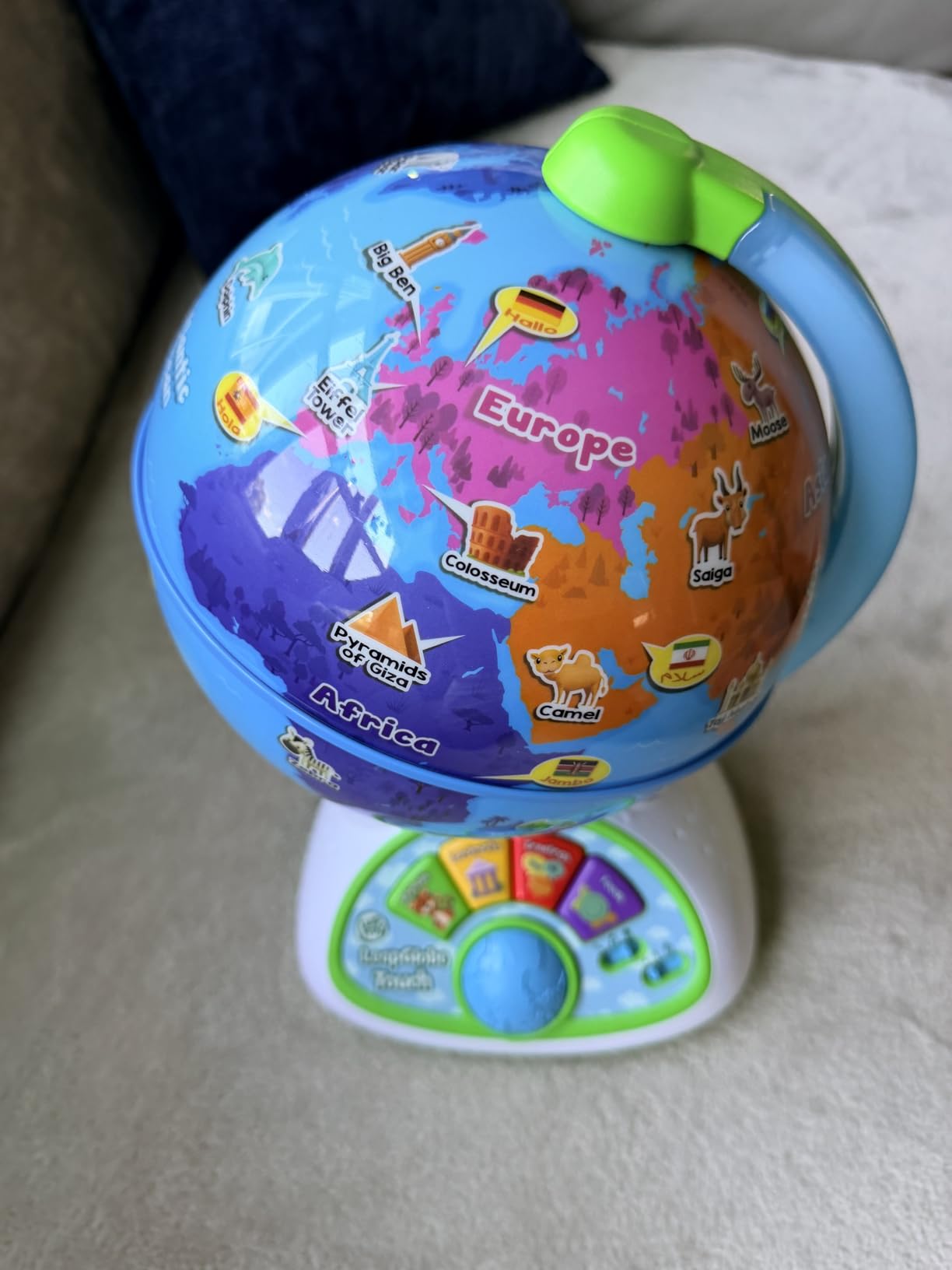
The language exposure is a nice touch. The LeapGlobe introduces basic words in French, Mandarin, and Spanish alongside English. These are not full language lessons, but they plant seeds of curiosity. When my daughter heard bonjour for the first time through the globe, she started saying it around the house for weeks.
The Find-It quiz mode is simple enough for a 3-year-old to understand. The globe asks the child to find a specific animal or landmark, and the light-up feature guides them. It is a low-pressure introduction to geography that feels more like play than learning.
How It Differs From the LeapFrog Magic Adventures
The LeapGlobe and the Magic Adventures Globe are both made by LeapFrog, but they target very different age groups. The LeapGlobe is simpler, brighter, and more durable, designed for ages 3 and up. The Magic Adventures has a video screen, deeper content, and targets ages 5 to 10.
If you have a toddler or young preschooler, the LeapGlobe is the better choice. If your child is in elementary school, go with the Magic Adventures.
Durability for the Youngest Users
This globe survived being dropped, sat on, and having juice spilled on it during our testing period. The plastic construction is tough and the touch points are sealed well. The only issue was the demo batteries, which died within the first day. Have a fresh set of AAs ready when you unbox it.
The lack of included instructions was frustrating at first, but the interface is intuitive enough that we figured it out within a few minutes.
How to Choose the Best Homeschool Globe for Your Kids
Choosing the right globe for your homeschool comes down to three main factors: your child’s age, your teaching style, and your budget. After testing 8 globes over several months, I developed a framework that makes the decision much easier.
Age-Based Recommendations
For ages 3 to 4, the best options are tactile and simple. The Learning Resources Puzzle Globe and the LeapFrog LeapGlobe are my top picks for this age range. Both emphasize touch, color, and physical interaction over reading and detailed facts. At this age, the goal is to build familiarity with the concept of a globe and basic continent recognition.
For ages 5 to 8, interactive globes shine. The LeapFrog Magic Adventures Globe, PlayShifu Orboot Earth, and Educational Insights GeoSafari Talking Globe all hit this sweet spot. Kids at this age can read, follow instructions, and benefit from structured quiz modes. They are also old enough to handle tablets for AR experiences.
For ages 9 and up, traditional globes with accurate cartography become more valuable. The Replogle Student Classic Globe with its raised relief and detailed political map is ideal for older students doing serious geography work. The Waypoint Geographic Parlamondo adds multilingual content for advanced learners.
Interactive vs Traditional Globes
This is the biggest decision you will make. Interactive globes with screens, apps, or talking pens offer higher engagement and more content, but they also mean more screen time, battery management, and potential technical issues. Traditional globes are simpler, more durable, and encourage self-directed exploration, but they lack the multimedia content that brings geography to life.
My recommendation for most homeschool families is to have one of each. Use the interactive globe for structured learning time and the traditional globe for free exploration. The combination gives kids both the depth of digital content and the tactile grounding of a physical world.
Durability for Active Kids
If your kids are rough on toys, pay close attention to build quality. The Learning Resources Puzzle Globe and the LeapFrog LeapGlobe are both built to withstand toddler-level abuse. The USA Toyz Illuminated Globe has a non-tip chrome steel base that survived multiple tumbles in our testing.
Traditional globes with paper-vinyl surfaces, like the Replogle Student Classic, require more careful handling. They are not the right choice for toddlers or very active preschoolers. Save those for kids who are old enough to treat learning materials with respect.
Budget Considerations
Globe prices in this roundup range from about $25 to $150. The budget tier under $40 includes the USA Toyz Illuminated Globe and the Learning Resources Puzzle Globe. Both deliver excellent value for younger kids. The mid-range tier from $50 to $70 includes the LeapFrog Magic Adventures, PlayShifu Orboot Earth, Replogle Student Classic, and LeapFrog LeapGlobe. These offer the best balance of features and value for most families.
The premium tier above $100 includes the Educational Insights GeoSafari Talking Globe and the Waypoint Geographic Parlamondo. These are worth the investment if geography is a major focus in your curriculum or if you want features like multilingual support and measurement tools.
Curriculum Alignment
Think about how the globe fits into your overall homeschool plan. If you follow a literature-based approach, a traditional globe lets kids look up places they read about in books. If you use a unit study method, interactive globes can anchor geography units with multimedia content. For Montessori families, the puzzle globe aligns with sensorial and cultural curriculum areas.
Many parents on homeschool forums recommend starting geography around age 4 with a simple globe and adding interactive features as kids grow. The key is matching the tool to your child’s developmental stage and your teaching approach.
FAQs
What is the best globe for children?
The best globe depends on the child’s age. For toddlers ages 3 to 4, the LeapFrog LeapGlobe or Learning Resources Puzzle Globe are ideal. For elementary kids ages 5 to 10, the LeapFrog Magic Adventures Globe offers the best all-around experience with its built-in screen, BBC videos, and interactive stylus. For older students, the Replogle Student Classic Globe provides accurate cartography and raised relief for serious geography study.
What is the best interactive globe for children?
The LeapFrog Magic Adventures Globe is the best standalone interactive globe, offering a built-in screen with over 5 hours of BBC video content and a stylus for exploring countries. If you already own a compatible iPad, the PlayShifu Orboot Earth provides an impressive augmented reality experience with over 1,000 facts at a lower price point.
What are some educational globes for kids?
Educational globes range from simple puzzle globes for preschoolers to advanced talking globes for older students. Top options include the Learning Resources Puzzle Globe for Montessori learning, the LeapFrog Magic Adventures for interactive video content, the Educational Insights GeoSafari Talking Globe for narration-based learning, and the Replogle Student Classic for traditional cartography with raised relief.
What are two drawbacks of globes?
Two common drawbacks of globes are limited readability for small countries and lack of updatable information. Unlike digital maps, physical globes cannot reflect political changes, name updates, or border revisions. Additionally, smaller globes under 10 inches in diameter make it difficult to read tiny country labels, especially in densely packed regions like Europe and Southeast Asia.
At what age should a child get their first globe?
Children can benefit from a globe as early as age 3. For toddlers and preschoolers, simple tactile globes like the Learning Resources Puzzle Globe or the LeapFrog LeapGlobe introduce basic continent and world concepts through touch and play. By ages 5 to 6, kids are ready for more detailed globes with interactive features that support structured geography learning.
Final Thoughts on the Best Homeschool Globes for Kids
After months of testing, the LeapFrog Magic Adventures Globe remains our top pick for the best homeschool globe for kids. Its combination of BBC video content, interactive stylus, and quiz games creates the most complete geography learning experience without needing a separate device. For budget-conscious families, the USA Toyz Illuminated Globe delivers incredible value with its 3-in-1 design. And for the youngest learners, the LeapFrog LeapGlobe and Learning Resources Puzzle Globe make geography accessible from age 3.
The best homeschool globes are the ones your kids will actually use. Pick the one that matches their age, your teaching style, and your budget, and watch their curiosity about the world take off. Any globe on this list will serve your homeschool geography program well in 2026.