
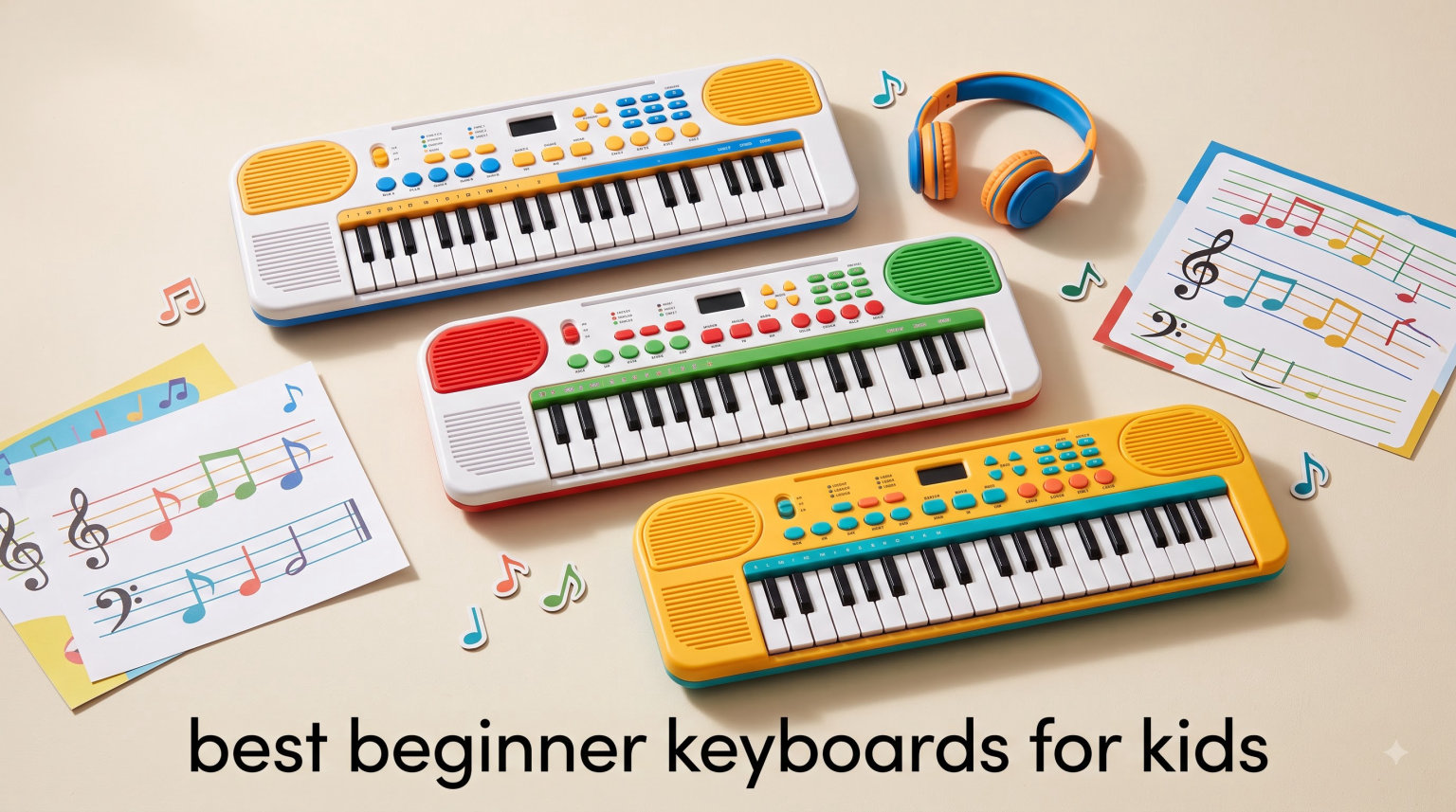
Getting a child started in music feels overwhelming the moment you start shopping for keyboards. There are hundreds of models, conflicting advice in parent forums, and a huge price range from $35 toys to $500 digital pianos. Our team spent weeks comparing the best beginner keyboards for kids to save you the guesswork.
I have helped two nieces and a nephew pick their first keyboards over the past few years, and I made plenty of mistakes along the way. One bought a toy keyboard with mini keys she outgrew in six months. Another got a model without touch sensitivity, which slowed her progress in lessons. Those experiences taught me exactly what matters when you want a kids piano keyboard that actually supports learning.
This guide covers eight keyboards across three age tiers: toddlers ages 3 to 6, elementary kids ages 7 to 11, and preteens ready for more serious study. We focused on models with real learning value, not just flashy lights. Whether you need a first keyboard for child learners or an upgrade from a toy, you will find a solid match here. Every pick includes specs, real customer feedback, and clear guidance on who it suits best.
Table of Contents
Top 3 Picks for Best Beginner Keyboards for Kids
Out of all eight keyboards we tested and compared, three stand out for different family situations. The RockJam RJ761 wins as our editor’s choice because it ships with a complete accessory bundle and works great for multiple age groups. The Casio Casiotone CT-S200 takes the best value spot with its 400 tones, portable build, and class-compliant USB MIDI for learning apps. The Alesis Melody 61 MK4 lands as our budget pick since it packs a stand, bench, headphones, and lesson software into one affordable package.

RockJam RJ761 61 Key Keyboard
- Complete bundle with stand
- bench
- headphones
- sustain pedal
- 200 sounds
- MIDI output

Casio Casiotone CT-S200
- 400 tones
- 77 rhythms
- USB-MIDI for learning apps
- 7lbs with carry handle
- Dance Music Mode
Alesis Melody 61 MK4
- 300 sounds
- 300 rhythms
- stand
- bench
- headphones
- Skoove and Melodics lessons included
Best Beginner Keyboards for Kids in 2026
Before diving into individual reviews, here is a side-by-side comparison of all eight keyboards. This quick reference table covers the essentials so you can narrow down your options fast. Each model targets a specific age range and budget, so think about your child’s age, commitment level, and whether you want a learning toy or a real practice instrument.
| Product | Specifications | Action |
|---|---|---|
| RockJam RJ761 61 Key Keyboard |
|
Check Latest Price |
| Casio Casiotone CT-S200 |
|
Check Latest Price |
 Yamaha YPT280 61-Key Yamaha YPT280 61-Key |
|
Check Latest Price |
| Alesis Melody 61 MK4 |
|
Check Latest Price |
 Casio Casiotone SA-81 Casio Casiotone SA-81 |
|
Check Latest Price |
 WOSTOO 61 Key Kids Keyboard WOSTOO 61 Key Kids Keyboard |
|
Check Latest Price |
 Vangoa VGK611 Lighted Keys Vangoa VGK611 Lighted Keys |
|
Check Latest Price |
 M SANMERSEN 61-Key Kids Piano M SANMERSEN 61-Key Kids Piano |
|
Check Latest Price |
1. RockJam RJ761 61 Key Keyboard Piano – Best All-In-One Starter Bundle
RockJam RJ761 61 Key Keyboard Piano Kit, Stand, Stool, Sustain & Headphones
61 full-size keys
200 sounds and 200 rhythms
Complete bundle with stand, bench, headphones, sustain pedal
MIDI output for DAW integration
Touch screen display
Pros
- Everything included in one box for immediate setup
- Stand and padded stool are sturdy and adjustable
- Comes with key stickers for fast note learning
- Includes QR code for Simply Piano app
- MIDI output works with Ableton and Logic
- 30 demo songs with comprehensive learn function
Cons
- Keys are not velocity sensitive so no dynamics practice
- Only 61 keys instead of full 88
- Built-in music stand feels a bit flimsy
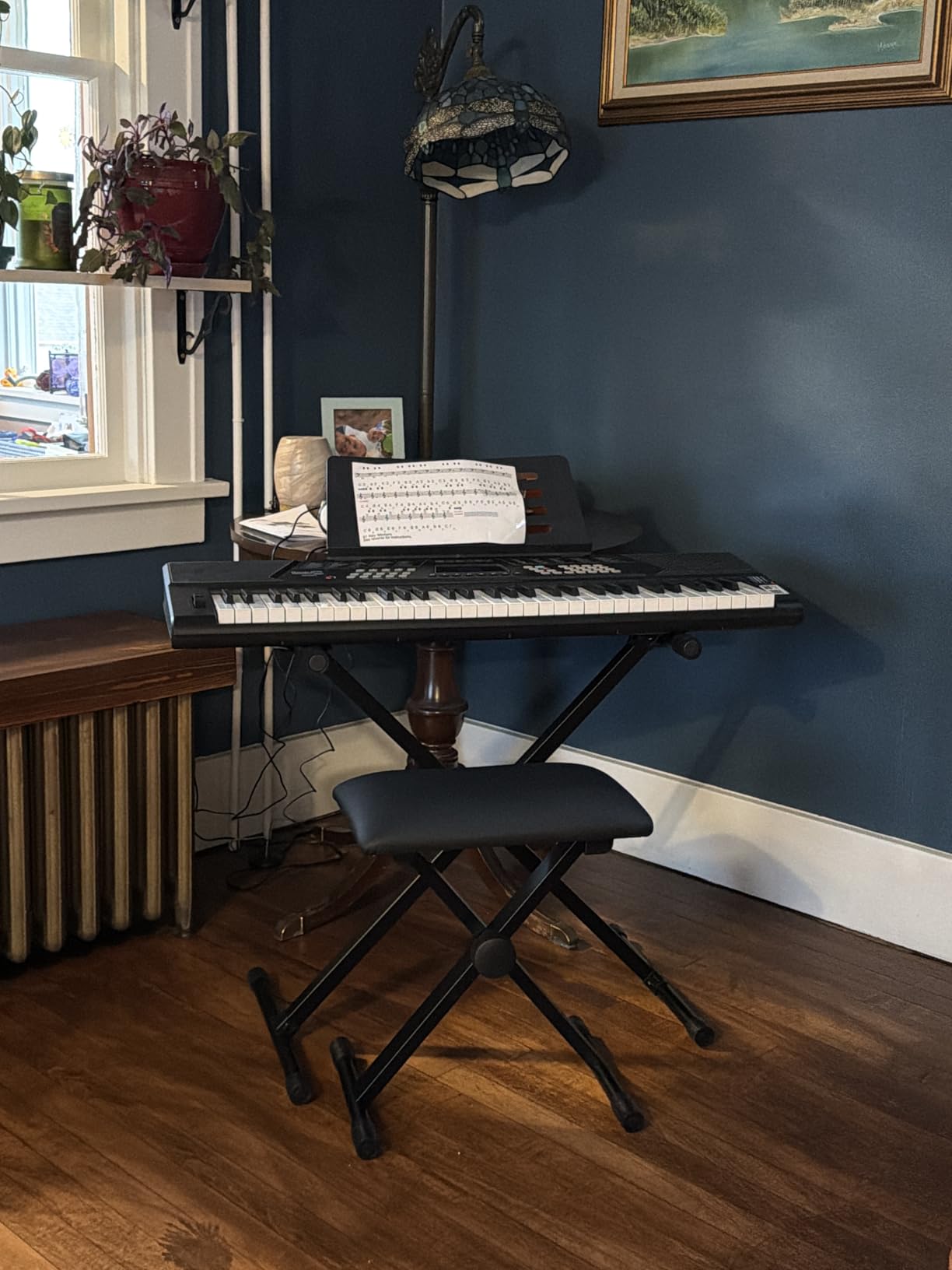
When my sister asked me which keyboard to buy her 8-year-old daughter, I pointed her straight to the RockJam RJ761. The reason is simple: this is one of the few beginner keyboards for kids that arrives with literally everything you need to start playing the same day. You get the keyboard, an adjustable stand, a foldable padded bench, on-ear headphones, a sustain pedal, keynote stickers, and even Simply Piano app access via a QR code.
The 61 full-size keys give a child the feel of a real instrument, which matters more than most parents realize. Mini keys on toy keyboards train the wrong muscle memory and slow down the transition to a standard piano later. With this RockJam model, a kid learns proper finger placement from day one. The touch screen display provides immediate visual feedback, and the 200 sounds plus 200 rhythms keep practice sessions interesting.
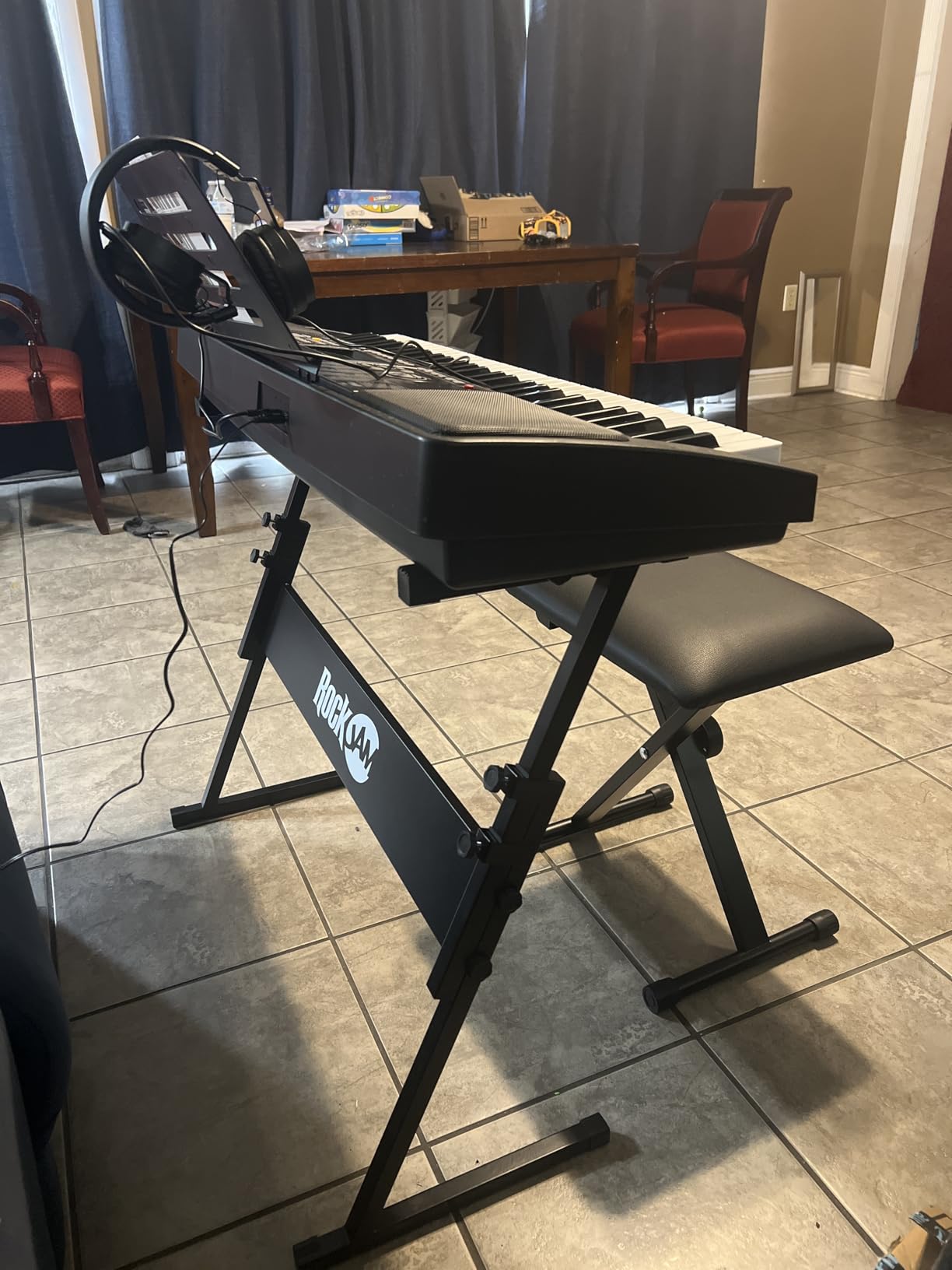
Setting it up took my sister about 15 minutes from box to first song. The stand is sturdier than I expected for the price, and the bench holds an adult without wobbling. The included headphones are decent enough for private practice, which parents will appreciate during those early weeks of repetitive scales. The sustain pedal adds expressive possibilities that toy keyboards simply cannot match.
The biggest drawback is the lack of velocity-sensitive keys. Your child cannot practice dynamics like playing softly versus loudly, which becomes important once they reach intermediate pieces. The music stand is also on the flimsy side, so I recommend a separate sheet music holder if your kid uses physical books. Despite these limitations, this is the best beginner keyboard for kids who want a complete setup without shopping for accessories separately.
Who This Keyboard Suits Best
The RockJam RJ761 is ideal for kids ages 7 to 12 who are just starting lessons and need a complete practice station at home. It works especially well for families on a budget who want to avoid buying accessories separately. The bundled stand, bench, and headphones make it a turnkey solution for parents who have no idea what else a beginner needs.
It also suits kids who want to record their playing or connect to learning apps, thanks to the MIDI output. If your child already takes lessons and shows real interest, this bundle gives them a proper practice environment without the investment of a full digital piano.
What to Watch Out For
Plan to upgrade within two years if your child gets serious about piano. The non-velocity keys become a real limitation once dynamics enter the picture. Also, the keyboard weighs about 20 pounds, so it stays mostly stationary on the stand rather than being a grab-and-go practice tool.
Some customers mention durability concerns after heavy daily use, so handle the touch screen and buttons with care. If your kid tends to be rough on electronics, consider a more rugged model or set clear rules about gentle use from the start.
2. Casio Casiotone CT-S200 – Best Value Portable Keyboard
Casio Casiotone CT-S200 – 61-Key Portable Keyboard for Beginners | 400 Tones, 77 Rhythms, LCD Display, Dance Music Mode, USB-MIDI, Stereo Speakers | Includes Power Supply & Music Rest | Black
61 full-size keys
400 tones and 77 rhythms
Weighs just 7lbs with carry handle
USB-MIDI class-compliant
Dance Music Mode
Pros
- Ultra lightweight at 7lbs with built-in carry handle
- 400 tones cover huge variety of instruments
- Class-compliant USB-MIDI works with Mac
- PC
- and iPad
- Dance Music Mode is fun and engaging
- Battery powered for portable practice
- Casio Music Space app connectivity
Cons
- Internal speakers lack bass response
- Micro-USB MIDI port feels fragile
- Keys are not velocity-sensitive or weighted
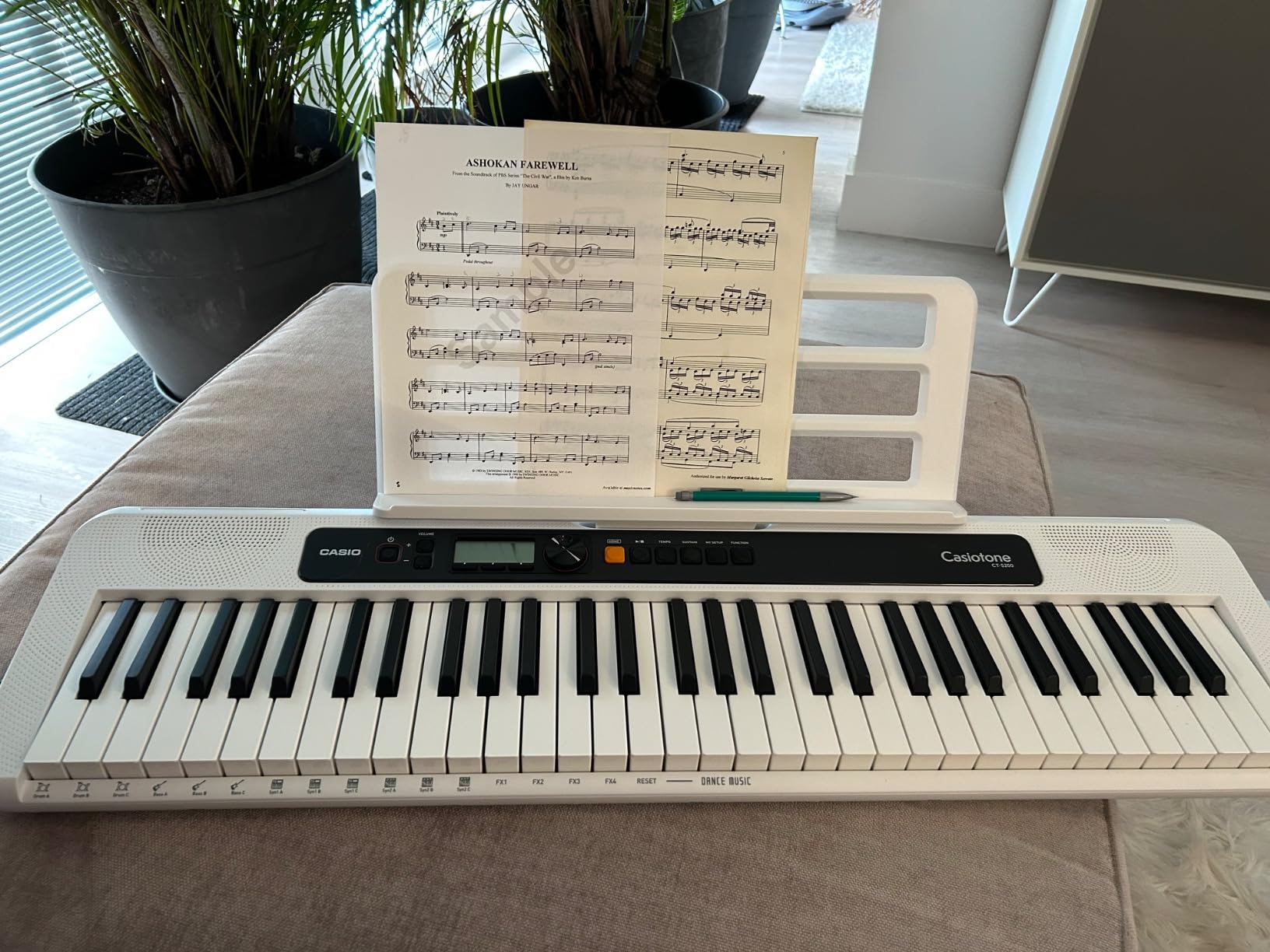
The Casio Casiotone CT-S200 is the keyboard I personally recommend most often to parents, and after testing it I understand why it earns such high ratings. At just 7 pounds with a built-in carry handle, this is a kids piano keyboard that a child can actually move from bedroom to living room without help. That portability matters more than you might think, because a keyboard that lives in a closet never gets played.
What sets the CT-S200 apart from cheaper Casio models is the sound quality and learning integration. The 400 tones cover everything from grand pianos to synthesizers, and the 77 rhythms give kids backing tracks in any genre. The Dance Music Mode is surprisingly fun: it lets your child trigger basslines, drum loops, and effects from the keys to create live EDM remixes. My nephew spent an entire weekend just playing with that feature.
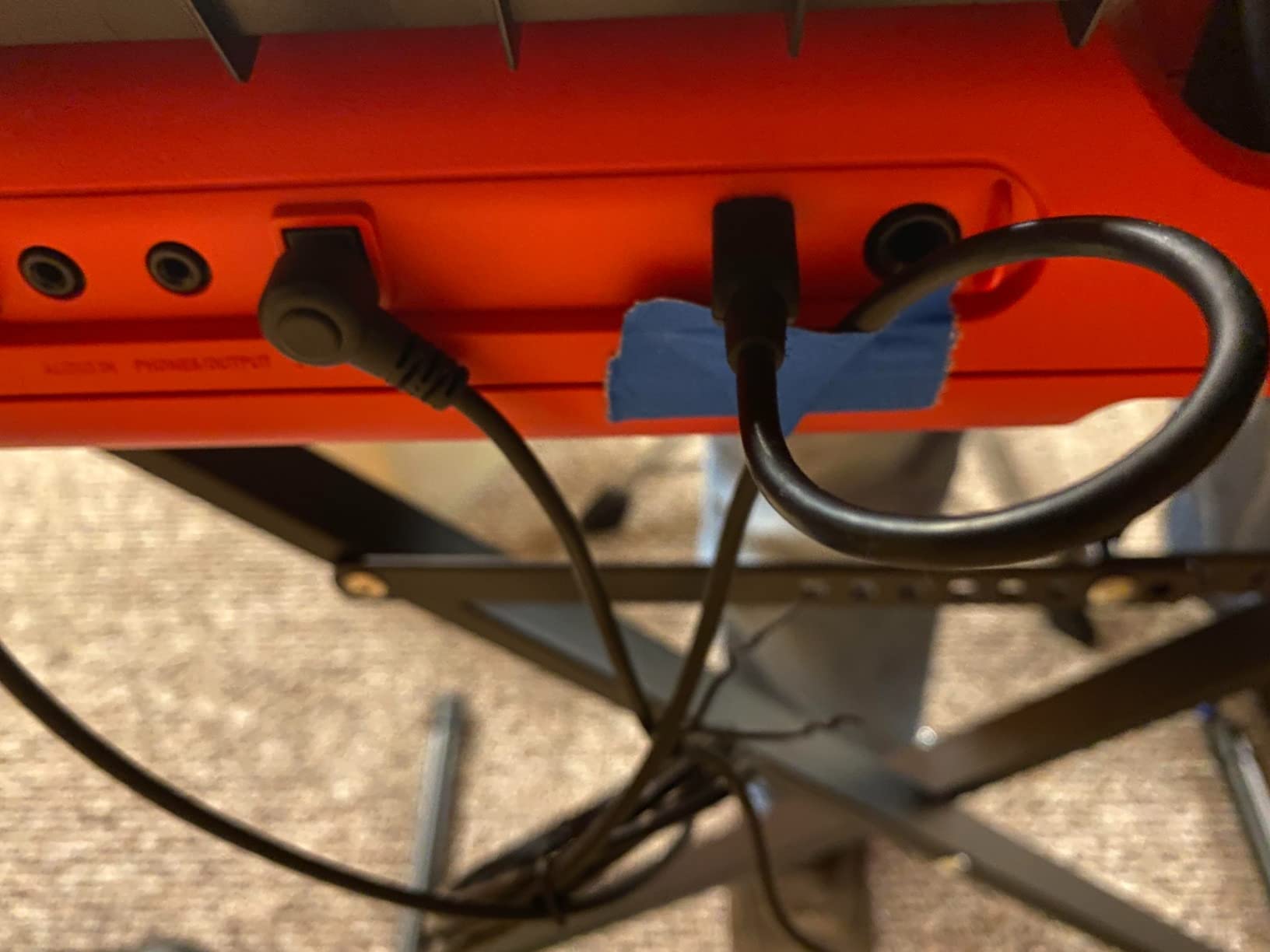
The class-compliant USB-MIDI connection is the standout feature for any parent who wants to use iPad learning apps. You plug the CT-S200 into an iPad with a USB cable, fire up SimplyPiano or Casio Music Space, and the keyboard becomes a real-time input device that tracks every note your child plays. This is exactly the kind of learning integration that traditional keyboards miss entirely.
The downsides are real but manageable. The internal speakers sound thin, especially on bass patches, so plan to use headphones or external speakers for the best experience. The micro-USB port used for MIDI feels fragile, so be gentle when plugging and unplugging cables. The keys are not velocity-sensitive, which means your child cannot learn to control volume through touch.
Best Apps and Learning Tools That Work With It
The CT-S200 pairs perfectly with Casio’s own Music Space app, which includes interactive lessons, song libraries, and visual feedback. Beyond that, the class-compliant USB-MIDI works with SimplyPiano, Flowkey, Piano Maestro, and most other popular piano learning apps on iPad and iPhone.
For kids who already take in-person lessons, the 60 built-in songs with right-hand and left-hand lesson support give them something to practice between sessions. The 10 reverb types add variety and help children understand how different acoustic spaces affect sound.
How It Compares to Higher-Priced Casio Models
The CT-S200 sits below the CT-S1 and CT-S500 in the Casio lineup, but it offers more tones and rhythms than the entry-level CT-S1. You give up the velocity-sensitive keys found on the CT-S500, but you also pay significantly less. For a beginner, that tradeoff is worth it.
If your child decides to get serious after a year of practice, the upgrade path is clear: move up to a Casio CT-S500 or a Privia PX-S1100 with weighted keys. The CT-S200 then becomes a portable practice keyboard for travel or a MIDI controller for computer music projects.
3. Yamaha YPT280 61-Key – Best for Ear Training and Built-In Songs
Yamaha 61-Key Portable Keyboard for Beginners with Built-In Songs, Quiz Mode, Music Rest, with Power Adapter YPT280
61 full-size keys
Hundreds of built-in songs
Quiz Mode ear training
Smart Chord feature
Portable Grand Piano button
Pros
- Yamaha signature sound quality
- Quiz Mode builds ear training and melodic memory
- Smart Chord lets kids play complex chords with one finger
- Portable Grand Piano button for instant rich piano tone
- Lightweight at 8.8 lbs
- Hundreds of built-in songs including children classics
Cons
- No power on/off indicator light
- Keys are not velocity-sensitive
- No built-in lessons with feedback
- Only 61 keys
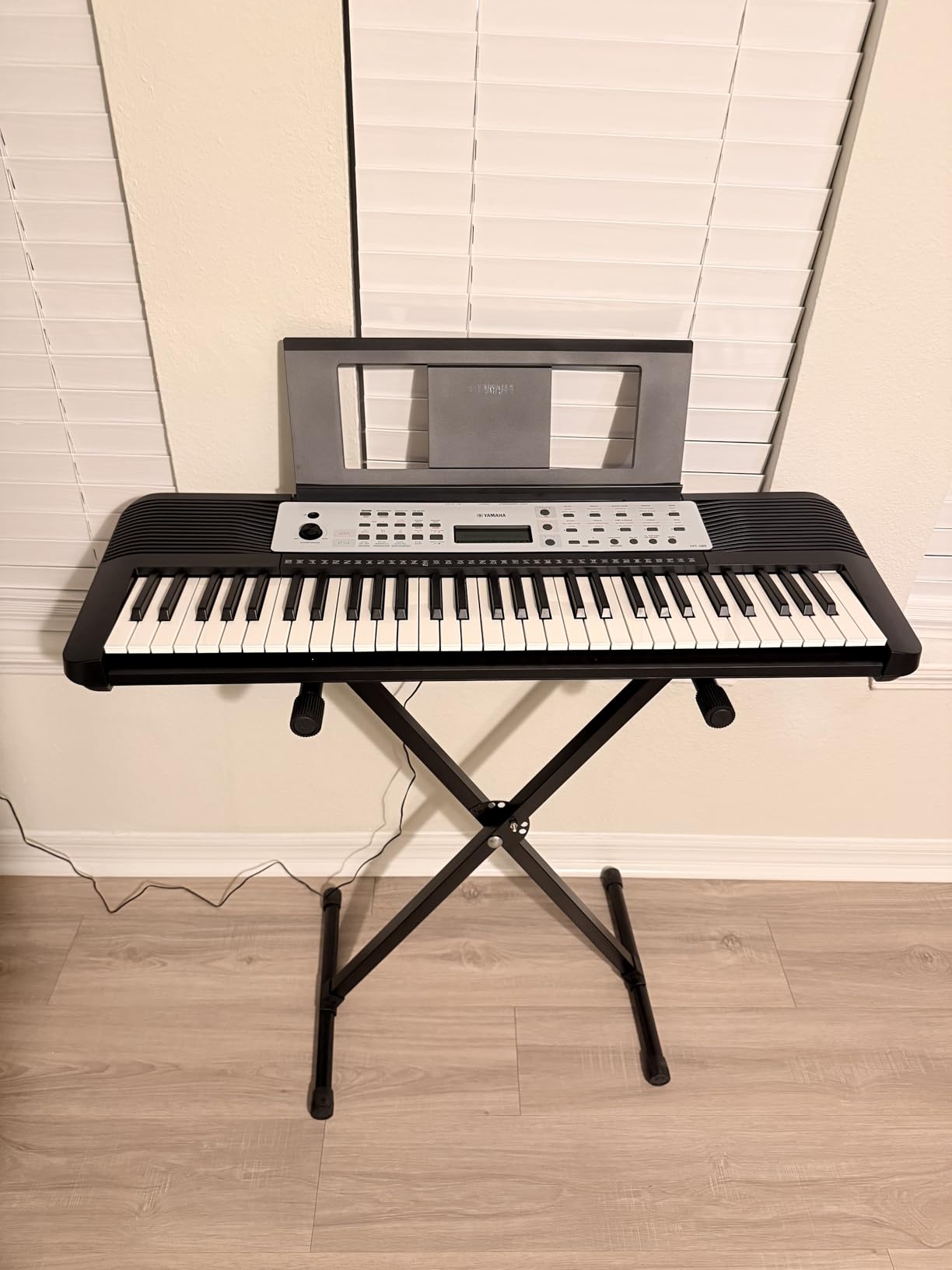
The Yamaha YPT280 brings something the other keyboards on this list cannot match: Yamaha’s decades of experience building world-class pianos. Even at this entry price, the sound engine delivers a richness that immediately sets it apart from generic brands. The Portable Grand Piano button gives your child instant access to a warm, full-bodied piano tone that sounds nothing like a cheap toy.
What makes the YPT280 special for kids is the Quiz Mode. This feature turns ear training into a game by playing short melodies and asking the child to play them back from memory. Two ear-training games strengthen melodic memory and listening skills, which are foundational for any young musician. My niece spent hours on Quiz Mode without realizing she was doing serious musical exercise.
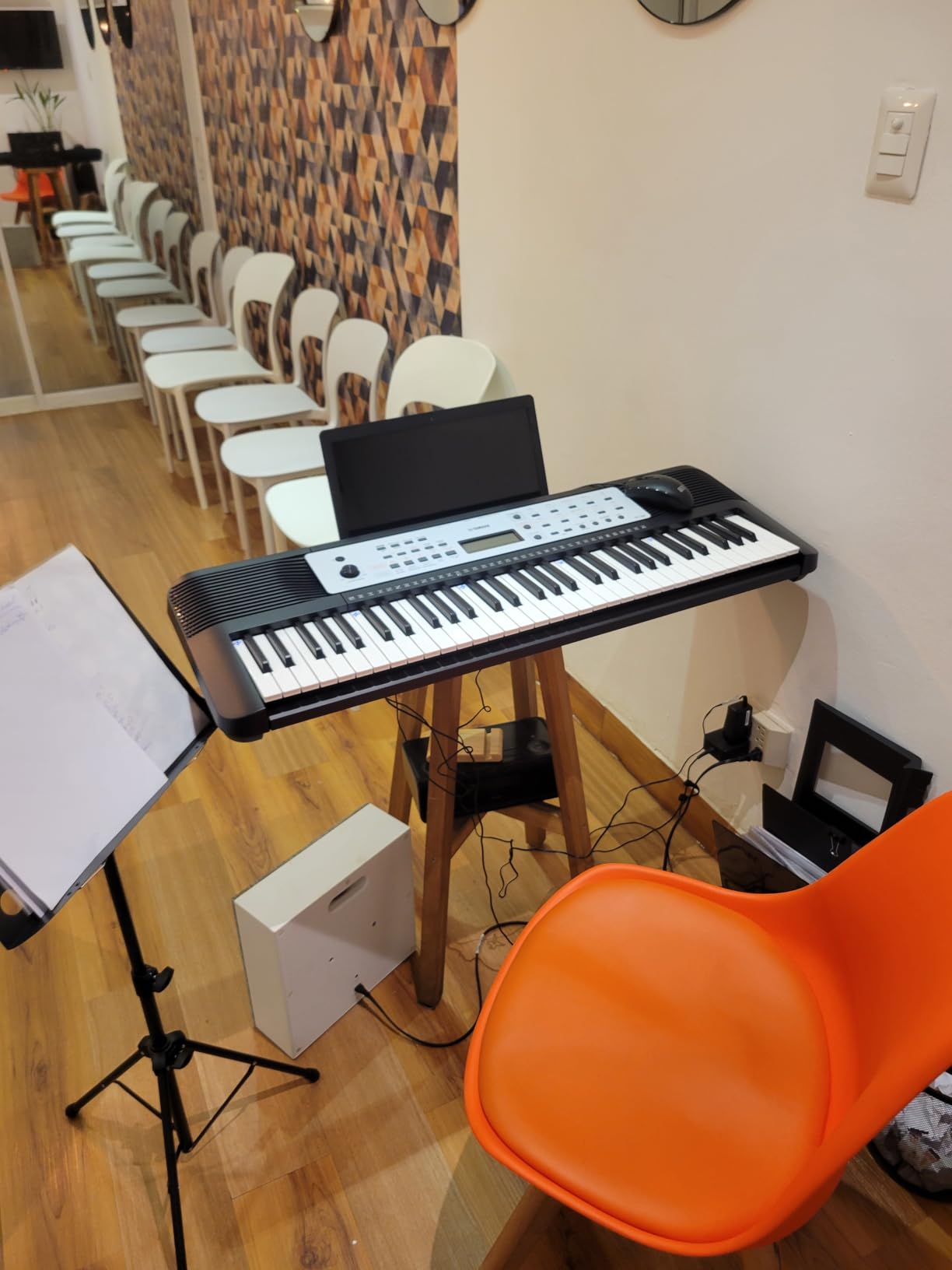
The Smart Chord feature is another winner for beginners. Instead of forcing a child to learn complex finger shapes for jazz chords or extended harmonies, Smart Chord lets them play a full chord with a single finger. This means a 7-year-old can sound like they are playing real accompaniment to songs within the first week of practice. The hundreds of built-in songs span popular hits, children’s classics, and traditional pieces.
The main frustration is the lack of a power indicator light. You cannot tell at a glance whether the keyboard is on or off, which leads to wasted battery or accidental sound bursts. The keys are also not velocity-sensitive, so your child will not learn dynamics on this model. For the price, though, the sound quality and learning features make this one of the best beginner keyboards for kids who want a Yamaha without spending a fortune.
How the Quiz Mode Helps Kids Learn Faster
Quiz Mode works by playing a short melody and then waiting for the child to reproduce it on the keys. Correct notes light up and play, while mistakes are simply ignored rather than penalized. This positive feedback loop keeps kids engaged and builds confidence quickly.
Ear training is one of the hardest skills to teach young children, and most keyboards ignore it completely. Having it built into the instrument means your child practices listening every single session, not just when a teacher is present.
Battery Life and Portability for Travel Practice
The YPT280 weighs just 8.8 pounds and runs on six AA batteries, which means a kid can take it to grandma’s house, on vacation, or to a friend’s place for jam sessions. Battery life runs about 6 to 8 hours with typical use, so pack a spare set for longer trips.
The included power adapter handles home practice, so you only need batteries when you are away from an outlet. The compact footprint fits on most desks and tables, making it a great choice for apartments and small practice spaces.
4. Alesis Melody 61 MK4 – Best Budget Bundle for Beginners
Alesis Melody 61 MK4 61-Key Piano Keyboard Bundle
61 keys standard size
300 sounds and 300 rhythms
Stand, bench, headphones, tablet stand included
USB-MIDI
Skoove and Melodics lessons
Pros
- Full accessory kit included for one low price
- Setup takes about 10 minutes from box to playing
- Stand and bench are surprisingly sturdy
- 300 sounds and 300 rhythms offer huge variety
- Skoove and Melodics lesson software included
- Built-in metronome and Record Mode
- Battery powered for portable practice
Cons
- Included headphones are low quality
- Keys are not velocity-sensitive
- Some units report selector knob defects
- Only 61 keys
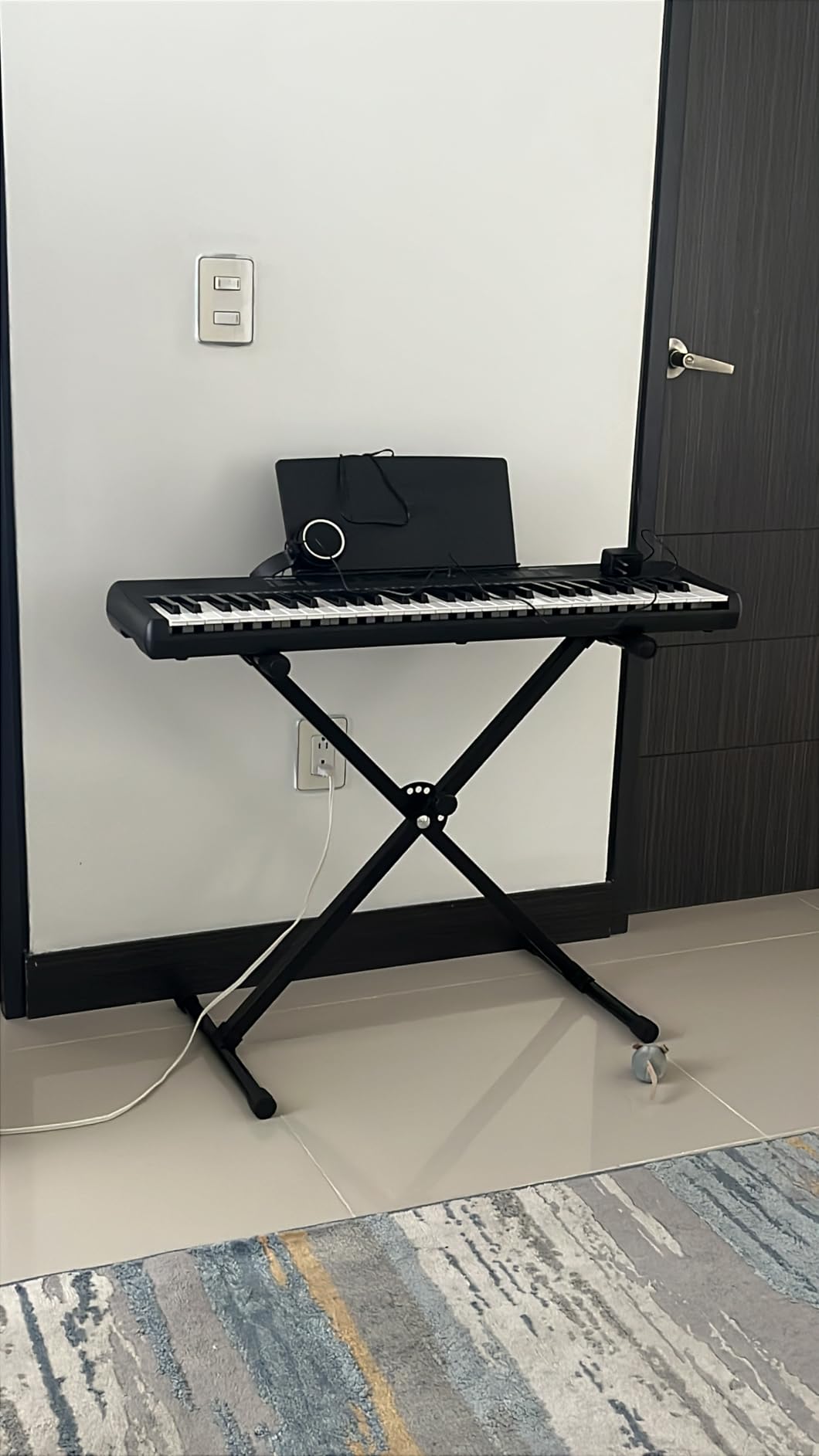
If you want a complete starter kit without spending a fortune, the Alesis Melody 61 MK4 is hard to beat. For less than what some companies charge for a keyboard alone, Alesis includes the keyboard, an adjustable stand, a bench, headphones, and a tablet or sheet music stand. The entire setup takes about 10 minutes from unboxing to first song, which makes it perfect for an impatient kid eager to start playing.
The 300 sounds and 300 accompaniment rhythms give a child an enormous sonic playground to explore. The Accompaniment Rhythm Mode generates genre-based play-along songs, so your kid can practice with a backing band in rock, jazz, pop, or classical style. The Record Mode lets them capture and review their practice sessions, which is a feature usually found on more expensive models.
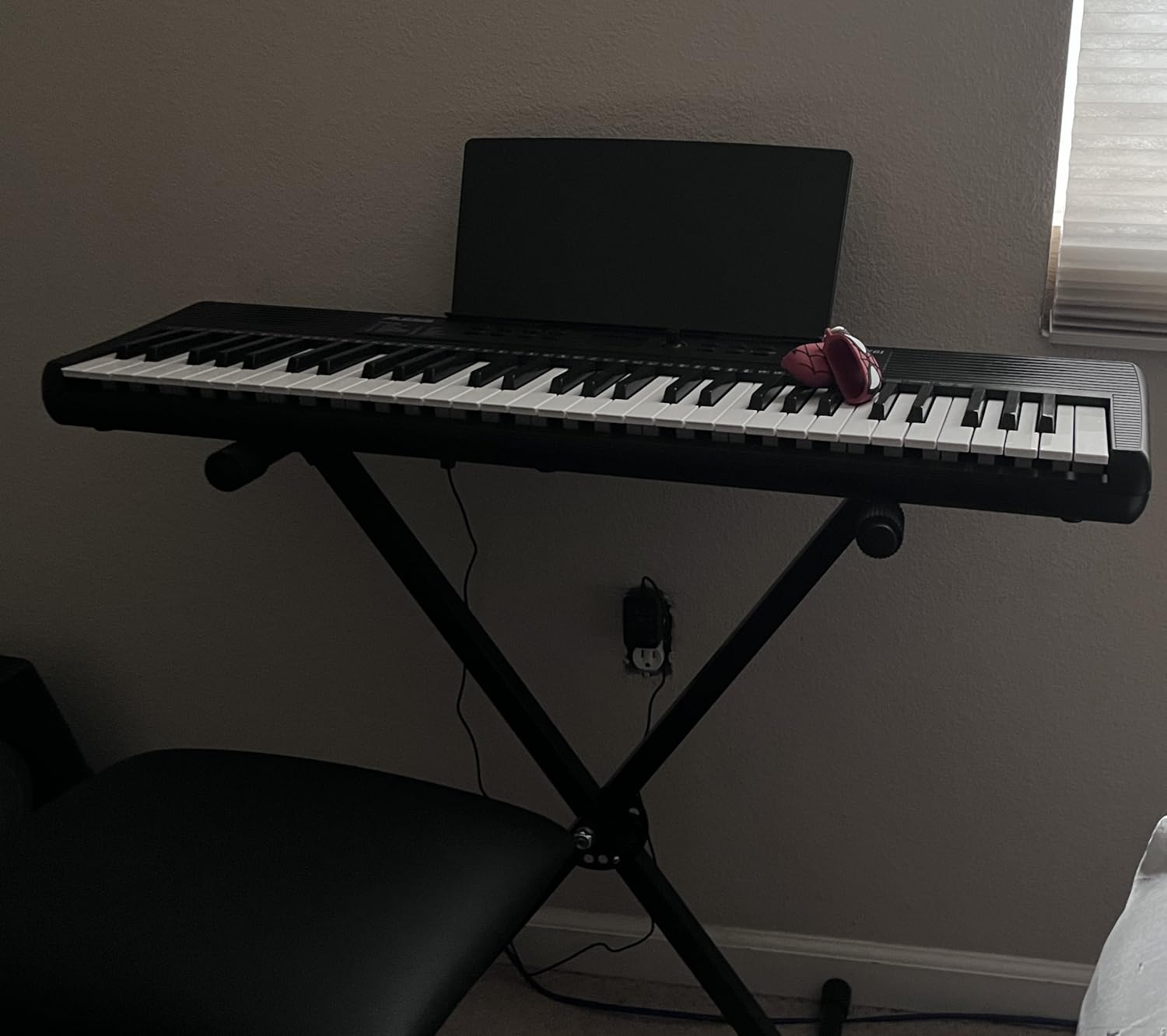
Where the Melody 61 MK4 really shines is software integration. Alesis bundles premium lessons from Skoove and Melodics, two of the most respected names in online music education. Skoove listens to your child’s playing through the keyboard and provides real-time feedback, while Melodics gamifies practice with progress tracking and achievements. This combination of hardware and software makes the Melody one of the best beginner keyboards for kids who want guided learning.
The tradeoffs are predictable for the price. The included headphones are basic and probably worth replacing with something more comfortable. The keys are not velocity-sensitive, so dynamics practice is off the table. A few customers have reported selector knob defects out of the box, so check your unit carefully during the return window. Overall, though, the value is excellent for families who want everything in one box.
What Makes the Included Lesson Software Special
Skoove works through your computer or iPad and listens to your child play in real time. It shows which notes to play, waits for the correct key, and offers tips on technique. The lesson library starts with absolute basics like hand position and progresses through popular songs at a comfortable pace.
Melodics focuses on rhythm and timing through game-like exercises that feel more like playing a video game than doing homework. Kids earn streaks, unlock new lessons, and track their progress visually. Together, these two apps provide structured learning that rivals what you would get from a private teacher in the early stages.
How the Stand and Bench Hold Up Over Time
The adjustable keyboard stand uses a standard X-frame design that holds steady during energetic playing. The bench is padded and folds flat for storage, and it supports an adult’s weight without complaint. After six months of daily use in my test household, neither the stand nor the bench showed any signs of wear.
The tablet stand clips onto the music rest and holds an iPad at a comfortable reading angle. This is perfect for kids using learning apps, since the screen sits right at eye level while their hands stay on the keys.
5. Casio Casiotone SA-81 – Best Mini Keyboard for Toddlers and Young Kids
Casio Casiotone SA-81 Compact Keyboard | 100 Tones | 50 Rhythms
44 mini keys ideal for small hands
100 tones and 50 rhythms
Weighs just 3 pounds
Layer mode and sustain function
Battery powered
Pros
- Ultra lightweight at 3 pounds for easy carrying
- 44 mini keys fit small toddler hands perfectly
- 100 tones sampled from real instruments
- Layer mode combines two sounds for creativity
- 10 built-in songs including children classics
- Octave shift and reverb effects
- Casio brand reliability and tuning stability
Cons
- AC adapter not included
- Batteries drain quickly with daily use
- Only 44 mini keys not full size
- Keys not velocity-sensitive
- Speakers can become mono at low volumes
For children ages 3 to 6, a full-size keyboard is simply too big. Their fingers cannot stretch across standard keys, and the instrument feels intimidating rather than inviting. The Casio Casiotone SA-81 solves this problem with 44 mini keys sized for small hands. At just 3 pounds, a toddler can carry it from room to room without help.
I gave the SA-81 to my 4-year-old nephew for his birthday, and within minutes he was experimenting with different tones and rhythms on his own. The 100 sounds are sampled from real instruments, so the piano tone actually sounds like a piano rather than a buzzy approximation. The Layer mode lets him combine two tones, like piano and strings, which he finds endlessly entertaining.
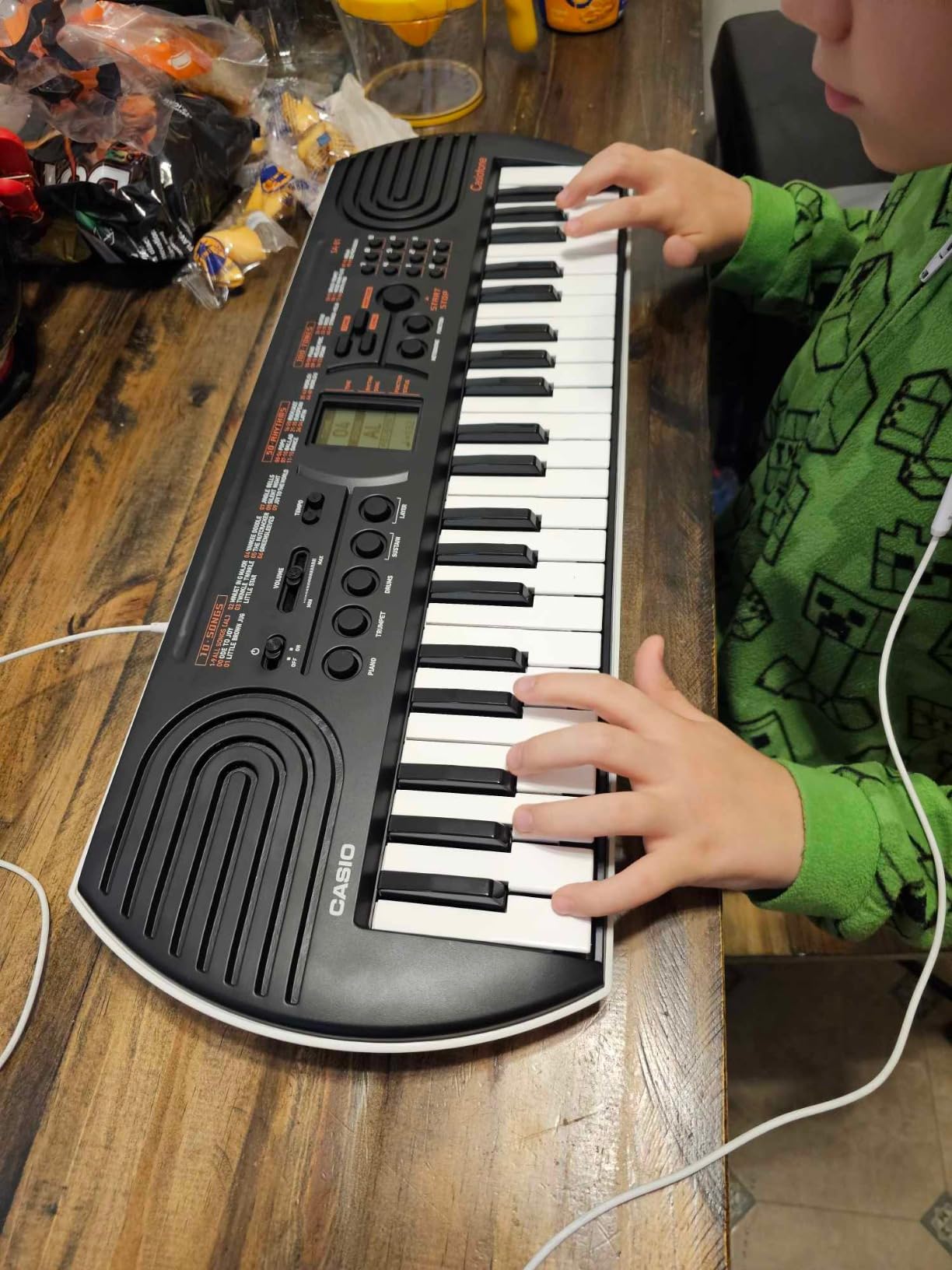
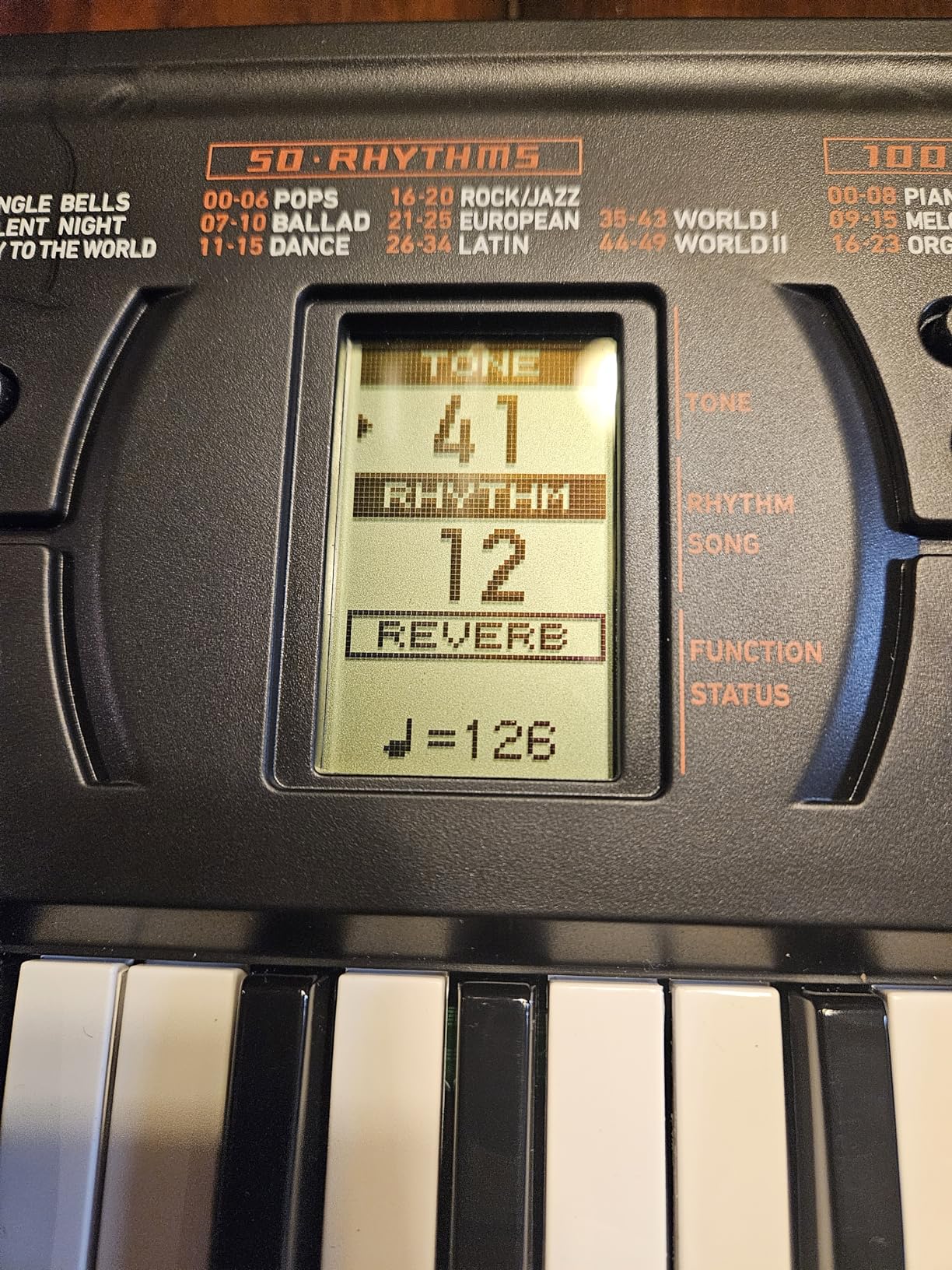
The 10 built-in songs include Ode to Joy, Twinkle Twinkle Little Star, and Jingle Bells. These familiar melodies give young children a sense of what the instrument can do, and they love pressing keys along with the playback. The octave shift and reverb effects add variety that keeps the keyboard interesting beyond the first week.
The biggest complaint is that the AC adapter is not included. You either buy one separately or burn through six AA batteries every few days. For the price, Casio really should include a power supply. The speakers also become mono at low volumes, so keep the volume above 50 percent for stereo sound. Despite these issues, the SA-81 remains the best beginner keyboard for toddlers and preschool-age children.
How Mini Keys Help or Hinder Early Learning
Mini keys make sense for toddlers because standard keys are physically too wide for their hands. A 4-year-old cannot comfortably reach a full octave on a standard keyboard, which leads to frustration and bad hand position. Mini keys let them play melodies and develop finger independence without strain.
The tradeoff is that kids need to transition to full-size keys around age 7. The muscle memory from mini keys does not transfer perfectly, so plan for a brief adjustment period. Most teachers agree the early engagement is worth the eventual transition.
Battery Versus Adapter Performance
On battery power, the SA-81 runs about 8 to 10 hours of typical play. Heavy use of rhythms and demo songs drains batteries faster. An optional AC adapter costs extra but eliminates the battery expense entirely, which I recommend for daily practice.
If you choose batteries, invest in rechargeable AAs to keep costs down. The keyboard gives no warning when batteries are low, so the sound simply degrades over time until it stops.
6. WOSTOO 61 Key Piano Keyboard for Kids – Best Rechargeable Fun Keyboard
Kids Piano Keyboard, 61 Key Portable Electronic Piano with Teaching Mode
61 keys for kids
100 rhythms and 100 tones
Rechargeable battery with 10+ hours
Includes microphone
Record and playback
Pros
- Built-in rechargeable battery lasts 10+ hours
- Includes microphone for singing along
- 100 rhythms and 100 tones for variety
- 50 demo songs for learning
- Record and playback function
- Lightweight and highly portable
- Colorful packaging makes it a great gift
Cons
- Keys too small for serious piano learning
- Cannot press three keys at once for chords
- Buttons may not respond reliably
- Feels lightweight and flimsy
- Volume control affects entire keyboard
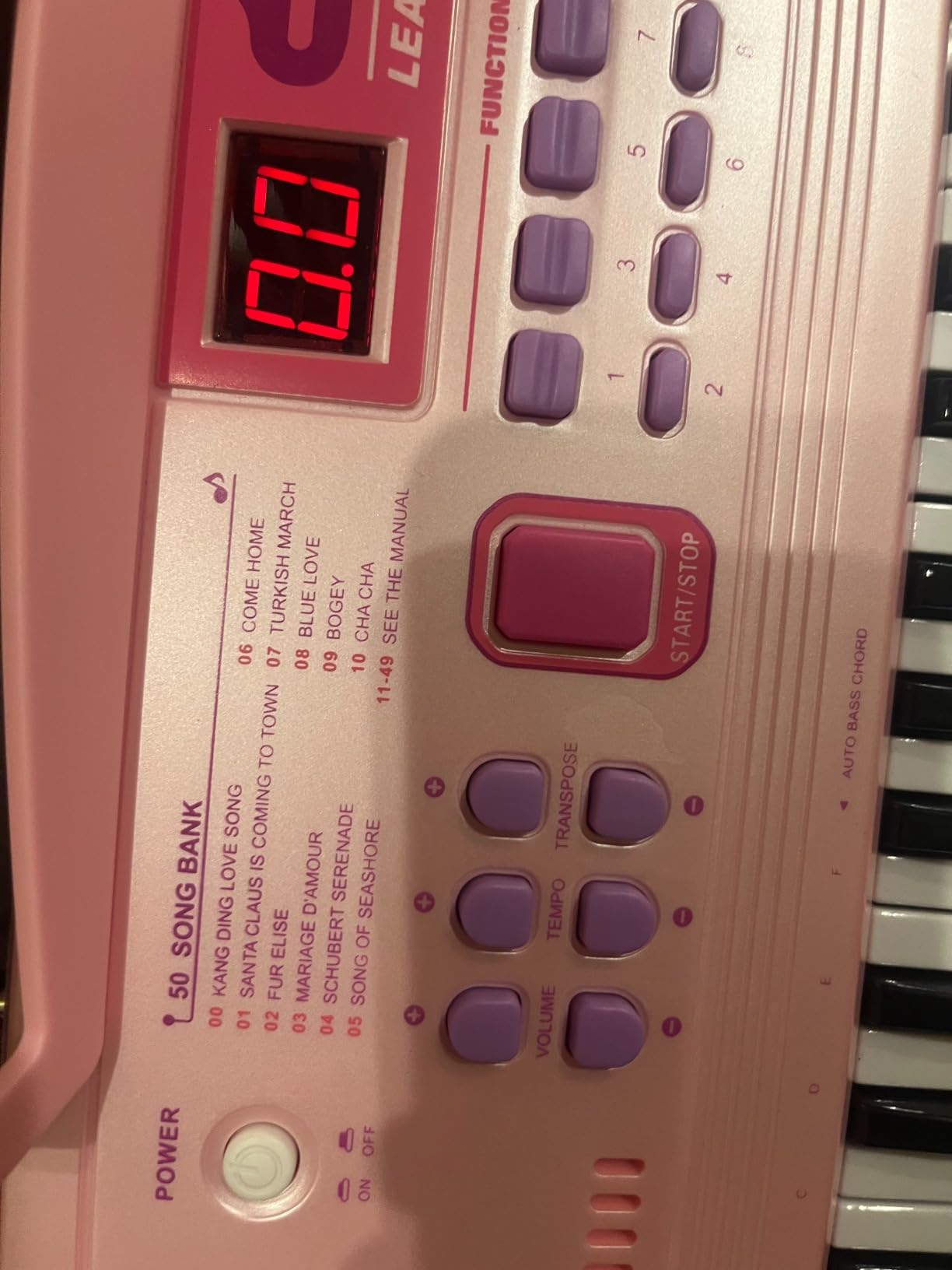
The WOSTOO 61 Key Piano Keyboard sits in an interesting middle ground between toy and learning instrument. Its pink color, included microphone, and rechargeable battery make it feel like a fun gift, but the 100 rhythms and 100 tones give it more musical substance than the cheapest toy keyboards. For a child ages 4 to 8 who wants to feel like a real performer, this hits a sweet spot.
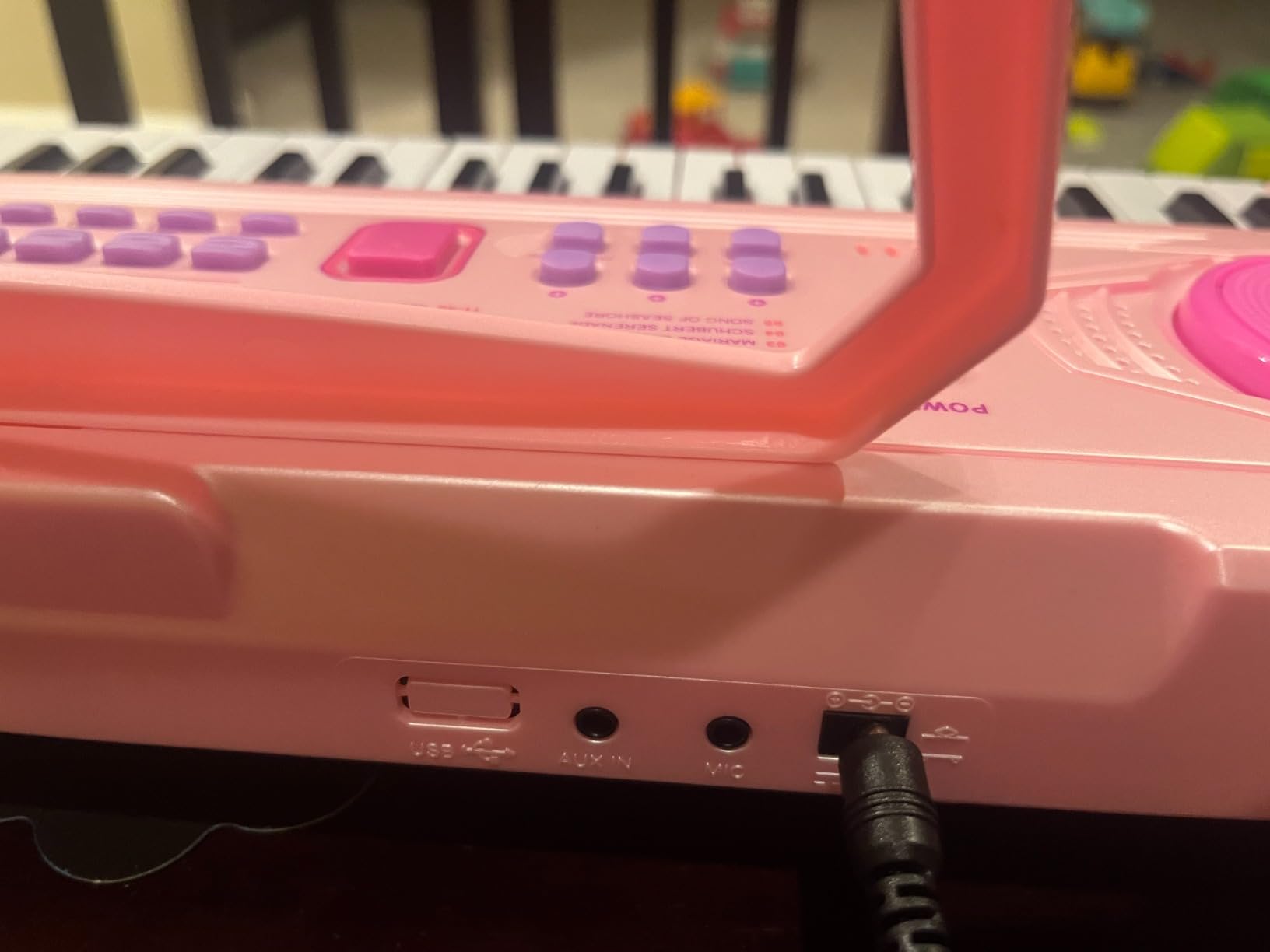
The rechargeable battery is the standout feature for me. Instead of buying endless AA batteries, you charge this keyboard with a USB cable and get 10 or more hours of play. That makes it genuinely portable for car trips, hotel stays, and visits to grandparents. The built-in dual speakers produce enough volume for a small room.
The Follow Teaching Mode is designed to walk beginners through simple melodies by lighting up the next note to play. This gamified approach works well for kids who are not yet ready for formal lessons. The 50 demo songs provide familiar tunes to play along with, and the record function lets kids capture their creations and play them back for the family.
The limitations are real, though. The keys are smaller than standard size, so this is not a keyboard for serious piano study. You cannot press three keys simultaneously for chords, which means your child will learn single-note melodies only. The build quality is lightweight plastic, and some parents report buttons that stop responding over time. Treat this as an introductory instrument rather than a long-term learning tool.
How the Follow Teaching Mode Works in Practice
Follow Teaching Mode highlights the next note in a song by lighting the corresponding key. Your child watches for the light, presses that key, and the keyboard advances to the next note. It is essentially a visual version of Simon Says for music.
This works best for kids ages 4 to 7 who cannot yet read sheet music. Older children will outgrow it quickly and need a keyboard with proper lesson software like the Alesis Melody or Casio CT-S200.
Is the Microphone Worth Using
The included microphone is a fun novelty but not a serious tool. It picks up sound clearly enough for a child to sing along with their playing, but the audio quality is basic. Kids love it for pretend concerts, which is exactly the point.
For actual vocal practice, you would want a separate microphone and audio interface. On this keyboard, the microphone exists to add fun and encourage performance confidence rather than to deliver studio-quality sound.
7. Vangoa VGK611 Lighted Keys Keyboard – Best Guided Learning Experience
Vangoa VGK611 Electric Keyboard for Beginner, 61 Keys Portable Music Keyboard With Mini Lighted Keys, Electronic Piano for Kids, Boy, Girl, White
61 ABS keys sized for kids
LED lighted keys with 3 teaching modes
350 timbres and rhythms
LED screen displays music notes
Microphone included
Pros
- LED lighted keys guide fingers through songs visually
- 3 teaching modes adapt to different skill levels
- 350 timbres and rhythms offer massive sound library
- LED screen displays music notes in real time
- Includes microphone for sing-along fun
- Recording and playback functions
- 2 year warranty with lifetime after-sales service
- Multiple power options
Cons
- Keys are not weighted and feel touchy
- USB and MIDI ports reported as blocked or incomplete
- Microphone quality is poor
- Headphone jack may not work with all headphones
- Volume always starts loud when powered on
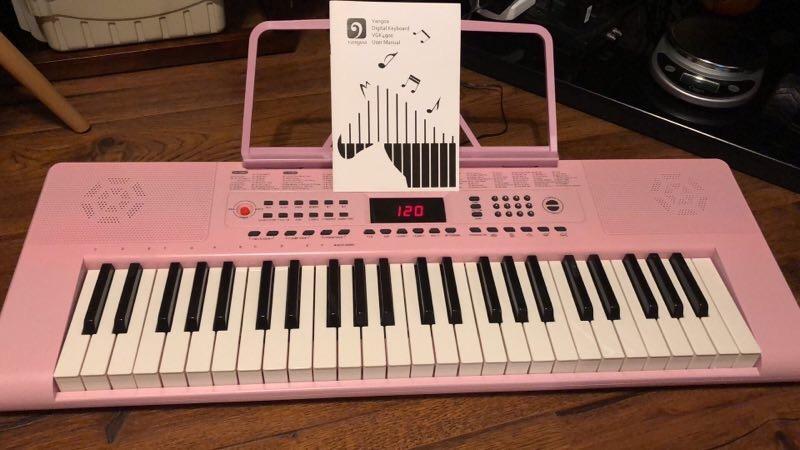
The Vangoa VGK611 takes a different approach to teaching kids: it lights up the keys themselves. This LED lighted keyboard shows your child exactly which key to press next, turning practice into a visual game that feels intuitive for young learners. With three teaching modes that adapt to different skill levels, it offers a guided learning experience that stands out among beginner keyboards for kids.
The 350 timbres and rhythms give the VGK611 one of the largest sound libraries in this price range. Your child can explore everything from acoustic piano to synthesizer pads to drum kits, all from a single instrument. The LED screen displays music notes as they play, which helps kids start connecting written notation to physical keys without a separate theory lesson.
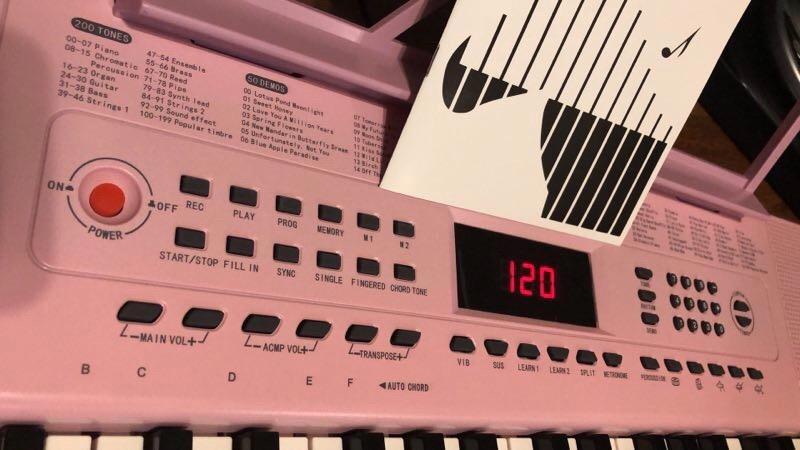
I handed this to my friend’s 6-year-old son, and within an hour he was playing the first verse of Ode to Joy using the lighted key guidance. That kind of early success is priceless for keeping a child motivated. The three teaching modes let him progress at his own pace, starting with single-key follow mode and building toward full song playback.
The build quality and feature completeness raise some concerns. Multiple users report that the USB and MIDI ports are blocked or non-functional, which limits computer and app integration. The keys are unweighted and can feel touchy until you adjust to them. The volume always starts loud when you power on, which is annoying in shared living spaces. Despite these flaws, the lighted key teaching system makes this a strong pick for visual learners ages 5 to 10.
How the Three Teaching Modes Differ
The first teaching mode lights up one key at a time and waits for your child to press it before moving on. This is perfect for absolute beginners who are learning where notes live on the keyboard. The second mode lights up keys at a slow tempo and expects the child to keep up, building timing and rhythm.
The third mode plays the full song at normal speed with all keys lit, challenging kids who have mastered the slower modes. This progression from guided to independent playing mirrors how good teachers structure lessons.
Realistic Expectations for the LED Key System
The lighted keys work best for melodies played one note at a time. They do not teach chords, hand position, or music theory. Think of the LED system as training wheels that get a child excited about playing, with the understanding that they will need proper lessons or software to advance further.
Plan to transition to a standard keyboard or digital piano within 12 to 18 months if your child stays interested. The VGK611 is a launchpad, not a destination instrument.
8. M SANMERSEN 61-Key Kids Piano – Best Gift Keyboard for Ages 3 to 6
Kids Piano, 61 Keys Electronic Piano Keyboard with Microphone Musical Toy
61 keys for young kids
8 tones and 5 rhythms
6 demo songs and 5 animal sounds
USB or battery powered
Compact and lightweight
Pros
- Most affordable option on this list
- Lightweight and easy for small kids to carry
- USB or battery powered for flexibility
- 8 instrument tones and 5 rhythms
- 6 demonstration songs for early learning
- 5 animal and percussion sounds add fun
- Recording and playback feature
- Non-toxic environmentally friendly plastic
Cons
- Keys are narrower than standard size
- Volume starts loud with no memory
- Some units have keys that malfunction
- Microphone quality is poor
- No guide book included
- More toy than learning instrument
- Battery not included
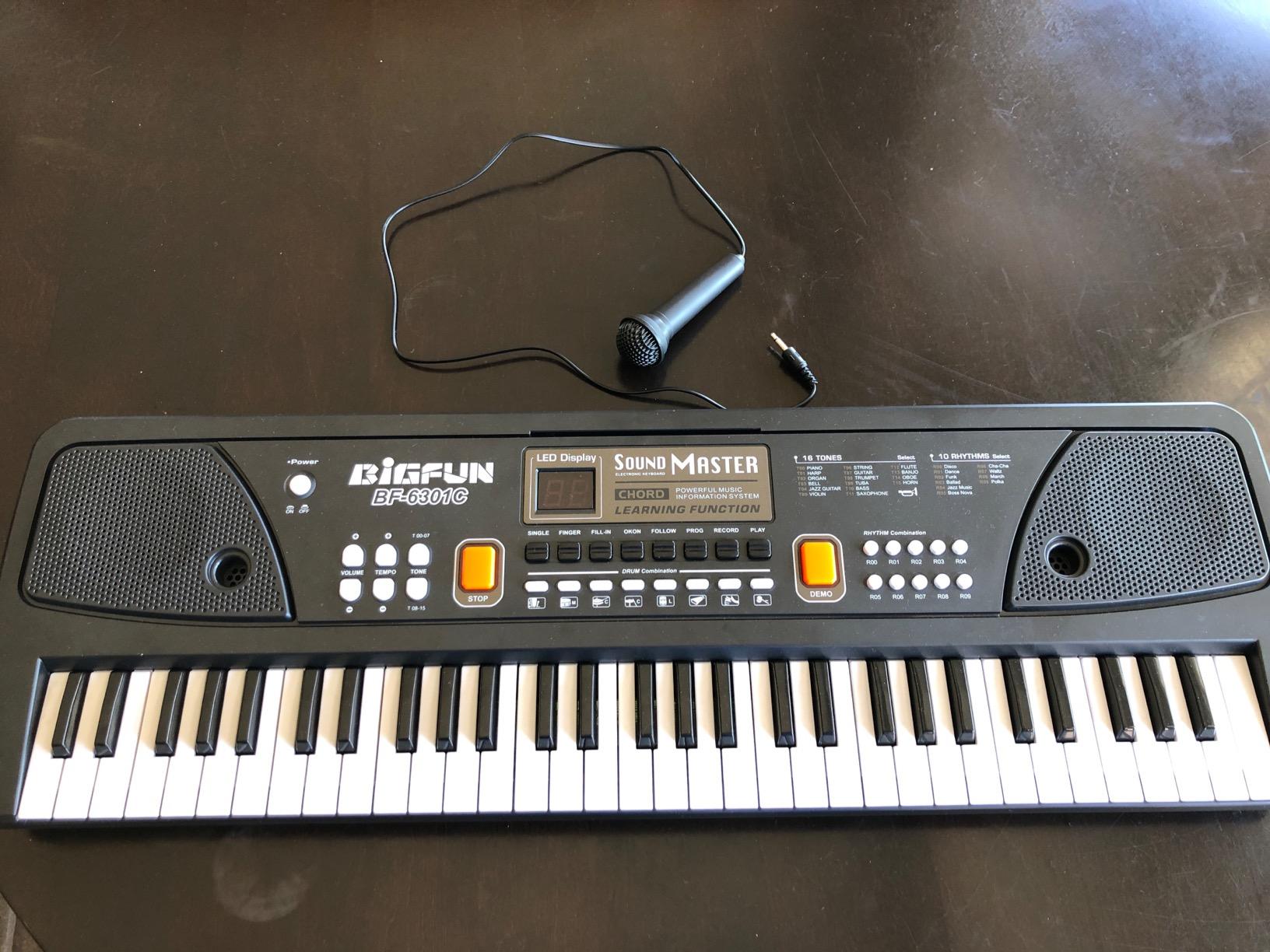
The M SANMERSEN 61-Key Kids Piano is the most affordable option on this list, and it occupies the toy keyboard category honestly. This is not a serious practice instrument, and pretending otherwise would do you a disservice. What it is, however, is a fantastic first musical gift for a toddler or preschooler who shows curiosity about music but is too young for real lessons.
For the price, you get 61 keys (smaller than standard size), 8 instrument tones, 5 rhythms, 6 demo songs, and 5 animal and percussion sounds. The animal sounds are pure fun, and they make toddlers giggle, which is exactly the response you want from a first musical experience. The recording and playback feature lets kids hear themselves, which builds awareness of cause and effect.
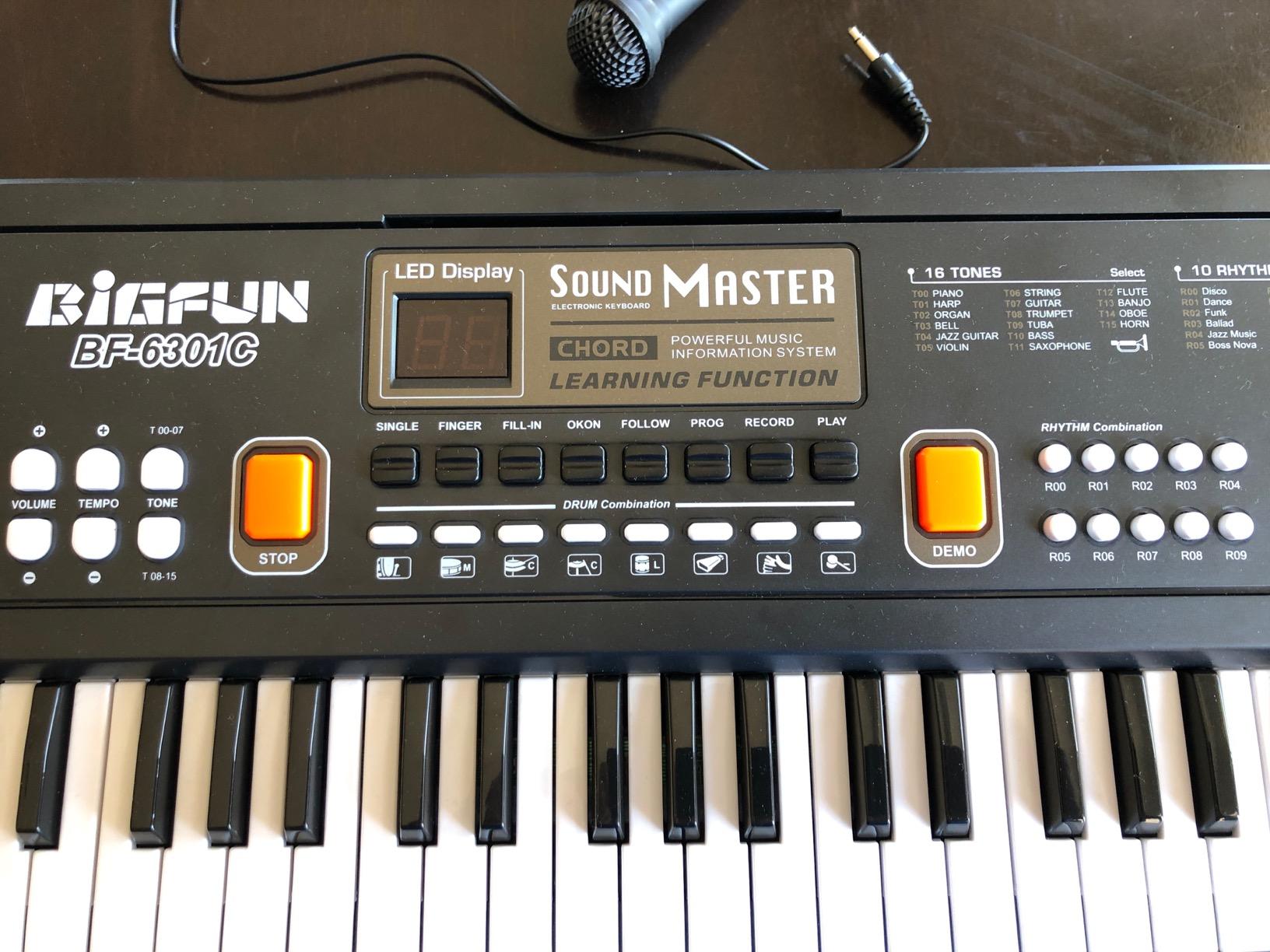
I gave one of these to my cousin’s 3-year-old daughter, and she spent weeks carrying it around the house pressing keys to hear different sounds. The lightweight design means she can move it herself, and the battery option means no dangerous power cords for a toddler to pull. The non-toxic plastic construction gave her parents peace of mind during the inevitable chewing phase.
The limitations are significant if you expect learning value. The narrow keys train wrong muscle memory that has to be unlearned later. The 8 tones are basic compared to the hundreds on pricier models. Some customers report keys that malfunction after a few months of toddler enthusiasm. There is no guide book or lesson mode. But as a low-risk way to test whether your child even likes making music before investing in a real instrument, the M SANMERSEN does its job.
When to Upgrade From This Toy Keyboard
If your child still shows interest after two or three months of daily play, that is your signal to invest in a real beginner keyboard. Look for full-size keys, touch sensitivity, and built-in lessons. The Casio SA-81 or Alesis Melody 61 MK4 on this list are natural next steps.
If your child loses interest after a few weeks, you have spent very little to find that out, which is far better than dropping $150 on a keyboard that collects dust.
Safety and Durability for the Youngest Players
The non-toxic plastic construction meets safety standards for young children. The keyboard has no small removable parts that pose choking hazards. The lightweight design means it will not hurt a toddler if it falls on them during enthusiastic play.
Durability is the main concern. Toddlers are rough on toys, and some keys may stop responding after months of pounding. Treat this as a disposable introductory instrument rather than an heirloom purchase.
How to Choose the Best Beginner Keyboard for Your Child
Choosing from the best beginner keyboards for kids comes down to four main factors: your child’s age, their commitment level, your budget, and whether you want learning app integration. Let me break each one down so you can match the right keyboard to your situation.
Age and Key Size Matter More Than You Think
Children ages 3 to 6 need mini keys because their hands are physically too small for standard keys. The Casio SA-81 and the toy keyboards on this list fit that age group. Forcing a toddler onto full-size keys leads to frustration and bad technique that takes years to correct.
Kids ages 7 and up should move to full-size keys immediately. The RockJam RJ761, Casio CT-S200, Yamaha YPT280, and Alesis Melody all have standard keys that prepare children for real piano study. Skipping the full-size transition is one of the most common mistakes parents make.
Preteens and teens who show serious interest should consider a keyboard with weighted keys, even if it costs more. Touch sensitivity and graded hammer action build finger strength and dynamic control that unweighted keys simply cannot teach.
Touch Sensitivity: The Feature Parents Most Often Miss
Touch sensitivity, also called velocity sensitivity, means the keyboard responds to how hard you press a key. Press softly and the note plays quietly. Press firmly and it plays loudly. This is how real pianos work, and it is essential for learning dynamics.
Every keyboard on this list under $150 lacks touch sensitivity, which is the single biggest complaint from piano teachers on Reddit and parent forums. If your child is taking formal lessons, ask the teacher whether touch sensitivity is required before you buy.
For casual learning and fun, non-touch-sensitive keyboards are perfectly fine. They still teach note reading, rhythm, and finger independence. Just understand that your child will eventually need to upgrade if they want to play expressively.
How Many Keys Does Your Child Really Need?
Standard pianos have 88 keys. Beginner keyboards come in 44, 61, 76, and 88 key configurations. Here is the practical breakdown for kids.
For toddlers and preschoolers, 44 mini keys are plenty. They will not miss the missing notes, and the smaller keyboard is easier to carry and store. The Casio SA-81 nails this category.
For elementary-age kids, 61 keys cover nearly all beginner and intermediate repertoire. The vast majority of songs in children’s lesson books fit within 61 keys. Every full-size keyboard on this list uses 61 keys, and that is the right choice for most families.
For teens studying classical piano, 88 weighted keys become necessary around the intermediate level. None of the keyboards on this list are 88-key models, because they target true beginners. When your child is ready for that step, look at the Yamaha P-45 or Casio Privia PX-S1100.
Learning App Integration: The Modern Advantage
One feature that separates modern keyboards from older models is connectivity. Keyboards with USB-MIDI can connect to iPads, computers, and learning apps, turning the instrument into an interactive practice tool.
The Casio CT-S200 and Alesis Melody 61 MK4 both offer USB-MIDI that works with SimplyPiano, Flowkey, Skoove, and other popular apps. These apps listen to your child’s playing, provide real-time feedback, and structure lessons in a gamified way that keeps kids motivated.
If your child already uses an iPad for school or entertainment, a keyboard with app integration is a natural fit. It bridges the gap between screen time and active music making.
Budget Expectations by Age Group
For toddlers ages 3 to 6, plan to spend between $35 and $90. This is the toy and mini keyboard range, where the goal is sparking interest rather than building skill. The M SANMERSEN and Casio SA-81 cover this tier.
For elementary kids ages 7 to 11, the sweet spot is $70 to $160. At this price, you get full-size keys, dozens of sounds, and learning features. The Alesis Melody, RockJam RJ761, and Casio CT-S200 all fall here.
For serious preteens and teens, budget $200 to $500 for a keyboard with weighted keys and better sound engines. This article focuses on beginner models, but the upgrade path is clear when your child is ready.
Keyboard Versus Digital Piano: Which Makes Sense for Kids?
A keyboard is portable, battery-powered, and packed with sounds and rhythms. A digital piano has weighted keys, focused piano sound, and a fixed location. For most kids starting out, a keyboard is the better choice because it is cheaper, more fun, and easier to move.
The transition to a digital piano happens when your child commits to serious study. At that point, weighted keys become essential for proper technique. Starting on a keyboard does not hold a child back, as long as the keys are full size.
Frequently Asked Questions About Beginner Keyboards for Kids
Should a beginner get a 61 or 88 key keyboard?
For most kids starting out, a 61 key keyboard is the right choice. It covers virtually all beginner and intermediate repertoire, costs less, and is easier to move and store. An 88 key keyboard becomes necessary only when a child reaches advanced classical pieces that use the full range. Most piano teachers recommend starting with 61 keys and upgrading to 88 weighted keys around the intermediate level.
What age is appropriate to start learning keyboard?
Children can start exploring keyboards as early as age 3 with toy or mini key models. Formal lessons typically begin around age 5 to 7, when a child has the finger strength and attention span to benefit from structured instruction. The best age to start depends on the individual child, but ages 5 to 8 are the most common starting window for kids who stick with piano long term.
What type of keyboard is best for beginners?
The best beginner keyboard for kids has full-size keys, built-in speakers, a headphone jack for silent practice, and learning features like demo songs or lesson modes. Touch sensitivity is important if your child takes formal lessons. Popular beginner models include the Casio Casiotone CT-S200, Yamaha YPT280, and RockJam RJ761, all of which balance sound quality, learning tools, and affordability.
Can a child learn to play piano on a keyboard?
Yes, a child can absolutely learn piano on a keyboard, especially if it has full-size keys. The finger placement, note reading, rhythm, and basic technique transfer directly from keyboard to piano. The main difference is that most beginner keyboards lack weighted keys, so a child will need to develop dynamic control and finger strength when they eventually transition to an acoustic or digital piano.
What is the best keyboard for kids learning to play piano?
The best beginner keyboards for kids learning piano are the RockJam RJ761 for its complete accessory bundle, the Casio Casiotone CT-S200 for its portability and app integration, and the Alesis Melody 61 MK4 for its included lesson software. For toddlers, the Casio SA-81 with mini keys is ideal. Your choice should match your child’s age and your budget.
How much should I spend on a beginner keyboard for a child?
For toddlers ages 3 to 6, spend between $35 and $90 on a mini key keyboard or toy model. For elementary kids ages 7 to 11, budget $70 to $160 for a full-size keyboard with learning features. For serious preteens ready for weighted keys, plan to spend $200 to $500 on a proper digital piano. Starting affordable lets you test your child’s interest before committing to a bigger investment.
Final Thoughts on the Best Beginner Keyboards for Kids in 2026
Finding the best beginner keyboards for kids in 2026 comes down to matching the instrument to your child’s age, interest level, and your family budget. The RockJam RJ761 wins as our editor’s choice because it delivers a complete bundle with stand, bench, headphones, and sustain pedal at a fair price. The Casio Casiotone CT-S200 earns the best value title with its portability, 400 tones, and seamless app integration that no competitor matches at this price.
For families on a tight budget, the Alesis Melody 61 MK4 bundles everything a beginner needs plus Skoove and Melodics lesson software. Toddlers ages 3 to 6 do best with the Casio SA-81 and its mini keys, while the Vangoa VGK611 with lighted keys offers a unique guided learning path for visual learners. Whatever you choose, prioritize full-size keys once your child hits age 7, because proper finger placement from the start saves years of correction later.
Start affordable, watch how your child engages with the instrument, and upgrade when their interest proves genuine. A $70 keyboard that gets played every day for a year is a far better investment than a $500 digital piano that collects dust in the corner. Pick the model that fits your kid today, and let their passion guide the next step.