
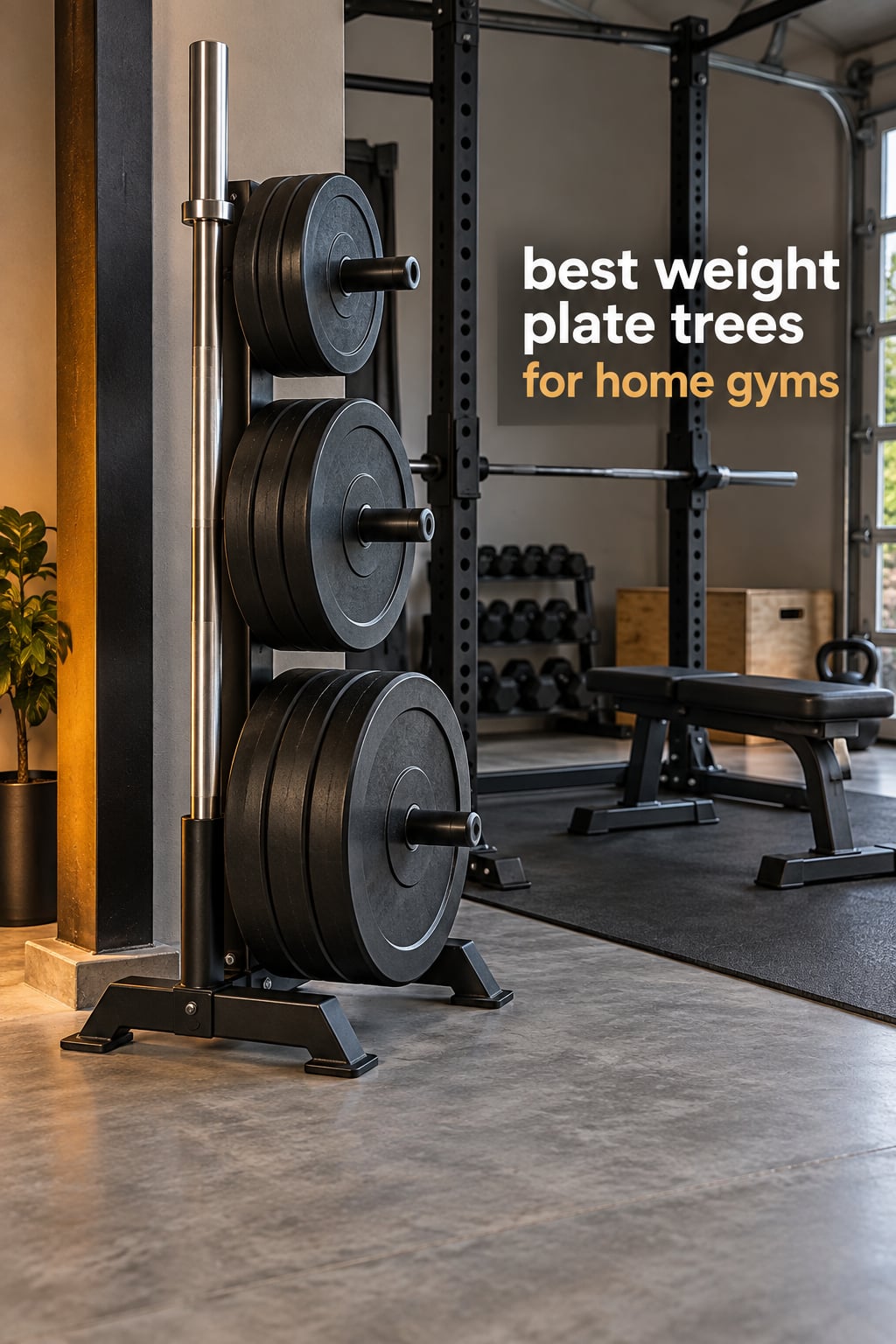
A weight plate tree is a vertical floor-standing rack with short horizontal pegs that stores Olympic or standard weight plates on edge, usually with built-in barbell sleeves, so plates stay off the floor and are easy to grab mid-workout. Anything beyond a few pairs leaning against a wall is better served by one.
That is the whole case for the best weight plate trees for home gyms, and it is a stronger case than most buyers expect. A pile of cast iron stacked on the floor is a trip hazard, it rattles the plates against each other, and it turns a corner of your garage into an unusable zone. A tree turns that same pile into a vertical column that occupies a fraction of the floor area and puts every plate at hand height.
We looked at twelve of them, sorted through the spec sheets, and read what buyers actually say after living with their trees. Some things came out exactly as advertised. Others revealed gaps in the listing photos that you only notice once 400 pounds of bumper plates are hanging off the pegs.
One clarification before we start. A plate tree is not a power rack. A power rack is the frame you squat and press inside, and if you are still shopping for one, our guide to the best power racks for home gyms covers that category properly. A plate tree is storage furniture. It holds plates and bars between sessions so the rest of the room stays clear for the actual training.
The other early question is which hole your plates have. Olympic plates have a 2-inch center hole, standard cast iron plates have a 1-inch hole, and the two will not mix on the same peg. Buying for the wrong one is the single most common reason plate trees come back, so we flag plate compatibility on every pick below. If your collection is standard, start with the 1-inch section. If you are loading bumper or competition plates, you need longer pegs than most budget trees give you.
While you are mapping out the room, it helps to think about the rest of your equipment. Where the bench goes affects your floor plan as much as the tree does, and our picks for the best weight benches for home gyms cover the space those trees need. If your plates are joined by adjustable dumbbells, the best adjustable dumbbells for home gyms roundup keeps the footprint down too. And if the tree is part of a full room build, the best home gyms for garages guide covers the layout problem at a larger scale.
Top 3 Weight Plate Trees for Home Gyms in 2026
Our top three came down to review volume and how the product behaves under a realistic load, not to the biggest capacity number on the page. Each of these suits a different plate collection, and the full list of twelve is below.

CAP Barbell 7-Post Olympic Tree
- 7-post A-frame
- 500 lb rated capacity
- Fits 2-inch Olympic plates
- 22 x 19 x 37 in footprint

CAP Barbell 1-Inch Plate Tree
- Built for standard 1-inch plates
- 300 lb rated capacity
- Low 12 inch depth sits near a wall

Fitness Reality X-Class Tree
- 1000 lb rated capacity
- Chrome-plated 2 x 8 in posts
- Two barbell holders built in
All 12 Weight Plate Trees Compared in 2026
Every pick in this roundup, with the specs that actually decide whether it fits your collection.
| Product | Specifications | Action |
|---|---|---|
| CAP Barbell 7-Post A-Frame Olympic Plate Tree |
|
Check Latest Price |
| CAP Barbell 1-Inch Plate Tree RK-1BB |
|
Check Latest Price |
 Marcy Olympic Weight Plate Tree PT-5740 Marcy Olympic Weight Plate Tree PT-5740 |
|
Check Latest Price |
 Marcy Standard 1-Inch Weight Plate Tree PT-5733 Marcy Standard 1-Inch Weight Plate Tree PT-5733 |
|
Check Latest Price |
| Fitness Reality X-Class Olympic Weight Tree |
|
Check Latest Price |
 CAP Olympic Bumper Plate Tree with Bar Holders CAP Olympic Bumper Plate Tree with Bar Holders |
|
Check Latest Price |
 Eocnrhe 5-Post Weight Plate Rack Eocnrhe 5-Post Weight Plate Rack |
|
Check Latest Price |
 Bongkim 2-Inch Olympic Plate Tree Bongkim 2-Inch Olympic Plate Tree |
|
Check Latest Price |
 SereneLife 6-Peg Olympic Plate Rack and 4 Barbells SereneLife 6-Peg Olympic Plate Rack and 4 Barbells |
|
Check Latest Price |
 Josmimic 400 lb Weight Plate Rack Josmimic 400 lb Weight Plate Rack |
|
Check Latest Price |
 ZHOOGE A-Frame Weight Plate Tree ZHOOGE A-Frame Weight Plate Tree |
|
Check Latest Price |
 Body-Solid WT46 6-Post Olympic Weight Tree Body-Solid WT46 6-Post Olympic Weight Tree |
|
Check Latest Price |
1. CAP Barbell 7-Post A-Frame Olympic Plate Tree Review
CAP Barbell Olympic 2-Inch Plate Rack
7 posts,2-inch Olympic plates,500 lb capacity,22 x 19 x 37 in
Pros
- Largest review base of any tree here
- Small A-frame footprint saves real floor space
- Open layout means fast plate changes
- Powder-coated steel resists scratches
Cons
- 2-inch plates only
- No barbell storage built in
- Wobbles if the base is not leveled before tightening
This is the one I kept coming back to while working through the list. The spec sheet is unremarkable on paper, but 6,900+ reviews averaging 4.5 stars is the deepest buyer record in the category, and that is what convinced us. In a product where the failure mode is a bent frame under a heavy load, thousands of owners reporting the same steady experience is real information.
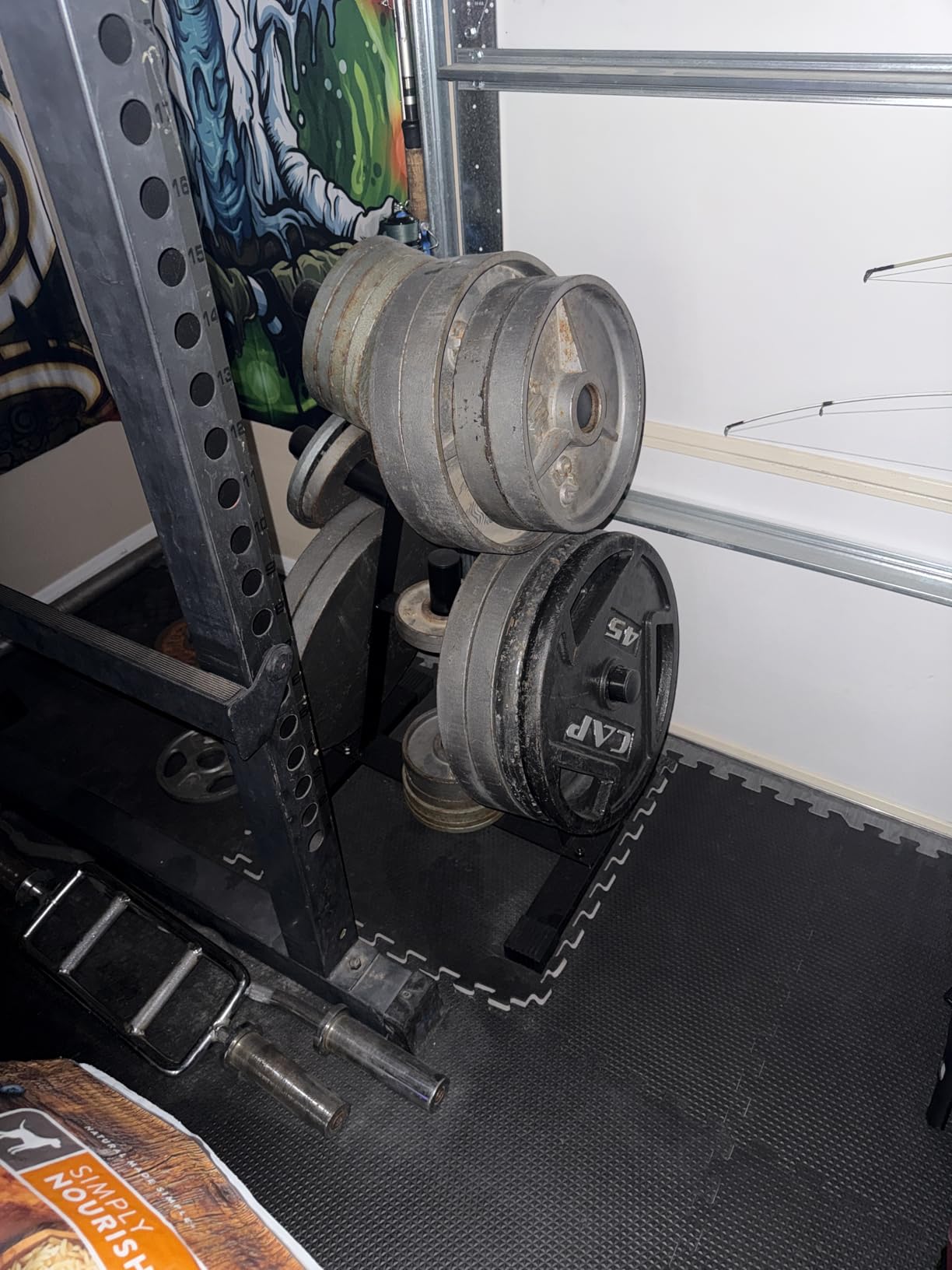
The A-frame layout is the reason it works so well. Seven posts arranged in tiers around two angled rails take up a 22 by 19 inch footprint, which is genuinely small. The taller units in this roundup need a 25-inch-deep base and 43 inches of height; this one stands 37 inches tall and can sit in a corner that a larger tree would swallow.
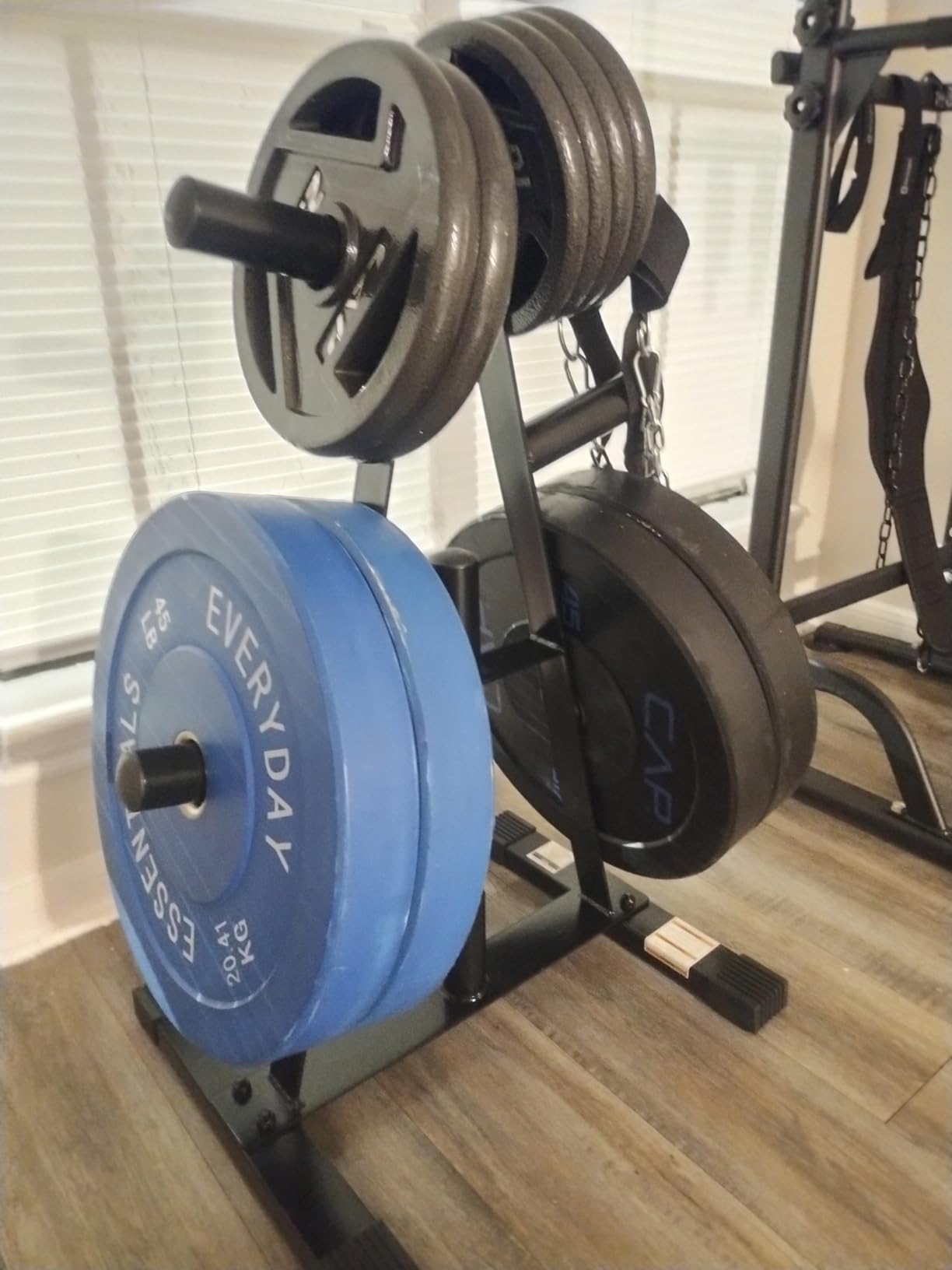
Loading is quick because nothing blocks access. You slide plates on from the outside edge, and the open frame means you can pull a single 25 without unstacking the column first. That is a bigger daily quality-of-life difference than it sounds, especially on a rest day when you want to swap plates between accessories without a production.
The finish is scratch-resistant powder coat over alloy steel, so a plate dragged across a post during a session scuffs the plate rather than tearing into the coating. Reviewers report that dragging a loaded tree across a floor still marks it, which is a reason to keep the wheels question separate from the build question.
What to check before you buy this tree
Confirm your plates have a 2-inch center hole. This tree is built for Olympic plates and there is no adapter path for standard 1-inch cast iron, so a mixed collection means buying a second unit rather than making this one work.
Count your pairs. With seven posts and a 500 lb rating, a typical rig of two 45s, two 35s, two 25s and two 10s per side lands well inside the limit. A powerlifting collection of four 45s plus a full set of calibrated plates will exceed the space before it exceeds the rating.
Have a level and a proper hex key ready. The most repeated buyer complaint is wobble, and the fix is the same in almost every case: set the frame on the floor, level it, then tighten. Torquing the bolts fully before the unit is positioned is the actual cause of most complaints about this design.
Who this is not for
If you own a specialty bar like a Curl bar or an EZ curl bar, there is no sleeve here, so it lives on the wall clips instead. Owners with two or three bars are the group that most often ends up buying a second piece of storage within a year.
It is also a fixed unit with no casters. Once you load it with a full plate set you will not want to slide it across a rubber floor, so decide its corner before assembly. In a room you reorganise seasonally, plan a lighter companion tree for the collection that moves.
Budget-minded buyers get a genuinely capable steel frame here, and the trade-off against the heavier welded units is gusseting and finish thickness rather than capacity. That is a sensible place to start for most home gyms.
2. CAP Barbell 1-Inch Plate Tree Rack Review
CAP Barbell 1-Inch Plate Tree Rack, Black
5 posts,standard 1-inch plates,300 lb capacity,12 x 23.5 x 25.5 in
Pros
- Over 5000 reviews at 4.6 stars
- Low 12 inch depth tucks against a wall
- Protective end caps guard plate faces
- Fast assembly with clear instructions
Cons
- 1-inch plates only
- Included Allen wrench can strip bolts
- Pegs feel loose if not fully tightened
If your gym runs on standard 1-inch cast iron, this is the pick. The 12-inch depth is the number that matters most, because it is a fraction of the depth of the taller Olympic units here and it lets the tree sit flat against a wall with the plates facing out.
Owners consistently describe it as simple and rigid once the bolts are tight. At 4.6 stars across 5,000+ reviews it sits among the best-rated products we looked at, and the complaints cluster almost entirely around assembly technique rather than the finished product.
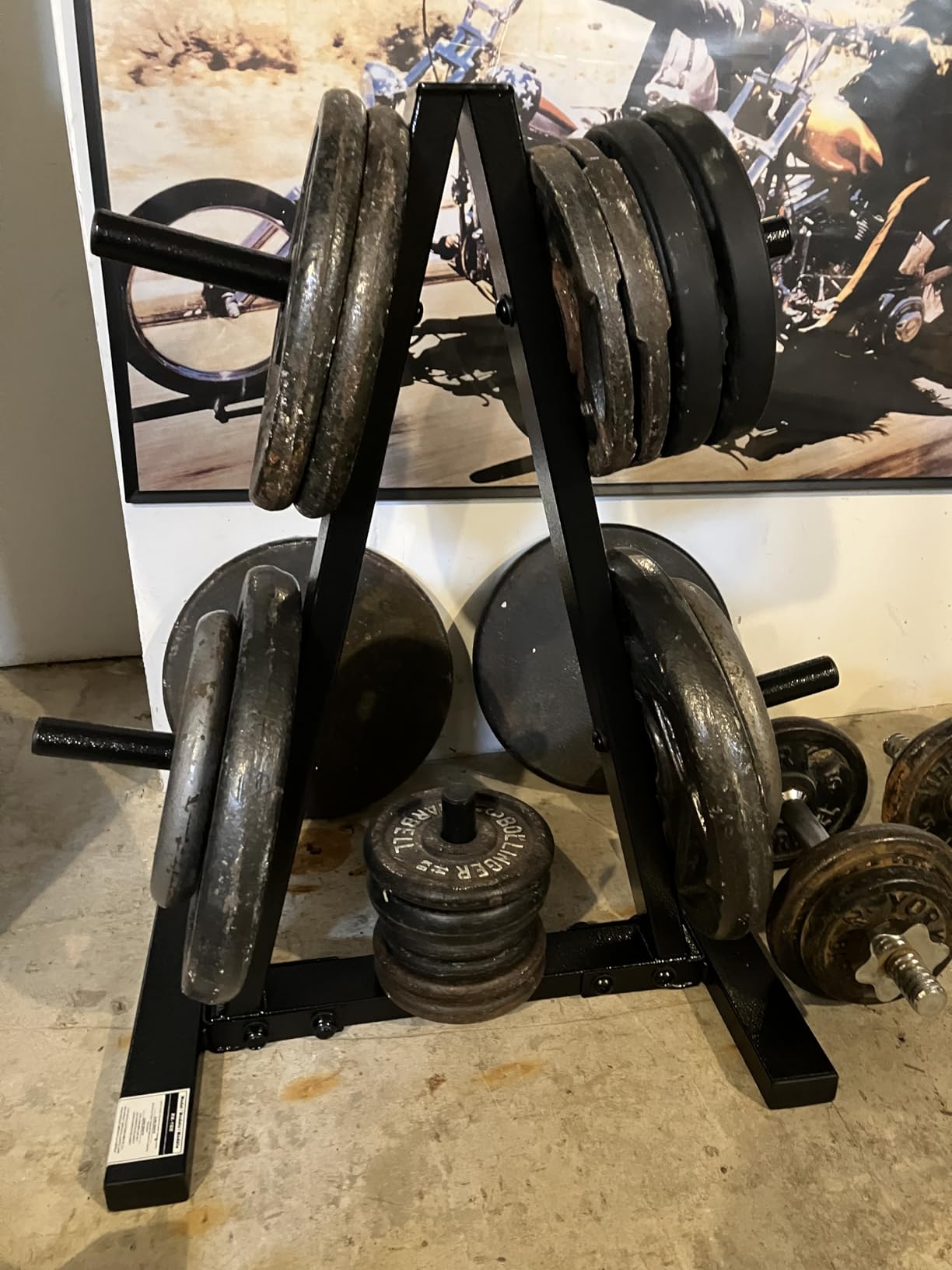
Standard plates are also easier to store in bulk. Because they are thin, a single post takes a large number of change plates, and five posts will swallow a full set of 2.5s, 5s, 10s and 25s along with your 35s and 45s. Olympic trees run out of post length long before they run out of rating.
Protective end caps keep plate faces from contacting bare steel, which is the detail that shows up in reviews about scratches. It is a small thing that matters when you own cast iron plates that show every mark.
What to check before you buy this tree
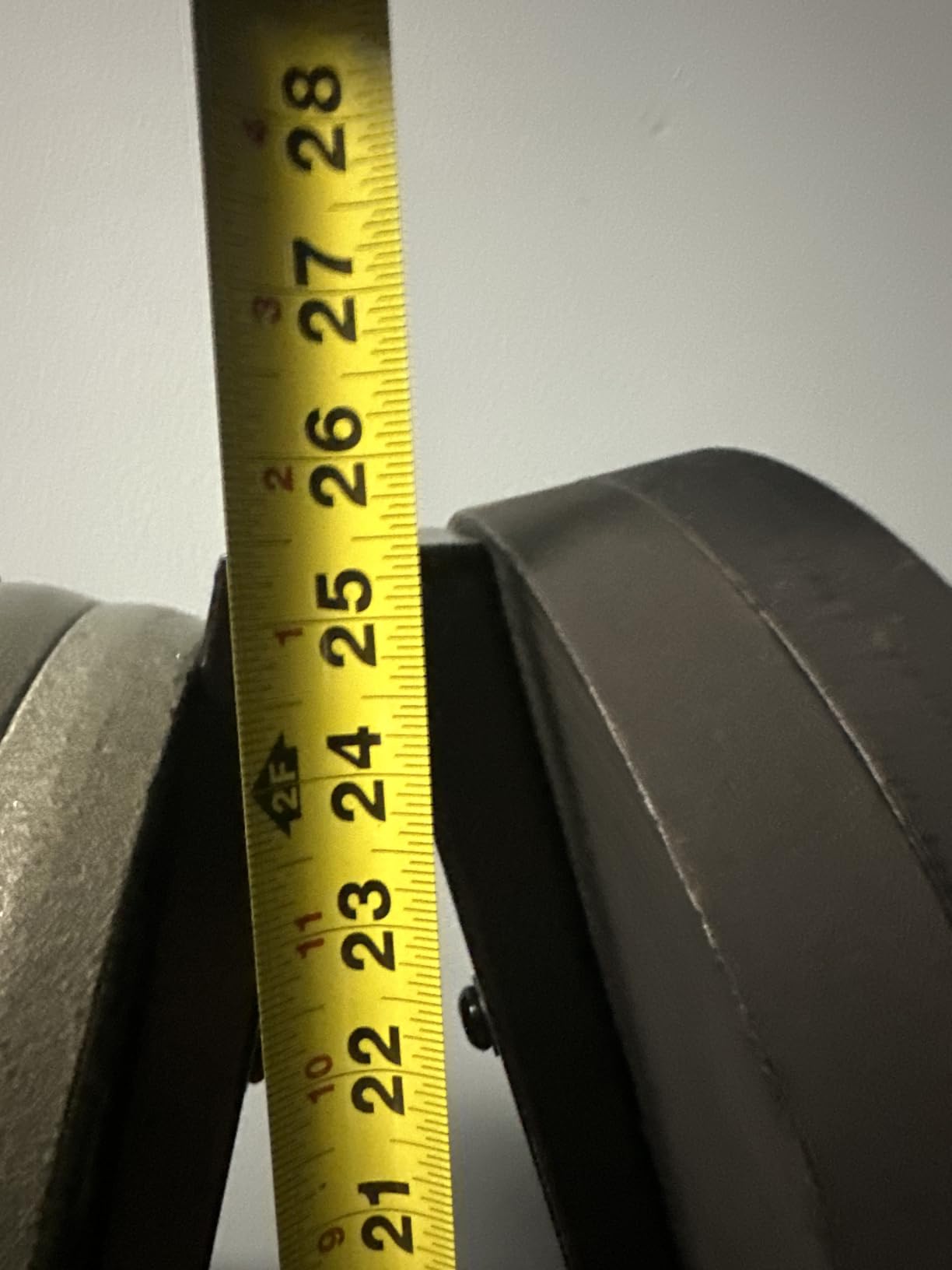
Measure your clear depth. At 12 inches this fits beside a rack or against a wall where a 22-inch A-frame would not, which is often the deciding factor in a garage narrower than a single car.
Bring your own hex key or a socket set. The bundled Allen wrench is the single most criticised part of this listing because rounded or stripped bolts are the most common reason owners report wobble. A 3/8-inch driver set removes the variable entirely.
Check your highest plate weight. At 300 lb rated capacity and a light frame, this works best for a standard plate collection rather than a mixed rack of steel change plates and full-size cast iron.
Who this is not for
Anyone loading bumper plates needs 2-inch holes and these pegs will not accept them. Do not attempt a workaround with sleeves or adapters; buy the Olympic version instead and the plates will sit properly.
There is no bar storage on this model, so a single bar still needs a wall clip or a rack J-hook. Owners with a bar and a full standard plate set often report the two living in separate corners of the room.
It is also the flattest design here, which means slightly less vertical capacity than a tiered tree. If your collection is heavy on 45s rather than change plates, a peg extension or a second unit keeps the layout tidy.
3. Marcy Olympic Weight Plate Tree PT-5740 Review
Marcy Home Gym A-frame Organizer for 2-Inch Olympic Weight Plates and Bar, 300 lbs Capacity PT-5740
Angled pegs for thick bumpers,300 lb capacity,Center bar sleeve,16 x 37.5 x 33 in
Pros
- Well spaced pegs suit thick Olympic bumpers
- Stable when fully loaded with a bar
- Spring clip collars stop plate drift
- Two-year warranty with spare parts
Cons
- Plastic bar sleeves are loose and can slip
- 300 lb rating goes fast with a bar aboard
- Two people needed for assembly
Bumper plate fit is the whole reason this one earns its place. The pegs are angled rather than straight, which widens the space between them at the plate face, and that geometry is what lets thick rubber-coated bumpers slide on without the stack jamming against the neighbouring post.
Reviewers report the frame staying rock solid under realistic loads, which matters more than the 300 lb figure. A bar and four bumper pairs on the pegs is already most of the rating, so treat the number as a guideline rather than a target.
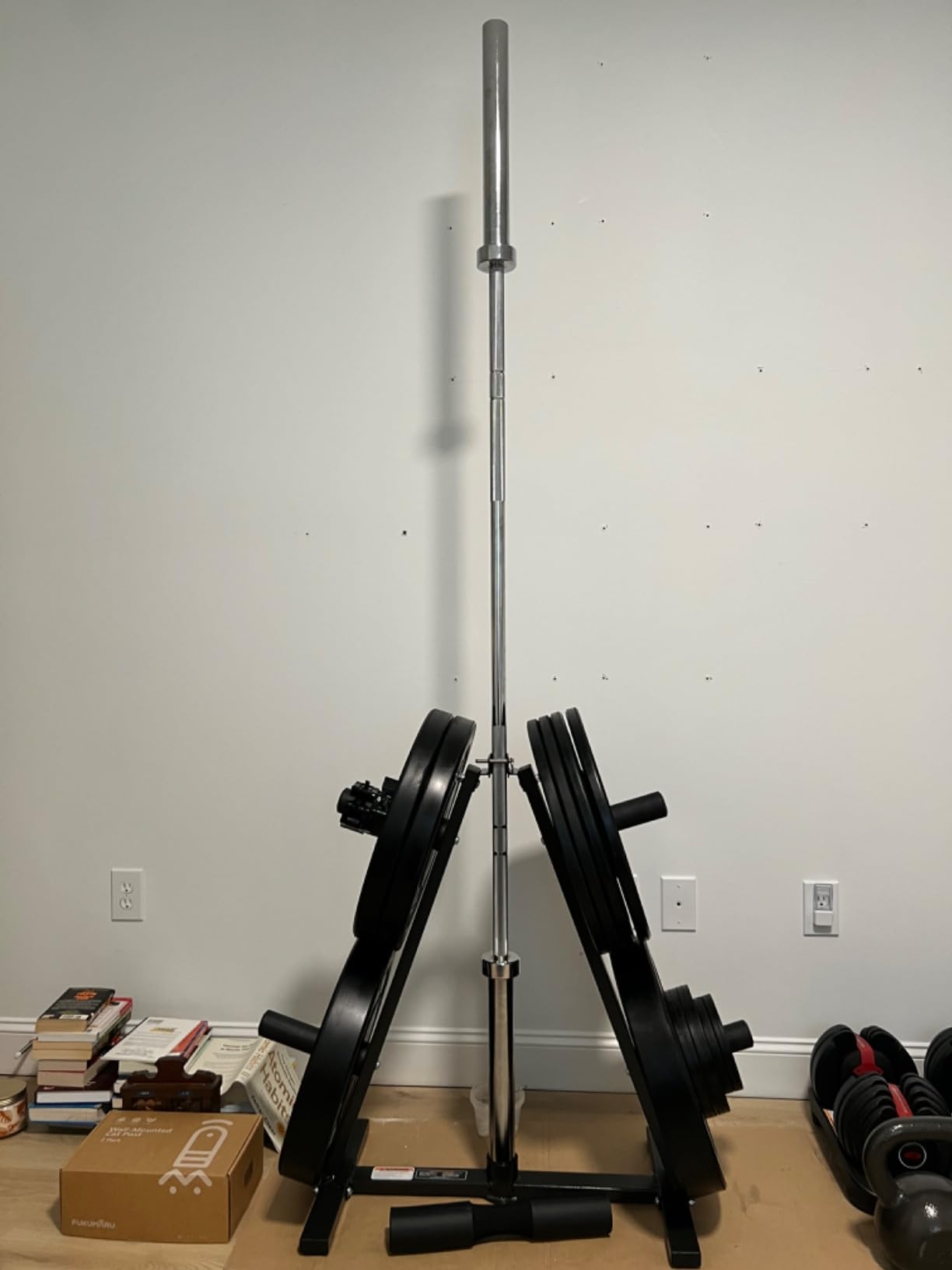
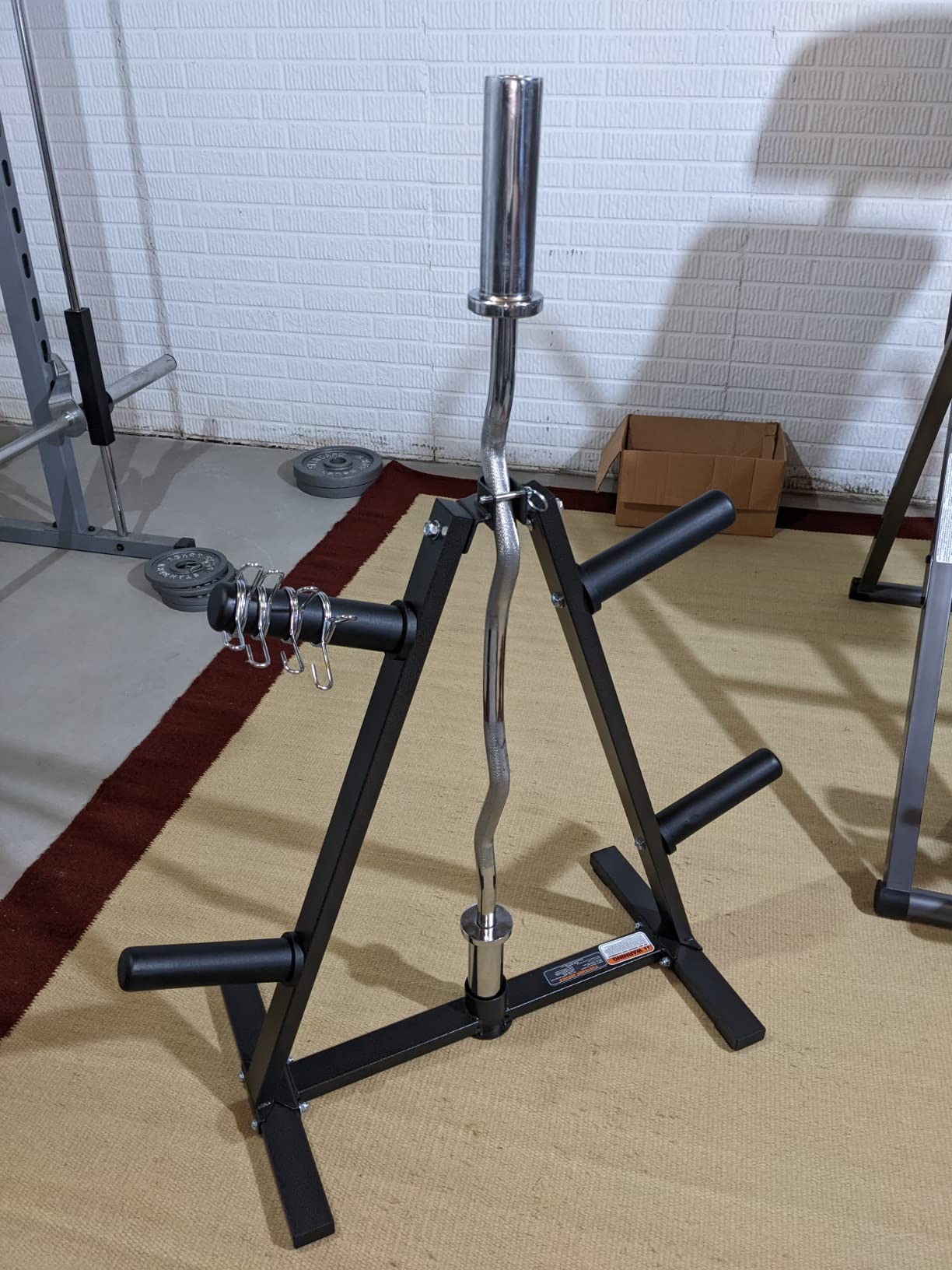
The centre sleeve holds an Olympic bar off the floor, and the four included spring clip collars stop plates walking off the peg ends during a re-rack. Those collars matter more than they sound like they should, because loose bumpers on a steel peg are noisy and they roll.
Marcy backs this one with a two-year manufacturer warranty and two-year spare part availability, which is a stronger commitment than the 30-day coverage on several budget units in this roundup.
What to check before you buy this tree
Measure the width. At 37.5 inches across, this is one of the wider units here, and the triangular frame needs that span to stay stable. It suits a garage wall or a corner rather than a narrow equipment bay.
Plan for two people. Buyers report that the frame is awkward to square up alone, and a second set of hands turns a frustrating build into a ten-minute job. Tighten the bolts in stages while the frame is on the floor.
Budget your capacity honestly. Add the bar weight to the plate total before you assume everything fits, because 300 lb disappears quickly with an Olympic bar and heavy bumpers already on the pegs.
Who this is not for
The plastic bar sleeves are the most-cited flaw, described as loose and prone to sliding off with the last plate. If you cycle your bar on and off often, expect to reseat it or plan a wall clip as a backup.
It is a fixed frame with no casters, so the same moving-a-loaded-tree regret applies. It is also 2-inch only, so a standard plate collection gets nothing from it.
If you need to store more than one bar at a time, look at a unit with dedicated vertical barbell holders. This one holds a single bar in the centre.
4. Marcy Standard Weight Plate Tree PT-5733 Review
Marcy Standard Weight Plate Tree for 1-Inch Plates for Home Gym, 300 lb. Max. Capacity PT-5733
Five pegs for 1-inch plates,300 lb capacity,18.25 x 27.5 x 31 in
Pros
- Handles change plates up to 45 lb pairs
- Stable hardware rated for real loads
- Compact footprint keeps floor clear
- Two-year warranty included
Cons
- Peg extensions have side-to-side play
- Awkward to assemble for one person
- Bottom peg is not Olympic diameter
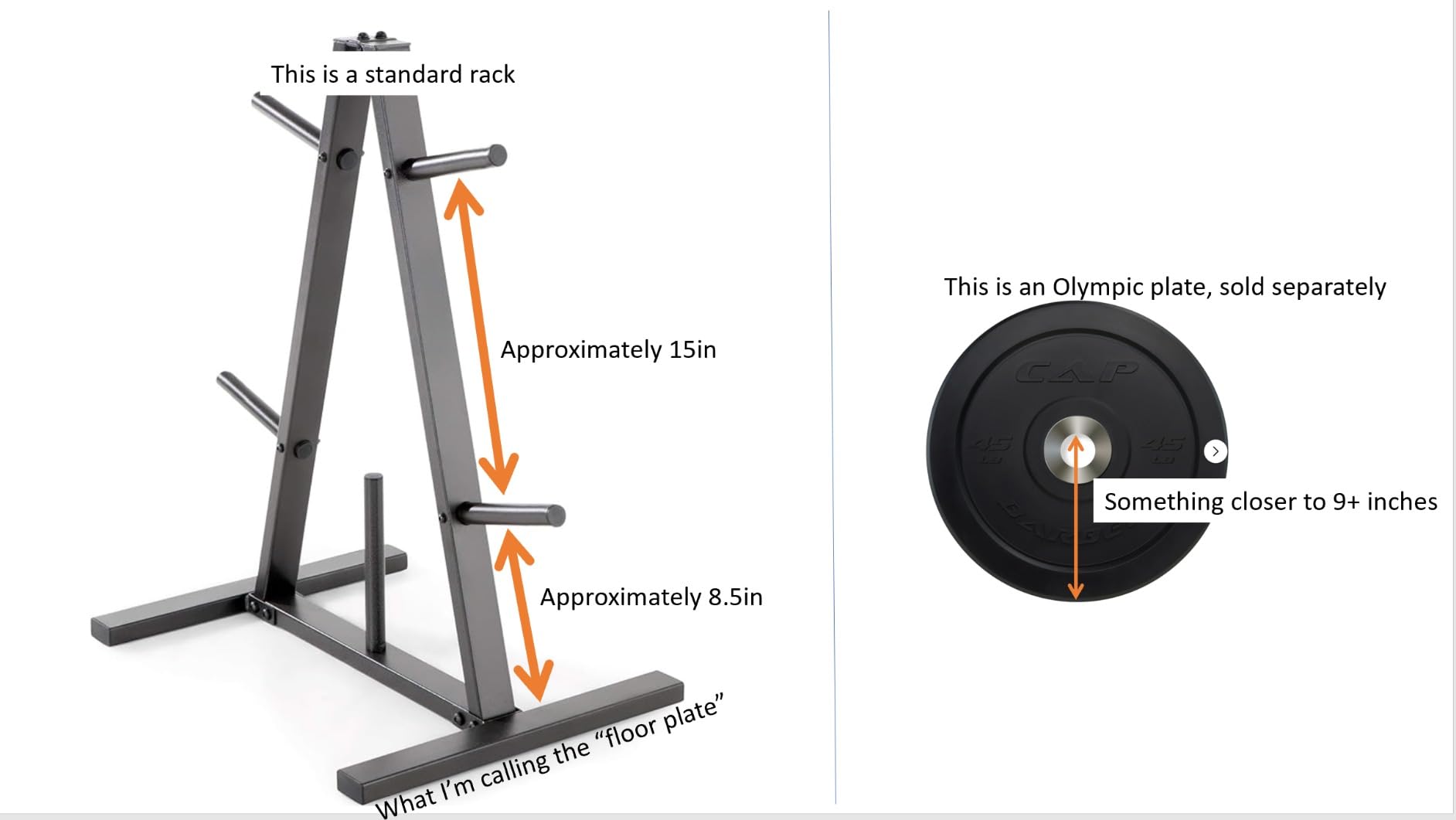
This is the change plate specialist in the roundup. Five pegs sized for standard 1-inch plates handle a spread from small change plates up through 45 lb pairs without the depth of plate that jams an Olympic post.
Buyers call it a solid budget tree that does its job, and 1,800+ reviews at 4.5 stars backs that up. The hardware is rated for heavy loads and the frame stays put once it is assembled and levelled.
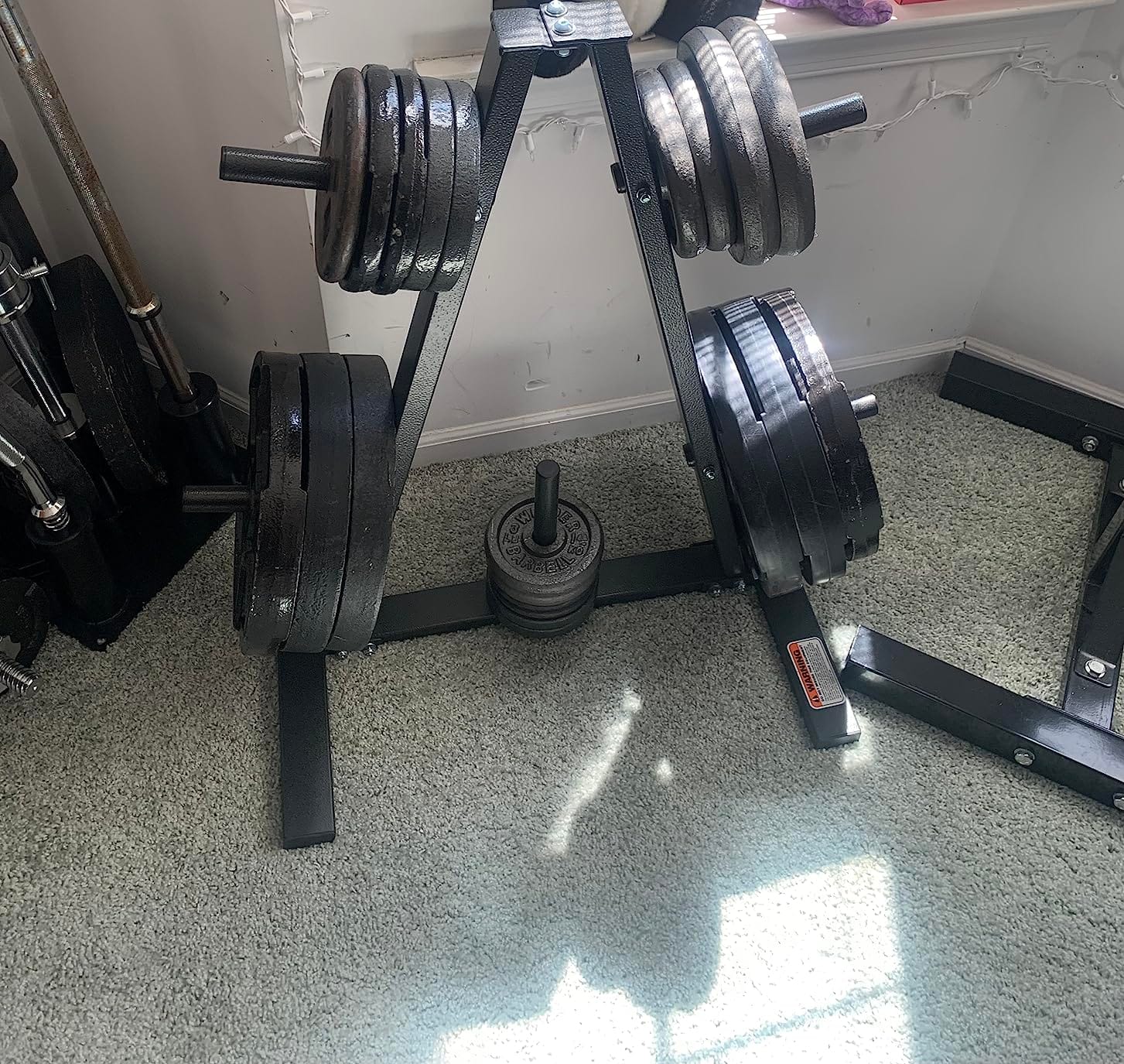
The compact footprint is a genuine advantage in a room that doubles as a storage space. At under 19 inches deep it tucks against a wall without stealing lifting space, and the plate faces stay visible so you can see what you have at a glance.
Two-year warranty coverage and spare part availability are included, which is rare at this tier and useful if a peg extension takes a beating from cast iron being dragged on and off.
What to check before you buy this tree
Sit down with it during assembly. The most common complaint is peg play, and owners who report a tight, wobble-free tree generally mention taking the time to square the frame properly before final tightening.
Decide how many change pairs you actually own. Five pegs is generous for a standard collection, but a dedicated dumbbell set with micro plates needs more peg count than peg strength, and this unit gives you neither extension pegs nor a second tier.
Note the bottom peg diameter if you plan to mix in any Olympic accessory. The frame is 1-inch only, and a plate that sits on a mismatched bore will lean rather than sit flat.
Who this is not for
Anybody lifting Olympic or bumper plates should skip this. There is no 2-inch compatibility here, and no reasonable way to bridge the difference with the pegs as supplied.
There is no barbell storage at all, so your bar lives on a rack or a wall clip. The unit is also fixed in place, which limits you to one corner of the room for the life of the tree.
If you want a taller capacity ceiling for a growing standard collection, a tiered tree gives you more usable pegs. This one prioritises a small footprint and a low price over headroom.
5. Fitness Reality X-Class Olympic Weight Tree Review
Fitness Reality X-Class Olympic Weight Tree – Heavy-Duty Bumper Plate Rack for Home Gym – Chrome Storage Posts – Includes 2 Barbell Holders – 1,000 Lb. Capacity
1,000 lb capacity,Chrome-plated 2 x 8 in posts,Two barbell holders,22 x 26.5 x 41.5 in
Pros
- Highest rated in the group at 4.7 stars
- Chrome posts resist chipping and scratching
- Two barbell holders built into the frame
- Limited lifetime warranty
Cons
- Peg spacing is tight for large-diameter plates
- Barely fits four wide bumpers per peg
- Some pre-load wobble
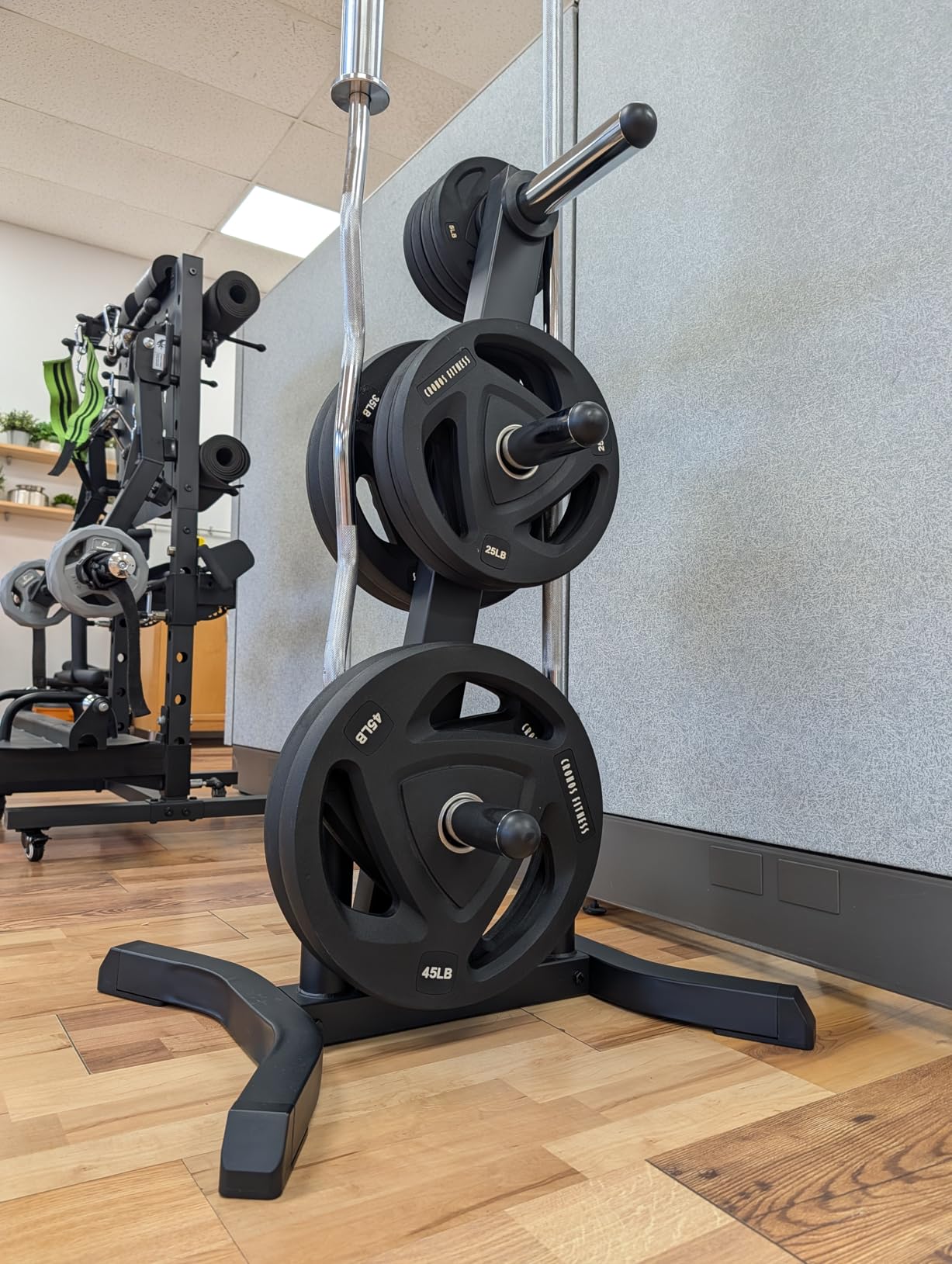
This is the highest-rated product in the roundup at 4.7 stars, and the design decisions behind that score are specific rather than cosmetic. The six storage posts are chrome-plated rather than painted, which is the single upgrade that matters most on a tree, because a sliding plate edge will eventually cut through paint and start rusting the steel underneath.
Two additional posts are sized for 2-inch wide Olympic bars, so bar storage is part of the frame rather than an accessory. For a home gym with an Olympic bar and a Curl bar, that removes the need for separate wall hardware.
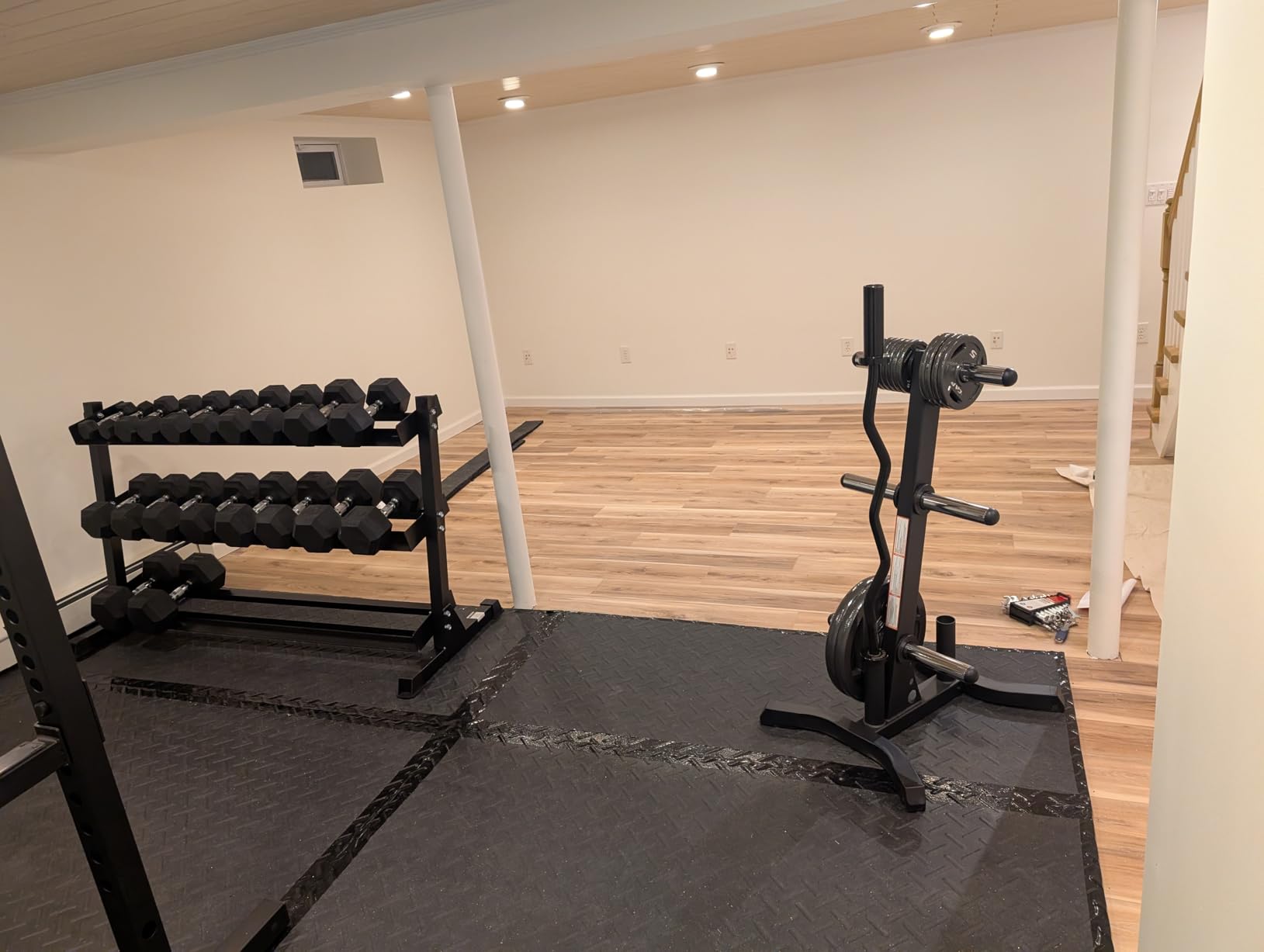
At a 1,000 lb rating with 41.5 inches of height and a 26.5-inch width, this is a genuinely large unit. It is not a small-room tree, and buyers who love it tend to own a garage with a dedicated corner to give it.
Post caps help align plates as you load, which keeps the stack square and makes a full column look deliberate rather than precarious. Reviewers describe the frame as stable under heavy loads once weighted down.
What to check before you buy this tree
Look at your plate diameter, not just the hole size. Owners report that wide-diameter plates can overlap on adjacent posts, and that four wide rubber-grip bumpers per peg is about the limit before the stack starts to crowd itself.
Measure the corner. At 22 by 26.5 inches plus plate radius on each side, the real footprint is closer to four feet square than the base dimensions suggest. This is a garage unit, not a spare-room unit.
Check your ceiling. Inserting a 7-foot bar into a vertical holder on a 41.5-inch frame requires a few inches of overhead clearance that a low-ceilinged basement may not have.
Who this is not for
Standard 1-inch plate owners get no benefit from it. Everything about the post diameter and the bar holders is built around Olympic equipment, and a 1-inch collection will not fit any of it.
Apartment and small-room lifters should look at the compact A-frame designs instead. Buyers who want a tree they can tuck into a corner are usually disappointed by the width once the plates are on.
There is no mobility kit. A tree loaded toward its 1,000 lb rating is not something you want to drag across a rubber floor, so treat it as permanent furniture from the day it is assembled.
6. CAP Olympic Bumper Plate Tree with Barbell Holders Review
CAP Olympic Bumper Plate Tree Rack with 6 Weight Plate Posts & 4 Barbell Holders, Heavy-Duty Steel Plate Storage Rack for Home Gym, Black, 660 lb Capacity
6 posts plus 4 bar holders,660 lb capacity,25.59 x 23.62 x 51.18 in
Pros
- Four vertical barbell holders in the frame
- 660 lb rating across six posts
- Rubber end caps protect the floor
- Heavy 28.7 lb frame stays planted
Cons
- Bulky footprint needing a dedicated corner
- 51 inch height needs ceiling clearance
Multi-barbell households are the clear audience here. Four integrated vertical barbell holders give you four dedicated bar slots in the same frame as six plate post columns, which turns rack wall into free floor space when you own a power bar, an EZ curl bar and a couple of specialty bars.
The six expanded posts handle both bumper and cast iron Olympic plates, and the 660 lb rating is a genuinely useful ceiling. The 366 reviews at 4.5 stars are fewer than the older models here, but they are consistent.
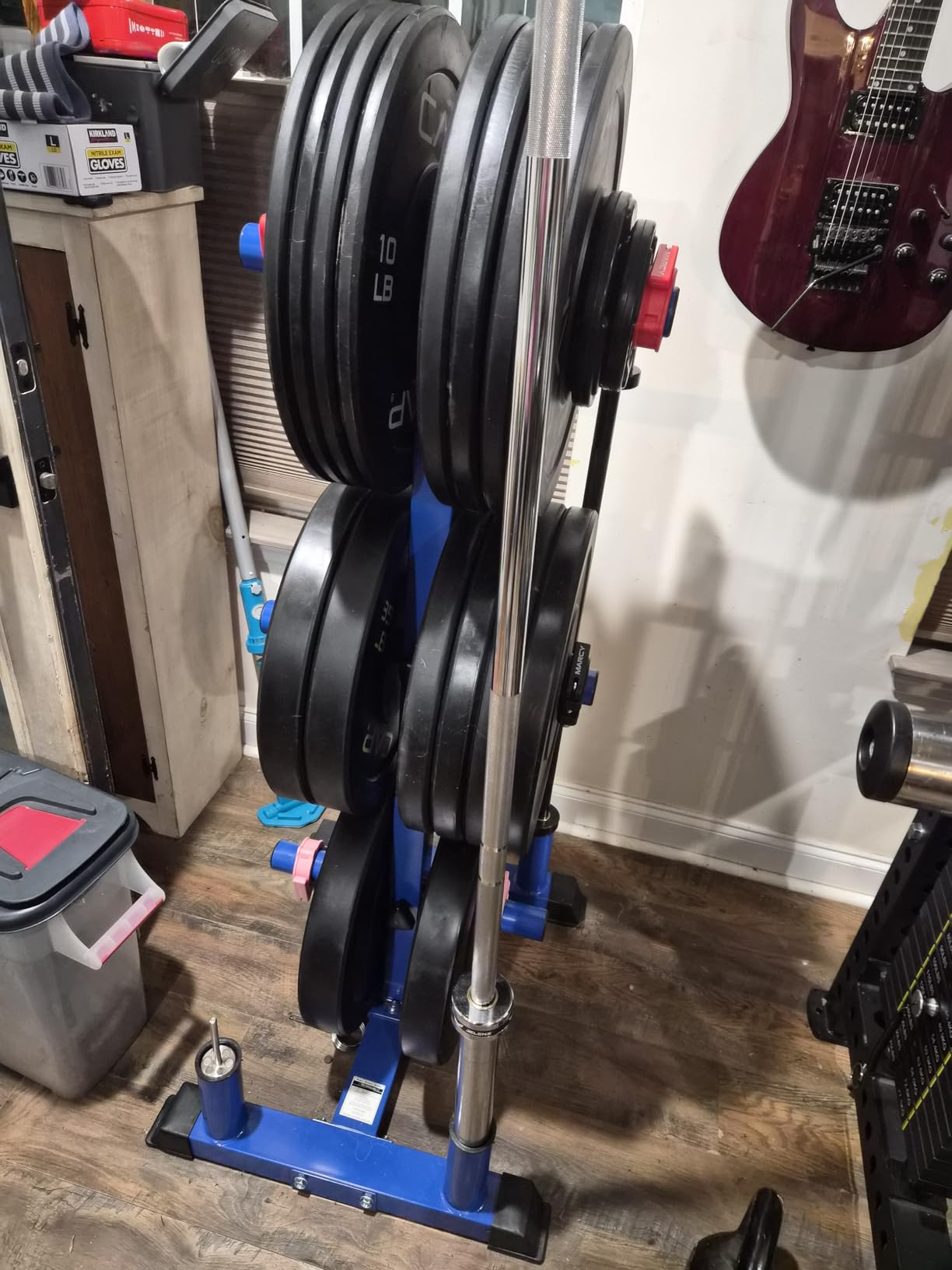
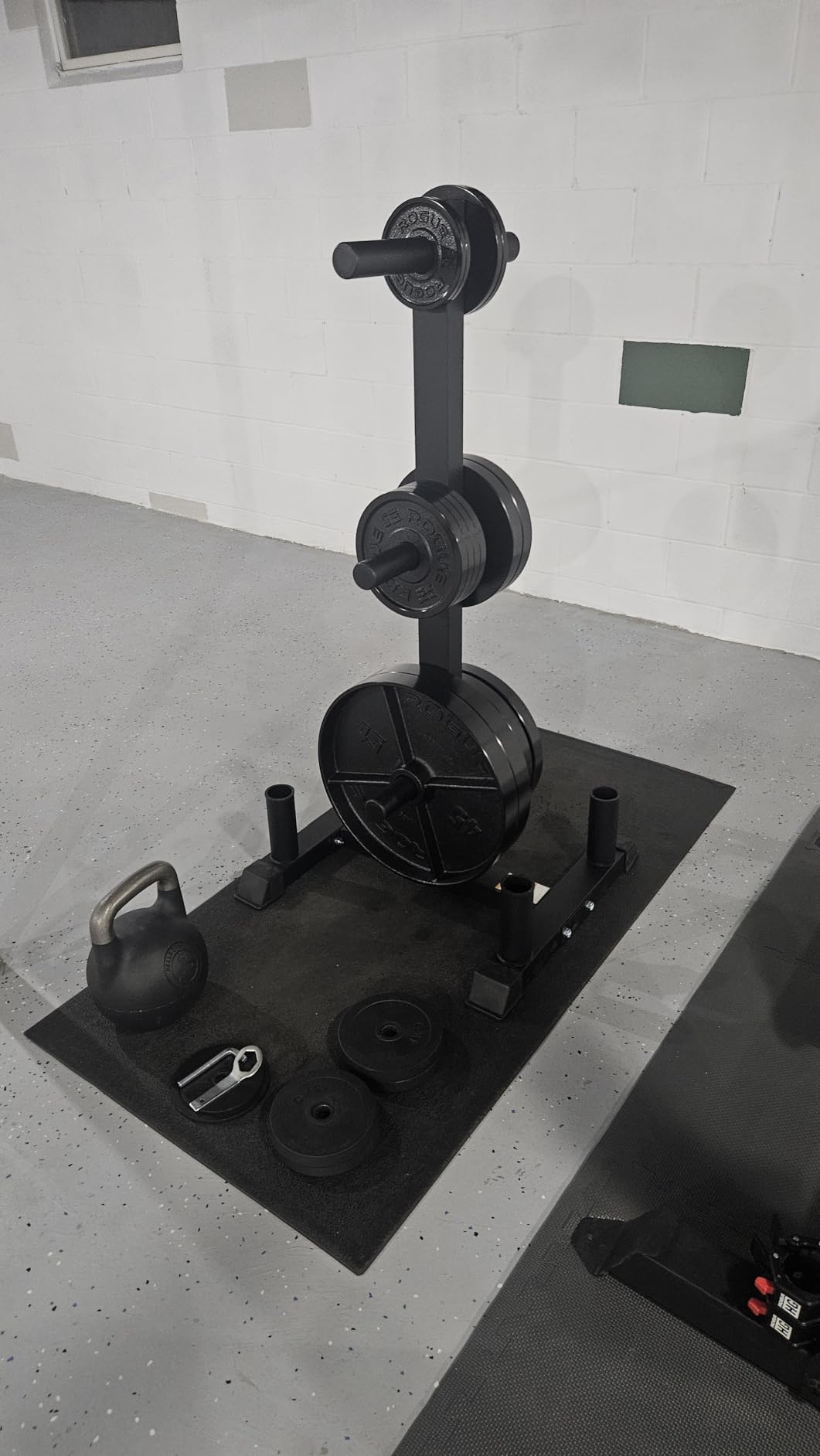
Rubber-capped base ends are a small detail with a visible payoff. They spread the load onto a hard garage floor and take the scratching complaint that shows up constantly in reviews of bare-footed steel trees.
At 28.7 pounds the unit itself is heavy enough to stay put, which matters for a frame that is going to hold a full bumper set. The powder coat resists scratching, so a dragged plate scuffs the plate rather than the post.
What to check before you buy this tree
Measure height clearance before anything else. At 51.18 inches tall with vertical bar holders, this is the tallest unit in the roundup, and basement gyms with exposed joists regularly fail this test.
Confirm the corner. The 25.59 by 23.62 inch base plus plate radius eats a large square of floor, and this is not a unit you tuck behind a door. Buyers who assembled it in a small room report regretting the placement.
Count your bars honestly. If you own one bar, four holders is generous. If you own three or four, it is the only reason to choose this over a lighter tree.
Who this is not for
Single-bar, small-room owners pay for capacity and height they will not use. A 37-inch A-frame handles one bar and takes up a third less vertical space for most collections.
It is 2-inch only, and it is fixed. A family that moves equipment around a shared space will find a lighter tree easier to relocate even when empty.
Assembly is heavier than the smaller units because of the frame gauge and the holder count. Set aside an evening rather than treating it as a weekend-quick build.
7. Eocnrhe 5-Post Weight Plate Rack Review
Weight Plate Rack, Weight Tree, 1-Inch Home Gym Storage Stand, Holds 300 lbs
Five posts for 1-inch plates,300 lb capacity,23.62 x 12 x 25.78 in
Pros
- Very narrow 12 inch footprint
- Five posts handle mixed plate sizes
- Powder coat resists stains and tarnish
- Five finish options to match a room
Cons
- Thin-gauge steel feels light in the hand
- Alignment-sensitive assembly lengthens the build
- Some sets arrive missing hardware
The narrow 12-inch width is the reason to look at this one. Alongside the other 1-inch trees in the roundup, it gives you a standard plate column that sits against a wall in a room where a 23-inch-wide model would not fit.
Five posts take plates of different sizes, and the black powder coat is described as resistant to scratches, stains and tarnish, which suits a garage where plates get dragged rather than lifted carefully.
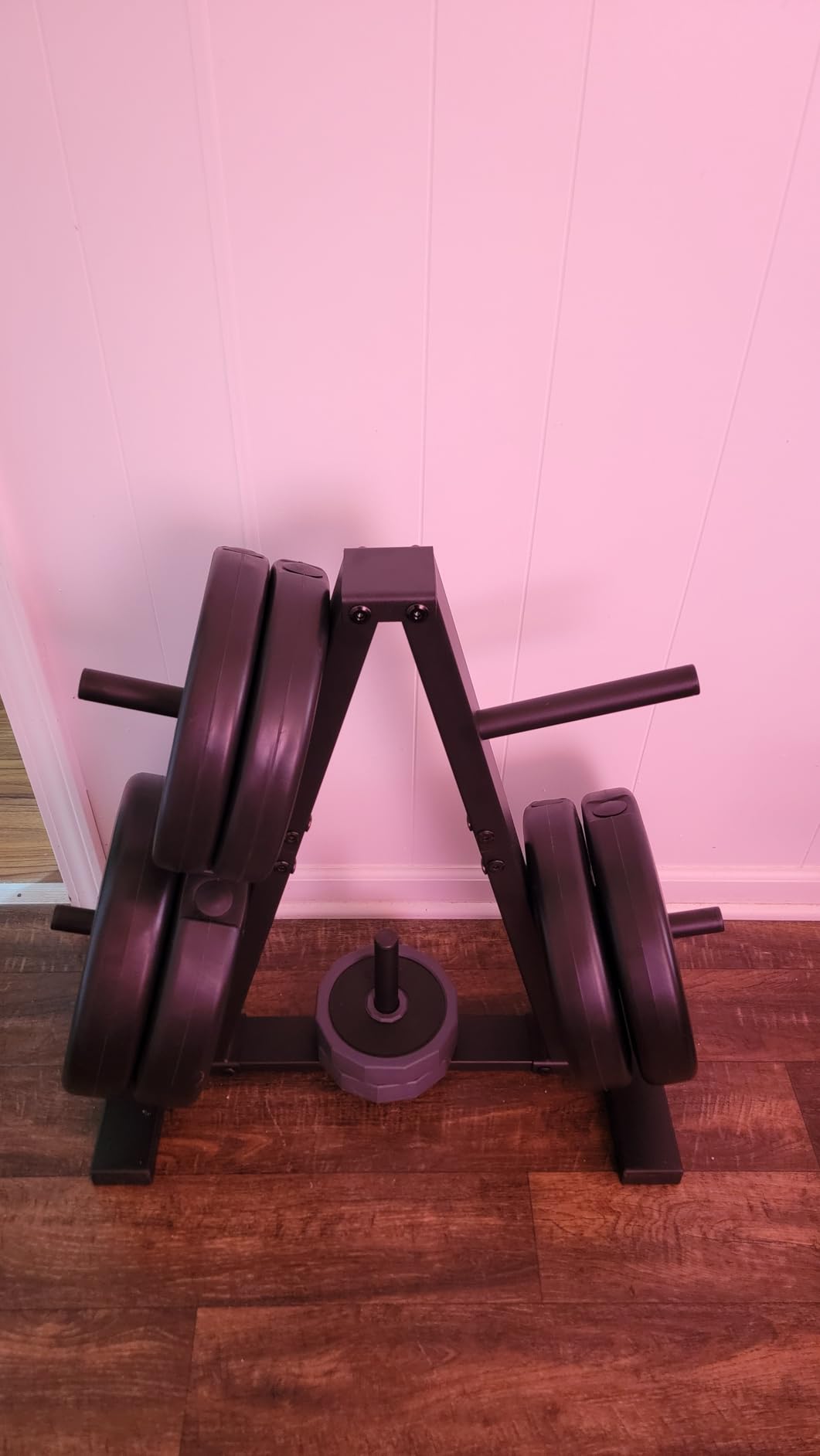
It is offered in five finishes including white, pink and golden alongside black, and a 2-inch black variant is listed separately. That is a genuine advantage if your gym is in a bedroom or a spare room where a black industrial frame looks out of place.
Buyers generally like the tidy, compact result. The 262 reviews at 4.3 stars reflect a product that does the storage job and is not much more than that.
What to check before you buy this tree
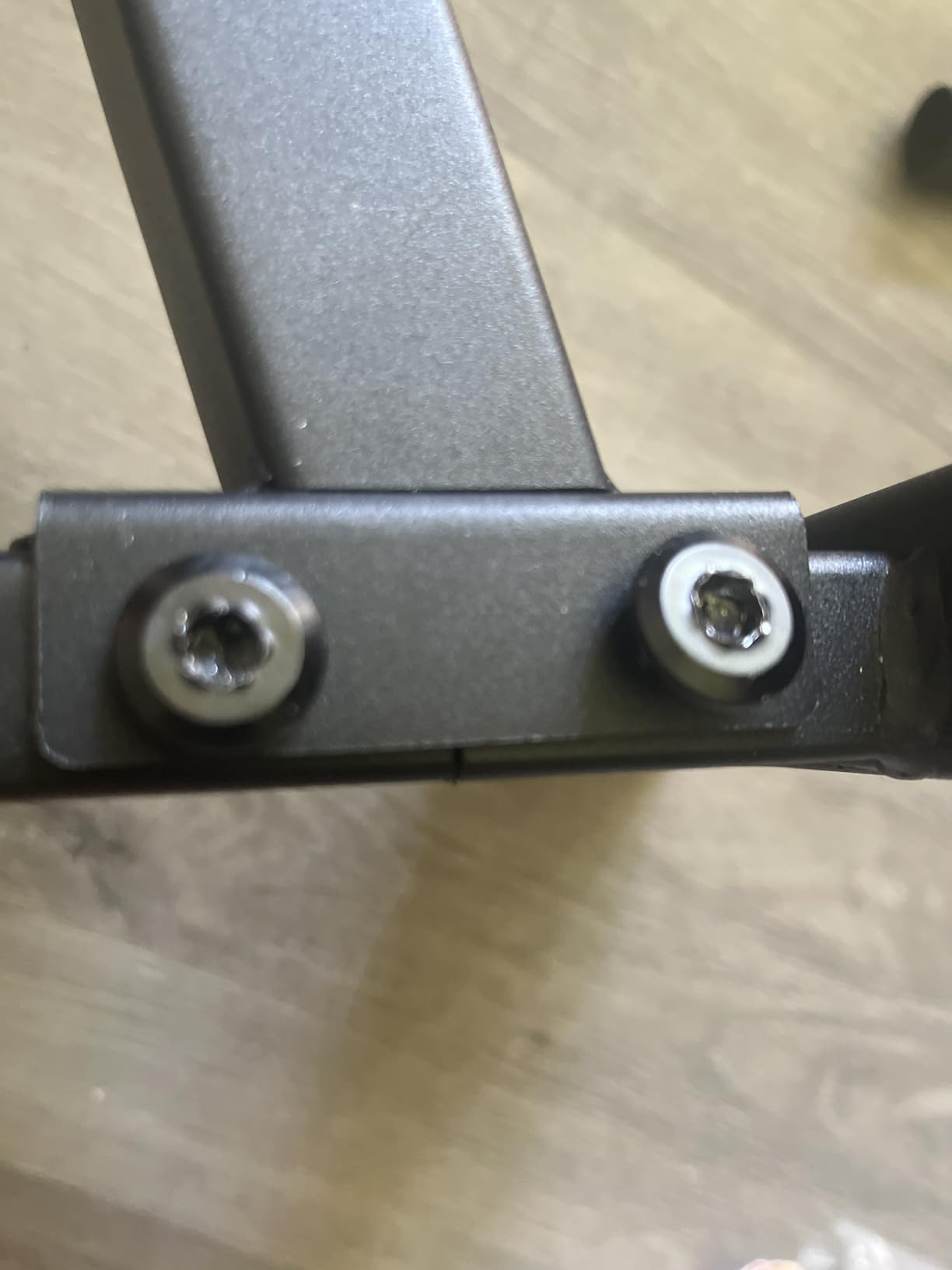
Inspect the hardware before you start. Missing washers and short screws are the most reported complaint, and an incomplete box is an easy return rather than a two-evening troubleshooting session.
Align the post holes before tightening anything. Owners report misaligned holes stripping bolts, and the fix is simply building the frame loose on the floor, checking each post sits square, then tightening in stages.
Know what thin-gauge steel means in practice. It is fine for a standard plate collection, and it will flex more than the heavier frames here if you load cast iron onto a single post.
Who this is not for
Bumper and Olympic plate owners should use the separate 2-inch version, because the standard build will not accept 2-inch holes. Check the variant carefully, as listings for this style are often grouped together.
Anyone expecting a welded commercial frame will notice the bolt-together joints. It is a budget-friendly build, and treating it that way keeps expectations straight.
There is no bar storage and no casters. A loaded tree here weighs enough to be awkward, so pick the spot before assembly rather than after.
8. Bongkim 2-Inch Olympic Weight Plate Tree Review
Weight Plate Rack, Bongkim Weight Tree and Weight Rack for Plates, Weight Holder for 2 inch Olympic Weight Plate, Weight Plate Storage for Home Gym
4 pegs for 2-inch plates,530 lb rating,H-shaped rubber-capped base,Collars included
Pros
- Handled 240-375 lb loads without tipping
- Assembles solo in 15-30 minutes
- Center holder stores a shorter or specialty bar
- Thickened steel tubes under the rating
Cons
- Tapered center sleeve can pinch the bar
- 2-inch Olympic plates only
- Plastic collars need replacing over time
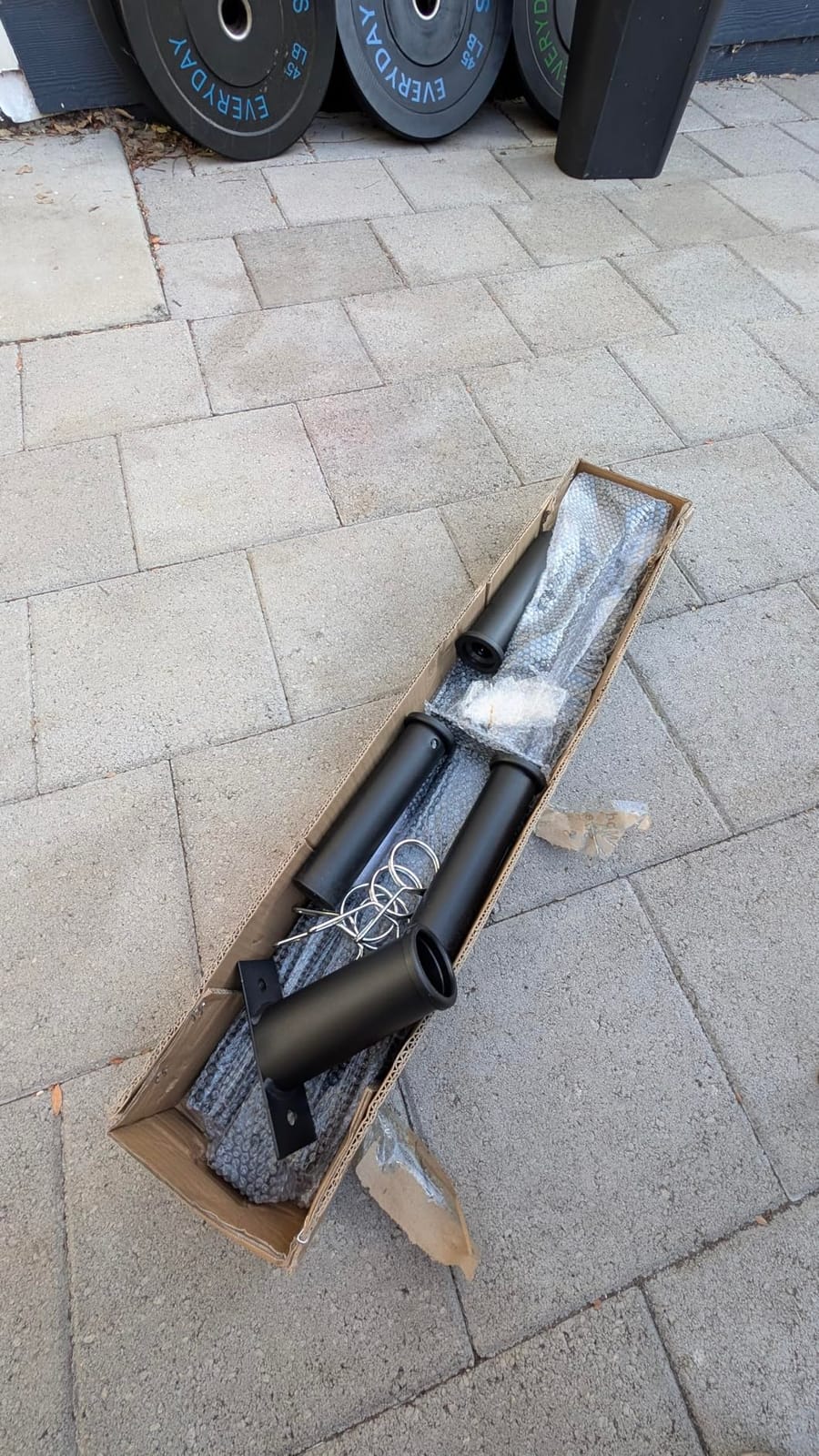
The centre bar holder is what separates this one. Most trees store an Olympic bar in a straight sleeve; this one has a holder sized for a shorter bar or a specialty bar such as a curl bar, which is a real use case for a home gym with limited floor space.
Reviewers report loads in the 240 to 375 lb range without tipping, and the thickened steel tubes are the reason the 530 lb rating is credible rather than aspirational.
Assembling solo in 15 to 30 minutes is a specific and unusual complaint in the positive direction. Most owners in this roundup report needing a second person, so this one saves a step for a single-lifter household.
The triangular support with a wide, thick H-shaped base and non-slip rubber caps keeps the frame stable and protects a hard floor. Included collars stop plates sliding off the peg ends.
What to check before you buy this tree
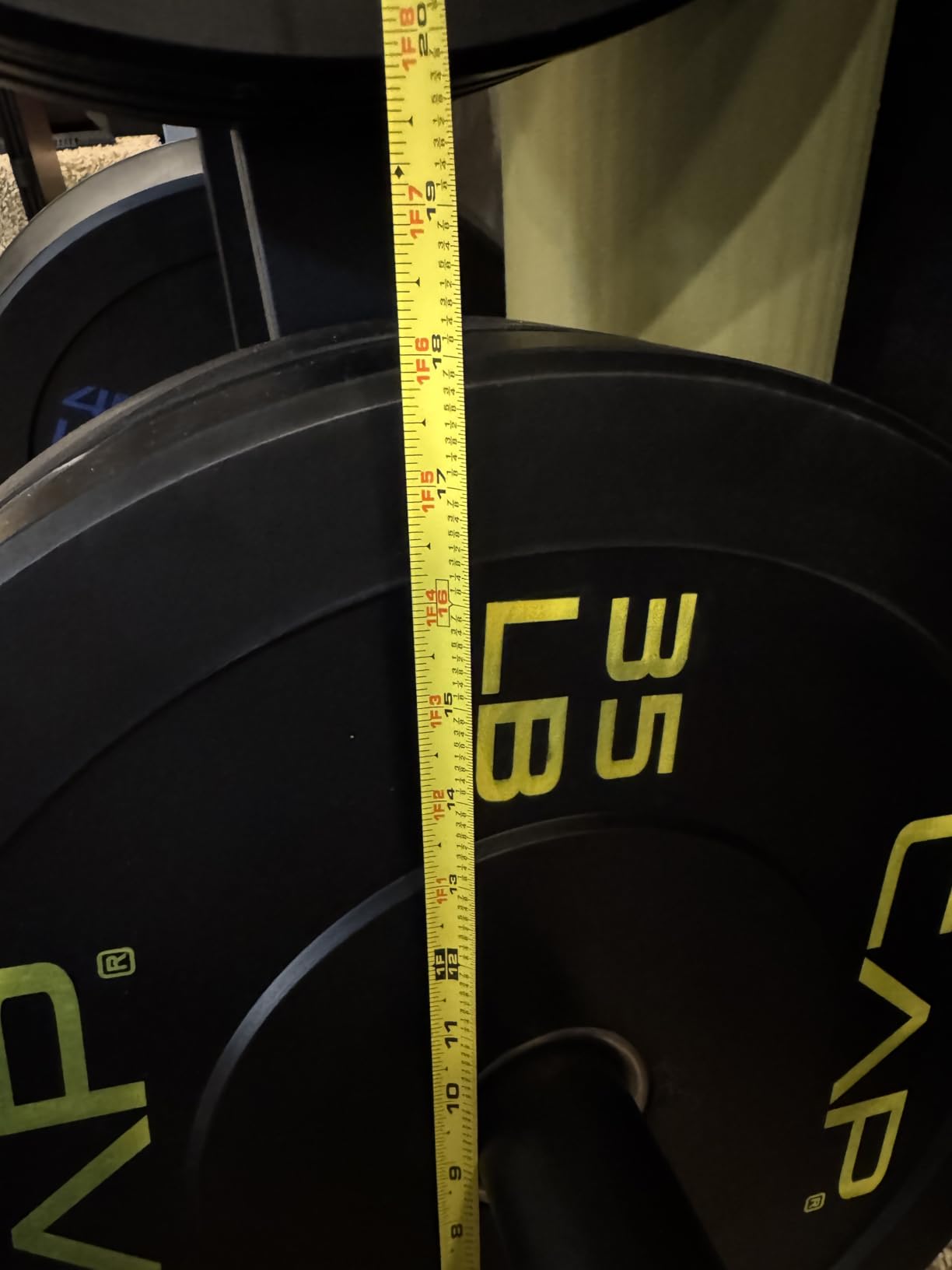
Measure the bar you want to store. The centre holder is not a full-length sleeve, so check your bar’s shaft diameter and length before assuming your specialty bar fits. A full Olympic bar may be a tight or awkward fit.
Confirm 2-inch compatibility. This is an Olympic-only build and nothing about the pegs accepts standard 1-inch plates.
Count pegs against your collection. Four pegs is fewer than several rivals here, which works for a focused collection but gets tight with a mixed set of bumpers, iron plates and change plates.
Who this is not for
Anyone with a full barbell collection will run out of peg count before capacity. The 530 lb rating is generous for four pegs, and the mismatch between the two is worth thinking about.
Owners report the tapered centre sleeve can pinch the bar, making it hard to pull out. If you swap bars frequently, expect a little friction each time.
It is fixed in place with no wheels, and a loaded unit at this weight is not something to slide across rubber flooring. Choose the corner first.
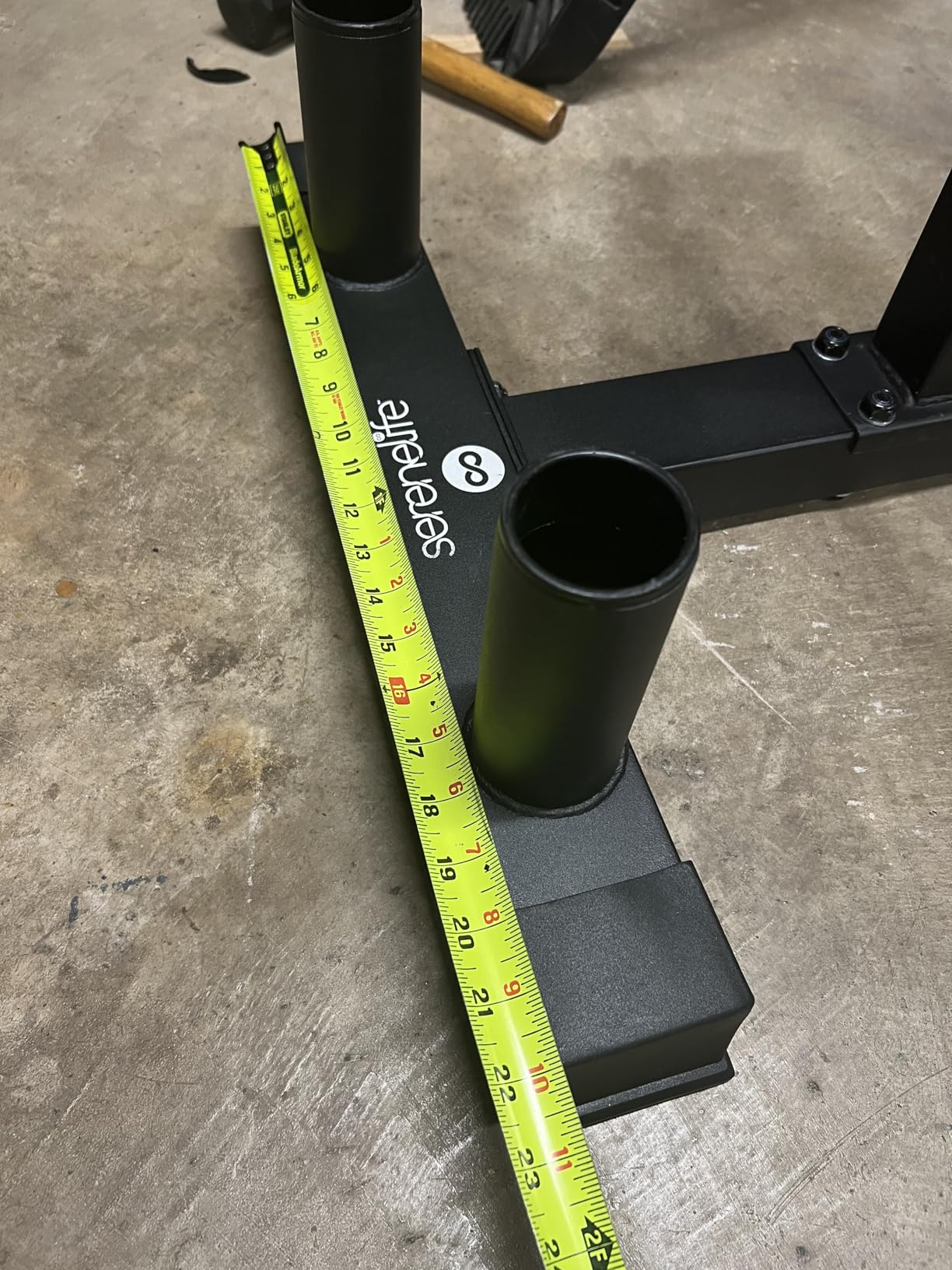
9. SereneLife 6-Peg Olympic Plate Rack and 4 Barbells Review
SereneLife 6-Pegs Olympic Weight Plate Rack & 4 Barbells – 800 Pounds Capacity, Heavy Duty Gym Organizer, Scratch Resistant Frame, Powder-Coat Finish, Easy to Assemble, Compact & Space-Saving
6 pegs plus 4 bar holders,800 lb capacity,25.6 x 23.2 x 43.7 in
Pros
- Stable solid build with no wobble
- Four barbell holders in one footprint
- Powder coat resists scratches and chips
- Easy to assemble and move when empty
Cons
- Pegs sized for 2-inch plates only
- Bar holders need ceiling room for 7 ft bars
- Some orders arrive missing nuts and washers
The 2-in-1 design is the pitch and it largely delivers. Six plate pegs plus four barbell holders means one unit covers both a multi-bar collection and the plates that go with it, which is the combination most buyers are actually looking for.
Owners describe the build as very stable and solid-feeling without wobble, and the powder-coated frame is reported to hold up against chips. At 28.2 pounds the unit has real mass behind it, which is why it does not rock.
It is also one of the few units owners describe as easy to move, though that applies to the empty frame. Once loaded to a meaningful fraction of the 800 lb rating, the same mass that makes it stable makes it immovable.
The modern look is a genuine factor in a home gym that doubles as a living space. A black powder-coated rectangle reads less like warehouse equipment than a bright chrome tree does.
What to check before you buy this tree
Confirm your plates are 2-inch. Buyers report that 1-inch plates will not fit, and this unit does not have interchangeable pegs, so it is a single-purpose build in that respect.
Check overhead clearance for a 7-foot bar. At 43.7 inches tall, the barbell holders need enough ceiling above the unit to seat a full-length bar without forcing it.
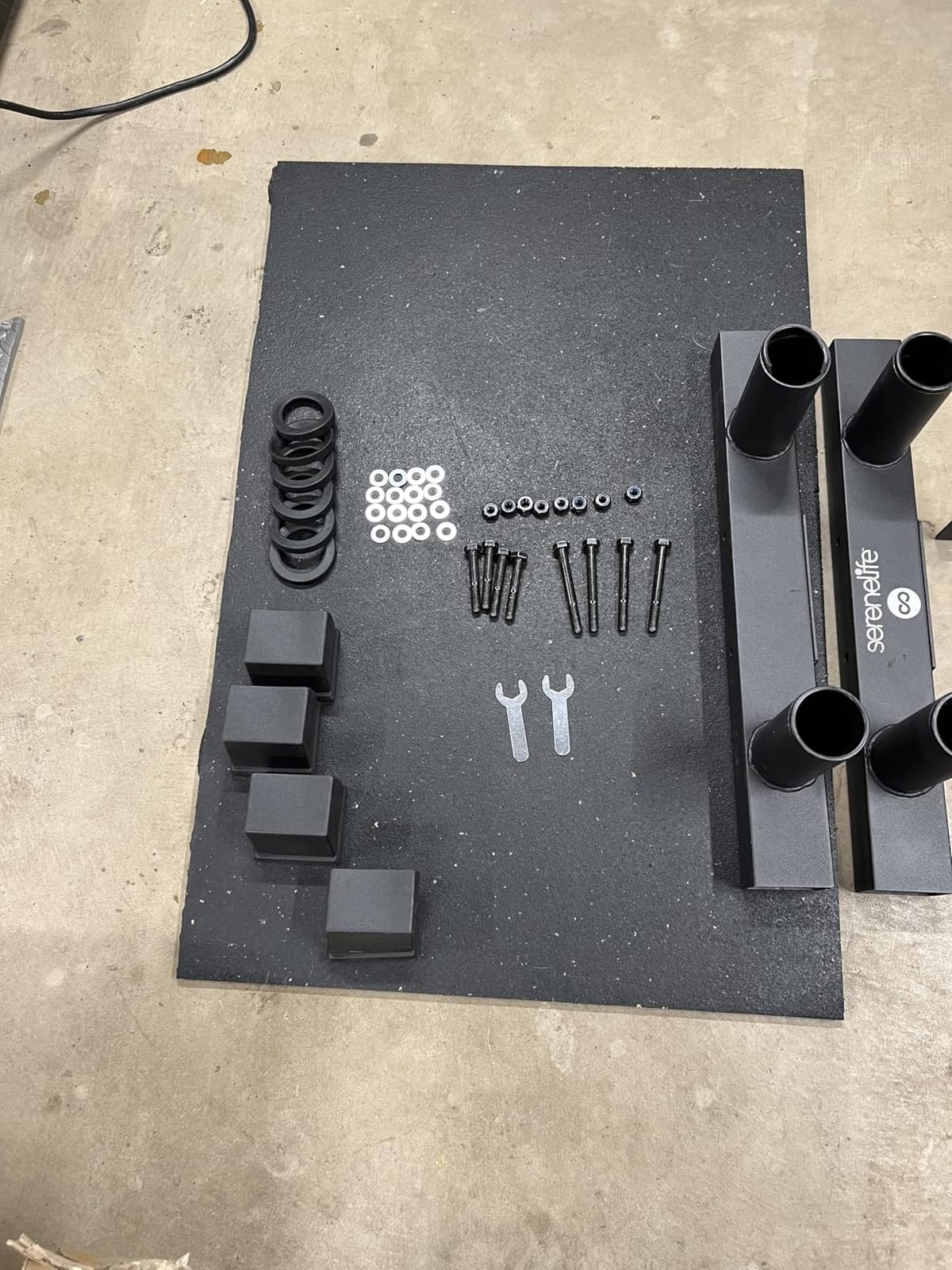
Open the box and count hardware before building. Missing nuts and washers are the reported weak point, and checking first means a quick fix rather than a teardown.
Who this is not for
Standard 1-inch plate owners get nothing here. There is no 1-inch variant in this listing and the pegs are fixed.
Small rooms should note the 25.6 by 23.2 inch base, which is one of the larger footprints in the roundup. Combined with barbell holders, this needs a wall rather than a corner.
If you only own one bar, four holders is more than you need, and a lighter single-bar tree leaves you with more usable floor space for the same plates.
10. Josmimic 400 lb Weight Plate Rack Review
Weight Plate Rack 400LBs, Weight Tree Holder for 2-Inch Olympic Plates
6 pegs at 35 mm,400 lb capacity,13 x 24.8 x 36.7 in
Pros
- Stands steady with 200-500 lb loaded
- 20-30 minute assembly with included key
- 13 inch depth keeps the floor clear
- Anti-slip feet limit wobble
Cons
- Peg holes reported too snug for 2-inch plates
- Plates may not sit flush
- Standard 1-inch version is a separate build
Six pegs in a 13-inch-deep frame is a good combination of capacity and compactness. That narrow depth means the plates face out into the room and the unit tucks back, which is how you fit an Olympic tree into a garage that already has a bench and a rack in it.
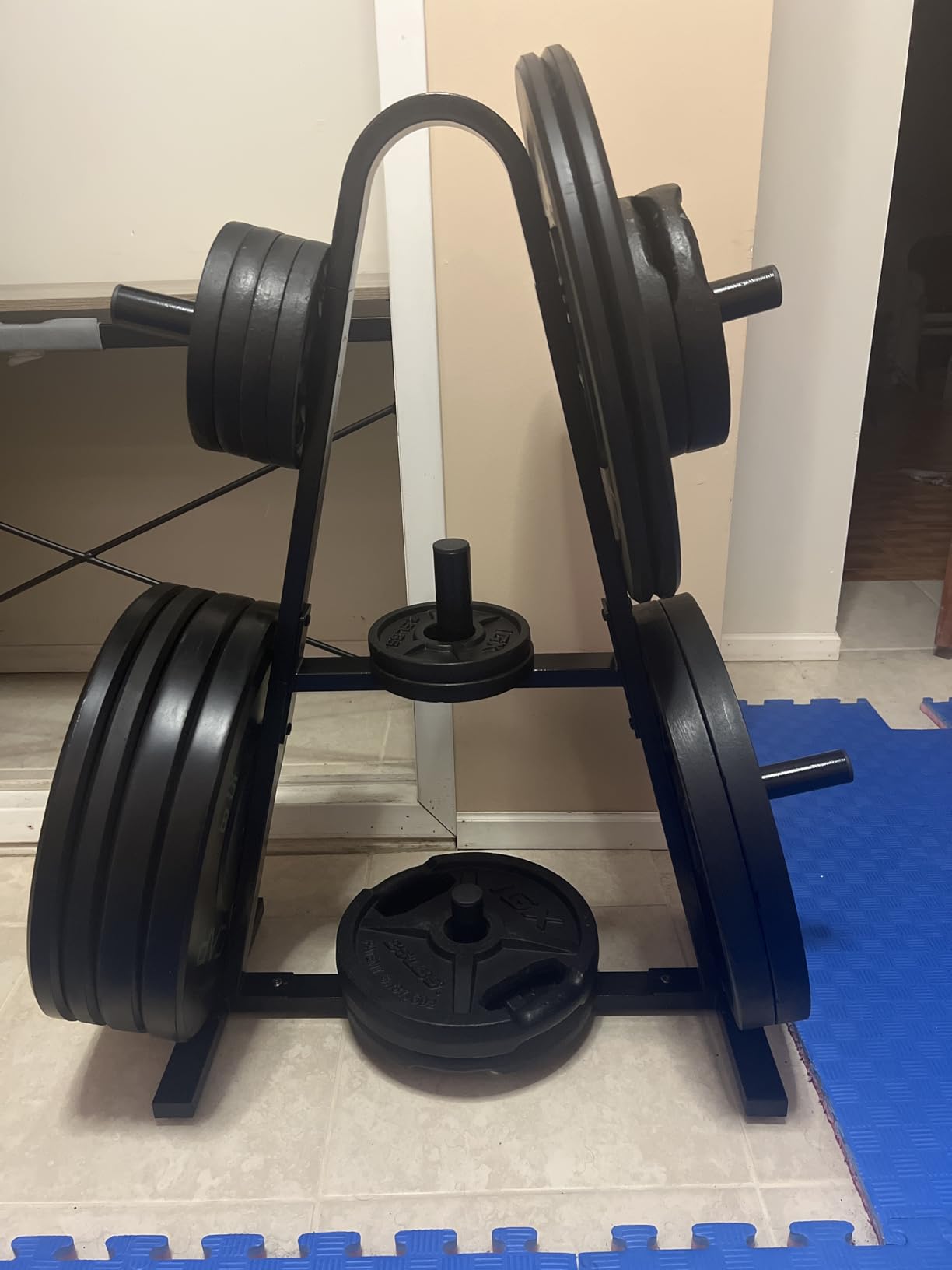
Most owners find it sturdy and good value, reporting steady behaviour between 200 and 500 lb of plates. The reinforced steel frame and anti-slip feet do the work of keeping it from rocking.
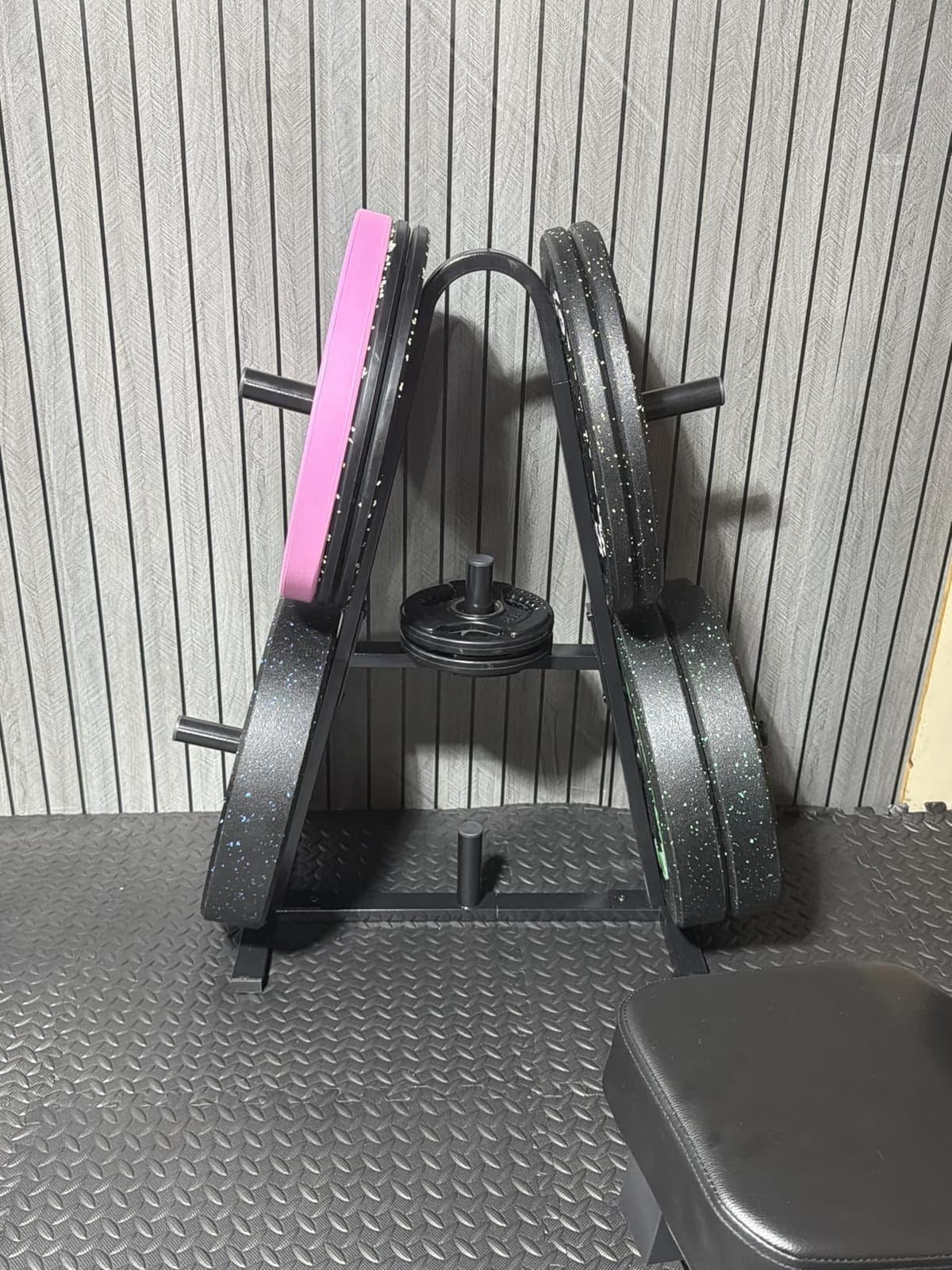
Assembly takes 20 to 30 minutes with the included Allen wrench, and the six pegs accept more plate types than most four-peg units. If your collection mixes bumpers with lighter iron plates, the extra pegs help.
Owners also report that it works as a plate and barbell storage solution in the same footprint, so a single bar has somewhere to live even though there is no integrated sleeve on every variant.
What to check before you buy this tree
Verify the peg diameter against your plates before you commit. A minority of owners report the 35 mm holes are too snug for their 2-inch plates, causing wobble rather than a flush seat, so this is worth a check against the specific plates you own.
Check the variant listing carefully. Standard-plate and Olympic-plate versions are separate builds in this range, and ordering the wrong one is an easy mistake.
Note the 36.7-inch height. That is tall enough for full-size plates but low enough to work under a sloped garage ceiling where a 51-inch unit would not.
Who this is not for
Standard 1-inch plate owners need the separate standard version of this product, because the pegs in this configuration are not sized for 1-inch holes.
Buyers who need barbell storage built in should look at a unit with dedicated vertical holders. This one is plate-focused, and a bar needs a wall clip or a rack J-hook.
With 146 reviews it has the thinnest owner record in the roundup, so long-term durability reports are limited. That is a reasonable trade for a compact and inexpensive Olympic tree.
11. ZHOOGE A-Frame Weight Plate Tree Review
A-Frame Weight Plate Tree for 1″ Olympic Plates – Holds 300 lbs, Dumbbell Rack and Home Gym Storage Stand – Organize Your Workout Area
4 pegs plus a bar holder,300 lb capacity,Pyramid A-frame base,1-year warranty
Pros
- Assembles in about 10 minutes with hardware included
- Rubber base protects hard flooring
- Organizes plates and one bar in a single unit
- Entry-level build for a starter collection
Cons
- Lowest rated at 4.1 stars
- Only four pegs limits capacity
- Some plates sit unevenly on the pegs
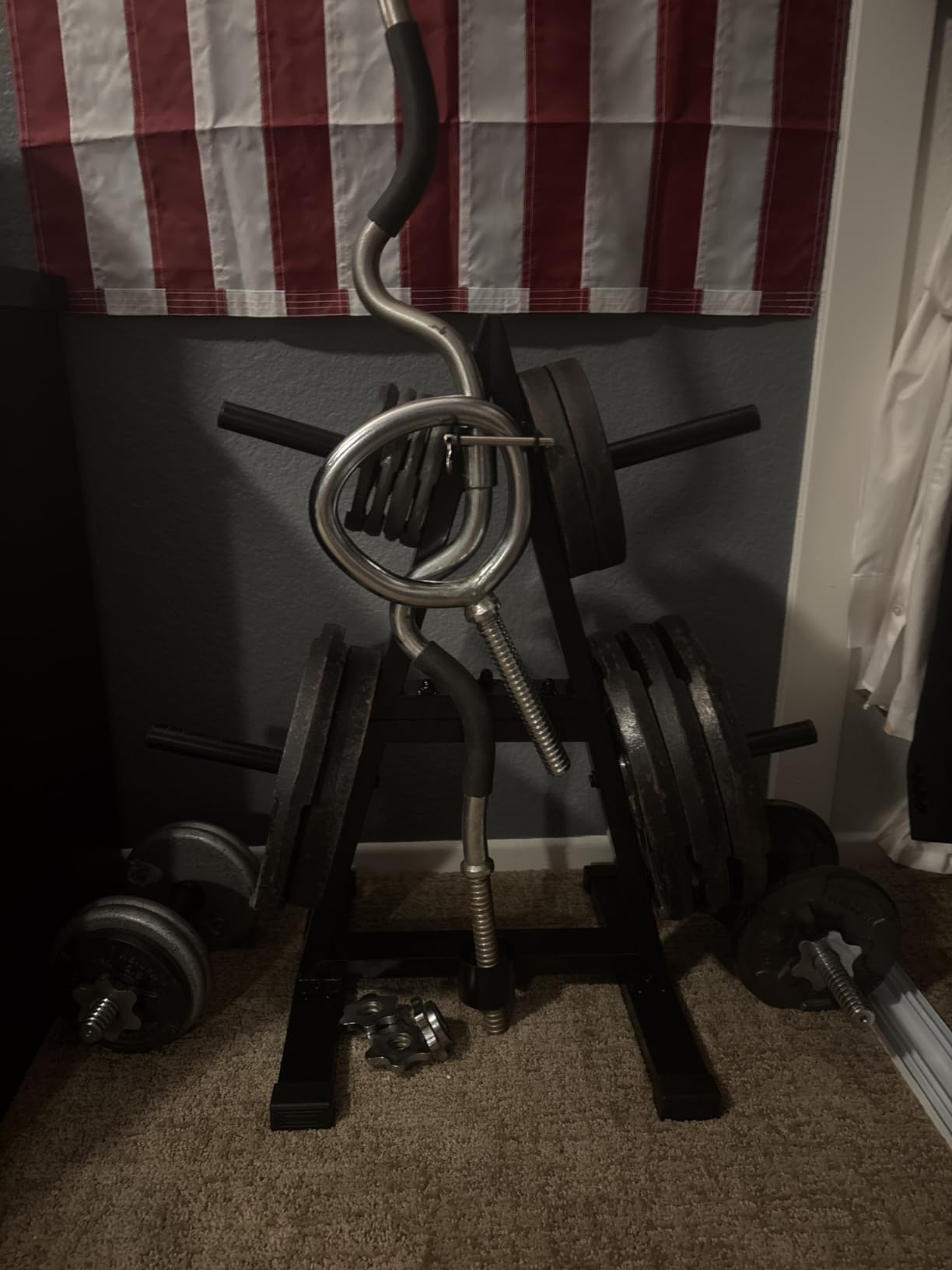
This is the budget end of the A-frame range, and it does the basic job for a small collection. Four pegs and one weight bar holder cover a starter set of plates and a single standard bar in one unit.
The 383 reviews at 4.1 stars make it the lowest-rated product here, and the reasons are consistent: limited peg count and a looser overall fit than the higher-rated trees. The build itself is straightforward, with assembly reported at about ten minutes.
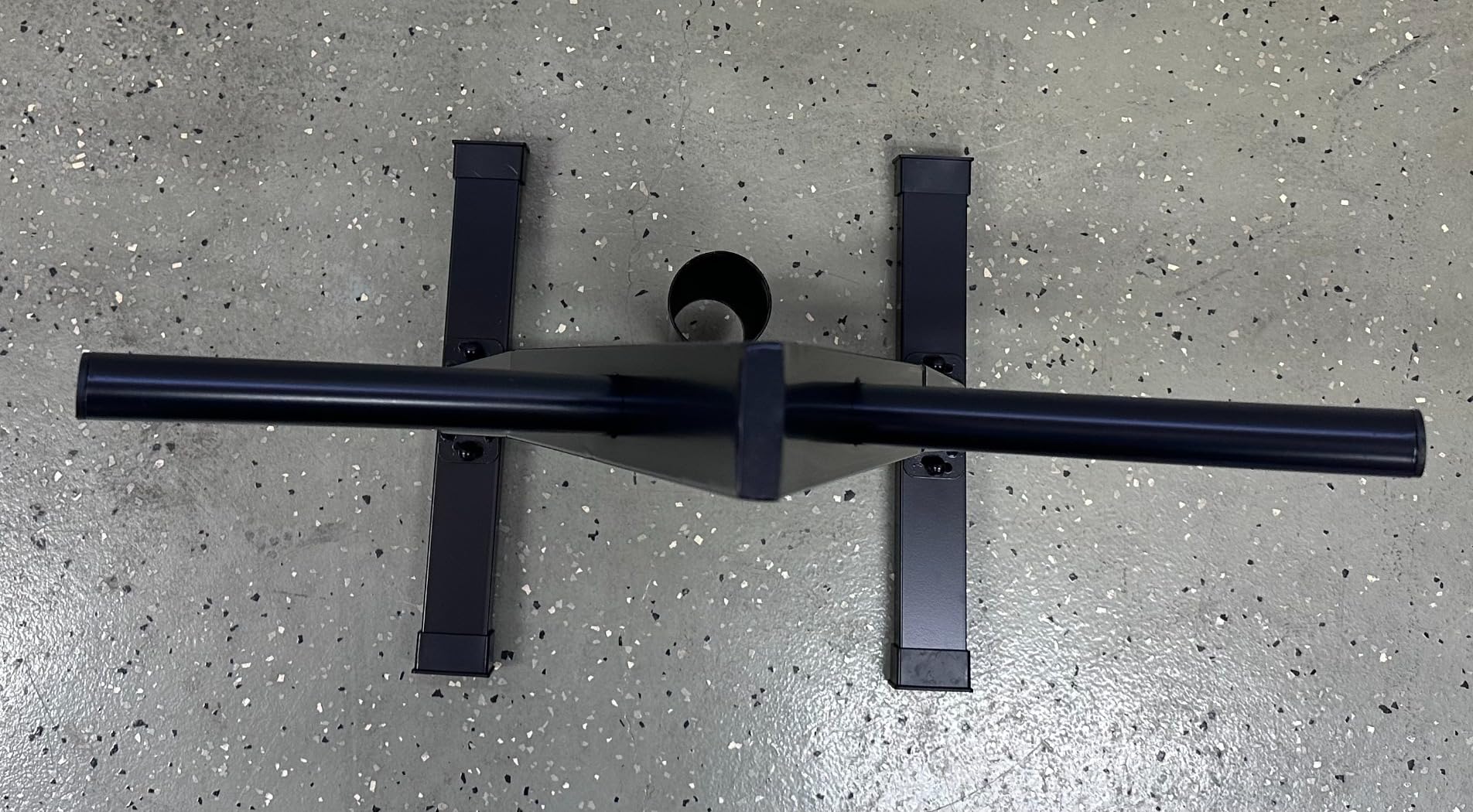
The rubber base is a nice touch at this price, since most of the cheaper competitors in this roundup put bare steel on your floor. Owners with hardwood or tile appreciate it.
The pyramid structure with an H-shaped base gives it more lateral stability than a simple single-post design, and the frame is iron, which explains the weight of the feel relative to the price.
What to check before you buy this tree
Count your pairs against four pegs. That is enough for a genuine starter collection, and not enough for a full bumper set plus change plates, which is the most common upgrade path owners describe.
Note the plate range. The pegs are specified for 2.5 lb to 45 lb plates, so ultra-light competition change plates below 2.5 lb are outside what the listing covers.
Check the warranty term. One year is the shortest coverage in the roundup, and on a thin iron frame that is worth factoring into a replacement plan.
Who this is not for
A growing collection will outgrow it quickly, and four pegs cannot absorb the kind of plate volume that motivates a tree in the first place. If you are already adding pairs, spend a little more for peg count.
Owners report some plates sitting squarely and others not, which is a fit characteristic rather than a defect. It is not a unit for a collection where appearance matters as much as function.
There are no casters and no multi-bar storage here, and the pegs are for standard plates only. It is a straightforward small standard-plate tree and nothing more.
12. Body-Solid WT46 6-Post Olympic Weight Tree Review
Body-Solid (WT46) 6-Post Olympic Weight Tree & Bar Holder – Durable Plate Rack and Weight Storage Stand for Home Gym – 1000 lb Weight Capacity
6 posts at 2 x 8 in,1,000 lb capacity,22 x 20 x 40 in,34 lb unit
Pros
- Rock solid with 400-685 lb and no wobble
- All-side welded high-tensile steel
- Central load distribution cuts tip risk
- Limited lifetime warranty
Cons
- Pegs can wobble if not shimmed
- Supplied spring clamp does not fit the peg diameter
- Rubber peg rings have a strong chemical odor
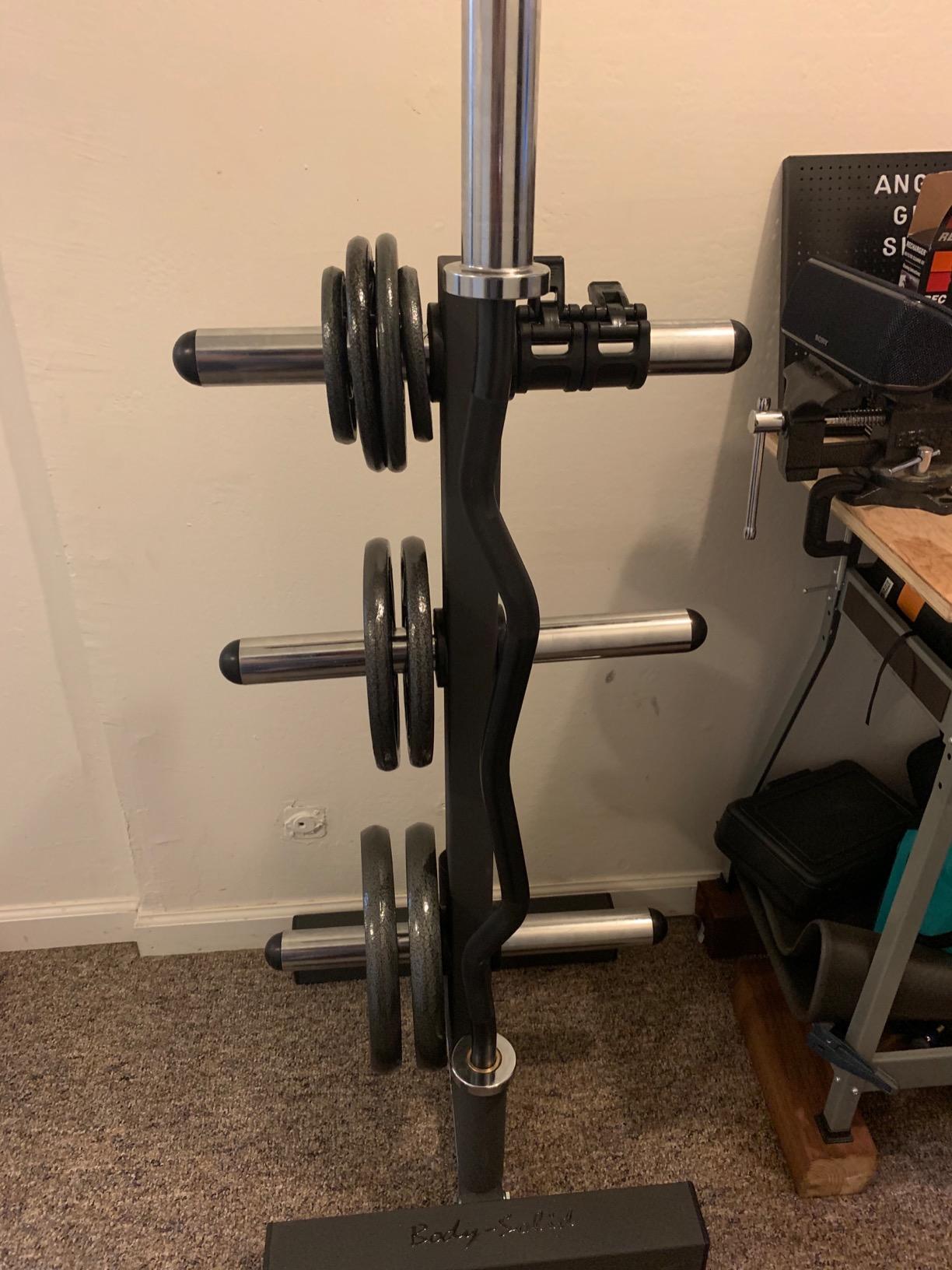
The weld quality is the story here. This frame is built from 2 by 2 and 2 by 3 inch high-tensile steel with all four sides welded, and buyers with 400 to 685 lb loaded report no wobble at all, which is the highest stability level in the roundup.
Central weight distribution reduces tipping risk, and that is the safety argument for spending more on a tree that will hold competition-calibre plates. A limited lifetime warranty backs the frame rather than a one or two-year term.
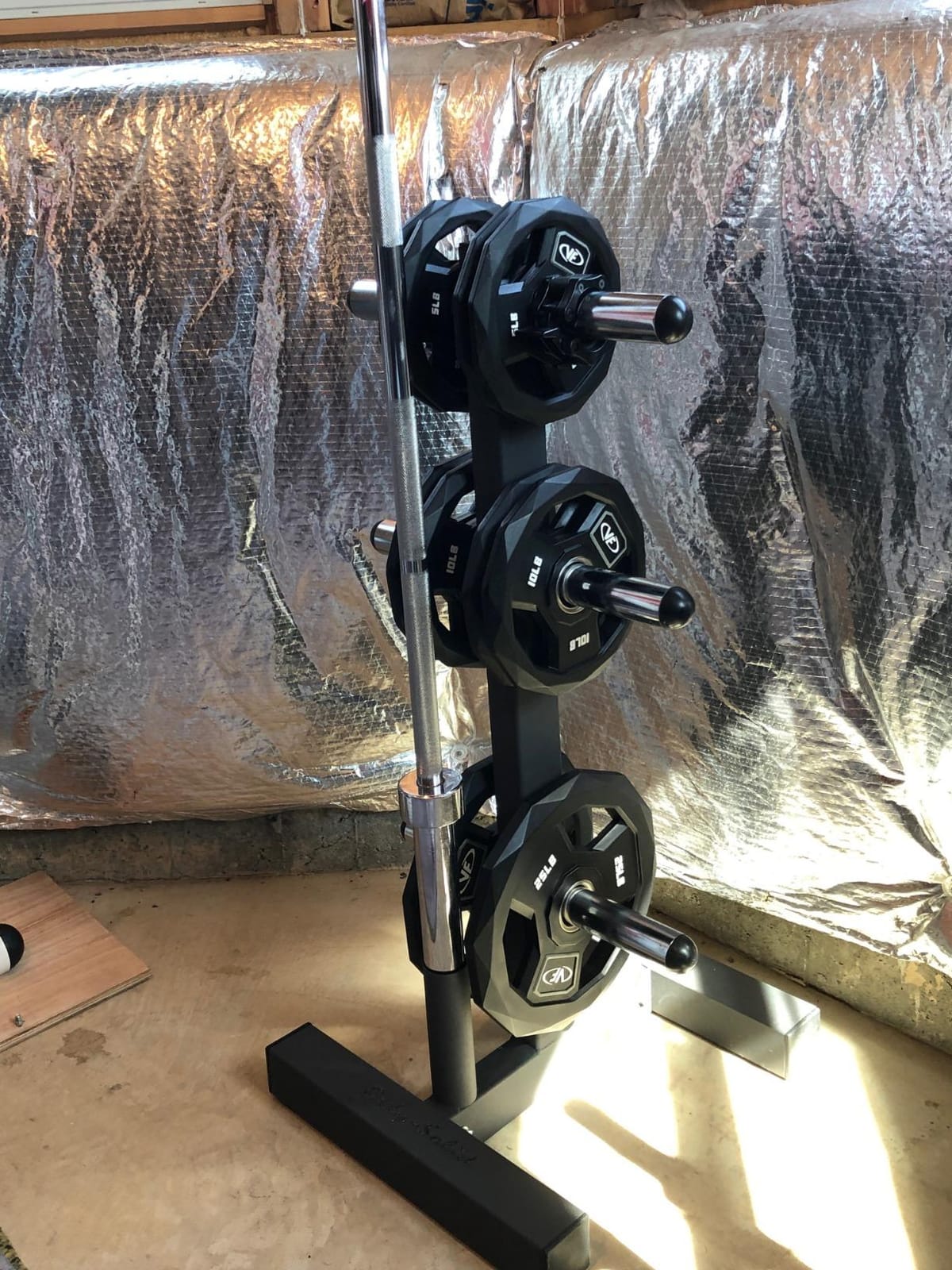
Six 2 by 8 inch posts give more usable peg length than most competitors, and dual barbell holders cover two bars. At roughly 34 pounds the unit is heavy in a way that reads as quality rather than inconvenience.
Assembly is fast if you have a socket set, which is the tool the frame really wants. The electrostatically applied powder coat is reported to resist scuffs and corrosion.
What to check before you buy this tree
Plan for shimming. Owners report peg wobble that resolves with a thin shim at the joint, and the supplied spring clamp is reported not to fit the peg diameter, so plan to source your own collars or clips.
Count pegs per side for your heaviest plate. With 45 lb plates you can fit four per side on the lower pegs, which is fewer than the longer posts on some premium rivals, so a full competition set may need two trees.
Check overhead clearance for a 7-foot bar. The unit is 40 inches tall and inserting a full bar needs clearance above the holder.
Who this is not for
Standard 1-inch plate owners get nothing from the 2 by 8 inch Olympic posts, and the rubber peg rings are reported to have a strong chemical odour, which matters in a room used for living as well as training.
Frame construction is the honest comparison against the 500 lb A-frame in this roundup. The premium here buys weld integrity, peg length and warranty length rather than a higher number on the label.
It is a fixed, 34-pound unit. Anyone who needs to move a loaded tree will be disappointed, so place it where it will live.
How to Choose a Weight Plate Tree for a Home Gym
Match the tree to your plate hole first
Standard 1-inch plates and Olympic 2-inch plates are not interchangeable, and no plate tree in this roundup accepts both without modification. Standard cast iron plates with a 1-inch hole need one of the 1-inch designs, and anything with a 2-inch hole, which includes nearly all bumper and competition plates, needs an Olympic tree.
Measure the hole rather than assuming. Many change plates and some older cast iron sets are 1-inch, while most modern iron plates and all bumpers are 2-inch. A caliper on a plate you already own settles the question in ten seconds and saves a return.
Work out the capacity you actually need
Add up your total plate weight, then add your bar. A 45 lb Olympic bar plus two of every plate from 10 to 45 lb is over 700 lb before you count a second bar, and that total is what the tree has to carry, not the number of pairs you plan to display.
Then check peg count against the number of pairs. A 1,000 lb tree with four pegs cannot hold a 900 lb collection, because the plates will not physically fit. Peg count and rating have to agree, and most capacity complaints trace back to buying the rating and ignoring the pegs.
Add headroom of about 25 percent if you are still adding plates, and count collars. A tree without caps or clips lets plates walk off the peg ends, and bumper plates on a concrete floor take a real beating.
Vertical tree versus A-frame versus wall-mounted versus half rack
A vertical tree is a tall central column with tiers of pegs. It holds the most plates in the least floor area and is the right choice for a tight garage, but it needs ceiling clearance and it is the hardest style to move once loaded.
An A-frame is a shorter, wider version. It uses less vertical space, often fits under a sloped ceiling, and holds a smaller collection, which makes it the better fit for standard plates and small rooms. Most of the budget options in this roundup are A-frames.
Wall-mounted storage is the genuine alternative to a tree, and it is the only style that returns its floor space entirely. It works well for standard plates in a basement gym with a solid stud wall, and it does nothing for a garage with thin walls. It is also harder to load safely at height, which is where a tree wins.
A half rack stores plates in angled channels near a squat rack and looks tidy inside a training space, but it holds fewer plates and forces you to reach into a corner to pull the last pair. For most home gyms the honest answer is a tree plus two or three wall clips for change plates.
Peg length decides the bumper plate question
This is the single most repeated complaint across the category, and it is worth understanding before you buy. Bumper and competition plates are far thicker than iron plates, so a short peg holds three iron plates comfortably and barely two bumpers.
Look for pegs around 8 inches long if you lift bumpers, and check how many plates that actually holds once the end cap is in place. The 2 by 8 inch posts on the heavier trees in this roundup are sized for exactly this reason, and it is why a cheaper 5-inch peg tree feels cramped the moment a full bumper set goes on.
Wide-diameter plates add a second problem. Where posts sit close together, larger plates can overlap their neighbours. That is worth checking against your plate diameter, because it determines how many pairs fit per tier.
Decide whether you need mobility
Casters matter more than buyers expect. Fully loaded trees are extremely hard to move, and owners who regret their purchase almost always regret the lack of wheels, particularly in a single-car garage where floor space is reallocated constantly.
The counter-argument is floor damage and weight. A loaded castored tree is a heavy object being dragged across concrete or rubber, and most wheel kits are sold as a separate accessory. If your layout is fixed, a footed tree with rubber end caps is simpler and more stable.
Look at the base, the finish and the fasteners
Level the frame before you tighten anything. This one step resolves the majority of wobble complaints in this category, and a cheap bubble level is worth more than any upgrade short of casters.
Welded frames feel different from bolt-together frames under load. A welded joint does not develop play over time, which is why the all-side welded unit in this roundup gets stability reports that the budget models do not.
On finish, chrome-plated or plated posts outlast painted ones. A dragged plate edge will cut through paint and start corroding the steel underneath, and most chipping complaints in buyer reviews are on powder-coated posts rather than structural failure.
Bring a proper hex key or a socket set. The bundled Allen wrench is a recurring complaint across cheap and mid-priced trees, and stripped bolts are the reason a perfectly good frame ends up wobbling.
How many trees you actually need
Most home gyms get by with one, and buyers routinely report overbuying. A tree that covers every plate from change plates up to your heaviest pair is a full tree, so the second unit is worth adding only when the first runs out of pegs, not when it runs out of rated capacity.
A single 400 to 600 lb home collection usually fits one well-built unit if the peg count is there. That is the range where the trees in this roundup are comfortable, and it covers two of most plates from 10 lb up plus your 25s and 35s. A powerlifting collection of four 45s plus calibrated change plates is where one tree stops being enough.
If you lift both standard and Olympic plates, you need two different trees, because no peg set here accepts both hole sizes. That is the least satisfying answer in this article and the most common one for a mixed household.
Split a large collection by frequency rather than by weight if you end up with two. Change plates and your working pairs go on the tree you can reach, and the heavy singles live on the second unit further from the rack.
Load order and tip risk
Tip risk is a real consideration in a family home, and the loading order is what manages it. Put your heaviest plates on the lowest pegs and work upward, so the centre of mass stays low and the tree is hardest to tip when it is most loaded.
Fill every peg before concentrating load on one. A tree with plates stacked on two posts and three left empty carries the same weight but tips far more easily, because the load is not distributed around the frame.
Add plates symmetrically. Load opposite sides of the same tier together rather than filling one side top to bottom, since an asymmetric column is what turns a small bump into a collapse.
Keep children and pets out of the loading zone while a tree is being filled or emptied. A loaded tree is stable under static weight but not under a lateral shove, and that is the honest limit of any rack in this roundup regardless of its rating.
Organising change plates on the tree
Change plates are where trees get disorganised fastest, because they are thin, light and removed in pairs mid-session. A simple ascending order from the bottom up means the plates you never touch sit at eye level and the 2.5s you grab every set stay at waist height.
Collar or clip the pegs that hold loose pairs. Spring clips and end caps are included with several units here, and they are the difference between a plate stack and a plate avalanche when you pull a pair out from under the others.
Use a shelf above or beside the tree for collars and clips rather than stacking them on the pegs. A small tray keeps the loose hardware out of the plate column and out of the floor.
If your micro plates are the problem, wall-mounted storage is a better answer than a bigger tree. Peg count is what limits you on change plates, and a wall rail gives you a second row without adding a second footprint to the floor.
Assembly mistakes that cause most complaints
Level first, tighten second. This is the single biggest source of wobble reports across this category, and it costs nothing to get right. Set the frame flat on the floor, check it sits square, then torque the bolts in a star pattern rather than one at a time.
Use the right tool. Several bundled Allen wrenches are round the wrong size for their own bolts, and a rounded hex head is unrecoverable. A metric hex key set or a 3/8-inch socket set is a few dollars and removes the most common assembly failure.
Count the hardware against the manual before you start. Missing washers and short screws are the reported problem on several budget units, and discovering it after half the frame is built costs more time than a quick count.
Check the floor. Rubber gym flooring, carpet and soft wood give a bolted frame something to grip, while bare concrete lets a base that is slightly off-plane rock. If you are on hard flooring, felt or rubber pads under each foot fix most of it.
Build it yourself or buy it
A DIY tree from a 4 by 4 post, a 1.25 inch dowel and a length of scrap 2 by 8 is a well-regarded build in r/homegym threads, and it costs a fraction of any unit here. It is genuinely good for standard plates and a small collection, and it is a satisfying weekend build.
The limits are honest. A DIY build has no warranty, no barbell storage, no finish quality, and it is usually not rated for anything. Anyone lifting competition bumpers or planning to keep a tree for a decade is better served by a manufactured frame with a stated capacity.
The forum consensus that keeps repeating is that plate storage is worth buying once your collection passes about three pairs. Before that, wall clips or a corner stack are fine, and the tree earns its floor space later.
Best by situation
For most people with an Olympic collection, the CAP Barbell 7-Post A-frame is the balanced choice, with the deepest owner record in the category and a footprint that fits where larger trees do not. If your plates are standard 1-inch, the CAP Barbell 1-inch tree is the equivalent pick, with a lighter frame and an even better average score.
If you lift thick bumper plates, look at peg length before anything else. The Marcy Olympic tree has the best-spaced angled pegs in the roundup for thick rubber, and the Body-Solid unit gives you the longest posts if your collection is genuinely heavy. For multiple barbells, the CAP tree with four vertical holders solves the problem outright in one footprint, which is the other design here built around bar storage rather than plates.
For a small room, the compact 1-inch designs and the Josmimic 13-inch-deep Olympic tree are the ones that fit. For a home gym that doubles as living space, the lighter powder-coated frames look better than a chrome-post industrial unit, and a small tree plus wall clips beats one oversized tree.
If you are starting from nothing, the ZHOOGE A-frame is the quickest way to get plates off the floor, and the CAP Barbell pair is the version that stays rigid a decade later. The upgrade you are buying is frame gauge, fit and warranty length, not a higher capacity number.
Related reading for the rest of the room: our best air bikes for home gyms covers cardio equipment, and the best home gyms for garages guide maps out a full layout including where plate storage belongs.
Frequently Asked Questions
What is the best weight plate storage system for a home gym?
A vertical weight plate tree is the best all-round choice for most home gyms because it holds the most plates in the least floor area and keeps everything at hand height. Wall-mounted storage returns the most floor space but is limited by wall strength and plate weight, and a half rack looks tidier inside a training space while holding fewer plates.
What is the best way to store bumper plates in a gym?
Store bumper plates vertically on a tree with pegs at least 8 inches long, because thick rubber plates will only fit two or three per short peg. Load the heaviest plates nearest the base, use collars or end caps so plates cannot walk off, and keep bumpers off concrete by using a tree with rubber-capped base ends.
Are Olympic plates compatible with my weight tree?
Only if the tree has 2-inch pegs. Olympic plates have a 2-inch center hole and standard cast iron plates have a 1-inch hole, and the two will not share a peg. Measure the hole on a plate you already own before ordering.
How much weight can a plate tree hold?
The trees in this roundup are rated from 300 lb to 1,000 lb. Your real limit is whichever comes first: the rated capacity or the number of pairs that physically fit on the pegs, so check both. Add your bar weight to the plate total before comparing against the rating.
Do plate trees damage bumper plates?
A tree will not damage bumper plates if the peg diameter is right and the post surface is sound. Plates dragged sideways across a painted post can scratch the rubber, which is one reason chrome-plated or plated posts outlast powder-coated ones over time.
How much floor space does a weight tree take up?
Base footprints in this roundup run from a 12 inch depth on the compact 1-inch models to roughly 26 inches deep and 25 inches wide on the largest. Once you add plate diameter to every side, a 1,000 lb tree occupies closer to four feet of floor than its base dimensions suggest, so measure the corner before ordering.
Conclusion
The best weight plate trees for home gyms come down to two questions: what diameter are your plates, and how many pairs do you own. For an Olympic collection, the CAP Barbell 7-Post A-frame is the pick we would buy first, because 6,900+ reviews describe exactly the steady, compact behaviour most people need. Standard 1-inch owners get the same footprint advantage from the CAP 1-inch tree.
Bumper lifters should prioritise peg length and spacing over the capacity number, multiple-bar households should pick the CAP tree with four vertical holders, and tight rooms should look at the narrow 12-inch models. Anyone with a full plate collection and no tree is leaving floor space and plate condition on the table. Measure your corner, check your hole diameter, and get the tree before the plates take over the room.