
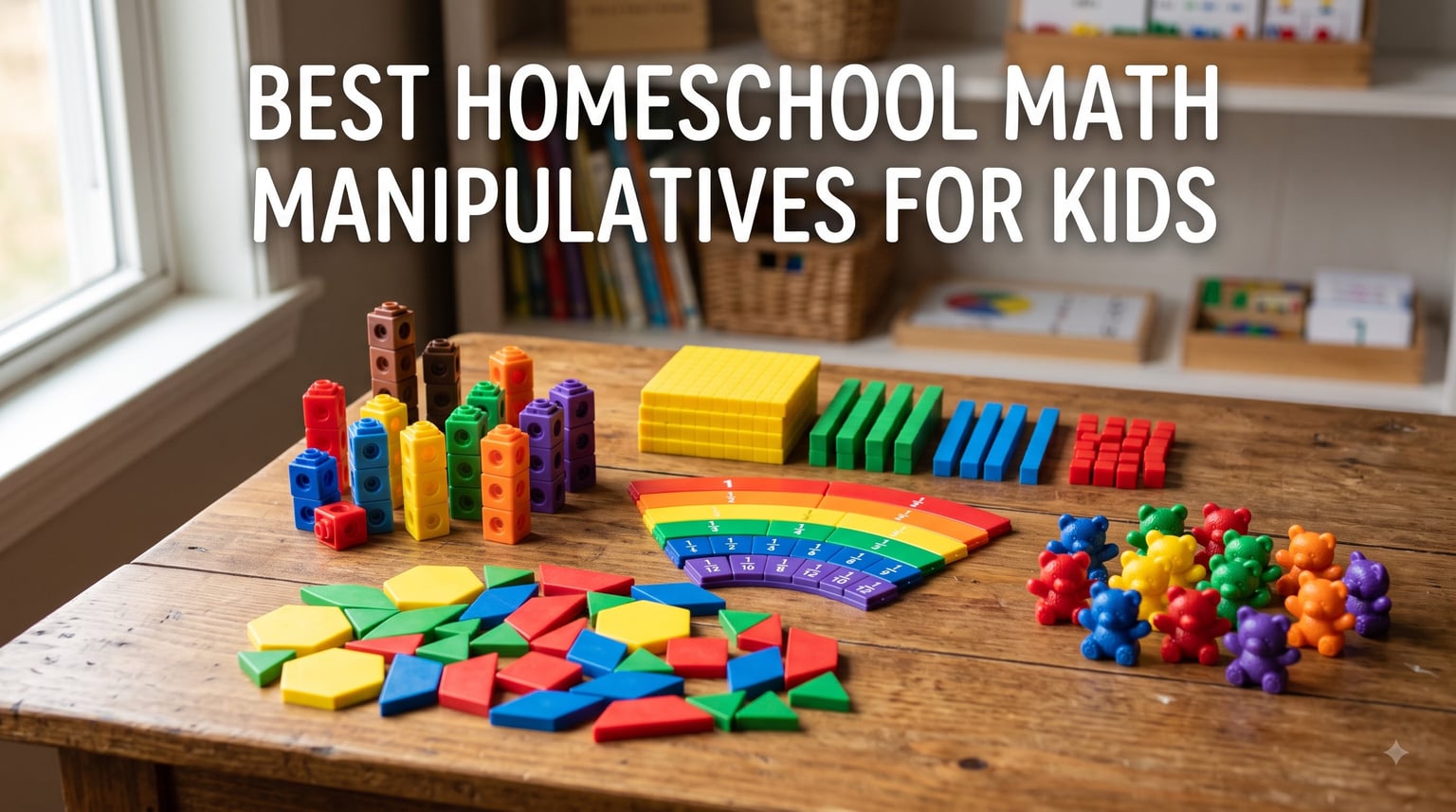
When my daughter was struggling with place value, I handed her a set of base ten blocks. Within 20 minutes, regrouping clicked in a way my verbal explanation had not reached in three weeks of trying. That moment showed me what the best homeschool math manipulatives can do for kids: turn abstract math concepts into something they can hold, move, and explore with their own hands.
After years of homeschooling and helping other families pick supplies, our team compiled the 12 best homeschool math manipulatives for kids available right now. These hands-on math tools cover everything from kindergarten counting to fraction operations, place value, geometry, and pattern recognition. Every product below was evaluated for durability, classroom-or-homeschool usability, age-appropriate design, and how well it builds number sense in real lessons.
Whether you teach a preschooler one-to-one correspondence or a sixth grader fraction operations, this guide will help you find the right math tools without overspending on a kit full of things you never use.
Table of Contents
Top 3 Picks for Best Homeschool Math Manipulatives

Learning Resources MathLink Cubes
- 100 snap-together cubes
- Counting
- patterns
- geometry
- Ages 5+
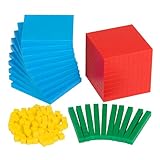

Learning Resources Baby Bear Counters
- 102 bears in 6 colors
- Early counting & sorting
- Ages 3+
Best Homeschool Math Manipulatives for Kids in 2026
1. Learning Resources MathLink Cubes – The All-Purpose Manipulative Every Homeschool Needs
Learning Resources MathLink Cubes – Set of 100 Cubes, Ages 5+ Kindergarten, STEM Activities, Math Manipulatives, Homeschool Supplies, Teacher Supplies
100 snap-cube set
Ages 5+
Counting, patterns, geometry
Pros
- Durable cubes that snap together securely
- Bright colors engage kids immediately
- Versatile for counting
- addition
- subtraction
- patterns
- sorting
- geometry
- Appropriate for ages 5+ through elementary grades
Cons
- Can be a choking hazard for toddlers
- Not as durable as Lego/Duplo products
- Only one nubin side per cube
I have used MathLink Cubes across three grades and multiple kids. They became our go-to math manipulative for kindergarten and stuck with us through third grade for early multiplication models. The bright colors pull kids in fast, and the snap-together design means a child can build a tower of 10 cubes while physically counting each one. That simple act of building, knocking down, and rebuilding is where number sense grows.
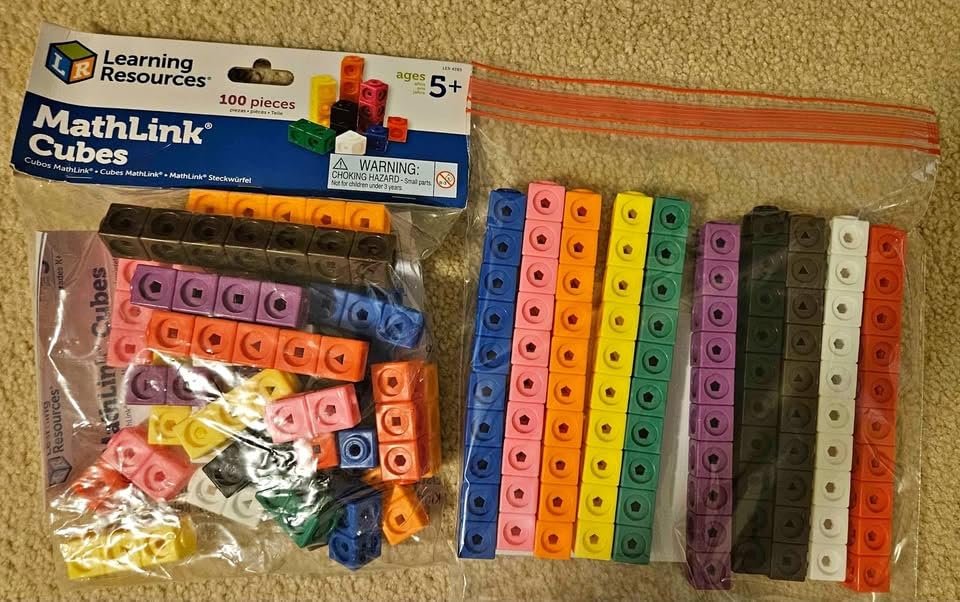
What I appreciate most is the range. We have counted bears with them, modeled addition by combining two-color trains, explored skip counting by 2s and 5s, and built rectangular arrays for multiplication. Each cube has a geometric cutout on one face (circle, square, triangle) so kids learn shape names alongside math. The 39,000+ reviews make this one of the most-trusted math manipulatives in any homeschool room.
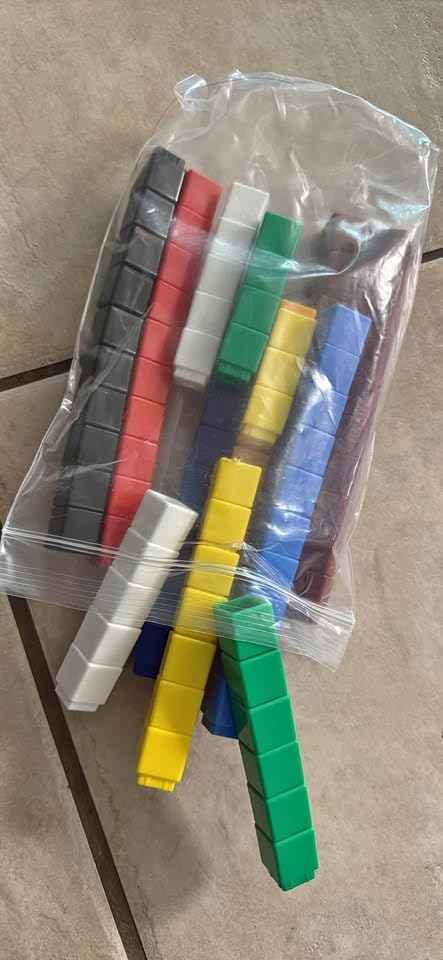
The cubes come in 10 colors and are well-sized for small hands. We learned the hard way that one cube per child per activity works better than dumping all 100 on the floor. Storage is simple with a ziplock bag or small bin labeled “MathLink Cubes.”
For families wondering whether to start with one manipulative or build a kit, this is the first one I recommend. It ages well, costs little, and replaces several single-purpose tools.
Compatibility with popular curricula
MathLink Cubes pair nicely with Singapore Math, Math-U-See (introductory levels), RightStart, and even Beast Academy. I pulled them out every time my daughter needed a concrete model that the workbook alone could not provide. They are also Montessori-friendly when used for counting, patterning, and one-to-one correspondence.
Honest drawbacks from real classroom use
Two cautions from our team. The cubes are a choking hazard for kids under 3, so we waited until age 4 for our toddler. Some cubes break if stepped on, and they are not as tough as Duplo. If a child is rough with toys, you may lose a few pieces per year. Budget for occasional replacements.
2. edxeducation Base Ten Blocks – The Budget-Friendly Place Value Powerhouse
edxeducation Base Ten Blocks, Set of 121 Base 10 Blocks for Math
121-piece set
Ages 6+
Place value, regrouping, addition
Pros
- Color-coded pieces help children visualize place values
- Durable plastic that wipes clean easily
- Scored in 1 cm increments for accurate measurement
- Great for hands-on learning of abstract math concepts
Cons
- Only one thousand cube included
- Some users wish there were more green pieces
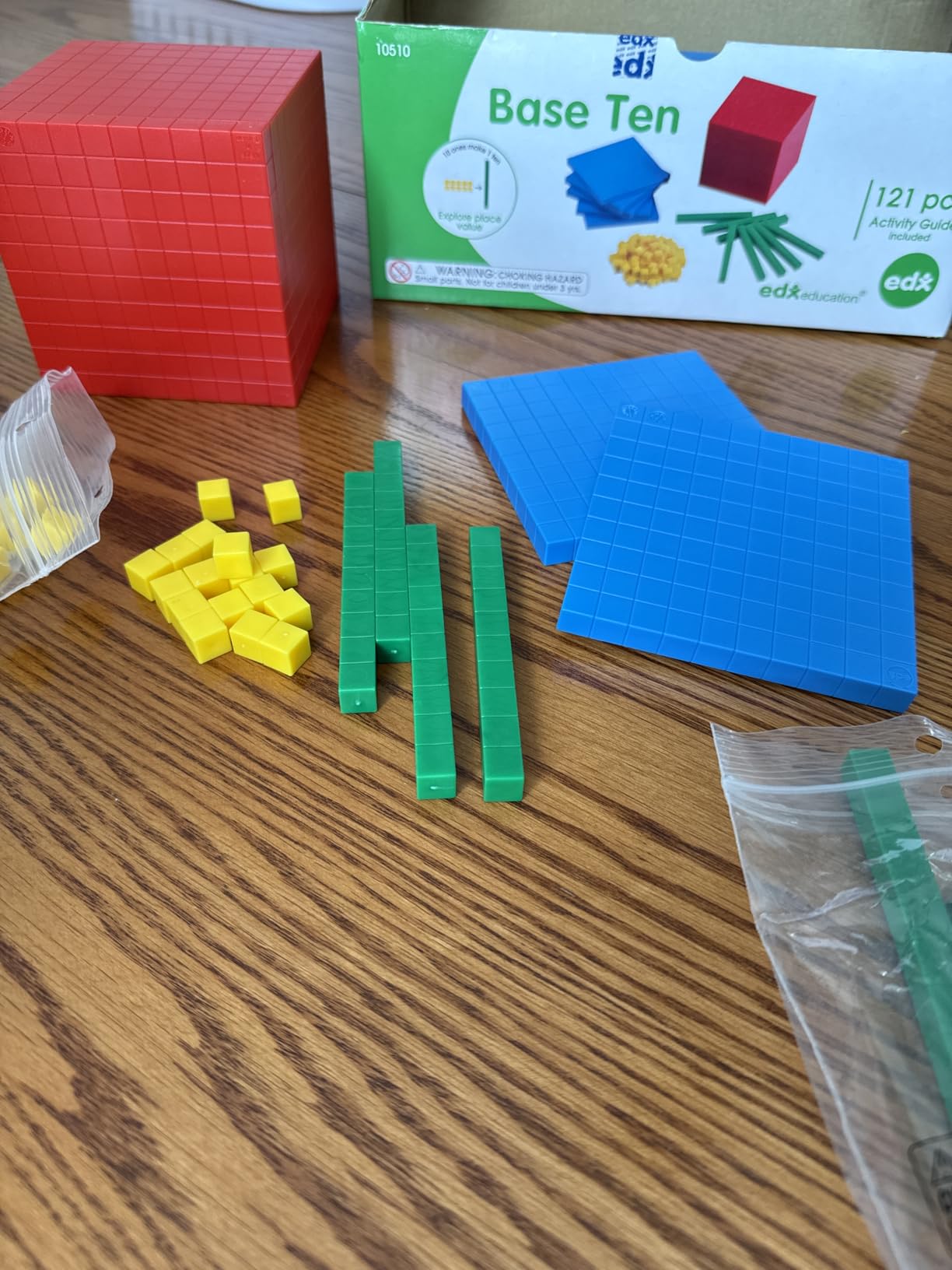
Base ten blocks are the single manipulative I would never skip in elementary homeschool math. After three years of teaching place value with sticks-and-dots drawings that confused my son, I bought this set. He regrouped 12 tens into 1 hundred and 2 tens within minutes. The color-coding does the heavy lifting: yellow units, green tens, blue hundreds, red thousands. A child sees the relationship, not just hears it.
This 121-piece set from edxeducation includes 100 unit cubes, 10 rods, 10 flats, and 1 thousand cube. It is enough for one child working through second-grade math or two siblings taking turns in a math center. Our team liked that each block is scored in 1 cm increments, so kids can measure with them while learning place value. That dual purpose saved us from buying a separate centimeter cube set.
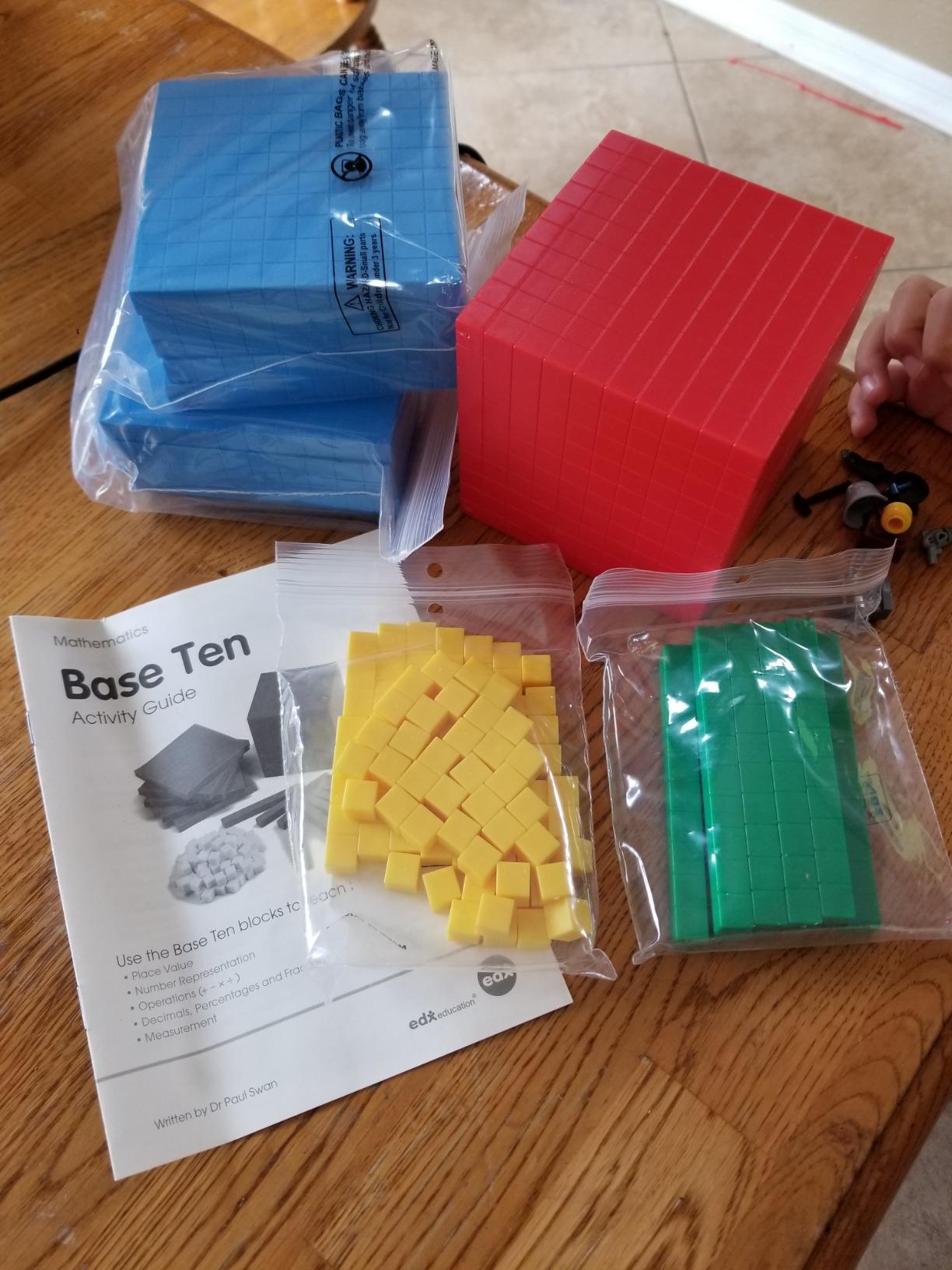
These plastic blocks wipe clean with a damp cloth, which matters when peanut butter fingers meet math. They survived three kids, four years, and a cross-country move in a labeled shoebox. The price is also hard to beat for homeschool budgets.
One thousand cube in the set is enough for most place-value lessons up to 4-digit numbers. If you plan to teach decimals or push into 5-digit regrouping, consider buying a second thousand block. Our team tested a couple of brands and found the edxeducation version just as durable as more expensive options.
Pairing with place value lesson plans
Use the unit cubes for one-to-one correspondence, the rods for “ten as a group,” and the flats for “hundred as a group.” When you introduce regrouping, model with a flat broken into 10 rods, then into 100 unit cubes. The visual proof of why we “carry” is what helps the abstract algorithm finally stick.
When the set might feel too small
Two children working at the same time on multiplication models will run out of flats quickly. If you teach multiple kids, double the set. Otherwise, the included quantity handles typical homeschool single-child and small-group lessons for grades 1 through 4.
3. Learning Resources Base Ten Starter Set – The Premium All-in-One With a Built-In Activity Book

Learning Resources Base Ten Starter Set
141 pieces + activity book
Ages 6+
Place value, estimation, fractions
Pros
- Comes with helpful 36-page activity book for grades 3-6
- Sturdy storage box included
- Helps visualize place value concepts effectively
- Good quality plastic that is easy to clean
- Appropriate sizing for children to handle
Cons
- Only one thousand cube included
- Organizing pieces back in box can be challenging
- Thousand cube not weighted appropriately by some users
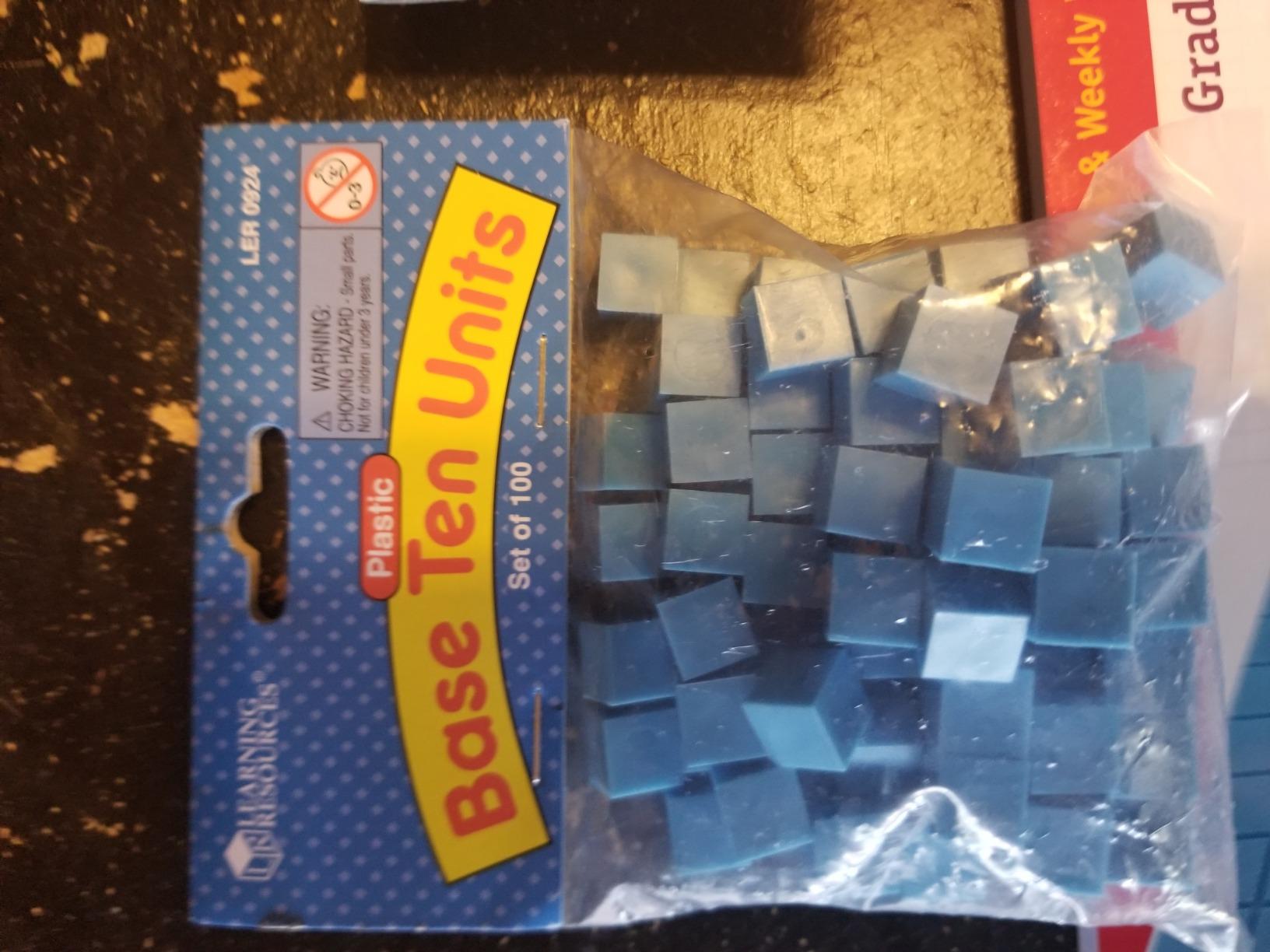
The Learning Resources Base Ten Starter Set is the kit I recommend when families want a curated experience instead of a bare-bones box. It ships with 100 unit cubes, 30 rods, 10 flats, 1 thousand cube, and a 36-page activity book that walks through place value, estimation, operations, and even fraction work. For a new homeschool parent, that activity book eliminates the “now what?” problem that often hits after unboxing a math manipulative.
I used the activity book with my fourth-grader during our decimals unit. Each lesson was a 10-minute warm-up that turned a vague idea like “0.7 equals seven tenths” into a concrete experience with the cubes and flats. The included storage box is sturdy enough to survive heavy use, though our team recommends using small ziplock bags inside it to keep pieces grouped by type.
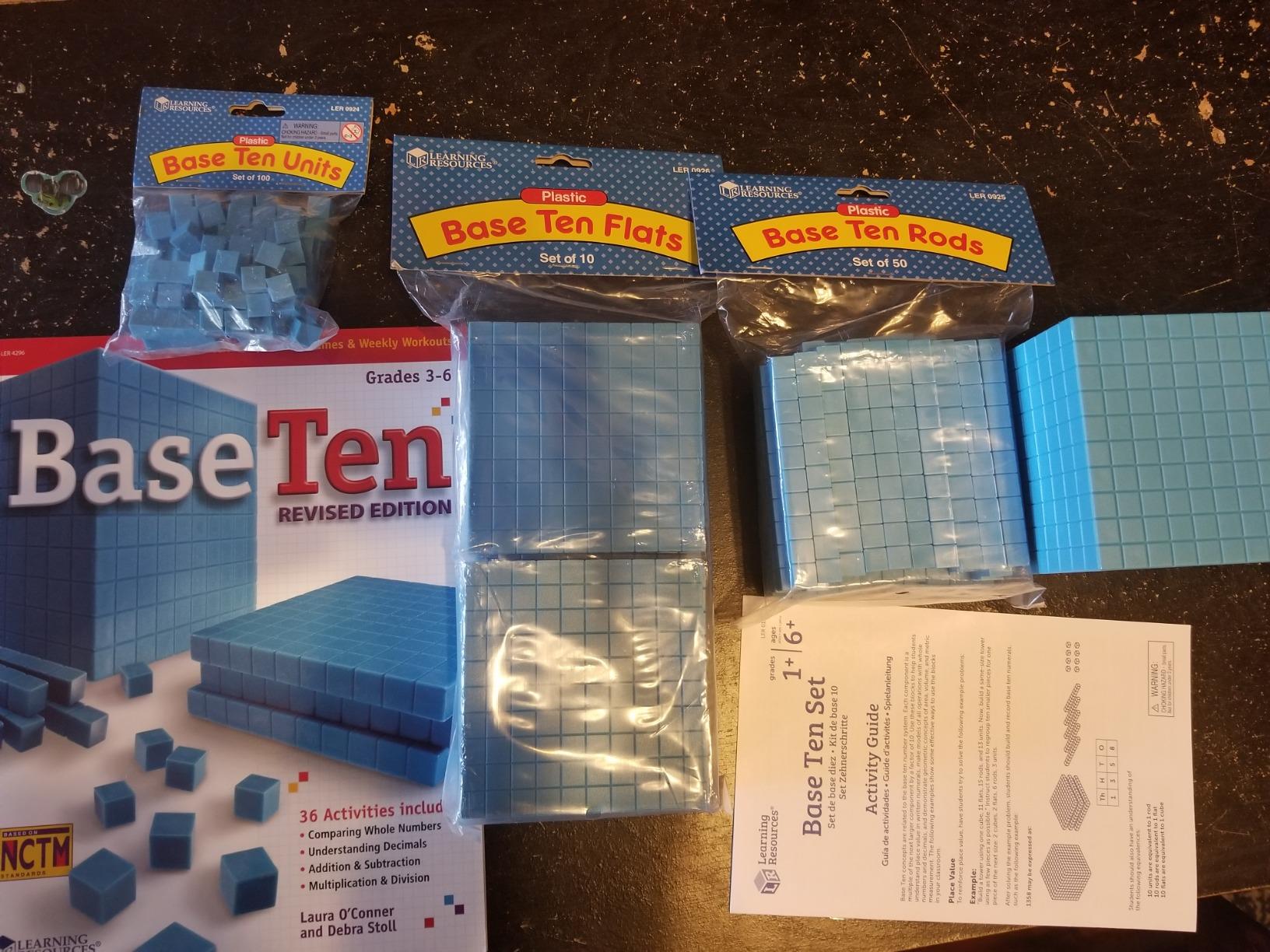
The plastic has a smooth finish that wipes clean easily. After four months of daily use, our unit cubes had no cracks or rough edges. The rods and flats are slightly thicker than budget sets, which gave them a more substantial feel in small hands.
This set costs more than the edxeducation option, but the activity book and durable storage box justify it for busy homeschool families who want lesson plans ready to go.
How the activity book adds value
The book targets grades 3 to 6 with progressively harder tasks. Younger kids can still benefit from the visual activities. We used pages on building numbers and trading 10 ones for 1 ten with our second-grader without issue.
Storage and organization tips
Our team found a small craft organizer with compartments works better than the included box for daily use. Keep the activity book in a dry spot, since the box lid does not seal moisture out. If you have a pet that chews plastic, store the box on a high shelf.
4. hand2mind Plastic Rainbow Fraction Tiles – The Visual Way to Make Fractions Click

hand2mind Plastic Rainbow Fraction Tiles, Montessori Math Materials, Fraction Manipulatives, Unit Fraction, Fraction Bars Math Manipulatives, Fraction Games, Homeschool Supplies (Set of 51)
51 proportional tiles
Ages 5+
Fractions, decimals, comparison
Pros
- Bright rainbow colors make learning fractions engaging
- Proportionally sized tiles help compare fractional values
- Durable plastic that is easy to clean
- Great for visual learners
- Helpful for homeschool and classroom settings
Cons
- Tiles are smaller than expected from product photos
- Some pieces could be choking hazard for young children
- No magnetic background or storage box included
Fractions finally became real for my daughter when I brought out the hand2mind Rainbow Fraction Tiles. The pieces are proportionally sized, so a half tile is exactly half the size of the whole tile. You can stack, compare, and line them up to see equivalencies in a way flat drawings never managed. Our team rated this the top fraction manipulative for visual learners.
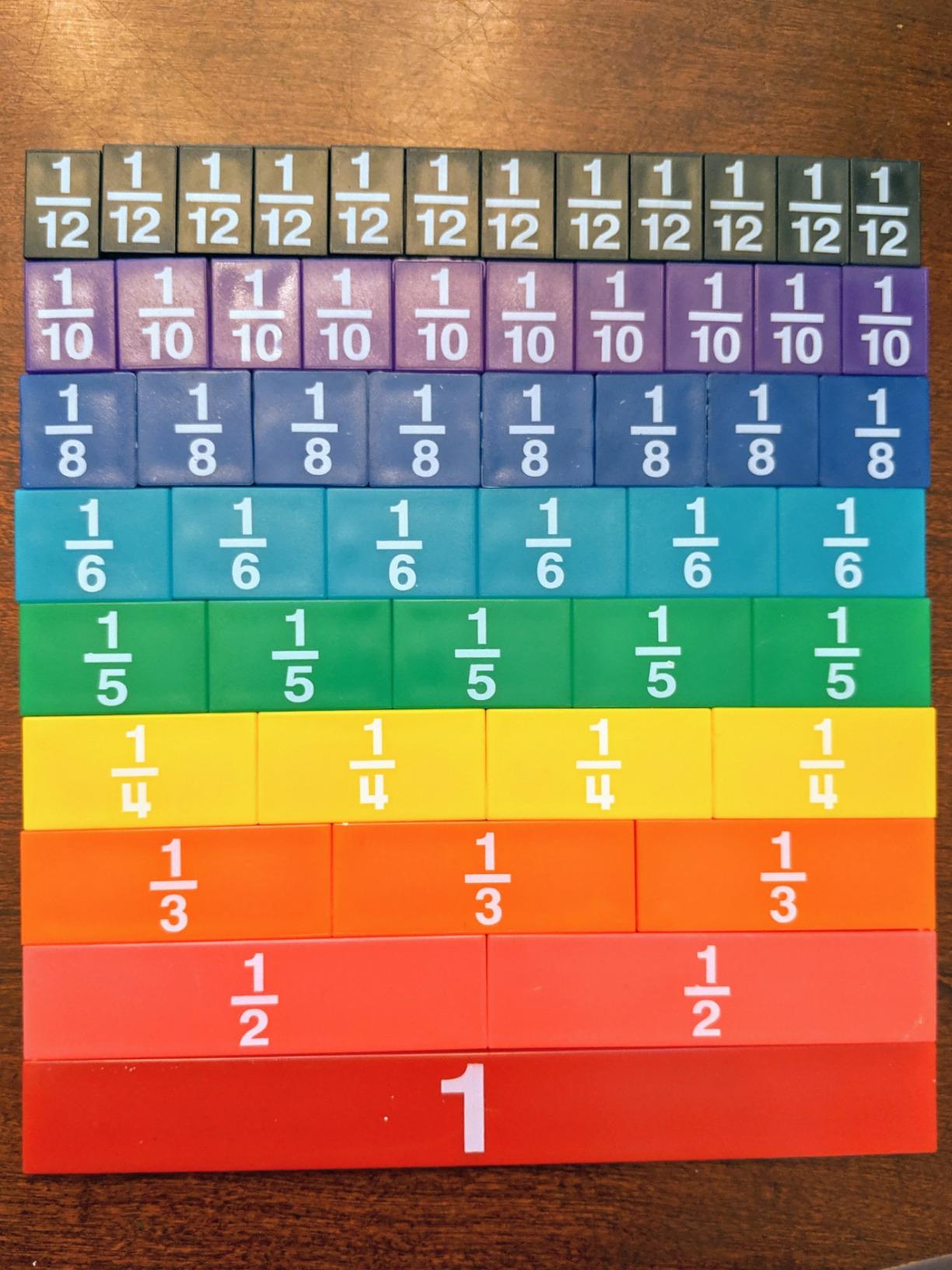
The set includes tiles for halves, thirds, fourths, fifths, sixths, eighths, tenths, and twelfths. Children can write fractions on the tiles with a dry-erase marker and wipe them clean. We used the markers for matching games and quick assessments. The colors are vivid and made our math lessons feel more like art time than drill time.
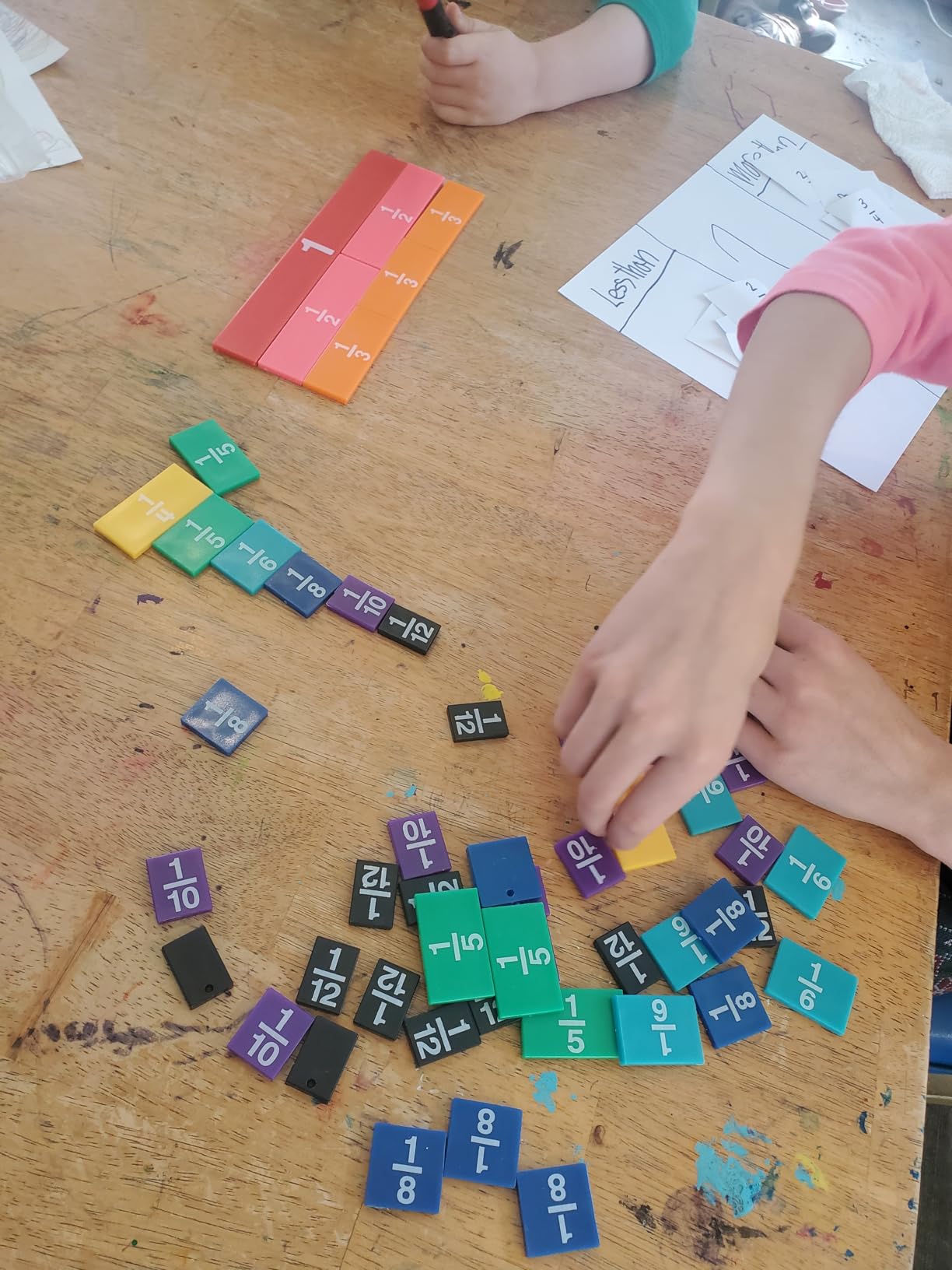
The 51-tile count is enough for one student or two working in a small group. We could quickly model 1/2 + 1/4 = 3/4 by laying tiles side by side. The visual proof helped my daughter finally choose the common denominator without prompting.
Note that the tiles are smaller than they look in photos. Our team measured them at roughly 1 inch by 8 inches for the largest. That size is fine for grades 3 and up but a little small for kindergarten hands.
Best uses in a homeschool lesson
Use the tiles to introduce fraction names and equivalencies. Build a fraction wall by stacking one-whole tile next to two halves, four fourths, and so on. For older kids, the tiles bridge to decimals: a tenth tile covers one-tenth of the whole, which links to the 0.1 column on a place value chart.
What we wish came in the box
A magnetic back, a small storage container, or carrying case would help. Without one, tiles scatter under couch cushions. We ended up buying a small photo storage box with a lid and labeling each section by fraction. Total cost was under five dollars.
5. Learning Resources Fraction Tower Equivalency Cubes – Linking Fractions, Decimals, and Percents Together

Learning Resources Fraction Tower Equivalency Cubes
51 snap-cube set
Ages 6+
Fractions, decimals, percents
Pros
- Interchangeable cubes make whole from combinations of fractions
- Clear markings show fractions
- decimals
- and percents on each side
- Color-coded for easy fraction comparison
- Durable snap-together construction
- Useful from 1st grade through middle school
Cons
- No base included for standing towers upright
- Some users find the set pricey for plastic pieces
- Only one cube of each fraction type limits some activities
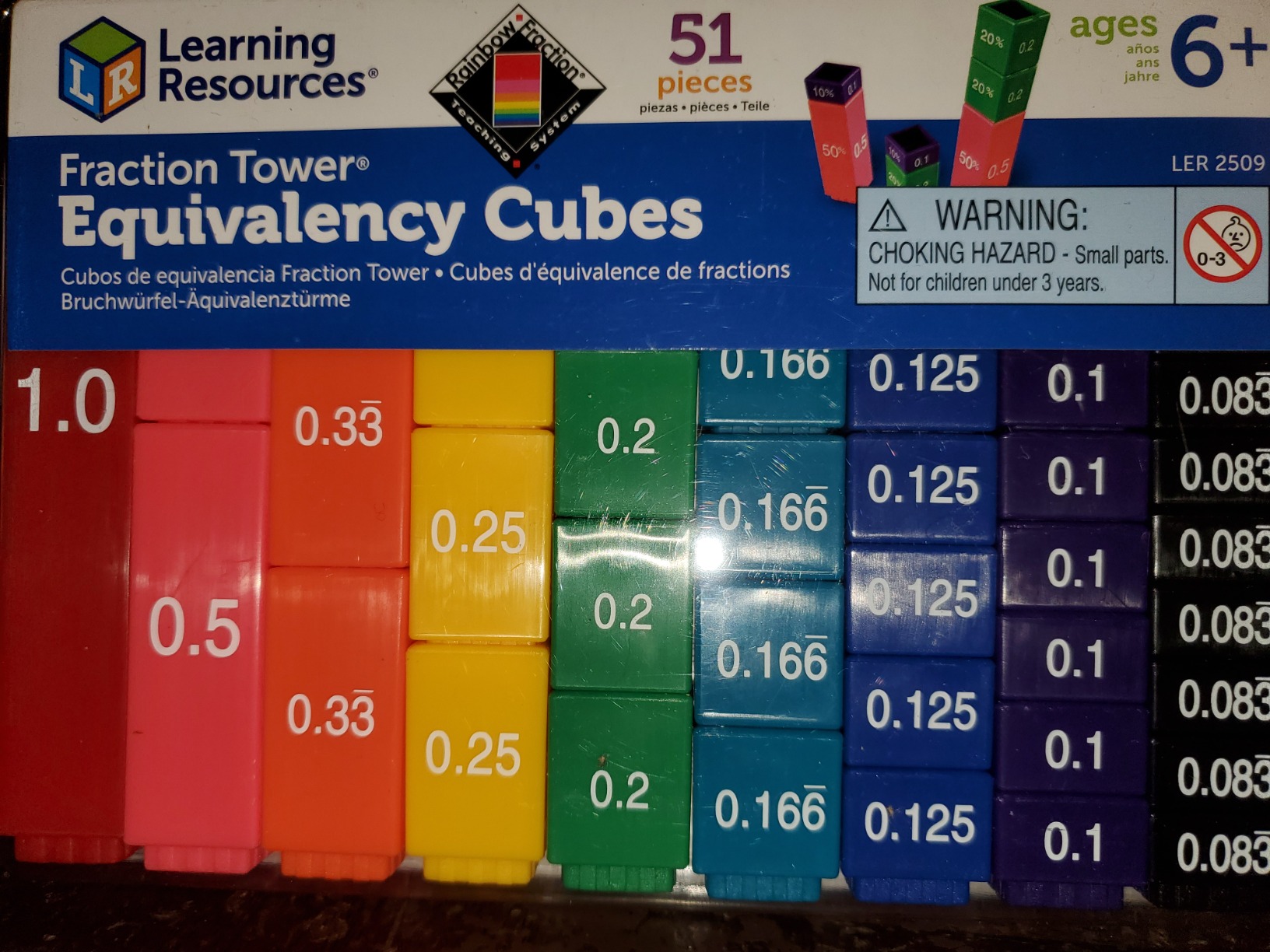
The Fraction Tower Equivalency Cubes were the manipulative that turned our fraction-decimal-percent lessons into a 10-minute game instead of a 40-minute struggle. Each cube has a fraction, decimal, and percent printed on three different sides. Kids snap cubes together to build towers that equal one whole. The same physical tower represents three different ways to think about the same quantity.
I watched my son, who had been stuck on “what is 75 percent?” for two days, snap three fourths cubes onto one whole cube and announce “that is three fourths, which is zero point seven five, which is seventy-five percent” all in one breath. The cubes made the equivalency obvious because the same tower literally is all three at the same time.
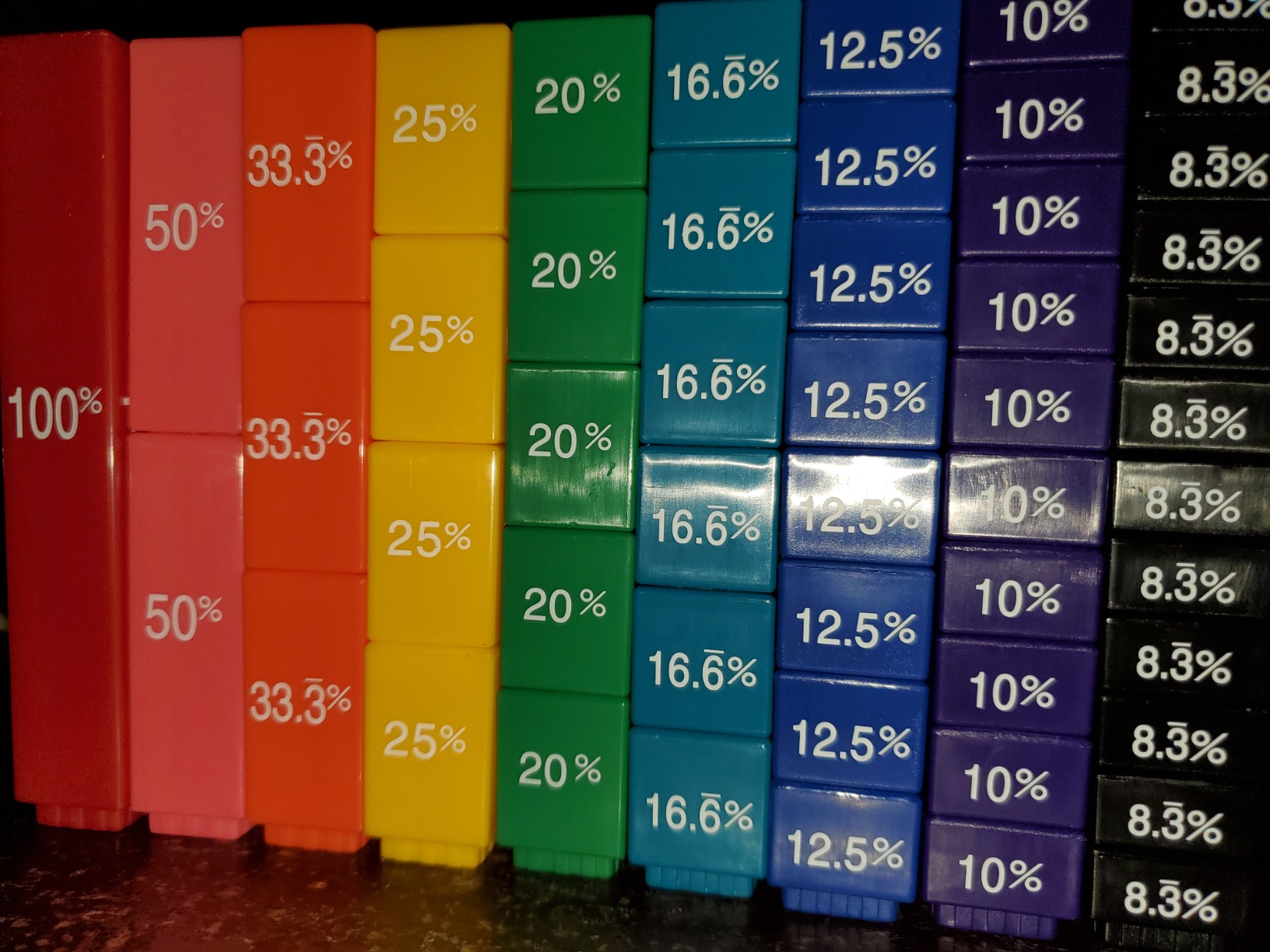
The set has 51 cubes representing halves, thirds, fourths, fifths, sixths, eighths, tenths, and twelfths. Color-coding keeps each fraction family distinct. The cubes snap together firmly but release easily for younger hands.
The cubes work from grade 1 through middle school, which gave us 6+ years of use. Our team appreciated that the same set taught fractions to my kindergartner (stacking halves) and percents to my sixth-grader (rebuilding a tower as 50%).
Grade-by-grade use
For first and second grade, snap the halves cubes to make a whole. For third and fourth grade, add fourths and eighths to explore equivalencies. For fifth and sixth grade, use the percentage labels to bridge fractions and decimals. One set covers six years of math, which makes the cost easier to justify.
Why we recommend buying a second set
Many activities like comparing 1/3 and 1/4 require two of the same cube to stand side by side. With only one of each fraction, you’ll be passing cubes back and forth. A second set is helpful but not strictly required for solo homeschool use.
6. Learning Resources Baby Bear Counters – The Budget Pick for Early Counting and Sorting
Learning Resources Baby Bear Counters – 102 Pieces, Ages 3+ | Grades Pre-K+ Toddler Learning Toys, Counters for Kids, Counting Manipulatives, Teddy Bear Counters
102 bear counters
Ages 3+
Counting, sorting, patterning
Pros
- Develop early math skills
- counting
- sorting
- and color recognition
- Hands-on tactile learning for young learners
- 102 bears in 6 vivid colors with activity guide and storage bucket
- Durable hard plastic construction
- Ideal for homeschool and classroom use
Cons
- Red and orange bears can be difficult to distinguish in certain lighting
- Small size may pose choking hazard for young children
- Lid may arrive damaged in some packaging
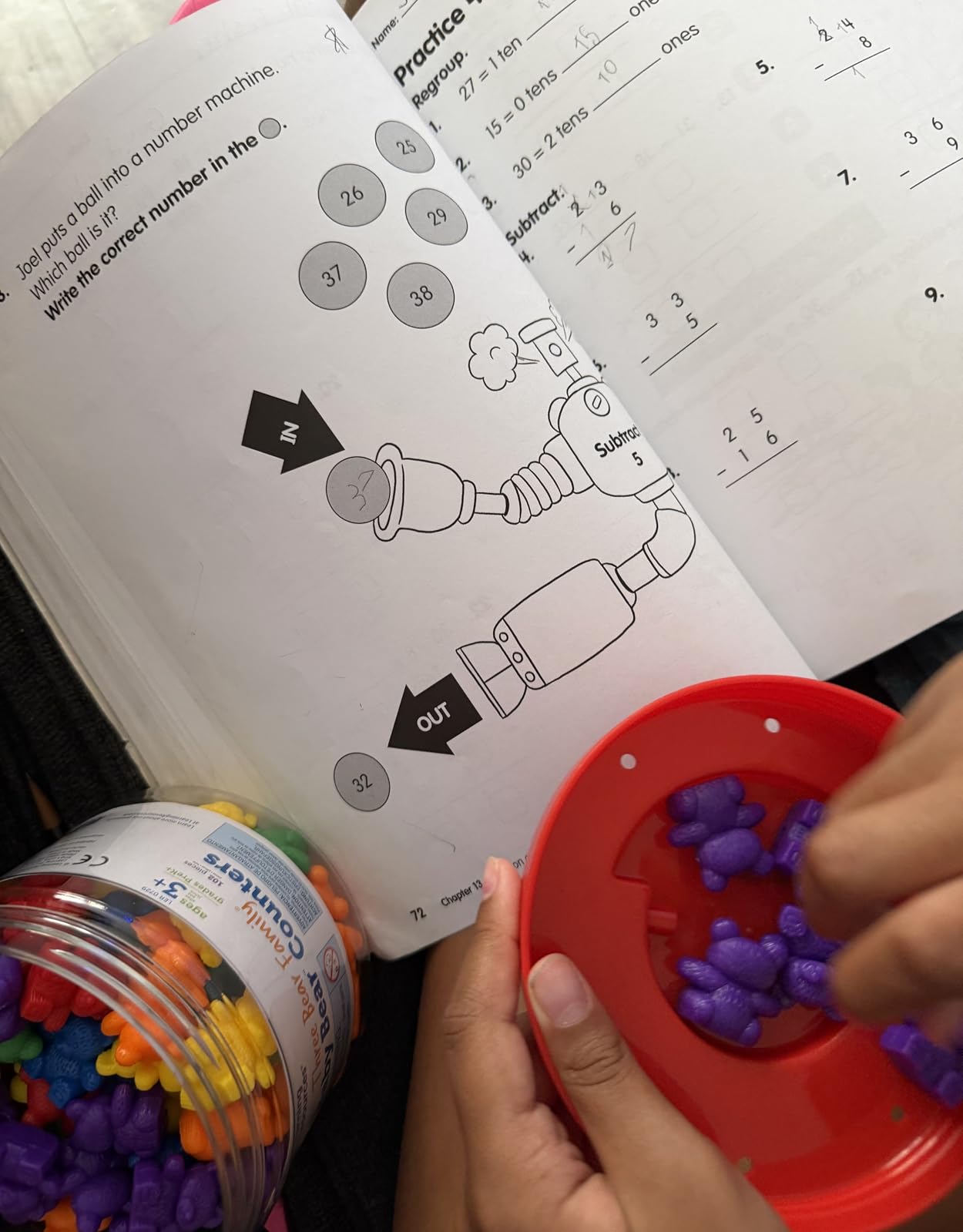
Baby Bear Counters are the math manipulative I bought on a whim before my daughter turned 3, and we are still using them six years later. They teach one-to-one correspondence, sorting by color, basic addition, and pattern-making in ways that paper worksheets never matched. The set includes 102 bears in 6 colors, a storage bucket, and an activity guide.
Our team picked this as the budget pick because the price is low and the use-span is long. The bears served as counting objects in kindergarten, fraction pieces in third grade, and a tactile model for multiplication arrays in fourth. We have used the same bucket of bears for six years of math.
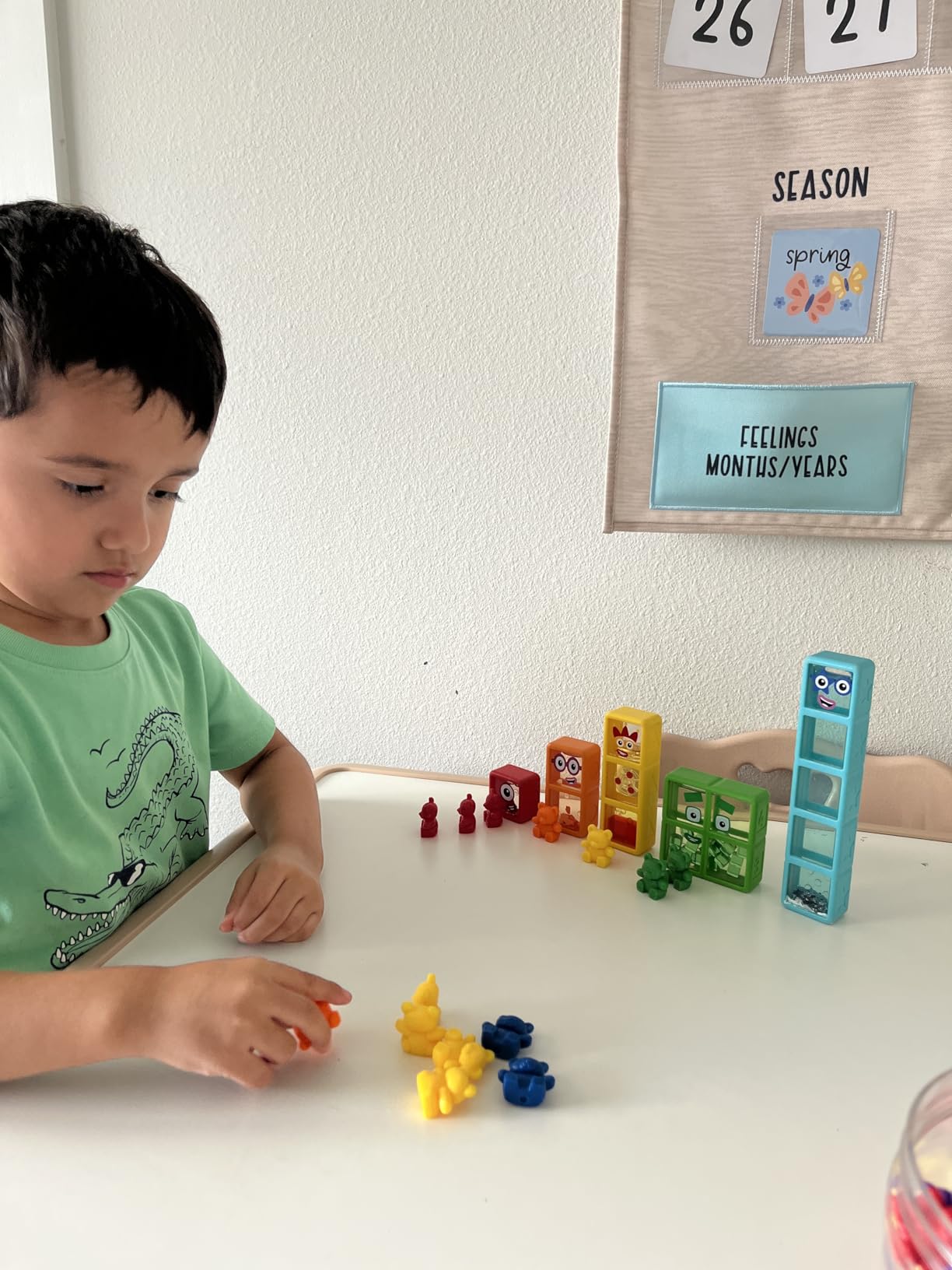
The bears stand about 1 inch tall and weigh 4 grams each, which gives them a satisfying feel in small hands. Our team noticed the red and orange are similar in certain lighting, but that turned into a great real-world lesson in careful observation.
The activity guide walks through sorting games, simple counting, and pattern extension. We added our own lessons as the kids grew. A handful of bears in a row became a math problem: 5 red + 3 yellow = 8 bears total.
Age and developmental fit
Best suited for ages 3 to 7. Older kids can still use them for fraction work, basic multiplication models, and probability experiments. Our team tested the bears up through fourth grade math and found useful applications even then.
Safety and storage notes
Small parts are a choking hazard for kids under 3, so we kept the bucket on a high shelf until our toddler was ready. The included storage bucket is durable, but the lid can crack if dropped. We replaced ours with a latching plastic container from a dollar store.
7. edxeducation Plastic Pattern Blocks – The Geometry Workhorse for Visual Learners
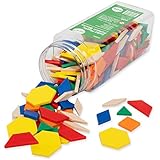
edxeducation Plastic Pattern Blocks, Set of 250
250 geometric blocks
Ages 3+
Geometry, fractions, symmetry
Pros
- Bulk 250-piece set with 6 geometric shapes
- Standard shapes
- sizes and colors that fit together perfectly
- Great for teaching geometric shapes
- symmetry
- fractions
- measurement
- Develops problem-solving skills
- spatial awareness
- fine motor skills
- Easy to store and travel with plastic jar handle
Cons
- Somewhat smaller than name brand equivalents
- Shipping packaging may not adequately protect the container
- Would prefer slightly larger pieces
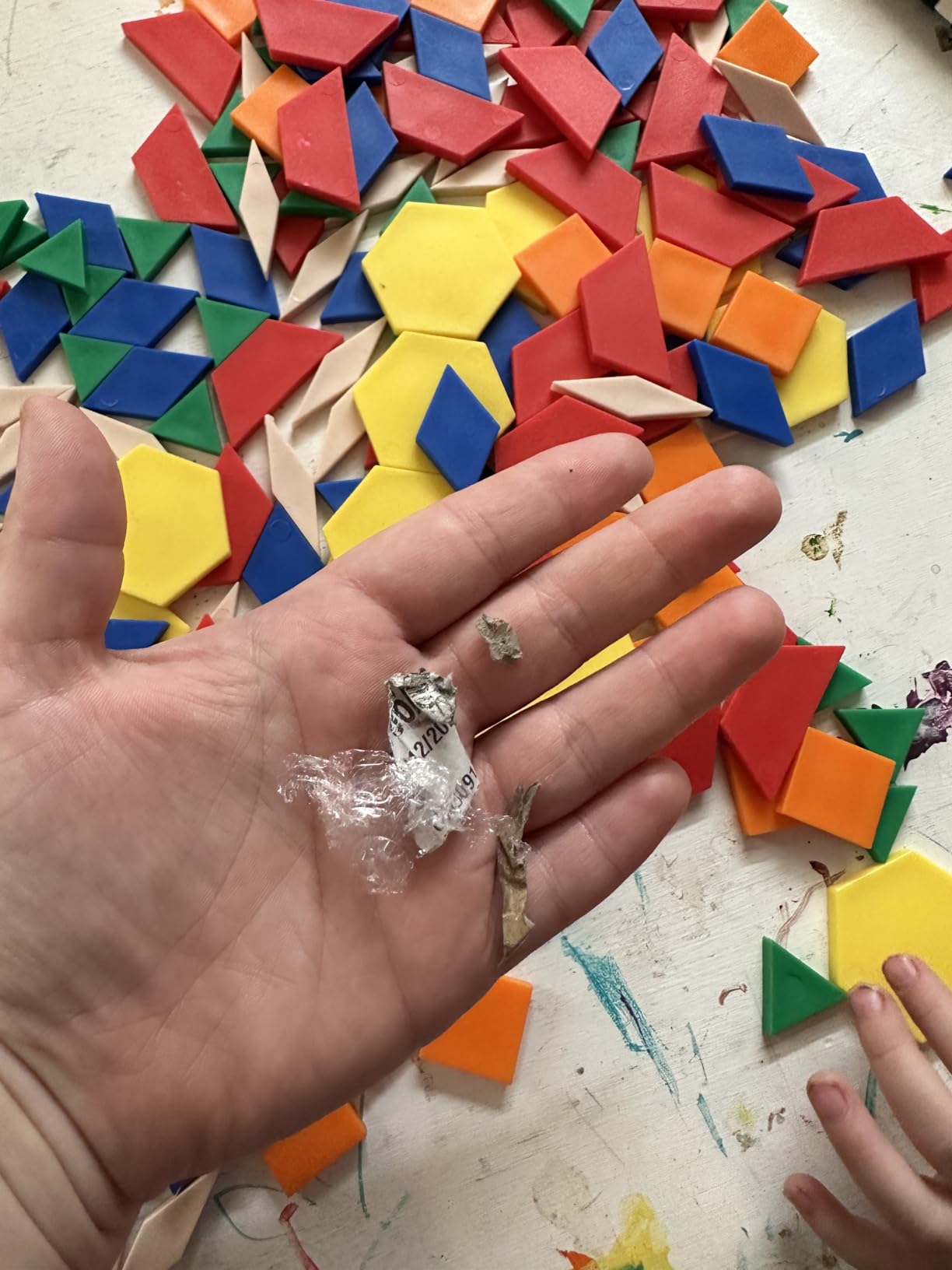
Pattern blocks are the manipulative I underestimated before trying them. Now I consider them essential. Our edxeducation 250-piece set covers 6 shapes (hexagons, squares, triangles, trapezoids, parallelograms, rhombuses) in 6 colors, all sized to fit together perfectly. My daughter spent an entire afternoon building a giant hexagon out of smaller hexagons, triangles, and rhombuses, learning the relationships between shapes without writing a single equation.
The 250-piece count supports multiple kids at the same time, which is rare at this price point. We used the blocks for symmetry lessons, fraction work (a hexagon is six triangles, two trapezoids, three rhombuses), tangram-style puzzles, and pattern-making. Each task taught something different while feeling like play.
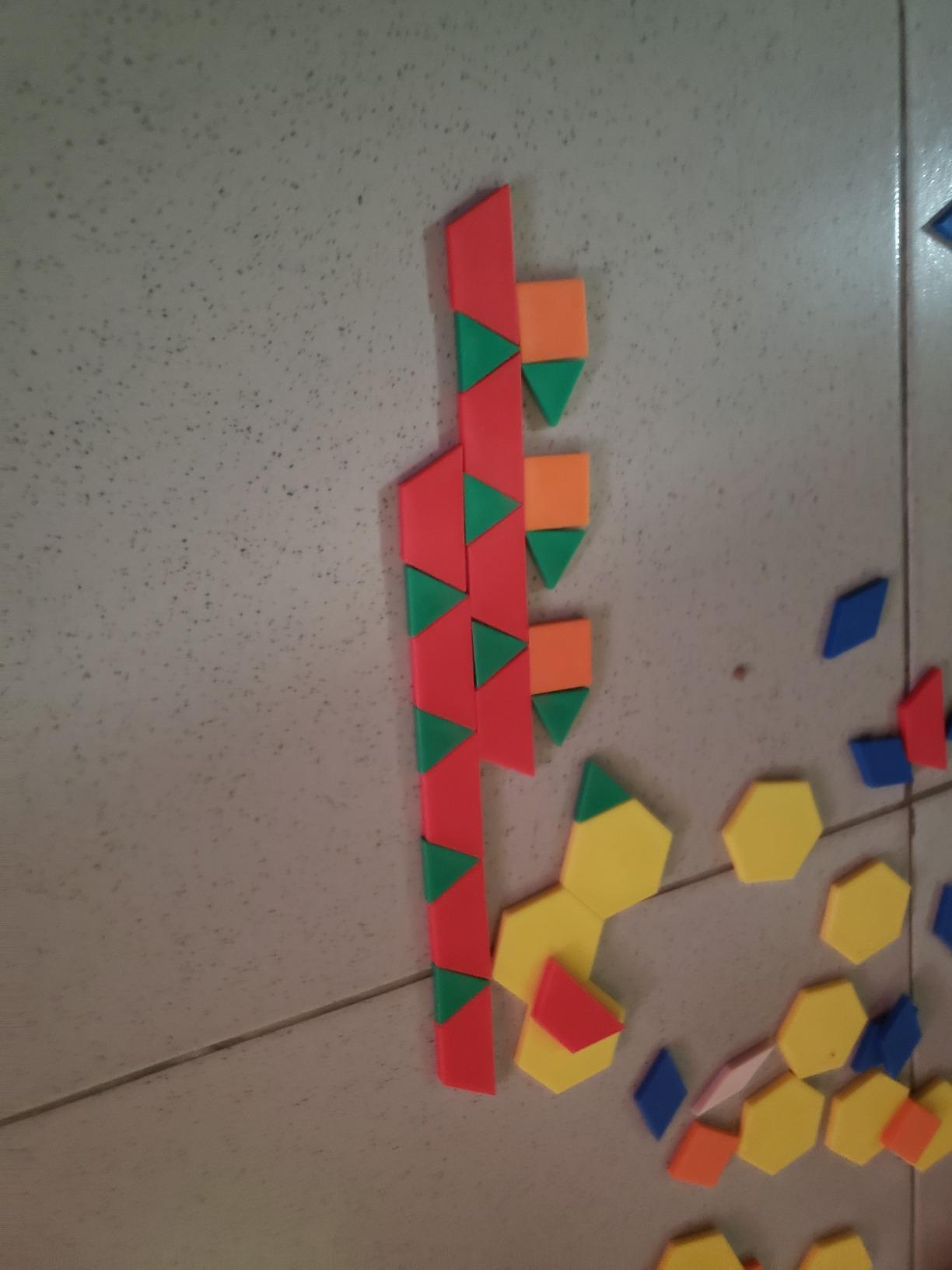
The plastic is durable and the colors are vivid. Our set survived two years of daily use without chips or cracks. The plastic jar with a handle makes storage and travel easy. We brought the jar to a co-op class and let six kids build together without running out of pieces.
The 5 cm piece size is the standard for Montessori classrooms, so the set complements most curriculum work. Pattern blocks also work for tessellation art projects, which let kids flex creative muscles during math time.
Why pattern blocks beat tangrams for early learners
Tangrams are lovely, but the seven-piece limit constrains most activities. Pattern blocks give kids six shapes and 250 pieces, so they build more complex designs and discover relationships tangrams cannot show. Our team saw much higher engagement with pattern blocks in kindergarten through third grade.
Tips for first lessons
Start with free play. Lay out the blocks and let kids explore. Then introduce shape names, then ask them to copy simple designs (a house, a tree, a flower). Finally, move into fractions by asking how many triangles fit inside one hexagon.
8. hand2mind Wood Pattern Blocks – The Premium Wooden Set for Heirloom Use
hand2mind Wood Pattern Blocks for Kids, Shapes for Kindergarten, Montessori Toys, Geometric Shapes, Symmetry, Shape Recognition, Pattern Blocks for Classroom (Set of 250)
250 wooden blocks
Ages 3+
Geometry, symmetry, hands-on
Pros
- Wooden construction with nice feel and weight
- High quality with no rough edges
- Vibrant bold colors easy to distinguish
- Great for classroom and homeschool use
- Smooth and fit together well
Cons
- Colors not as vivid as pictured - more muted and dark
- Some pieces may be small choking hazards for young children
- Shapes slightly off from perfect alignment
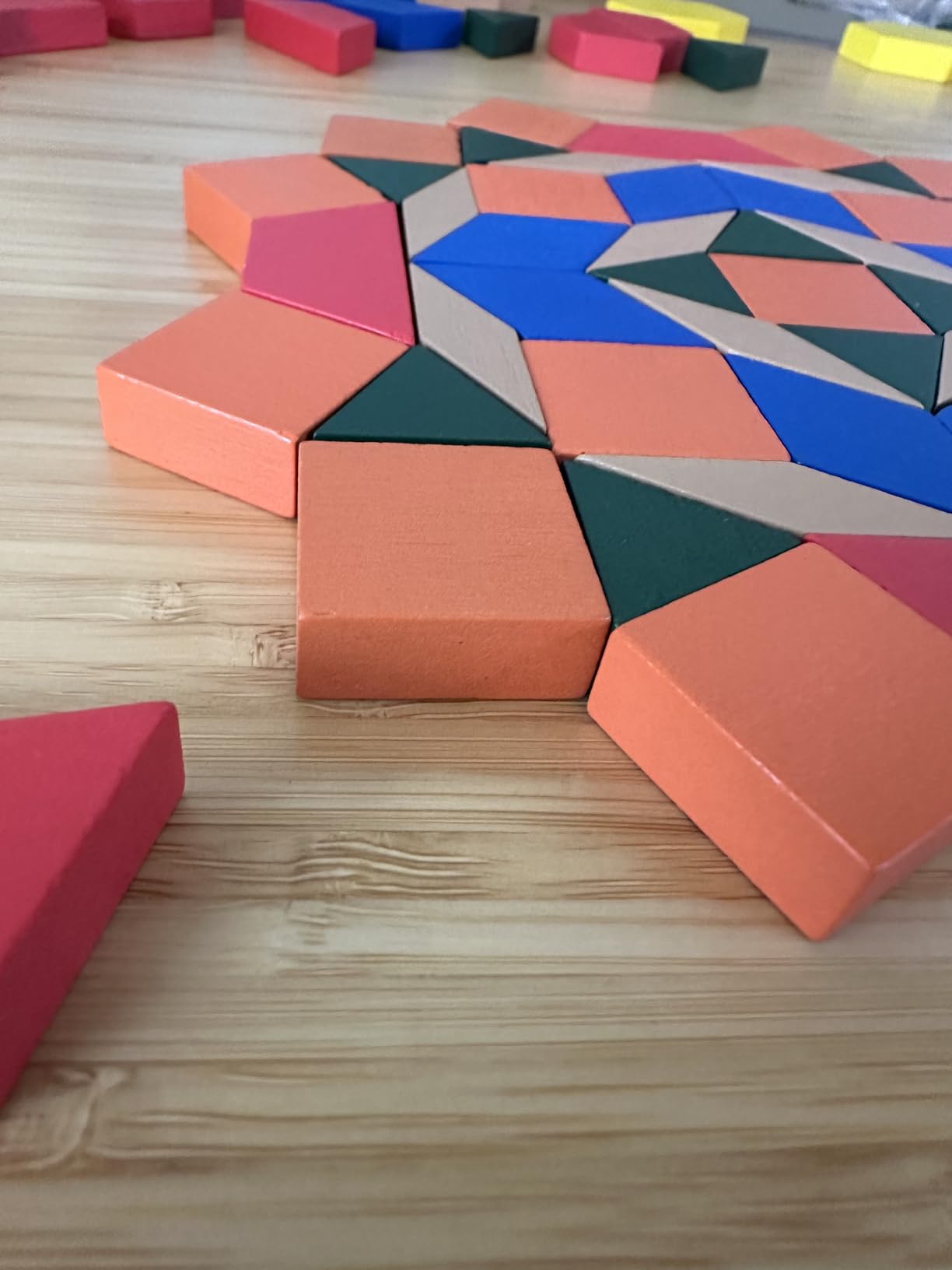
I bought the wooden hand2mind pattern blocks because I wanted a manipulative that could survive multiple kids and feel like an heirloom. The wooden blocks have a satisfying weight and a smooth finish that plastic versions cannot match. Our team noted the colors are slightly more muted than the photos suggest, but they are still distinct enough to sort easily.
The 250-piece set covers the same shapes as the plastic version. The wood holds up to years of stacking, knocking over, and being shoved into bags. We tested them with kids aged 4 through 11, and only one piece chipped after 18 months. The blocks also feel nice in adult hands, which mattered when we used them for geometry review with older kids.
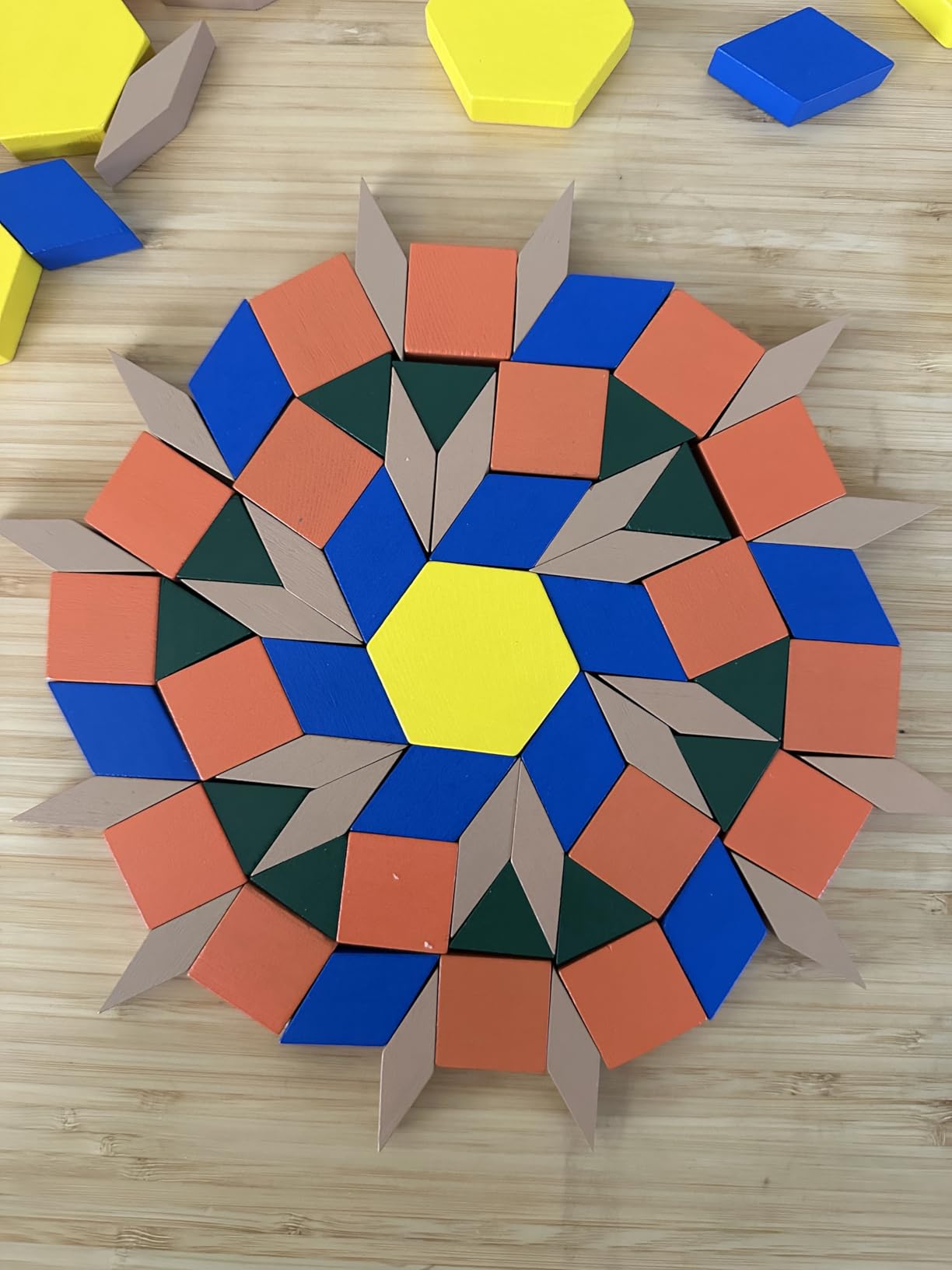
The included storage container is sturdy enough for daily use. We added a craft organizer inside to separate shapes, since dumping 250 mixed blocks back into the bin leads to chaos. The wood does not wipe clean as easily as plastic, but a quick rub with a barely damp cloth handles fingerprints.
The blocks pair well with traditional Montessori works, Waldorf-inspired learning, and Charlotte Mason style lessons where natural materials are preferred. They are a quiet upgrade from plastic that holds up over time.
When to choose wood over plastic
Wood makes sense for families who plan to keep the set across multiple children or who follow a nature-based homeschool philosophy. Plastic works fine for rough use, large groups, or tight budgets. The shape quality is similar between the two, so the choice is about feel and longevity.
Small but noticeable drawbacks
The colors are darker and less saturated than plastic versions. A few shapes did not align perfectly, with small gaps when stacked. Neither issue affects math instruction, but perfectionists may notice. We used them daily without issue.
9. Coogam Wooden Geoboard – The Spatial Reasoning Tool That Doubles as a Puzzle

Coogam Wooden Geoboard Mathematical Manipulative Material Array Block Geo Board – Graphical Educational Toys with 30Pcs Pattern Cards and Latex Bands Shape STEM Puzzle Matrix 8×8 Brain Teaser for Kid
8x8 wooden board
Ages 4+
Geometry, fine motor, shapes
Pros
- Sturdy wooden construction with firm secure boards
- Double-sided design with grid and circular peg arrays
- Includes plenty of thick durable rubber bands
- Great for fine motor skills and visual-spatial awareness
- Fun for ages K-5 and even adults
Cons
- Card storage box is flimsy and poorly designed
- Rubber bands may eventually wear out
- Pegs may require adult supervision for very young children
Geoboards surprised me. I ordered the Coogam set for geometry lessons and ended up using it daily for fine motor practice, fraction work, and even rest-time quiet activities. The double-sided board has an 8×8 square grid on one side and a circular peg array on the other. Kids stretch colorful rubber bands across the pegs to make shapes.
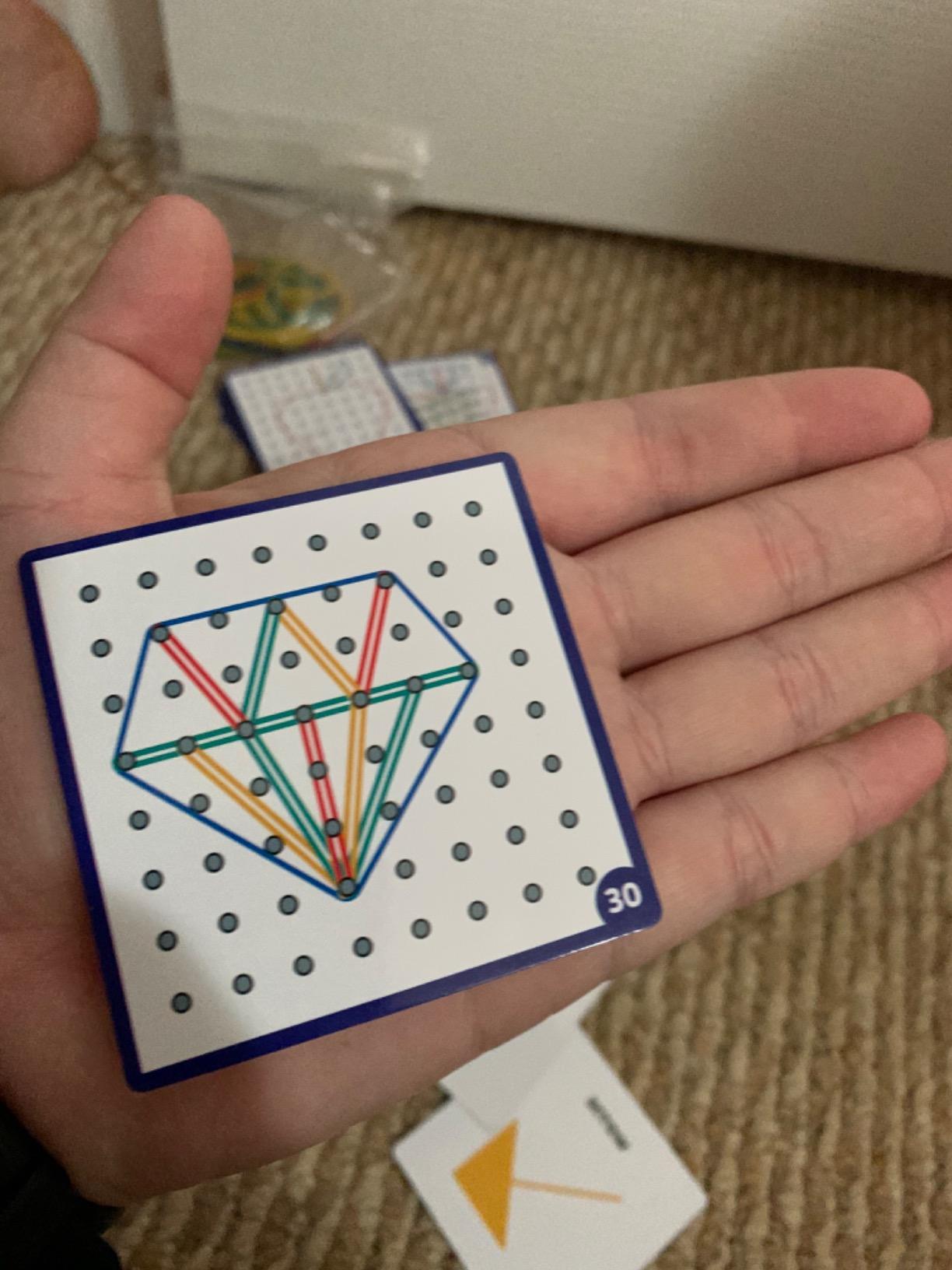
The set comes with 30 pattern cards plus 5 blank cards for free design. My daughter copied a butterfly, then a rocket, then created her own “rainbow unicorn” pattern. Each design teaches something about shapes, symmetry, or spatial relationships. Our team rated this the top geoboard for variety and sturdiness.
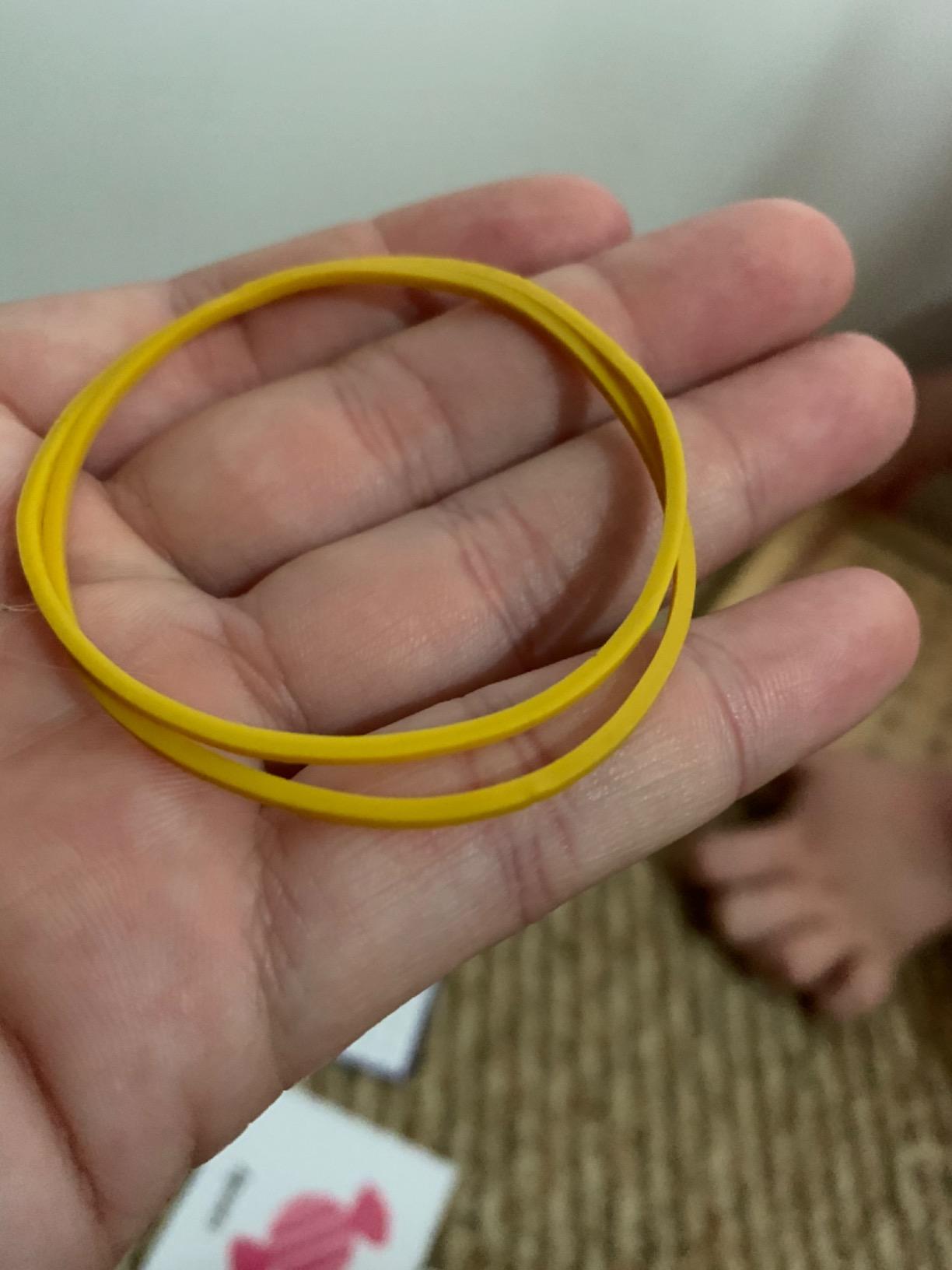
The wooden board is solid and the rubber bands held up to three months of daily use before any broke. We replaced broken bands with craft-store rubber bands, which work just as well. The pattern cards are sturdy enough for kids to handle, though the storage box is flimsy. We transferred the cards to a small index card holder from a teacher supply store.
Beyond pure geometry, the geoboard builds the visual-spatial reasoning kids need for later math like coordinate graphing, area, and symmetry transformations. My eighth-grader pulled it out during a coordinate plane review and re-discovered why midpoint formulas work.
Best age range for maximum benefit
Kids aged 4 through 10 get the most out of the pattern cards. Teens and adults enjoy the open-ended design side. Our team tested with kids from kindergarten through middle school and saw sustained engagement at every age.
Replacing the storage box
The included card box will not last. A simple solution is a 4×6 photo storage box or a small zippered pouch. We taped a rubber band around the whole set and stored it on a shelf next to the math books. Total fix took 2 minutes.
10. edxeducation Double-Sided Geoboards – The 6-Pack for Multiple Kids or Math Centers

edxeducation Double-Sided Geoboards, Set of 6 with Rubber Bands
Set of 6 boards
Ages 5+
Geometry, area, symmetry
Pros
- Double-sided design with square grid and circular peg patterns
- Sturdy boards with secure pegs that hold rubber bands well
- Great for teaching shapes symmetry area and fractions
- Includes plenty of colorful rubber bands
- Lightweight and portable for travel
Cons
- Rubber bands may eventually wear out or snap
- Pegs are small best for kids past toddler stage
- Some rubber bands may arrive damaged or stuck together
The edxeducation 6-pack of geoboards is what I recommend to homeschool co-ops and families with multiple kids. Each board has a 5×5 peg grid on one side and a 12-pin circular array on the other. Six boards means every kid gets one during lessons, which removes the “wait for my turn” bottleneck that derails group work.
We used these boards during a unit on shapes and symmetry. Each kid built the same shape, then compared designs. The boards stack neatly for storage and the rubber bands come in six colors so kids can sort by color or use color to layer designs. Our team picked this as the best value for multi-child households.
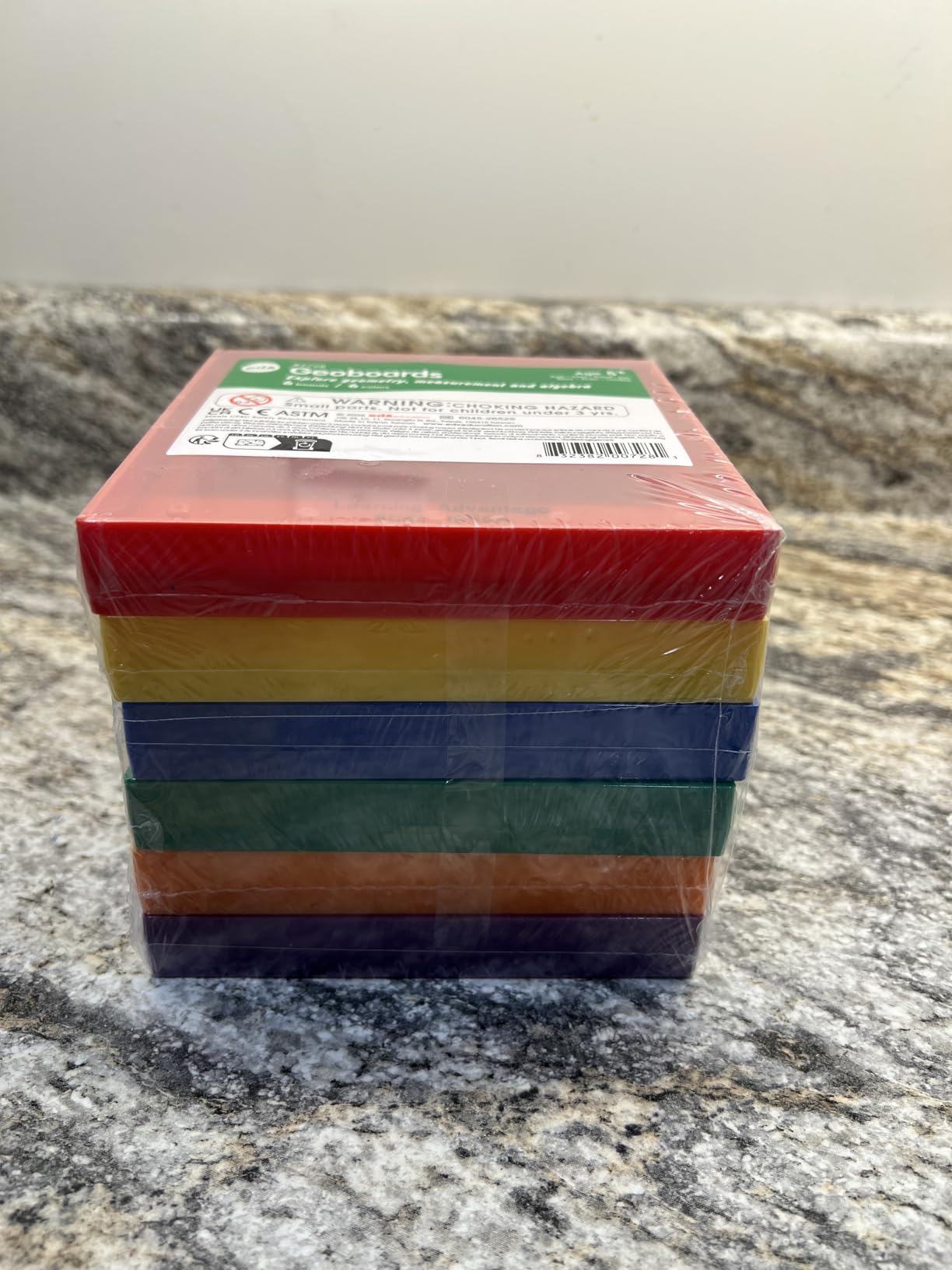
The plastic boards are lightweight and portable. We took them on a recent road trip and used them at a restaurant while waiting for food. Kids built houses while parents ate in peace. The boards wipe clean with a damp cloth.
The included rubber bands include enough for six kids to build at once with extras left over. Replacement packs are inexpensive if bands eventually wear out. Our team noted the 5×5 grid is smaller than the 8×8 Coogam, which limits some advanced designs, but works perfectly for elementary lessons.
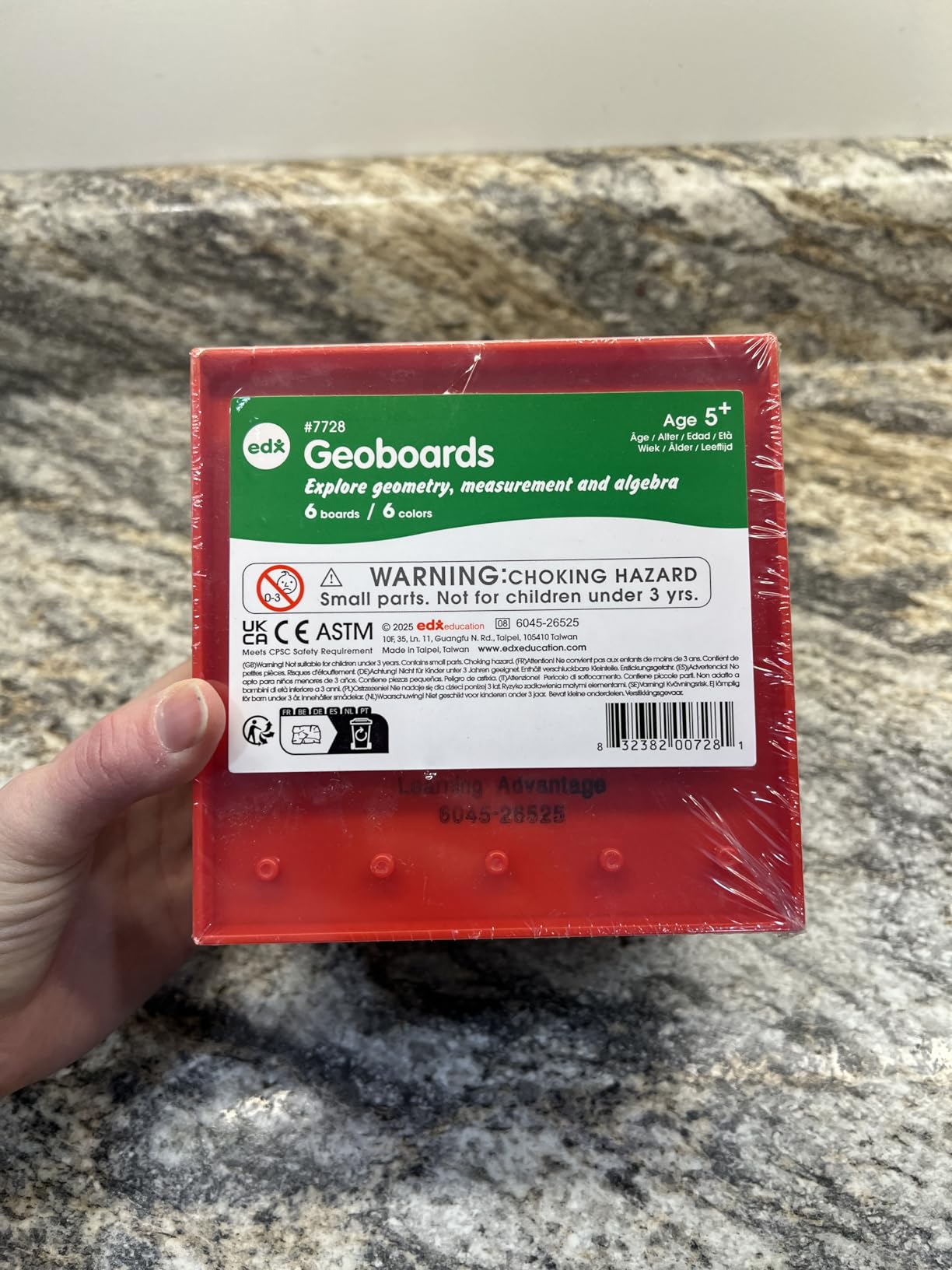
Best classroom setups
Six boards support a small homeschool co-op of up to six kids per session. Pair the boards with a deck of pattern cards (sold separately) or download free printable geoboard cards online. Each kid can copy a design and then create their own variation.
When to choose the 6-pack vs single board
Single-board sets work for one-child households. The 6-pack is the right call for families with 2+ kids, homeschool co-ops, or families who want to use geoboards during math centers. Our team found the per-board cost is significantly lower in the 6-pack.
11. edxeducation Math Cubes – The Kindergarten Counting Set With 10 Colors

edxeducation Math Cubes, Set of 100 Counting Blocks, 5 Shapes and 10 Colors
100 linking cubes
Ages 5+
Counting, sorting, building
Pros
- Bright colors keep kids engaged
- Easy soft-click connection for small hands
- Durable plastic construction
- Versatile for math
- sorting
- and building
- Includes different shapes for shape recognition
- Comes with activity guide
Cons
- Not suitable for very young children (choking hazard)
- No warranty
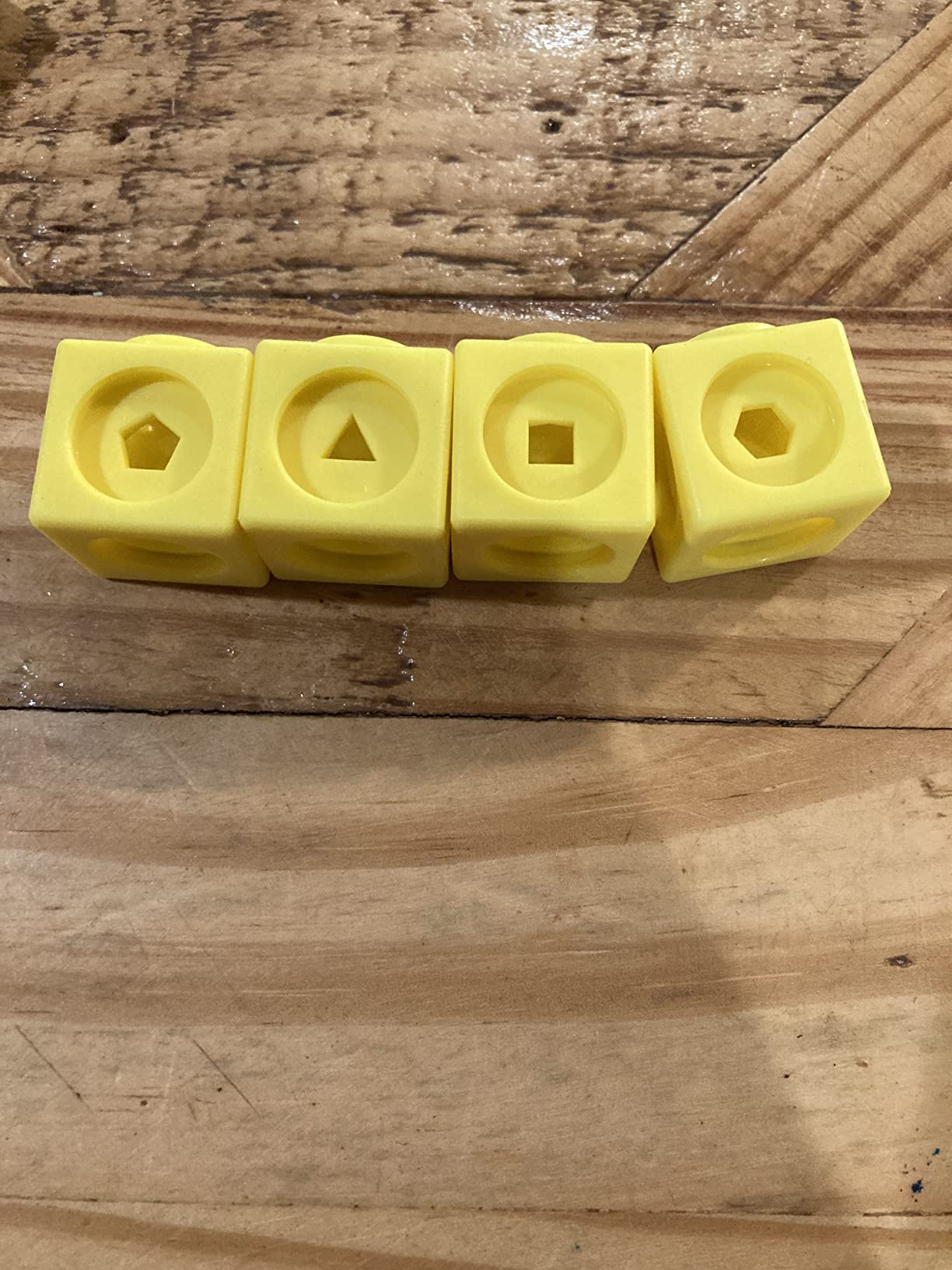
The edxeducation Math Cubes are the snap-cube set I bought after our MathLink Cubes disappeared during a move. They are functionally similar with one key difference: this set comes in 10 colors instead of 10, and each cube has 5 different geometric cutouts (circle, square, triangle, pentagon, hexagon). The added shapes make these a better fit for younger kids who are still learning shape names.
Our team found the soft-click connection easier for small hands than competing brands. Kids as young as 4 can snap and unsnap cubes without frustration. The set includes an activity guide that walks through counting, sorting, patterning, and basic operations.
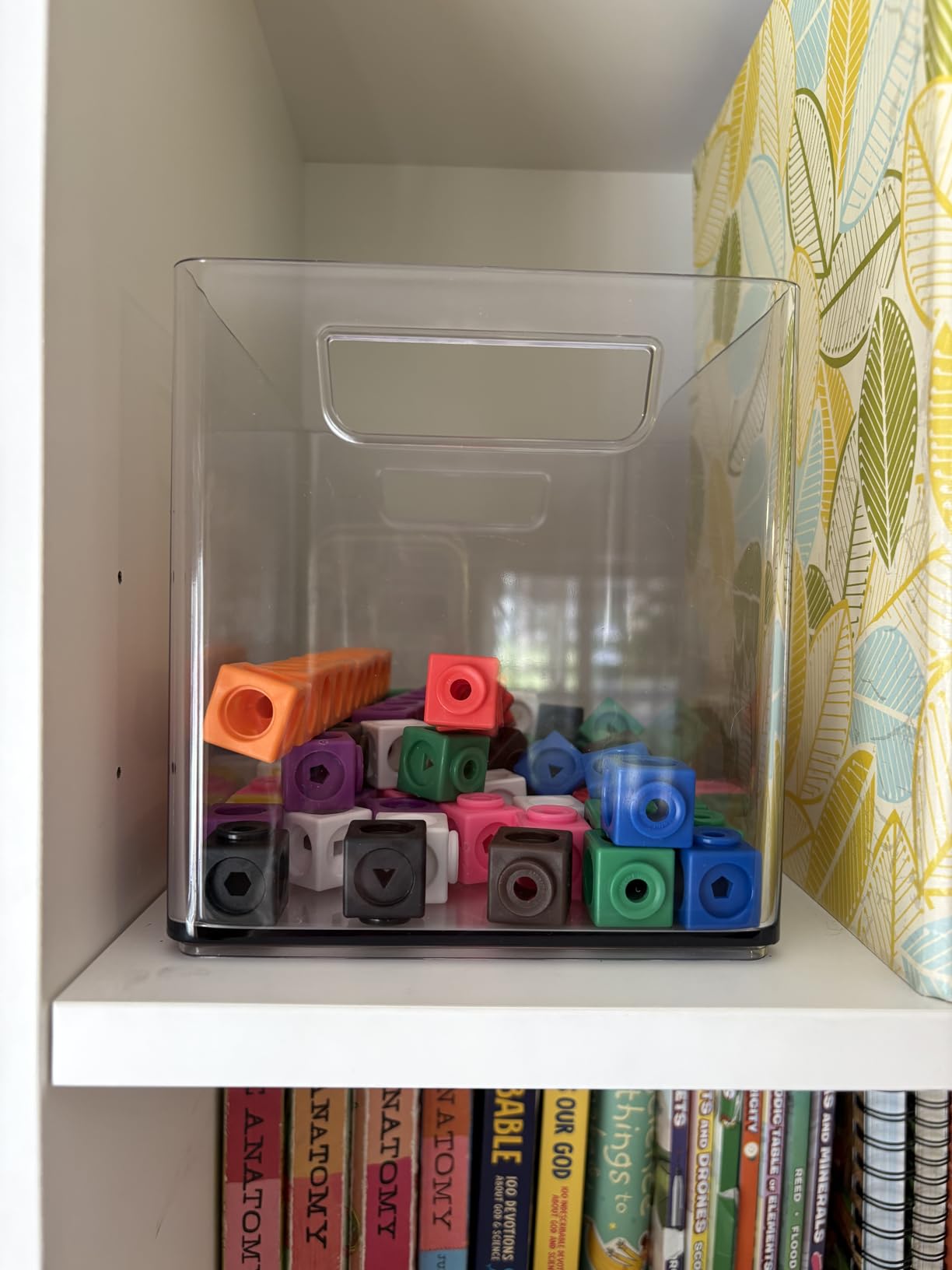
Each cube has multiple shapes cut out on different faces, so kids can identify circles one moment, triangles the next, and pentagons the third. The 10,000+ reviews make this one of the most-trusted counting manipulatives for early elementary.
The set works from kindergarten through second grade. For third grade and up, you’ll likely want to add base ten blocks or pattern blocks. We kept this set out for the entire K-2 years and used it weekly.
How the 10 colors help
10 colors map perfectly to benchmarks of 10, which is the foundation for place value. Kids can see 7 yellow + 3 red = 10 total. Later, those 10 cubes become a “ten rod” equivalent in place value lessons. The color count is intentional and ties directly to math standards.
Limitations at older ages
By third grade, kids need more advanced manipulatives. The cubes still get occasional use for fraction models and probability experiments but become a “support” rather than the primary tool. Our team recommends upgrading to base ten blocks around grade 3.
12. Learning Resources Three Bear Family Counters – The Proportional Bear Set for Measurement Play

Learning Resources Three Bear Family Counters
80 bears in 3 sizes
Ages 3+
Sorting, measurement, counting
Pros
- Plastic bears in three sizes and four colors
- Proportionally weighted for measurement activities
- Durable solid plastic construction
- Great for sorting
- counting
- and pattern activities
- Includes activity guide
- Ideal for homeschool and classroom use
Cons
- Only four colors (some customers prefer six-color set)
- Smaller children need supervision
The Three Bear Family Counters are the set I bought for measurement lessons when my kindergartner was learning “bigger than” and “smaller than.” The bears come in three sizes (Papa, Mama, Baby) and four colors. Each bear is proportionally weighted so it balances on a scale perfectly against its size. Real measurement turns into a hands-on experiment.
Our team picked this as a budget pick because the 80-piece set costs less than the 102-piece Baby Bear set but introduces proportional thinking, which is a more advanced skill. Kids quickly grasp “Mama + Baby = Papa” through physical play.
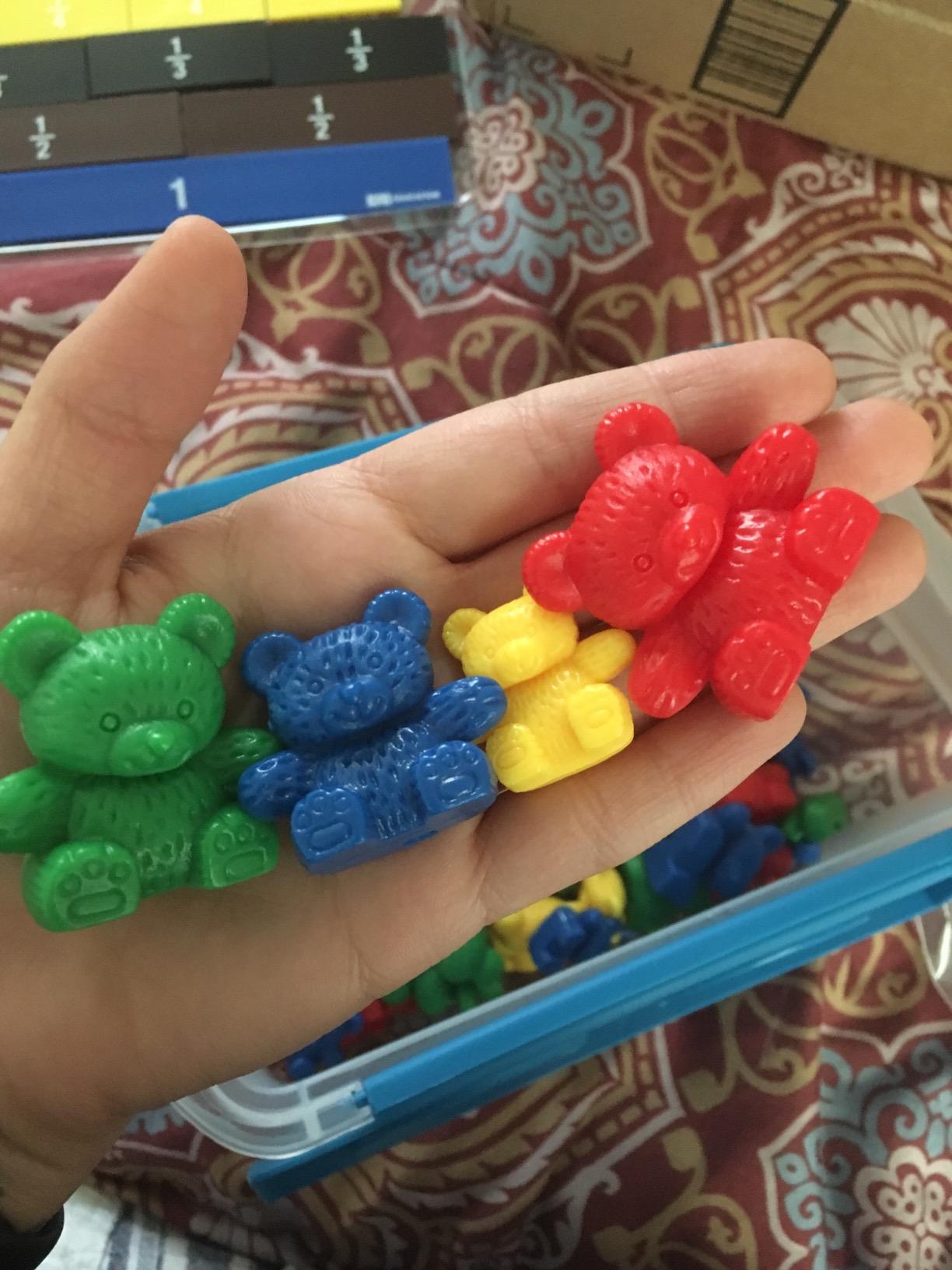
The bears are solid plastic and held up to two years of daily play without chips. We used them for sorting by color, sorting by size, simple weighing experiments with a kitchen scale, and pattern extension activities. The activity guide walks through each lesson.
The bears pair well with the Baby Bear Counters we already covered. Our team recommends starting with the 102-piece Baby Bear set for general counting, then adding the Three Bear Family set when kids are ready for measurement.
When to add a balance scale
The bears shine when paired with a simple balance scale. Kids explore non-standard measurement: “How many Baby bears equal one Mama bear?” That experience builds the foundation for understanding units of measurement later. Our team tested with a small kitchen scale and a classroom-style balance, and both worked well.
Use across elementary years
From kindergarten through second grade, we used these bears weekly. By third grade, they became more of a “math center” option. The set earns its place for early elementary math and stays useful for years.
How to Choose the Right Math Manipulatives for Your Homeschool
Picking math manipulatives feels overwhelming once you start browsing. I have bought sets I never used and skipped ones I later wished I had bought. The trick is matching manipulative to grade level, lesson style, and storage space. Here are the four decisions our team makes first.
Match Manipulatives to Grade Level
Kindergarten through second grade needs counting manipulatives (bear counters, math cubes) and early place value tools (ten frames). Third through fifth grade shifts to base ten blocks, fraction tools, and pattern blocks. Sixth through eighth grade uses more advanced fractions, decimals, and geometry sets. Our team recommends starting with one set per grade band and adding more only when lessons actually need them.
Consider Durability and Safety
Plastic manipulatives cost less and survive rough play. Wood holds up across many kids and feels nicer but costs more. Look at age recommendations and check for choking hazard warnings if you have younger siblings nearby. Our team recommends budgeting for replacement parts on heavily used items like rubber bands.
Storage and Organization
Math manipulatives multiply fast. Our team uses clear plastic bins with labels, one per manipulative type. Pattern blocks go in a jar with a handle. Bear counters go in their original bucket. Base ten blocks live in a shoebox with smaller bags inside. A 10-minute setup prevents the “everything dumped on the floor” problem.
Budget-Friendly DIY Alternatives
You do not need to buy every set at once. Dry beans work as counters. LEGO bricks model place value. A deck of cards plus a die builds number sense games. Pool noodles cut into sections become giant fraction circles. Our team tested several DIY options and found they work well for kindergarten through second grade but lose appeal by third grade when lessons get more complex.
For families on a tight budget, start with bear counters and math cubes (under $25 combined), add base ten blocks when you reach first grade, and build from there as lessons demand.
Frequently Asked Questions About Homeschool Math Manipulatives
What math manipulatives do I need for homeschool?
Start with counting manipulatives like bear counters or math cubes for kindergarten and first grade. Add base ten blocks for grades 1 through 4 to teach place value. Include fraction tiles or cubes by third grade, when fractions enter the curriculum. Pattern blocks and geoboards support geometry from kindergarten through middle school. A complete starter kit costs around $50 to $80 and covers the core elementary math concepts.
What age should kids start using math manipulatives?
Kids can start using math manipulatives as early as age 3, with simple counting bears or linking cubes. Counting practice and one-to-one correspondence are appropriate from preschool. By kindergarten, manipulatives become central to daily math lessons. The manipulatives age with the child: bear counters in kindergarten become fraction pieces in third grade and probability models in middle school.
Are math manipulatives worth the investment?
Yes, math manipulatives are worth the investment for most homeschool families. Research consistently shows that hands-on learning improves math understanding, especially for visual and kinesthetic learners. A $50 to $80 starter set covers grades K through 4 and replaces many workbook pages. The manipulatives also support multiple children across years, spreading the cost further. Skip expensive curriculum kits and build your own set with our recommended picks.
How do I store math manipulatives in a small space?
Use clear plastic bins with labels, one per manipulative type. Stack bins vertically on a shelf or in a closet. Smaller items like fraction tiles fit in photo storage boxes with divided compartments. Keep the most-used manipulatives at kid-height so they can be reached without help. Rotate seasonal or grade-specific sets into a storage tote and swap them in when needed. Our team recommends a 10-minute weekly tidy to prevent pile-up.
Can I make DIY math manipulatives at home?
Yes, several DIY math manipulatives work well for early grades. Dried beans or pasta become counters. LEGO bricks model place value and arrays. A paper circle cut into wedges teaches fractions. Pool noodles sliced into rings build giant fraction circles. Playing cards plus dice build number sense games. DIY options save money for kindergarten through second grade but lose effectiveness by third grade, when manufactured sets are more accurate and durable.
Final Thoughts on Best Homeschool Math Manipulatives
After testing dozens of math tools across multiple homeschool families, our team circled back to the same core recommendations. The Learning Resources MathLink Cubes remain our editor’s choice because no other single manipulative covers as many grade levels and math domains. The edxeducation Base Ten Blocks are the best value for place value work. The Learning Resources Baby Bear Counters are the budget pick for early counting.
Whatever you choose, the best homeschool math manipulatives are the ones your kids will actually use. Start with one or two sets from this guide, see what gets picked up daily, and build from there. The hands-on learning will do the rest.